
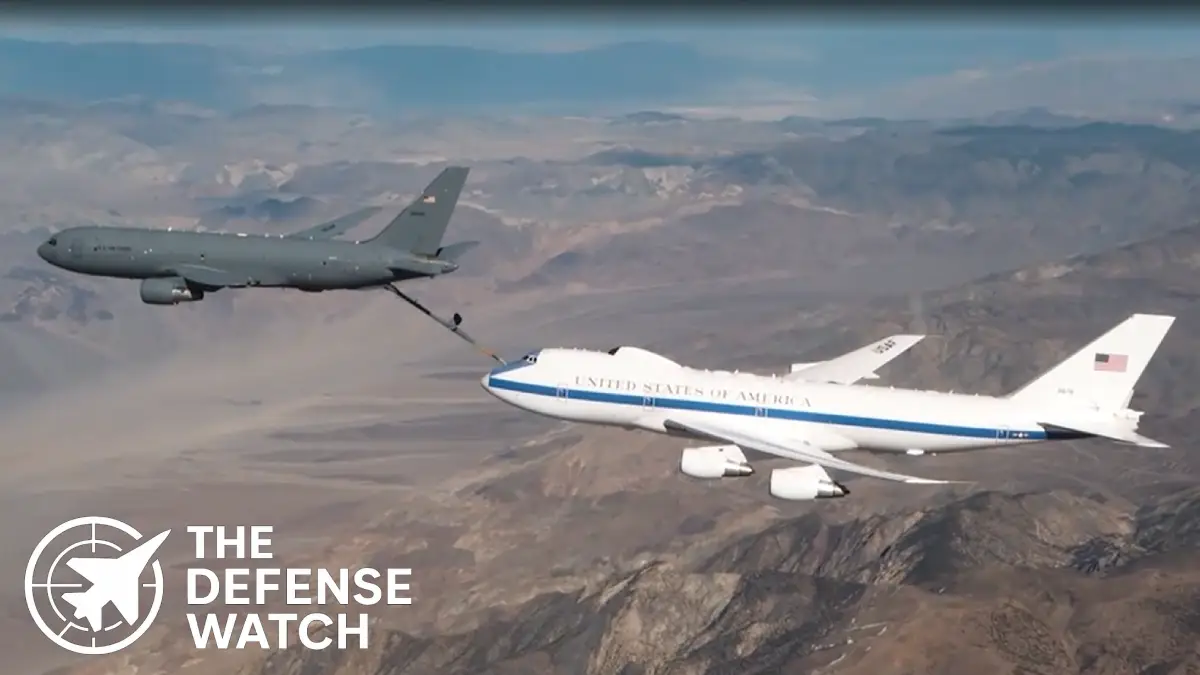
KC-46 Pegasus APU Failures Put Spotlight on Reliability
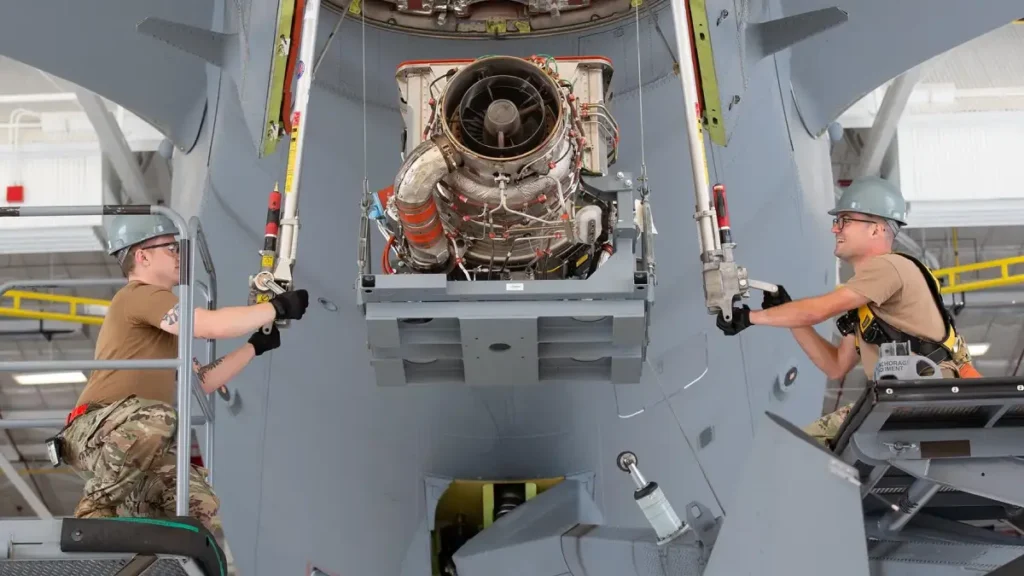
The U.S. Air Force’s KC-46 Pegasus aerial refueling tanker continues to face scrutiny after auxiliary power unit (APU) failures forced Air Mobility Command (AMC) to restrict onboard startup use across the fleet. The APU, a small turbine engine crucial for powering aircraft systems on the ground and self-starting the main engines, has experienced premature breakdowns that limit the tanker’s ability to operate autonomously at austere bases.
This latest issue adds to the KC-46’s growing list of technical hurdles, raising questions about Boeing’s program management and the long-term readiness of the Air Force’s next-generation tanker.
What is the KC-46 Pegasus?
The KC-46 Pegasus is the U.S. Air Force’s newest aerial refueling aircraft, built by Boeing on the 767 commercial airliner platform. Designed to replace aging KC-135 Stratotankers and KC-10 Extenders, the Pegasus brings modern avionics, defensive systems, and multi-role capability.
Key features include:
- Aerial refueling: Equipped with both a boom system and wing-mounted hose-and-drogue pods, enabling support for a wide range of U.S. and allied aircraft.
- Cargo & passenger transport: Can carry pallets, passengers, and medical evacuation patients alongside its tanker role.
- Survivability upgrades: Infrared countermeasures, advanced communications, and defensive systems enhance survivability in contested environments.
- Expeditionary design: Built to operate from forward bases with limited support — a key reason why APU reliability is critical.
The Air Force plans to acquire 179 KC-46s, making it the backbone of the U.S. tanker fleet for decades to come. However, recurring technical issues — from fuel system leaks to refueling boom malfunctions — have complicated its path to full mission capability.
Timeline of KC-46 Pegasus APU Issues
2022–2023: Early Signs of Trouble
Reports of slower-than-expected startup times for the KC-46’s APU compared with the older KC-135 began surfacing during early fleet integration. At McConnell AFB, crews noted delays that complicated preflight readiness, prompting innovation efforts like the Auxiliary Power Unit Remote Start System (APURSS) to reduce wait times.
2024: Maintenance Strains Emerge
By 2024, maintainers reported an uptick in unscheduled APU removals due to hardware wear. Reliability data indicated the APU was failing earlier than expected, adding maintenance burdens and affecting sortie rates.
July 2025: Restrictions Ordered
In July 2025, AMC formally restricted APU use across the KC-46 fleet, ordering crews to rely primarily on ground power units (GPUs) and external air carts for engine starts. This measure aimed to preserve APU life cycles amid premature failures, while Boeing and the Air Force work on hardware and software fixes. By September 2025, ongoing investigations into related issues, like a July boom mishap, continue to highlight program challenges.
Operational Implications
Reduced Autonomy
The KC-46 was designed to enhance expeditionary flexibility, including operations from forward-deployed or minimally equipped bases. With APU restrictions, tankers may now require additional logistics support, undermining this vision.
Increased Logistical Footprint
Relying on external ground support for startup increases the tanker’s logistics burden, requiring more equipment and personnel. In distributed operations, this could delay sortie generation or limit forward basing options.
Broader KC-46 Reliability Concerns
The APU issues are not isolated. The KC-46 program has faced multiple setbacks:
- Boom mishaps: At least three incidents since 2022 where the refueling boom stuck in receiver aircraft, causing millions in damage.
- Structural defects: In early 2025, Boeing halted deliveries after cracks were found in newly built airframes.
- Fuel system issues: Ongoing reports of cracked receptacle drain lines and fuel leaks have prompted inspections.
Fixes in Motion
Boeing and the USAF are addressing KC-46 Pegasus APU issues through multiple initiatives. The Auxiliary Power Unit Remote Start System (APURSS), prototyped by maintainers, allows crews to activate the APU remotely, reducing startup delays and improving mission readiness. Additionally, Boeing is investigating APU duct clamps and other hardware to address premature wear, with design updates expected by late 2025. Meanwhile, inspections for KC-46 drain mast cracks, identified alongside APU issues, are being integrated into maintenance protocols to ensure fleet reliability.
KC-46 Pegasus Remote Start System
The KC-46 Pegasus remote start system (APURSS), pioneered at McConnell AFB, allows maintainers to start the APU remotely before crews board. This innovation reduces startup delays and helps mitigate the reliability issues caused by repeated manual cycling.
APU Duct Clamps KC-46
Maintenance teams have also flagged wear on APU duct clamps in the KC-46’s pneumatic system. The Air Force is tightening inspection schedules and replacing these clamps to ensure safe airflow and reduce strain on the APU during startup sequences.
Boeing-USAF Coordination
Boeing engineers are working with AMC to identify root causes of APU failures, with potential design changes in the pipeline. Maintenance protocols are being adjusted to reduce stress on APU components until upgrades are fielded.
Analysis: What This Means for the Fleet
The KC-46 Pegasus remains a critical investment in America’s global reach. However, recurring reliability issues risk eroding confidence in its ability to perform under high-end operational demands. The APU restrictions, though temporary, highlight a gap between design promise and operational reality.
Unless Boeing delivers permanent fixes soon, the Air Force may face reduced tanker availability at a time when aerial refueling demand is increasing — especially in the Indo-Pacific theater, where austere basing and long-range missions are central to U.S. strategy.
Source: Airandspaceforces | Sofrep | Twz.com
FAQs
It’s the USAF’s newest aerial refueling tanker, derived from Boeing’s 767 platform, designed to replace KC-135 and KC-10 aircraft.
Premature APU failures prompted AMC to shift crews toward ground support equipment to preserve component life.
Boeing is pursuing engineering fixes, while USAF units have prototyped a remote-start system to mitigate delays.
The restrictions reduce expeditionary flexibility and increase the logistical footprint of deployments.
Get real time update about this post category directly on your device, subscribe now.

17 comments
[…] in the TVR, despite China’s larger overall inventory. The TVR metric takes into account not just fleet size but also aircraft mix, logistics, modernization, training and domestic aerospace-industry capability. Chinese media […]
[…] forward, watchers should focus on whether the DoD issues guidance within the timelines specified, how services reorganize around the PAE concept, and whether contract types shift […]
[…] problem is particularly acute as militaries and defense contractors increasingly adopt AI assistants, automated workflows and decision-support […]
[…] in 1968, which had entered Turkish service in 2010 after previous use by another air force. Ageing aircraft like this raise issues around maintenance, structural fatigue, upgrades and mission scheduling. The wear and lifecycle of […]
[…] & Range: Internal fuel capacity around 7,828 liters; mission radius approx. 630 km; aerial refueling capability extends mission […]
[…] L3Harris already handles maintenance, repair and overhaul (MRO) for much of Canada’s current aircraft fleet, including CF-18s, giving it experience across structural, avionics, software, and supply-chain […]
[…] The trans-Atlantic flight was supported by aerial refueling from three Boeing KC-135 Stratotanker aircraft. […]
[…] for anti-submarine warfare, long-range reconnaissance, and maritime patrol. Its integration with aerial refueling extends mission endurance well beyond previous […]
[…] remarks came after he delayed his Davos arrival due to a minor aircraft issue. Once on the ground, he told reporters he hopes to work out an agreement with NATO allies that […]
[…] carrier‑based unmanned aerial refueling system. Its primary role is to take over organic aerial refueling duties from manned aircraft, freeing fighters like the F/A‑18E/F Super Hornet and F‑35C Lightning II for core […]
[…] Air Force continues purchasing KC-46 Pegasus tankers from Boeing and decided in July 2025 to forgo competition for a bridge tanker, instead buying additional […]
[…] exercise combined fast jet operations, aerial refueling, and airfield support exchanges. It emphasized interoperability between US and UK forces and the […]
[…] automatic refueling capability on a tanker aircraft. This milestone establishes a benchmark for aerial refuelling automation and may influence future tanker modernization efforts […]
[…] long-range sorties over the North Atlantic, aerial refueling was critical. The French MRTT tanker extended F-35A time on station, bridging the significant […]
[…] Open-source flight tracking suggests a standard 12-aircraft detachment, supported by KC-135 aerial refueling assets to reach the CENTCOM area of responsibility without advanced […]
[…] the CENTCOM theater in recent weeks. The deployments reportedly include fighter jets, bombers, aerial refueling tankers, surveillance aircraft, and strategic airlift […]
[…] Aircraft used extended flight paths, likely supported by aerial refueling. […]