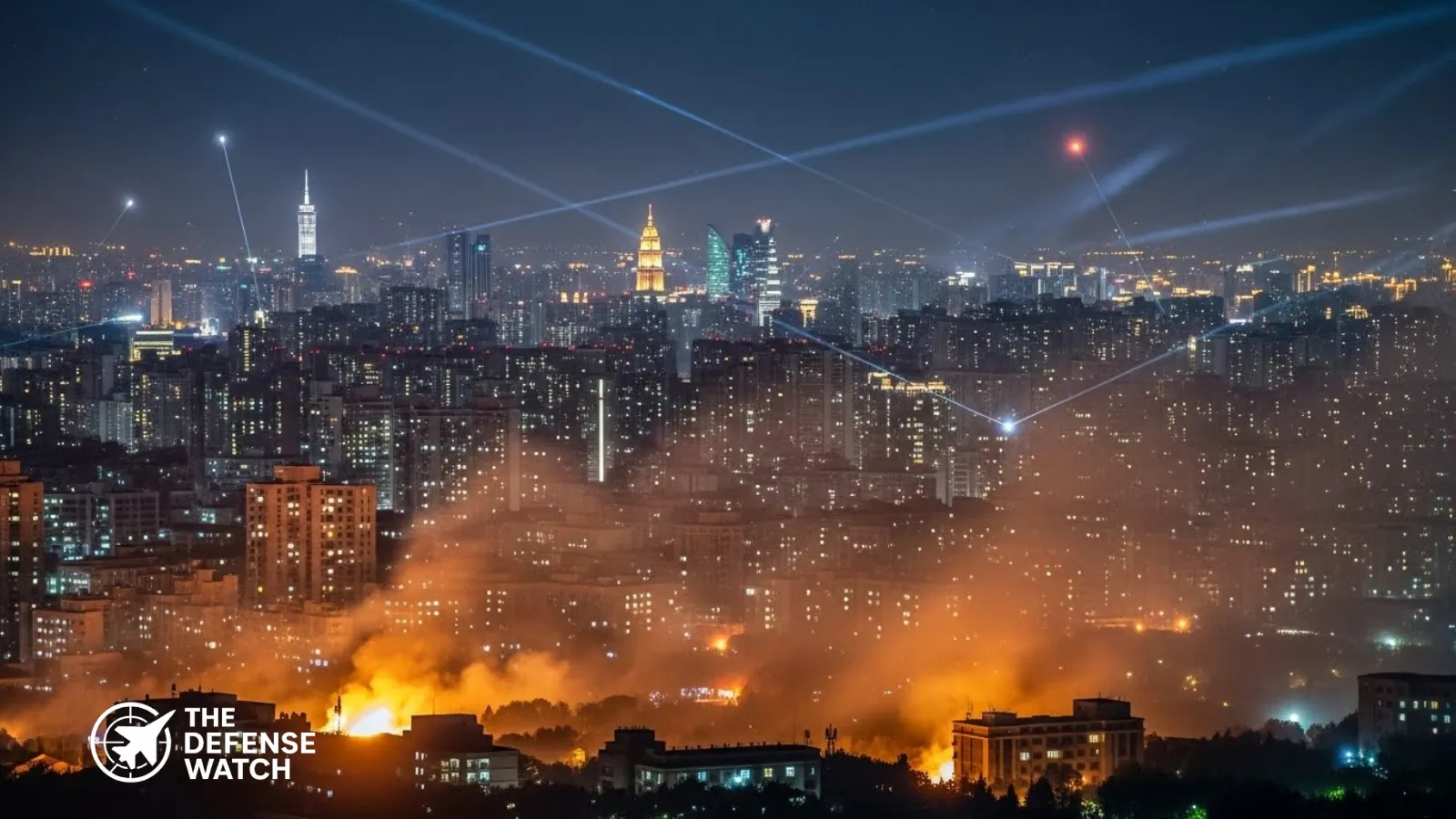
MOSCOW Ukraine conducted an overnight drone assault that targeted Moscow and sparked an industrial fire in Russia’s Tula region early on December 24, 2025, Russian authorities said, marking another escalation in long-running unmanned aerial vehicle operations deep inside Russian territory.
Moscow Mayor Sergei Sobyanin said several drones aimed at the capital were intercepted by air defense units, and debris from these unmanned aerial vehicles fell in multiple locations as the strikes unfolded through the night.
Officials in the Tula region, located south of Moscow, reported that debris from a downed drone fell onto an industrial site, triggering a fire that local emergency responders contained.
Air Defense Response and Airport Disruptions
The Russian defense ministry stated that its integrated air defense systems destroyed 172 Ukrainian drones during the overnight operations. Nearly half of these intercepts occurred over Russian border regions, according to the ministry’s breakdown.
Sobyanin said on the Telegram messaging app that at least three drones specifically targeting Moscow were downed. In response to the aerial activity, two of the four major airports serving the capital temporarily limited flights, the civil aviation authority said.
Local authorities did not immediately report any casualties or structural damage in the capital tied to the drone debris. Emergency services were sent to sites where parts of unmanned aerial vehicles landed.
Industrial Fire in Tula Region
In the Tula region, Governor Dmitry Milyaev confirmed that debris from an intercepted drone sparked an industrial fire at an unnamed site. Fire crews were able to contain the blaze, and there were no immediate reports of injuries.
The exact nature of the industrial facility involved has not been disclosed by regional authorities, though local reports outside official channels suggested the affected plant may be tied to rubber or polymer production, components often used in broader industrial and defense supply chains.
Context and Broader Drone Campaign
This incident comes amid a sustained period of Ukrainian drone operations targeting Russian rear areas. Kyiv has increasingly employed unmanned aerial systems to strike at military, logistical, and industrial facilities deep inside Russia in a bid to degrade Moscow’s capacity to sustain its military campaign.
Russian officials have repeatedly highlighted their air defense successes while acknowledging that some unmanned aerial vehicles have penetrated to critical zones. The Tula region incident follows a pattern of persistent UAV activity and ceiling-level interceptions across several Russian regions.
Technical and Strategic Notes on UAV Use
Unmanned aerial vehicles remain a central element of both Ukrainian offensive operations and Russian defensive efforts. Ukraine’s use of fixed-wing and rotary drones has evolved to include longer-range platforms capable of reaching beyond front lines into territory held by Russian forces. Russian air defense systems have adapted with layered counter-UAV measures, combining radar, surface-to-air missiles, and electronic warfare techniques to mitigate these threats.
The high number of drones reported intercepted overnight indicates both the scale of the operation from Kyiv’s perspective and the intensity of Russian counter-measures. The interception data points to significant resource commitments by both sides in this facet of the conflict.
Impact and Outlook
While there were no immediate reports of casualties in Moscow or the Tula region, the incident highlights ongoing threats to Russian infrastructure from UAVs. Such attacks, even when largely intercepted, can disrupt civil aviation and strain emergency response systems.
Analysts monitoring the conflict note that drone operations will likely persist as a key vector of asymmetric warfare. Continued UAV strikes within Russia could influence both operational planning and domestic perceptions of security. Meanwhile, Russia’s adaptive air defense posture aims to reduce the frequency and impact of such penetrations. Given the scale of this latest assault, observers will watch subsequent movements for indications of further escalation or shifts in aerial tactics. TASS