


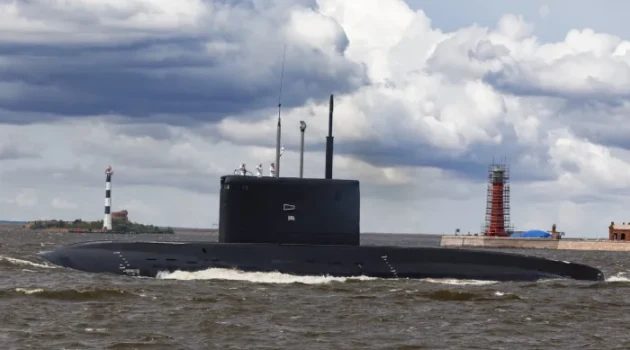
Ukraine has announced what it describes as the first combat use of an underwater drone against a manned submarine, claiming its forces targeted a Russian Kilo class submarine in the Black Sea. The reported strike involved the sub sea baby underwater drone, a domestically developed unmanned system designed for covert maritime attacks.
The announcement was made in July 2025 as the Russia Ukraine war continues to expand into new operational domains. While no independent confirmation has been released, the claim alone signals a possible shift in how undersea warfare is conducted in contested waters.
Context for US and Allied Navies
For US defense planners, the reported use of a sub sea baby underwater drone carries implications well beyond the Black Sea. The US Navy and NATO allies rely heavily on submarine forces for deterrence, intelligence collection, and strike missions.
An underwater drone capable of threatening a low signature diesel electric submarine challenges long standing assumptions about undersea survivability, especially in confined maritime zones such as the Baltic Sea, South China Sea, and Persian Gulf.
What Is the Sub Sea Baby Underwater Drone
Ukrainian officials describe the system as a compact, electrically powered underwater drone optimized for stealth and endurance. Unlike surface naval drones, the platform operates fully submerged, reducing exposure to radar and visual detection.
The sub sea baby underwater drone is believed to carry a high explosive payload and to use pre programmed navigation or remote guidance. Ukraine has not released technical specifications, but officials have emphasized its role in targeting high value naval assets.
Targeting the Russian Kilo Class Submarine
The Russian Kilo class submarine remains one of Moscow’s most important naval assets in the Black Sea. These submarines have launched Kalibr cruise missiles against Ukrainian infrastructure and provide Russia with a survivable strike option.
If an underwater drone was able to reach and engage a Kilo class submarine, it would demonstrate a vulnerability that could concern submarine operators worldwide. The US Navy has long tracked similar threats posed by autonomous underwater vehicles developed by China, Iran, and Russia.
Strategic Assessment
US naval analysts note that underwater drone warfare has been discussed for years but rarely demonstrated in combat. Ukraine’s claim suggests that smaller navies can now contest undersea space using relatively low cost systems.
This development may accelerate US investment in counter underwater drone defenses, improved passive sonar networks, and new operational concepts for submarine protection in shallow waters.
What to Watch Next
The Pentagon and NATO intelligence agencies are expected to monitor for confirmation of damage or changes in Russian submarine operations. Any reduction in Kilo class patrols or missile launches could support Ukraine’s claim.
Regardless of confirmation, the event highlights a future battlefield where unmanned underwater systems play a direct role in high end naval combat.

4 comments
[…] it struck western Ukraine’s Lviv region with an Oreshnik missile, a launch that came amid broader Russian attacks across Ukrainian territory. The launch occurred about 60 kilometers from the Polish border, raising […]
[…] order comes amid heightened UK attention on Russian maritime activity near its coasts. In recent months UK defence officials have publicly tracked Russian naval […]
[…] to information released by the company and Ukrainian media, the Marichka underwater drone is designed to target ports, bridges, large surface combatants, and amphibious landing vessels at […]
[…] accessing the Atlantic from northern bases. Today, the GIUK gap remains essential for monitoring Russian naval and aerial movements in the […]