


Table of Contents
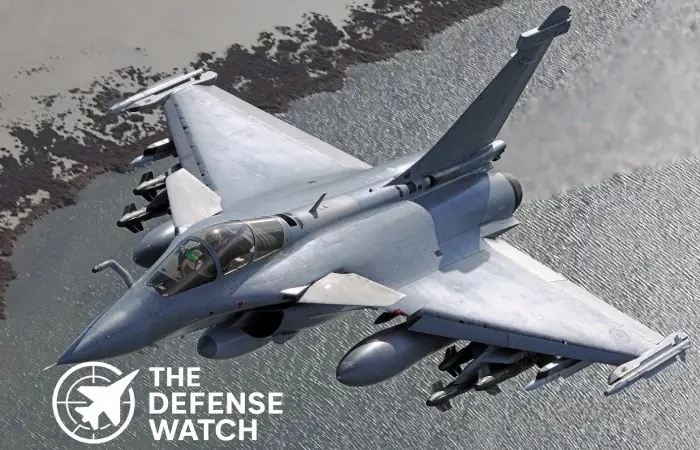
India is advancing plans to acquire 114 additional Rafale jets from France as part of a strategic push to bolster its air capability and modernize its fleet. Announced on 11 November 2025, the proposed deal represents one of the largest single-platform fighter acquisitions in the country’s history.
Background: why India is moving now
The Indian Air Force (IAF) has been operating below sanctioned strength of 42.5 squadrons, with current estimates placing it at 29–31 squadrons, largely due to the retirement of older aircraft such as the MiG-21. India’s decision to enlarge its Rafale fleet comes amidst increasing strategic competition with neighboring states, including the Pakistan Air Force and the People’s Liberation Army Air Force (PLAAF). Reports of Pakistan acquiring advanced air-to-air missiles and fighters from China have accelerated Indian urgency to maintain technological edge.
India already operates 36 Rafales delivered between 2020 and 2022. Familiarity with the platform gives France’s Dassault Aviation an edge in the negotiations.
Details of the Deal: What’s on the Table
The proposed procurement of 114 Rafales is linked to India’s Multi-Role Fighter Aircraft (MRFA) program under a government-to-government (G2G) framework.
Key elements under discussion:
- The Rafale F4 variant is the likely candidate for India, offering advanced sensor-fusion, electronic warfare, and long-range missile integration.
- India is seeking significant localization: the deal would include manufacturing, assembly and component production in India under the “Make in India” initiative.
- A major sticking point is access to source-code level control and modular mission computer integration. India wants to integrate its own weapons (such as the Astra air-to-air missile) and sensor suites, while France is reluctant to fully grant source-code access citing industrial and security concerns.
- The deal would build on existing industrial linkages: earlier agreements saw Dassault and India’s Tata Advanced Systems (TASL) set up production of Rafale fuselage in Hyderabad – the first time such manufacturing would take place outside France.
Strategic Implications
The incoming fleet would enhance India’s capability for both air-superiority and strike roles, with extended range and weapon integration that can operate in high-altitude and maritime theatres. The Rafale brings proven integration with missiles such as the Meteor air-to-air and SCALP/Storm Shadow cruise missile for deep-strike roles.
Dassault Rafale Fighter Jet – Full Specifications
- Generation: 4.5th
- Maximum Speed: Mach 1.8
- No. of Engines: 2
- Radar Range: 200+ km
Expert/Policy Perspective
Analysts note that the robustness of the deal lies not just in aircraft numbers but in what they enable: securing India’s two-front conflict doctrine (against China and Pakistan), strengthening industrial autonomy, and deepening defense cooperation with France.
One senior IAF official told Defense Security Asia: “The absence of source-code access represents a significant obstacle to India’s broader defense modernization agenda.”
Policy-makers in New Delhi view this acquisition as a force-multiplier: it addresses immediate squadron shortfall while positioning the domestic defense-industrial complex for future exports and maintenance hubs. On the French side, Dassault sees this as an export milestone and opportunity to embed deeper technology transfer and long-term service agreements.Closing: Impact and What’s Next
The acquisition of 114 Rafales would mark a turning point in India’s air combat capability and shape South Asian air-power balances for decades. The deal, if finalized, will accelerate squadron strength, enhance deterrence, and underpin India’s industrial ambitions.
Next steps include the Indian government’s Approval of Necessity (AoN) by the Defense Acquisition Council (DAC) expected by late 2025, followed by contract negotiations, fly-away deliveries, and local assembly ramp-up. Delays or failure to resolve key issues such as software access could push India to alternatives, but current momentum suggests the Rafale remains front-runner.
India’s neighborhood will pay close attention: Pakistan and China are likely to adjust their force-modernization strategies accordingly. For India, this is not simply an aircraft purchase — it is a strategic investment in future deterrence and industrial self-reliance.

10 comments
[…] decade if it wants to field next-generation fighters without foreign constraints,” said a former Indian Air Force engineering officer. He added that engine development cycles typically span 10–15 years, making […]
[…] in India’s high-altitude military infrastructure development. Its operationalization enhances India’s capability to conduct rapid airlift, sustained surveillance, and timely response across eastern Ladakh—a […]
[…] 13 November 2025, with the weapon visible on the centerline hardpoint of a naval variant of the Dassault Rafale M. The missile is described as having undergone a “successful” second firing, following its […]
[…] Rafale acquisition marks a watershed moment for the Ukrainian Air Force. Moving from legacy MiG-29 and Su-27 platforms to advanced Western fighters like the Rafale […]
[…] it could trigger redesign or retrofits. If pilot error or human factors are responsible, India’s air display protocols may undergo […]
[…] jets—by December 2025. This initial batch will form the nucleus of the country’s renewed fighter capability, […]
[…] to deliver a future-proof fighter aircraft and associated technologies by around 2040. France’s Dassault Aviation is leading development of the main fighter aircraft. Germany’s Airbus and Spain’s Indra Sistemas are responsible for key elements such as […]
[…] not only military forces but also society at large. The investment will include modular short-range air defense units capable of defending both combat units and civilian […]
[…] long‑range PL‑15E missiles downed multiple Indian aircraft, potentially including Dassault Rafale fighters, though India has not acknowledged these […]
[…] Looking ahead, the UK and Ireland are expected to continue dialogue on defence cooperation, including air and maritime security. Both governments have engaged in periodic reviews of existing arrangements, and Dublin may consider adjustments to its own air defence capabilities. […]