

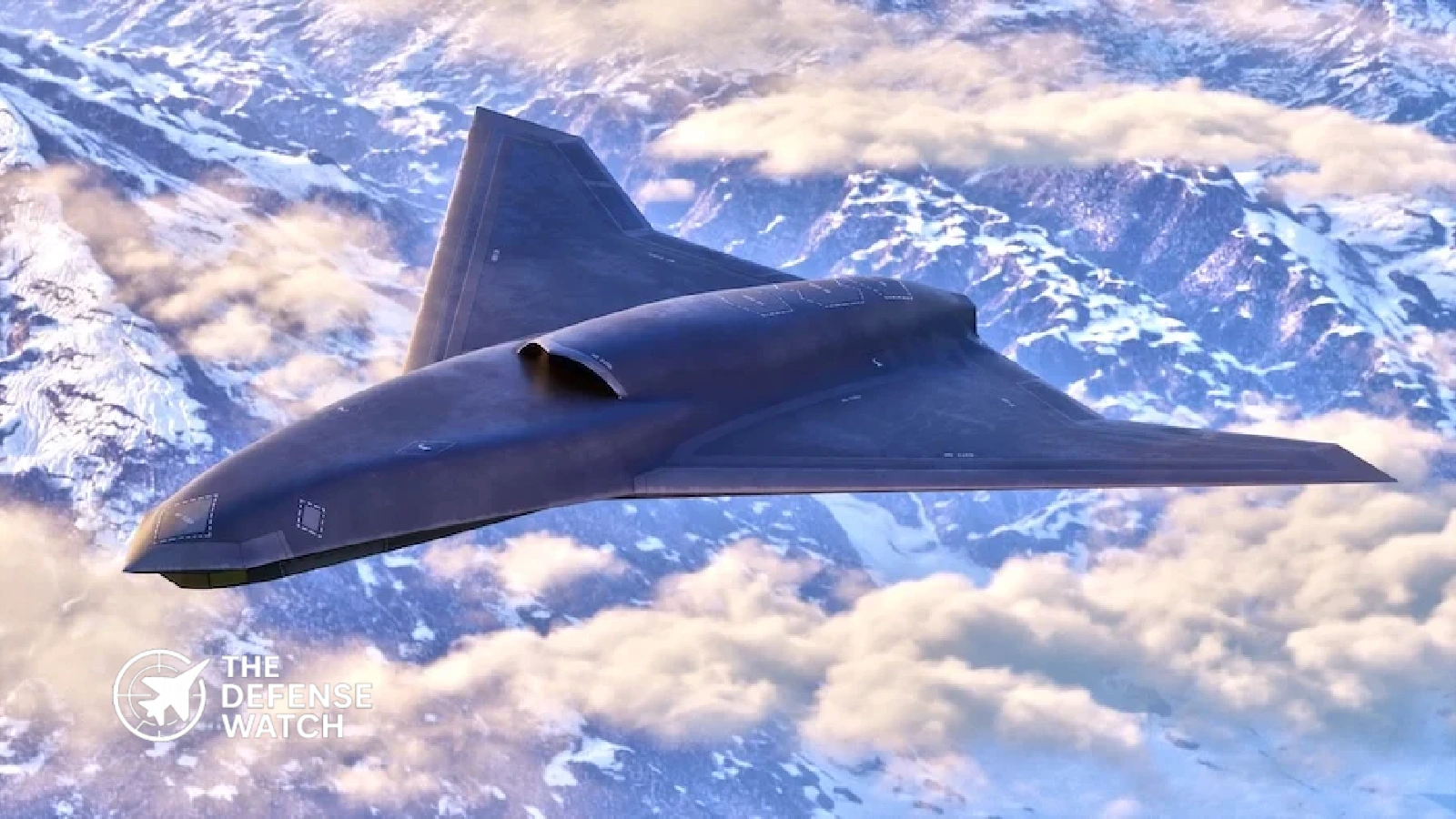
Lockheed Martin Vectis Reaches Another Development Step
The Lockheed Martin Vectis stealth combat drone has reached another reported development milestone as Skunk Works moves toward a planned prototype flight in 2027. Lockheed Martin signaled the update through a September 12, 2026 social media post, but did not disclose what technical or programmatic achievement had been completed.
Takeaways
Lockheed Martin has signaled another development milestone for Vectis, its Group 5 collaborative combat aircraft intended to operate with fifth-generation fighters.
The limited announcement is important because Vectis remains one of Lockheed Martin’s internally funded approaches to the growing collaborative combat aircraft market. The company introduced Vectis in September 2025 as a Group 5 uncrewed aircraft designed around survivability, autonomy, mission flexibility and integration with crewed combat aircraft.
Lockheed Martin’s current Vectis program page describes the aircraft as capable of operating independently or teaming with crewed platforms such as the F-35 and future next generation aircraft. The company has also explicitly identified the F-22 as part of the intended fifth generation integration concept.
Vectis Is Moving Toward a 2027 Prototype Flight
Lockheed Martin has previously said that Vectis is being developed under an accelerated design, build and flight approach. In December 2025, the company said parts for the prototype were being ordered and that first flight was targeted for 2027.
The propulsion plan provides one example of the program’s emphasis on using mature technologies where possible. Lockheed Martin selected Williams International’s FJ44-4 turbofan for the demonstrator, with the company stating that the engine produces more than 3,600 pounds of thrust.
That choice is significant from a development perspective. Rather than making a new propulsion system a prerequisite for flight testing, Vectis can use an established commercial turbofan architecture while Lockheed Martin concentrates development effort on the aircraft’s low observable design, mission systems, autonomy and integration requirements.
The latest milestone could therefore represent progress in one of several areas, but Lockheed Martin has not identified which one. It would be premature to describe the update as a flight test, completed prototype or demonstrated operational capability.
What Lockheed Martin Has Disclosed About Vectis
Lockheed Martin introduced Vectis as a Group 5 collaborative combat aircraft. The Group 5 classification covers large uncrewed aircraft with greater size, endurance and capability than smaller tactical drone categories.
The company has positioned the aircraft around several potential mission sets:
| Capability | Lockheed Martin Position |
|---|---|
| Aircraft class | Group 5 uncrewed aircraft |
| Program role | Collaborative combat aircraft |
| Crewed teaming | F-35, F-22 and future combat aircraft |
| Potential missions | Strike, ISR targeting, electronic warfare and counterair |
| Propulsion for prototype | Williams International FJ44-4 |
| Engine thrust | More than 3,600 pounds |
| Planned first flight | 2027 |
| Development approach | Internally funded, accelerated design and development |
| Architecture | Open and customizable mission systems |
The company has not publicly released a complete set of aircraft specifications such as maximum speed, combat radius, weapons payload, internal weapons capacity or detailed dimensions. Those figures should not be treated as established Vectis specifications unless Lockheed Martin or another authoritative source releases them.
Why F-22 and F-35 Integration Matters
Vectis is being developed against a major change in how the U.S. Air Force is approaching air superiority. Instead of relying exclusively on increasingly sophisticated crewed fighters, the service is building a force in which crewed aircraft can work with autonomous or semi-autonomous uncrewed aircraft.
The F-35 is particularly relevant because its sensor fusion, communications and data-sharing capabilities make it a natural node for distributed air operations. The F-22 presents a different challenge because it is optimized for air dominance and was designed before today’s CCA architecture became a central element of U.S. fighter modernization.
Lockheed Martin’s own 2026 material shows Vectis alongside F-35 and F-22 aircraft as part of a broader family of systems concept.
The operational value of such an arrangement would not depend simply on adding another aircraft to a formation. The more important issue is how information, targeting data, electronic warfare effects and weapons employment are distributed among the aircraft.
A survivable uncrewed aircraft could potentially allow a crewed fighter to remain farther from a threat while another platform performs a higher risk sensing, jamming, targeting or strike function. That is the broader operational logic behind collaborative combat aircraft.
Vectis Enters a More Mature CCA Environment
The timing of the Vectis development is notable because the U.S. Air Force’s own Collaborative Combat Aircraft program has moved substantially beyond the concept stage.
The Air Force selected General Atomics’ YFQ-42A and Anduril’s YFQ-44A as its initial CCA aircraft and has continued flight, autonomy, weapons and operational testing.
In July 2026, the Air Force conducted live fire testing involving a YFQ-44A and an AIM-120 weapon against a digital target. The service described the test as part of a phased approach to validating CCA operations.
The Air Force has also begun examining how these aircraft can operate in realistic conditions. An exercise at Creech Air Force Base in July tested servicing, refueling, weapons loading and rapid operational activities involving YFQ-42A and YFQ-44A aircraft.
This creates a more demanding environment for Vectis. Lockheed Martin is developing the Aircraft outside the Air Force’s initial CCA air vehicle selections, while the broader CCA ecosystem is already generating operational lessons about autonomy, logistics, weapons integration and human-machine teaming.
Open Architecture Could Be Central to Vectis
Another important element of the Vectis concept is its emphasis on an open and customizable architecture.
Lockheed Martin has said the aircraft is intended to accept different sensors, weapons and communications systems. That approach could allow the same basic airframe to be adapted for different missions rather than creating a separate aircraft for every operational requirement.
The U.S. Air Force is pursuing a similar principle through its Autonomy Government Reference Architecture. The service has been working to separate mission autonomy software from individual airframes, allowing different vendors and platforms to use common architectural standards.
For Vectis, this distinction could be important. A CCA’s usefulness will depend not only on its aerodynamic and stealth characteristics but also on how quickly its mission software, sensors, communications and weapons can evolve.
That creates a different development model from traditional fighter programs, where a large amount of capability is locked into an aircraft design for decades.
Stealth and Survivability Remain Central
Lockheed Martin has placed particular emphasis on Vectis survivability. The company describes the aircraft as a survivable Group 5 CCA and says its design draws on decades of work in low observable aircraft.
For a platform intended to operate with F-22 and F-35 fighters, survivability is especially important. An uncrewed aircraft that cannot operate inside a contested environment would have limited value for the missions in which crewed fifth generation fighters face the greatest risks.
However, Lockheed Martin has not released detailed radar cross section data, infrared signatures, electronic warfare performance or other classified survivability measurements. Claims about Vectis being more or less stealthy than a specific fighter therefore cannot currently be verified from public information.
The Main Technical Challenge Is Integration
The most difficult part of a future Vectis deployment may not be simply building the aircraft. It will be integrating the aircraft into a wider combat network while preserving human control over critical decisions.
The Air Force’s ongoing CCA testing illustrates the breadth of that challenge. Weapons integration, autonomy, logistics, communications and operational procedures all have to mature alongside the aircraft itself.
Vectis will also need to demonstrate that its autonomy and mission systems can function reliably when communications are degraded or contested. That requirement is particularly relevant to operations against advanced air defenses and electronic warfare systems.
The current public information does not establish how much autonomy Vectis will have during individual missions or which functions will require continuous human authorization.
What Comes Next for Vectis
The immediate milestone is the transition from development activity toward prototype flight. Lockheed Martin’s established target remains a first flight in 2027, while the latest September 2026 update indicates that work continues toward that objective.
The next significant evidence will therefore come from physical prototype completion, ground testing, engine operation, taxi testing and ultimately flight testing.
If the aircraft reaches flight testing on schedule, Lockheed Martin will be able to begin demonstrating whether the Vectis design can deliver the combination of survivability, autonomy, range, mission flexibility and crewed-uncrewed integration that the company has described.
For the U.S. Air Force, the significance extends beyond a single Lockheed Martin aircraft. Vectis represents another potential path toward a larger family of affordable uncrewed combat aircraft that could complement rather than replace high-end crewed fighters.
The September milestone is therefore best understood as a development signal rather than an operational breakthrough. Until Lockheed Martin releases additional technical information, the most concrete conclusion is that Vectis remains on a development path toward its planned 2027 prototype flight.
