Finland Orders More Than 100 Patria TREMOS Mortar Systems
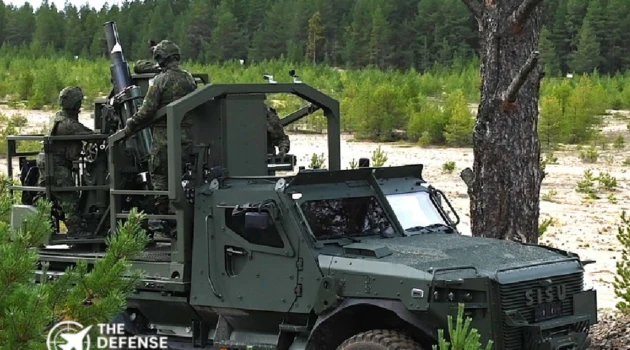
Finland has ordered more than 100 Patria TREMOS 120 mm mortar systems in a €49.9 million procurement designed to give Finnish Army heavy mortar units greater mobility, protection and flexibility. The Finnish Defence Forces and Patria agreed to the serial production contract on September 8, 2026, with deliveries scheduled to continue through 2028.
- Finland Orders More Than 100 Patria TREMOS Mortar Systems
- Takeaways
- A €49.9 Million Move Into Serial Production
- What Makes the TREMOS Different
- Mobility Is the Main Operational Gain
- Existing Ammunition and Equipment Remain Relevant
- Why the System Fits Finnish Defense Planning
- A More Survivable Approach to Indirect Fire
- Options Could Expand the Fleet Significantly
- Strategic Relevance for NATO
- The Bottom Line
Takeaways
Finland is moving more than 100 Patria TREMOS 120 mm mortar systems into serial production as part of a broader effort to increase the mobility and survivability of its heavy mortar units.
The Finnish Army identifies the system as the 120 KRH M3, while Patria markets it as TREMOS. The contract also contains options for hundreds of additional systems, making the agreement potentially much larger than the initial procurement.
The program is particularly significant because it does not replace Finland’s 120 mm mortar capability with a completely new ammunition or weapon family. Instead, it places a traditional heavy mortar on a modular vehicle integration system designed to improve how quickly the weapon can move, occupy a firing position and relocate.
A €49.9 Million Move Into Serial Production
The Finnish Ministry of Defence authorized the procurement at a total value of €49.9 million excluding VAT. Patria said production will take place at its facilities in Finland, supported by a domestic supplier network, with the agreement expected to generate approximately 130 person-years of employment.
The procurement follows an earlier development and pre-series phase. Finland ordered a pre-series batch in 2024, with delivery planned for 2025. Patria said the system had already undergone testing before that agreement was signed.
The Finnish Army began training with the pre-series systems in early 2026. The first serial-production weapons are scheduled to be delivered later this year.
Program Detail System Patria TREMOS Finnish designation 120 KRH M3 Weapon caliber 120 mm Initial procurement More than 100 systems Contract value €49.9 million, excluding VAT Serial deliveries 2026 to 2028 Additional options Hundreds of systems Pre-series delivery 2025 Training use Began in early 2026 What Makes the TREMOS Different
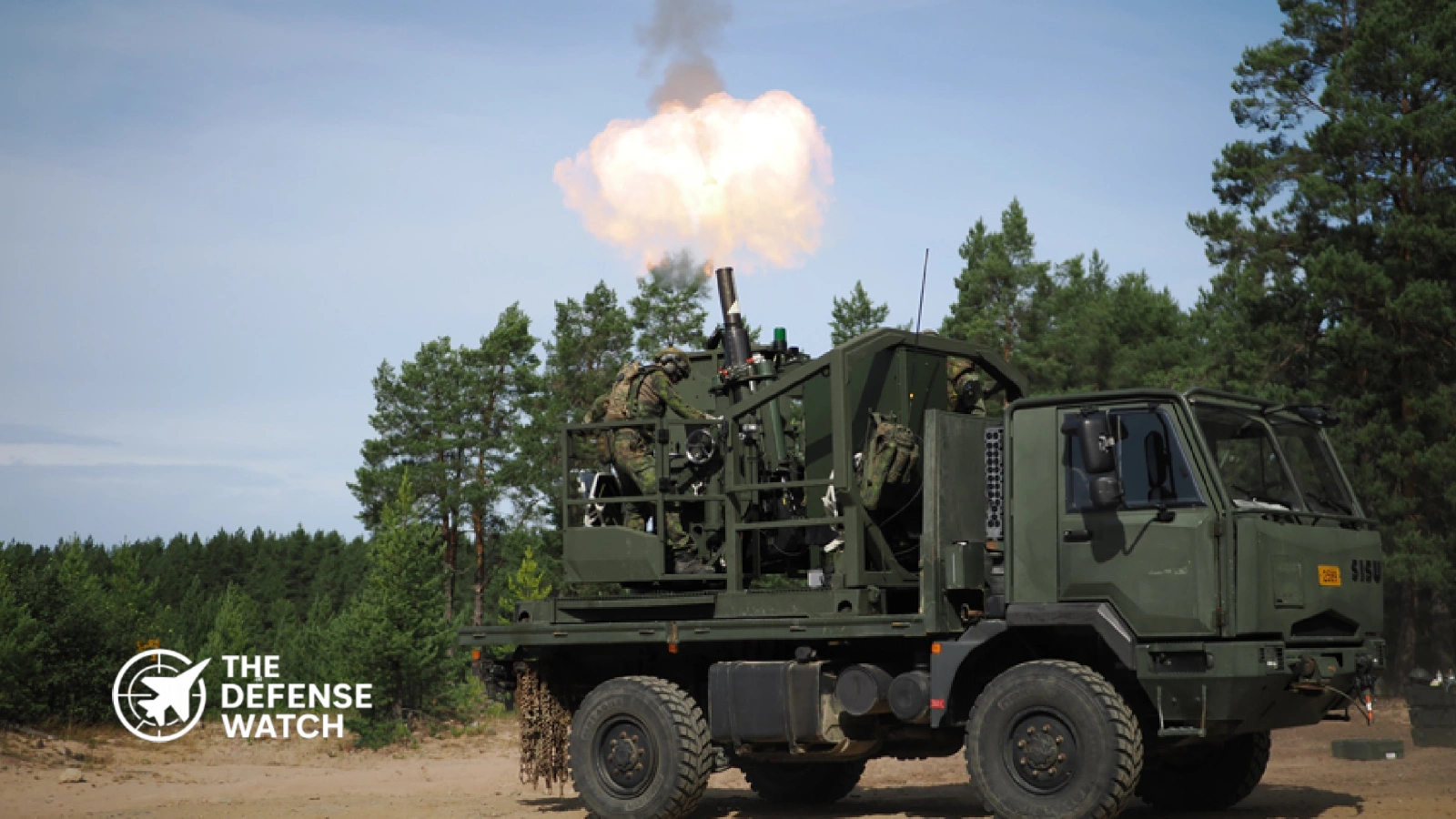
The central feature of TREMOS is its vehicle-mounted modular architecture.
Traditional heavy mortars can provide substantial indirect fire support, but their employment normally involves moving the weapon, baseplate and other components into position before firing. A vehicle-mounted system can reduce some of that setup burden and allow the firing unit to remain mobile.
Patria says TREMOS uses advanced recoil technology that permits integration with different vehicle platforms while retaining the ability to use existing mortar barrels, breeches and ammunition. The company says the system can therefore simplify training and logistics by maintaining compatibility with existing Finnish equipment.
The 2024 announcement also described the system as a modular carriage that can be installed on different military vehicles. Patria said the concept is scalable to different mortar systems.
This approach is important because Finland is not simply buying a self-propelled mortar in the conventional sense. It is acquiring a modular weapon integration architecture that can be adapted to different carriers.
Mobility Is the Main Operational Gain
The TREMOS does not represent a major increase in the basic ballistic class of Finland’s heavy mortar force. Its value is primarily in how the weapon is employed.
Army Recognition reported that the 120 KRH M3 can achieve a range of more than 7 kilometers depending on ammunition and has a firing rate of about 12 rounds per minute. The same report notes that the Finnish system remains manually loaded and manually laid rather than becoming an automated turreted mortar.
That distinction matters.
The system’s main advantage is the reduction in time spent preparing a firing position and moving away from it. In a modern battlefield, artillery and mortar positions can be exposed by counter-battery radar, acoustic detection, unmanned aircraft and other surveillance systems.
A mortar that can arrive, fire and move without the crew having to recover a conventional baseplate has a different tactical profile from a traditional towed weapon.
Army Recognition reports that TREMOS uses a hydro-pneumatic recoil system that absorbs firing loads within the weapon mounting rather than transferring them through a conventional baseplate into the ground. The system can therefore fire directly from its carrier.
Existing Ammunition and Equipment Remain Relevant
Another important aspect of the Finnish procurement is compatibility.
Patria states that TREMOS can use existing in-service barrels and breeches, as well as existing ammunition and ballistic tables. The company says this reduces the training and logistics burden associated with introducing a new mortar system.
That is particularly relevant for a country maintaining a large reserve and conscription-based defense structure.
Instead of creating an entirely separate ammunition ecosystem, Finland can combine a modern mobile mounting system with much of its existing 120 mm mortar infrastructure. The result is a modernization effort focused on mobility and survivability rather than simply replacing the weapon itself.
The system can also incorporate additional digital equipment, including an inertial navigation system and connections to battlefield management systems, according to technical information reported by Army Recognition.
Why the System Fits Finnish Defense Planning
Finland’s geography places unusual demands on land forces.
The country has extensive forested areas, lakes, dispersed road networks and large distances between populated areas. Its territory also stretches from southern Finland toward the Arctic regions in Lapland.
For heavy mortar units, mobility therefore has operational value beyond simply moving faster between positions.
A vehicle-mounted 120 mm mortar can remain integrated with the maneuver force instead of requiring the same degree of preparation associated with a conventional towed system. This can help commanders reposition indirect fire assets as units move between dispersed operating areas.
The Finnish Ministry of Defence specifically described the new system as improving mobility, protection and fire capability across a wide area.
The Finnish Army has also emphasized that the agreement could eventually support deployment across the country’s regions, from southern Finland to northern Lapland.
A More Survivable Approach to Indirect Fire
The TREMOS program also reflects a wider change in how artillery and mortar units are being designed.
The battlefield increasingly exposes firing units to rapid detection. Unmanned aircraft can locate firing positions, while counter-battery systems can calculate the origin of incoming rounds and support rapid retaliation.
That environment increases the value of shoot-and-scoot operations.
TREMOS does not eliminate the vulnerability of a mortar unit. It remains dependent on its vehicle, ammunition supply, communications and crew. It also does not transform the 120 mm mortar into a long-range artillery system.
Its contribution is narrower but important: reducing the time and physical effort required to establish a firing position and then relocate.
This is a meaningful modernization path for a force that already possesses substantial 120 mm mortar infrastructure.
Options Could Expand the Fleet Significantly
The initial order covers more than 100 systems, but the agreement also contains options for hundreds more. Finland has not publicly specified the final number that could ultimately be purchased under those options.
That makes the current order more significant than a limited technology demonstration or small production batch.
Patria describes Finland as the launch customer for TREMOS and says the serial procurement creates a foundation for future international sales.
For Finland, the immediate priority is domestic force modernization. For Patria, successful fielding with the Finnish Army provides a reference customer for a modular heavy mortar concept that could be adapted to different military vehicles and national requirements.
Strategic Relevance for NATO
Finland joined NATO in April 2023, adding a large northern land border with Russia to the alliance’s collective defense geography.
The TREMOS procurement should therefore be viewed within a wider effort to strengthen Finland’s ability to maintain mobile ground forces across difficult terrain.
The system is not a strategic weapon and does not independently alter the regional balance. Its importance is at the tactical and operational level, where mobile indirect fire can support maneuver forces while reducing the time spent in exposed firing positions.
The procurement also demonstrates how NATO members are placing greater emphasis on dispersed, mobile and recoverable combat systems.
For Finland, that approach fits a defense model built around territorial coverage, reserve forces, dispersed infrastructure and the ability to operate under sustained pressure.
The Bottom Line
Finland’s decision to procure more than 100 Patria TREMOS systems marks the transition of the 120 KRH M3 from development into serial production.
The €49.9 million program combines a conventional 120 mm mortar with a modular vehicle-mounted architecture, allowing Finland to retain existing ammunition and weapon infrastructure while improving tactical mobility.
Deliveries will begin in 2026 and continue through 2028, while options for hundreds of additional systems could eventually expand the capability across a much larger portion of the Finnish Army.
The most important change is not the mortar’s caliber or basic ballistic performance. It is the way the weapon can be integrated into a mobile force, allowing heavy indirect fire units to move, fire and relocate with less setup burden than traditional towed systems.
That makes TREMOS a notable example of how Finland is adapting established weapons to the demands of a more mobile and increasingly transparent battlefield.