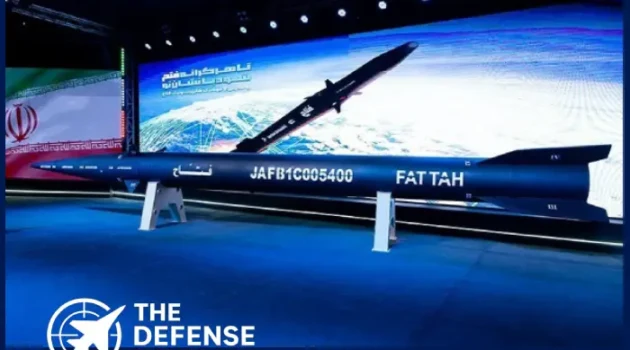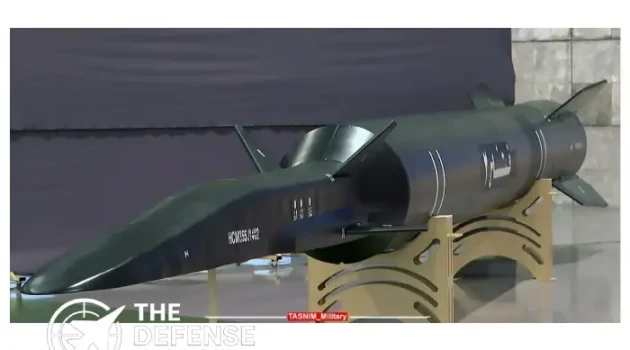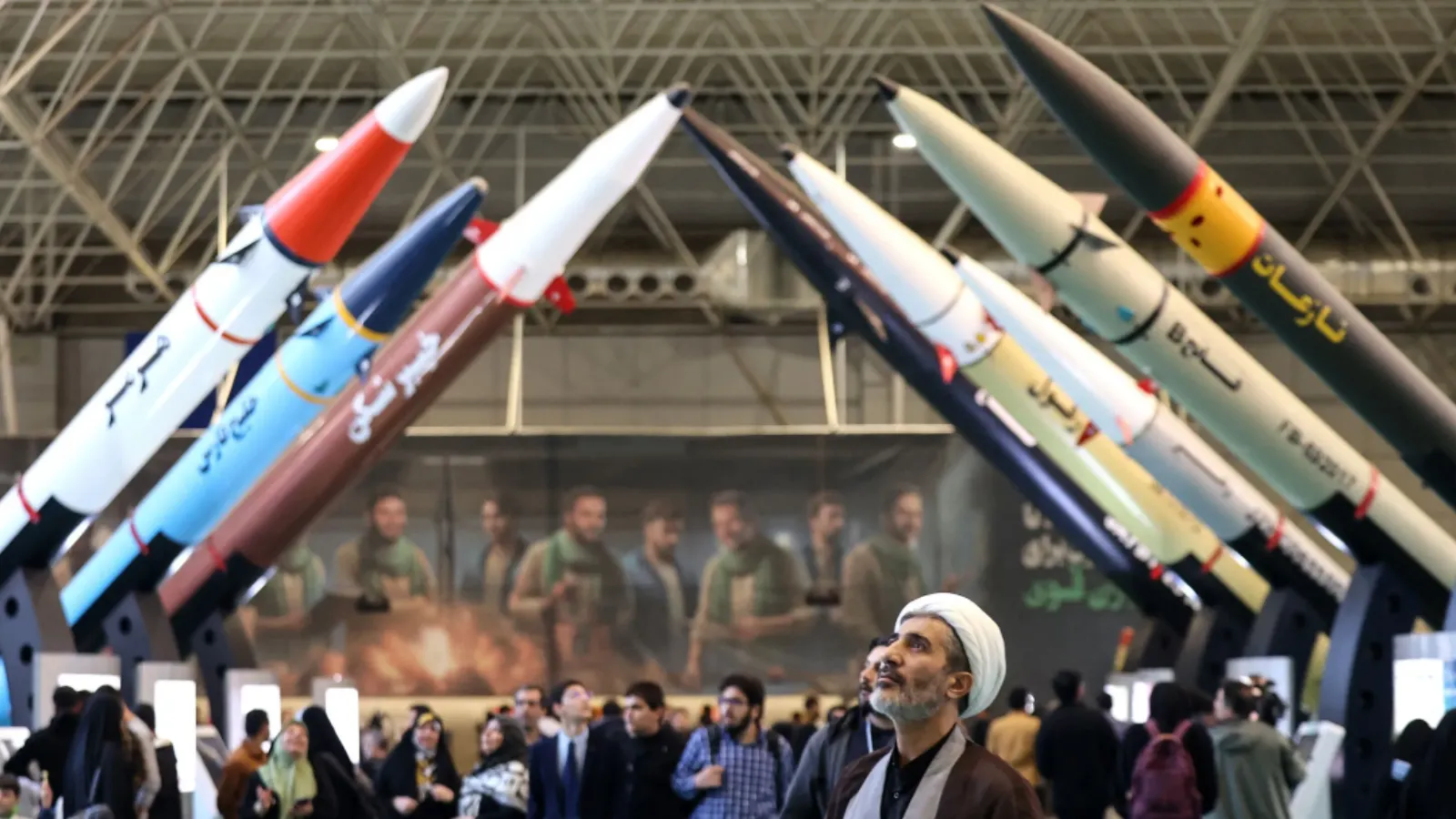
- U.S. intelligence assessed Iran held the Middle East’s largest ballistic missile stockpile entering 2025 — estimated at over 3,000 missiles before active hostilities began.
- On March 20, 2026, Iran fired two ballistic missiles toward the joint U.S.-UK base at Diego Garcia — approximately 4,000 km from Iranian territory — shattering assumptions about Tehran’s maximum strike range.
- As of mid-March 2026, U.S. Central Command reported missile launch rates had dropped roughly 90 percent from Day 1 of the conflict; drone attacks were down approximately 86 percent — though analysts warn the decline reflects inventory management, not depletion.
- Israel reportedly disabled up to 290 of Iran’s estimated 410–440 ballistic missile launchers through sustained strikes, according to a senior Israeli official cited by the Institute for the Study of War.
- Iran’s Shahed-series drones — costing between $20,000 and $50,000 per unit — can be produced rapidly in dispersed, simple facilities, giving Tehran a cost-asymmetric edge that is extremely difficult to neutralize from the air.
Iran’s Missile Arsenal in 2026: Stockpiles, Surviving Capability, and the Diego Garcia Shock
When the United States and Israel launched Operation Epic Fury against Iran on February 28, 2026, one of their central strategic objectives was clear: neutralize Tehran’s missile and drone forces before they could be turned against American bases, Gulf partners, and Israeli cities. Four weeks into the conflict, that mission is proving far more complicated than Washington’s initial battle damage assessments suggested.
The power of its air force diminished by Western sanctions over decades, Iran invested heavily in missiles and drones, amassing what U.S. intelligence called in early 2025 the “largest stockpile” of such systems in the Middle East. That arsenal — a combination of ballistic missiles, cruise missiles, and one-way attack drones — has now become both the primary target of American and Israeli air power and Tehran’s only meaningful tool of retaliation.
How Large Was Iran’s Missile Arsenal Before the War?
Accurately sizing Iran’s missile inventory has long been one of the hardest problems in Middle Eastern defense intelligence. U.S. military assessments have suggested Iran possessed more than 3,000 ballistic missiles — a commonly cited estimate — though analysts stress that the exact stockpile size remains unknown. Other defense research groups and regional intelligence estimates place the pre-war figure closer to around 2,500 missiles, noting such figures are approximations rather than confirmed totals.
Iranian ballistic missile capacity is difficult to independently verify, given the limited reliable information on quantities. The U.S. Air Force and some non-governmental organizations have released estimates in the past, but these typically count launchers rather than missiles themselves, since launchers are, in principle, easier to track and observe.
The arsenal itself spans multiple categories. Iran’s medium-range ballistic missiles (MRBMs), with heavy warheads, put the entire Middle East and parts of southeastern Europe, Southeast Asia, and northeast Africa within reach from Iranian territory. Meanwhile, short-range ballistic missiles and cruise missiles pose the greatest threat to U.S. bases, forces, and Gulf partners, given their shorter flight times and exposure to less robust air defenses.
Iran has also invested heavily in survivability. At least five known underground “missile cities” exist in provinces including Kermanshah and Semnan, as well as near the Gulf. These facilities include storage depots, concealed launch systems, and transport tunnels. Iran demonstrated in 2020 the ability to fire a ballistic missile from underground — establishing that degrading its capabilities would require sustained operations rather than a single decisive strike.
What Has the War Cost Iran So Far?
Weeks of intensive U.S. and Israeli strikes have made a measurable dent in Iran’s operational missile infrastructure. According to a senior Israeli military official cited by the Institute for the Study of War, Israel has put up to 290 launchers out of service, out of an estimated 410 to 440 total launchers.
U.S. Central Command reported that Iran had fired more than 500 ballistic missiles and in excess of 2,000 drones since the war began. Western officials noted a sharp drop in attack rates in recent days, with the top U.S. commander General Dan Caine noting an 86 percent decline in ballistic missile strikes from the first day of fighting, while Central Command cited a further 23 percent reduction in drone attacks.
Yet defense analysts are warning against reading those declining numbers as a sign that Iran is running out of weapons. The pattern of Iranian attacks is more consistent with recalibration than capacity constraints. Tehran could be using this period to learn, adapt, and refine its tactics — including stockpiling weapons for larger coordinated salvos designed to saturate air defenses, a tactic Moscow has repeatedly employed against Ukrainian defenses in Ukraine.
The White House declared on March 15 that Iran’s ballistic missile capacity was “functionally destroyed” and its navy “combat ineffective.” Yet just days later, Qatar announced it had intercepted an incoming Iranian missile, and new drone strikes were reported across the UAE, including a fire near Dubai International Airport that temporarily disrupted flights.
The Diego Garcia Revelation: A 4,000-Kilometer Surprise
The single most strategically significant development of the conflict came on March 20, 2026, when Iran launched two ballistic missiles toward the joint U.S.-UK military base at Diego Garcia — an island in the Indian Ocean that had never previously been considered within Tehran’s strike envelope.
UK Housing Secretary Steve Reed confirmed the attack, stating: “Our assessment is that the Iranians certainly targeted Diego Garcia. As we understand it, one missile fell short and failed. The other was intercepted and prevented.”
Israel’s military chief, Lieutenant General Eyal Zamir, stated that Iran employed a two-stage intercontinental ballistic missile with a range of approximately 4,000 kilometers to target the base, warning that such weapons put European capitals — including Berlin, Paris, and Rome — within direct threat range.
Analysts described the attack as potentially changing the strategic calculus of the conflict. “These missiles to Diego Garcia mean Iran has 4,000km-plus ballistic missiles, and that hasn’t been revealed before,” said Muhanad Seloom of the Doha Institute for Graduate Studies. If you reverse the direction of these missiles, they could reach London, so that changes the calculus not only for the U.S. but also for a reluctant London and European Union.”
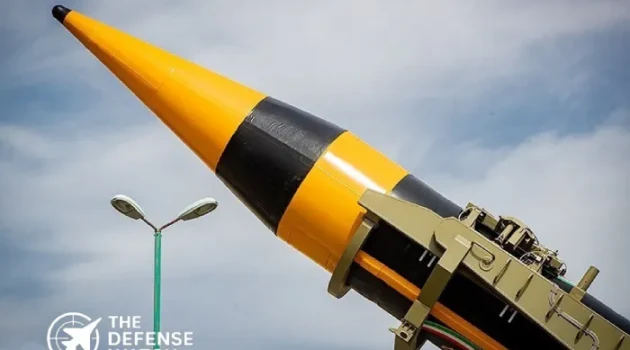
Defense analysts have linked the weapons system to the Khorramshahr-4 (Kheibar) ballistic missile — one of Iran’s most advanced long-range systems, assessed by many researchers to be derived from the North Korean Musudan intermediate-range ballistic missile, which has an estimated range of 2,500 to 4,000 kilometers depending on payload and trajectory.
Iran has formally denied responsibility for the Diego Garcia strike, with Tehran’s Foreign Ministry calling the claims an “Israeli false flag” operation. However, the denial has done little to reduce international alarm over the demonstrated capability.
The Drone Wildcard: Cheap, Dispersed, and Hard to Kill
While the ballistic missile debate dominates strategic headlines, Iran’s drone fleet may prove the more durable long-term threat. Iran relies heavily on one-way attack drones — slower and cheaper than ballistic missiles — which can be deployed in waves to overwhelm air defenses or apply sustained pressure on airports, ports, and energy infrastructure.
The Shahed-136 drone can be built quickly in large numbers in relatively simple factories. With a speed of just 185 km/h, it can theoretically be shot down by helicopters — yet many have still managed to penetrate U.S. and Gulf air defense systems.
The economics are stark. Shahed drones cost between $20,000 and $50,000 to produce, according to Stacie Pettyjohn of the Center for a New American Security, while the interceptors used to destroy them can cost many times more. That cost asymmetry is one Iran intends to exploit for as long as possible.
Prewar estimates placed Iran’s total drone inventory at several thousand to well above 10,000 units. Even assuming Iran’s manufacturing capacity has been significantly degraded — for which there is no confirmed evidence — Tehran likely retains a substantial operational inventory. The Shahed requires no dedicated launch infrastructure, no transporter-erector launcher, and no fixed facility. It launches from an angled rail on a pickup truck, after which crews can quickly relocate — a design specifically engineered to frustrate the targeting methods effective against ballistic missiles.
Analysis: Iran’s Strategy Is Attrition, Not All-Out Barrage
The trajectory of this conflict points to something more nuanced than a straightforward war of annihilation. Tehran appears to be operating from a deliberate playbook — conserving high-value ballistic missiles for psychologically and strategically significant targets, deploying cheap drones to maintain continuous pressure on Gulf infrastructure and shipping, and managing launch rates to avoid the rapid depletion of key systems.
The Diego Garcia strike fits this pattern perfectly. Even though both missiles failed to reach their target, the political signal was unmistakable: Iran possesses — or is rapidly developing — the ability to threaten assets far beyond the Middle East. The fact that one missile failed mid-flight may indicate Iran is operating these extended-range systems at the edge of their tested capabilities. But the attempt itself has already reshaped the escalation calculus for U.S. allies in Europe, who had until now viewed the conflict as a regional matter.
Meanwhile, the persistent flow of drone strikes, however reduced in frequency, continues to impose real economic costs. Disruptions near Dubai International Airport, maritime paralysis in the Strait of Hormuz, and sporadic strikes on Gulf energy infrastructure are grinding down regional confidence even as U.S. officials claim the air campaign is succeeding.
Ultimately, assessing Iran’s remaining strength is as much a psychological exercise as a bean-counting one. As one analyst put it plainly: “It does not matter how many you launch as long as you maintain a credible threat. It takes one successful drone to shatter a sense of security.” Tehran, for the moment, still has enough to keep that threat alive.
FAQs
How many ballistic missiles does Iran have left in 2026?Exact figures are classified and disputed. Pre-war estimates placed Iran’s inventory at approximately 2,500–3,000 ballistic missiles. After the June 2025 twelve-day war with Israel and weeks of Operation Epic Fury, Israeli intelligence estimates suggest the functional stockpile may be closer to 1,500 missiles — though Tehran has shown signs of active replenishment efforts.
Can Iran really hit targets 4,000 kilometers away?The March 20, 2026, strike attempt on Diego Garcia demonstrated Iran’s intent to reach targets at 4,000 km. However, both missiles failed — one fell short, one was intercepted. Analysts suggest Iran may be operating extended-range systems at or beyond their reliably tested limits, and that these weapons are expensive and likely held in limited numbers.
What is Iran’s most dangerous missile system?Defense analysts point to Iran’s medium-range ballistic missiles — particularly the Khorramshahr-4 (Kheibar) and the hypersonic-class Sejil — as the most dangerous in its inventory due to their combination of range, payload, and speed. Short-range ballistic missiles and cruise missiles pose the greatest practical threat to U.S. bases and Gulf infrastructure.
How does Iran’s drone program compare to its missile forces?Iran’s drone fleet — led by the Shahed-136 loitering munition — complements its missile forces through cost asymmetry. Drones are far cheaper to produce and harder to fully neutralize from the air. While individually less destructive than ballistic missiles, they can be launched in coordinated swarms that overwhelm layered air defense systems.
Has the U.S.-Israel air campaign neutralized Iran’s missile threat?U.S. officials have claimed Iran’s ballistic missile capacity is “functionally destroyed,” but persistent Iranian launches — including attacks into the UAE, Qatar, and the Gulf — indicate significant residual capability. Analysts widely assess that declining launch rates reflect deliberate conservation rather than a collapse in inventory.