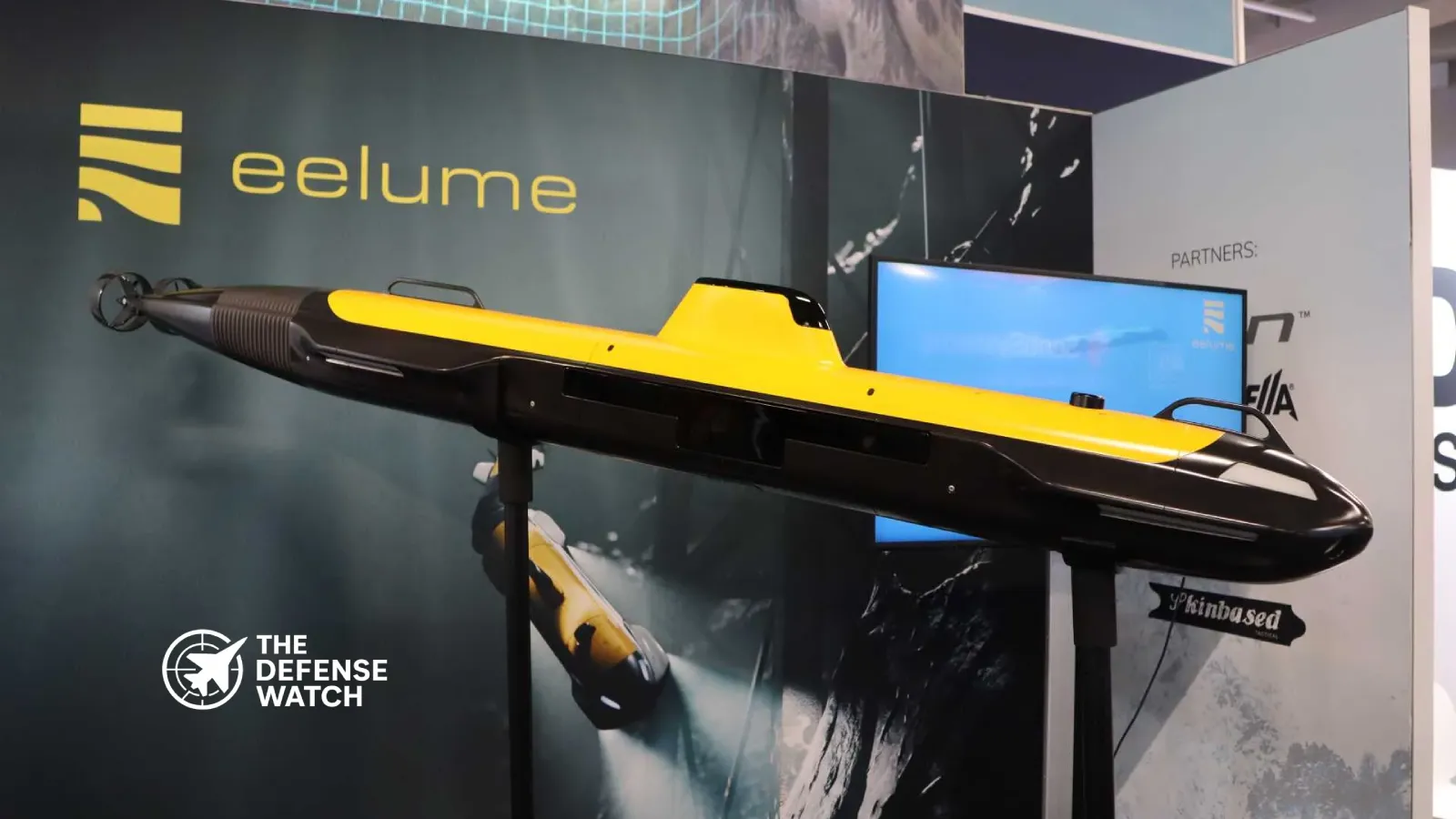
- ► Norway Eelume S autonomous underwater drone designed to conduct mine countermeasures without dedicated mine hunting vessels.
- ► Fully autonomous system operates subsea for extended periods with minimal human oversight.
- ► Supports Norway’s broader naval modernization and shift toward unmanned maritime operations.
- ► Reflects wider NATO trend toward autonomous mine countermeasures capabilities.
- ► Signals a potential reduction in risk to crews in high threat littoral environments.
Norway Eelume S Autonomous Underwater Drone Advances Mine Countermeasures
The Norway Eelume S autonomous underwater drone is emerging as a next generation solution to replace traditional mine hunting vessels in naval operations. Developed in Norway and reported by Army Recognition, the system is designed to conduct mine countermeasures missions without placing crewed ships in contested waters.
Unlike legacy mine hunting vessels that must enter potentially mined areas, the Eelume S operates fully autonomously below the surface. This shift reflects a broader naval trend toward unmanned and robotic systems capable of persistent, low risk operations.
From Crewed Mine Hunters To Persistent Subsea Robots
Traditional mine countermeasures operations rely on specialized surface vessels equipped with sonar and remotely operated vehicles. These ships are slow, manpower intensive, and vulnerable in high threat environments.
The Norway Eelume S autonomous underwater drone changes that model. Instead of deploying from a mine hunter each time a mission is required, the drone can remain subsea for extended durations. It is designed to dock underwater, recharge, and redeploy without constant surface support.
This approach reduces exposure of sailors and high value ships. In contested littoral zones, where naval mines remain one of the most cost effective denial weapons, removing crews from direct risk is a significant operational advantage.
The Eelume S is positioned as a direct alternative to traditional mine hunting vessels, not simply a supplementary unmanned tool. That distinction matters. It signals a structural change in fleet composition.
Technical Concept And Operational Role
The Eelume platform, originally developed for subsea inspection in the offshore energy sector, features a snake like, articulated design. This allows maneuverability in complex underwater environments.
The Norway Eelume S autonomous underwater drone adapts that architecture for defense missions. Equipped with sensors for detection and classification, it can search for, identify, and support neutralization of naval mines.
Autonomy is central to the concept. Rather than relying on continuous remote piloting, the system is designed to execute missions with minimal real time intervention. Operators can supervise from a secure location, reducing the need for forward deployed command platforms.
This aligns with broader defense investments in autonomous systems across NATO. The U.S. Navy, for example, is expanding its own unmanned surface and underwater vehicle programs under its Distributed Maritime Operations concept. European navies are also moving toward modular, unmanned mine countermeasures packages.
Strategic Context: Mines Remain A Persistent Threat
Naval mines continue to pose a serious operational challenge. From the Persian Gulf to the Baltic Sea, mines have demonstrated their ability to disrupt shipping and naval movements at low cost.
The Norwegian approach reflects lessons learned from decades of mine warfare. Dedicated mine hunting vessels are expensive to build and maintain. They require specialized crews and operate at slow speeds. In high end conflict, they may themselves become targets.
By contrast, the Norway Eelume S autonomous underwater drone offers persistence and lower visibility. It can operate quietly beneath the surface, conduct surveillance, and return to docking stations without exposing large surface assets.
For Norway, a country with an extensive coastline and strategic interest in the High North, autonomous mine countermeasures capability supports maritime domain awareness and protection of critical sea lines of communication.
Implications For NATO And Allied Navies
The introduction of the Norway Eelume S autonomous underwater drone reflects a wider transformation in naval strategy. NATO allies increasingly view unmanned systems as force multipliers rather than niche assets.
Mine countermeasures is often among the first mission sets to transition toward autonomy. The task is dangerous, repetitive, and sensor driven, making it suitable for robotic platforms.
If proven effective at scale, systems like Eelume S could reduce the requirement for large fleets of dedicated mine hunting vessels. Instead, navies may rely on modular unmanned systems deployed from multipurpose ships or fixed subsea infrastructure.
That shift would reshape procurement priorities. Funding could move from single mission hulls to flexible, software driven autonomous fleets.
Industrial And Technological Significance
The development of the Norway Eelume S autonomous underwater drone also underscores the growing overlap between commercial offshore robotics and defense applications.
Norway’s offshore energy industry has long invested in subsea inspection and intervention technologies. Leveraging that industrial base for defense provides cost and innovation advantages.
This dual use foundation may accelerate capability maturation. Commercial sectors often move faster in robotics and autonomy, allowing defense customers to adopt proven technologies rather than starting from scratch.
At the same time, military adaptation requires hardened communications, secure autonomy frameworks, and integration with command networks. Those factors will determine how rapidly such systems move from pilot deployments to full operational status.
Analysis: A Structural Shift In Mine Warfare
The most important takeaway is not the platform itself, but the doctrinal signal. Positioning the Norway Eelume S autonomous underwater drone as a replacement for traditional mine hunting vessels suggests confidence in autonomy as a primary capability.
That is a marked departure from past decades, when unmanned systems were seen as support tools.
If this model proves operationally reliable, it could reduce risk to personnel, lower lifecycle costs, and increase mission availability. Persistent subsea drones can remain on station for longer periods than crewed ships, enabling faster response to emerging threats.
However, integration challenges remain. Command and control resilience, cybersecurity, and rules of engagement for autonomous systems must be addressed carefully. Trust in autonomy will be built through testing, exercises, and real world deployments.
For now, Norway’s move places it among the more forward leaning navies in the unmanned mine countermeasures domain.