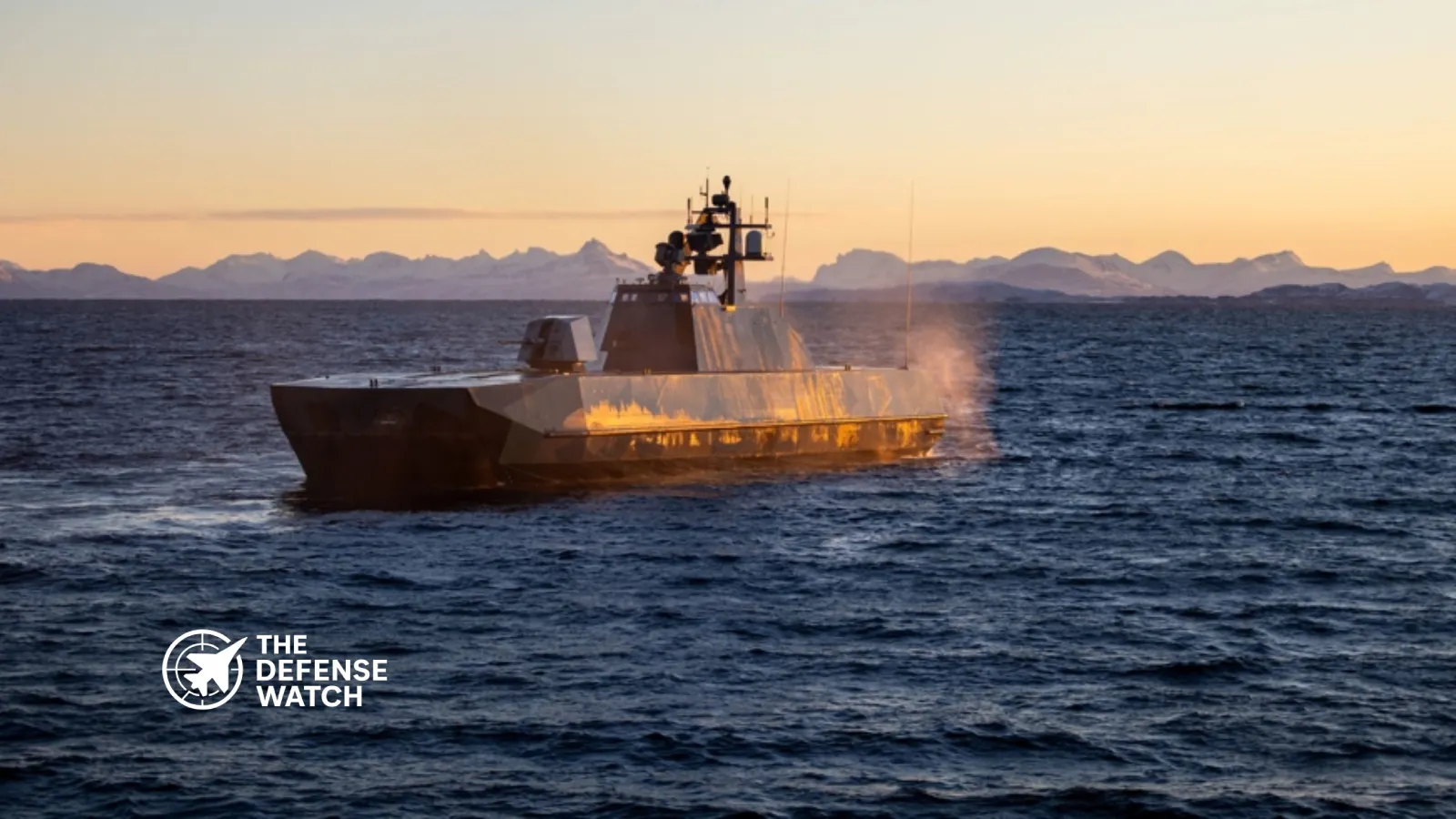
- ► Kongsberg awarded NOK 410 million contract by NDMA to upgrade Skjold-Class corvettes radar and sensors.
- ► Program focuses on enhancing situational awareness, detection range, and maritime combat effectiveness.
- ► Upgrades extend operational life of Norway high-speed coastal combat vessels.
- ► Contract supports Norway broader naval modernization and Arctic security strategy.
- ► Strengthens Kongsberg role as key supplier to Norwegian defense forces.
Kongsberg Secures Skjold-Class Corvettes Radar Upgrade To Boost Norway Coastal Defense
The Skjold-Class Corvettes radar upgrade is moving forward after Kongsberg signed a NOK 410 million contract with the Norwegian Defence Materiel Agency, marking a significant step in Norway naval modernization plan.
Under the agreement, Kongsberg will modernize radar and sensor systems aboard the Royal Norwegian Navy Skjold-Class corvettes. The contract, valued at approximately NOK 410 million, aims to enhance detection capabilities, improve situational awareness, and ensure the vessels remain operationally relevant in increasingly complex maritime environments.
According to the announcement, the work will focus on upgrading critical surveillance and sensor components to strengthen combat performance and extend service life.
Modernizing A Unique High-Speed Combat Platform
The Skjold-Class corvettes are among the fastest operational combat vessels in the world. Built for coastal operations, they combine stealth features, air-cushion technology, and advanced missile systems. Their role is centered on rapid response and sea denial in Norway coastal waters.
Improving radar and sensor performance directly enhances these missions. Modern naval warfare places heavy emphasis on early detection, electronic resilience, and networked operations. Upgraded sensors increase the ships ability to detect surface and aerial threats at greater ranges while improving target tracking and fire control integration.
This Skjold-Class Corvettes radar upgrade aligns with broader trends across NATO fleets, where legacy platforms are being modernized to counter advanced anti-ship missiles, drones, and electronic warfare threats.
Strengthening Norway Arctic And Coastal Posture
Norway strategic geography, including its long coastline and proximity to the High North, demands strong maritime domain awareness. The Royal Norwegian Navy relies on fast, agile vessels like the Skjold-Class to monitor and defend coastal approaches.
(adsbygoogle = window.adsbygoogle || []).push({});Upgrading radar and sensors enhances maritime surveillance in contested environments. It also improves interoperability with allied naval and air assets operating in the North Atlantic and Arctic regions.
The contract reflects Norway commitment to maintaining credible deterrence through incremental modernization rather than wholesale fleet replacement. As defense budgets rise across Europe, many nations are extending platform lifespans while integrating more capable electronics.
Kongsberg Expands Domestic Industrial Role
Kongsberg has long served as a core supplier to Norway defense establishment, providing missile systems, combat management systems, and maritime technologies. This new Skjold-Class Corvettes radar upgrade reinforces its role as a domestic industrial anchor for naval capabilities.
By keeping upgrades within national industry, Norway sustains sovereign control over sensitive technologies and ensures long-term supportability. That approach is increasingly important in a security environment marked by supply chain risks and geopolitical uncertainty.
(adsbygoogle = window.adsbygoogle || []).push({});The NOK 410 million contract also underscores steady investment in maintenance and modernization rather than headline-grabbing procurement programs. Incremental improvements often deliver substantial operational gains at lower cost and risk.
Operational Impact And Future Outlook
While detailed technical specifications were not publicly disclosed, radar and sensor upgrades typically involve improved signal processing, enhanced electronic counter-countermeasures, and integration with modern command and control networks.
For the Skjold-Class fleet, this means improved reaction time against fast-moving threats and better integration with Norway joint force structure. In practical terms, commanders gain clearer maritime pictures, stronger threat discrimination, and more reliable targeting data.
The Skjold-Class Corvettes radar upgrade therefore supports both national defense requirements and allied commitments. Norway plays a key role in NATO northern flank operations, and credible coastal combatants contribute to regional stability.
As naval warfare becomes more sensor-driven, investments in detection and electronic resilience can be as decisive as new hulls or weapons. This contract signals that Norway recognizes that shift.