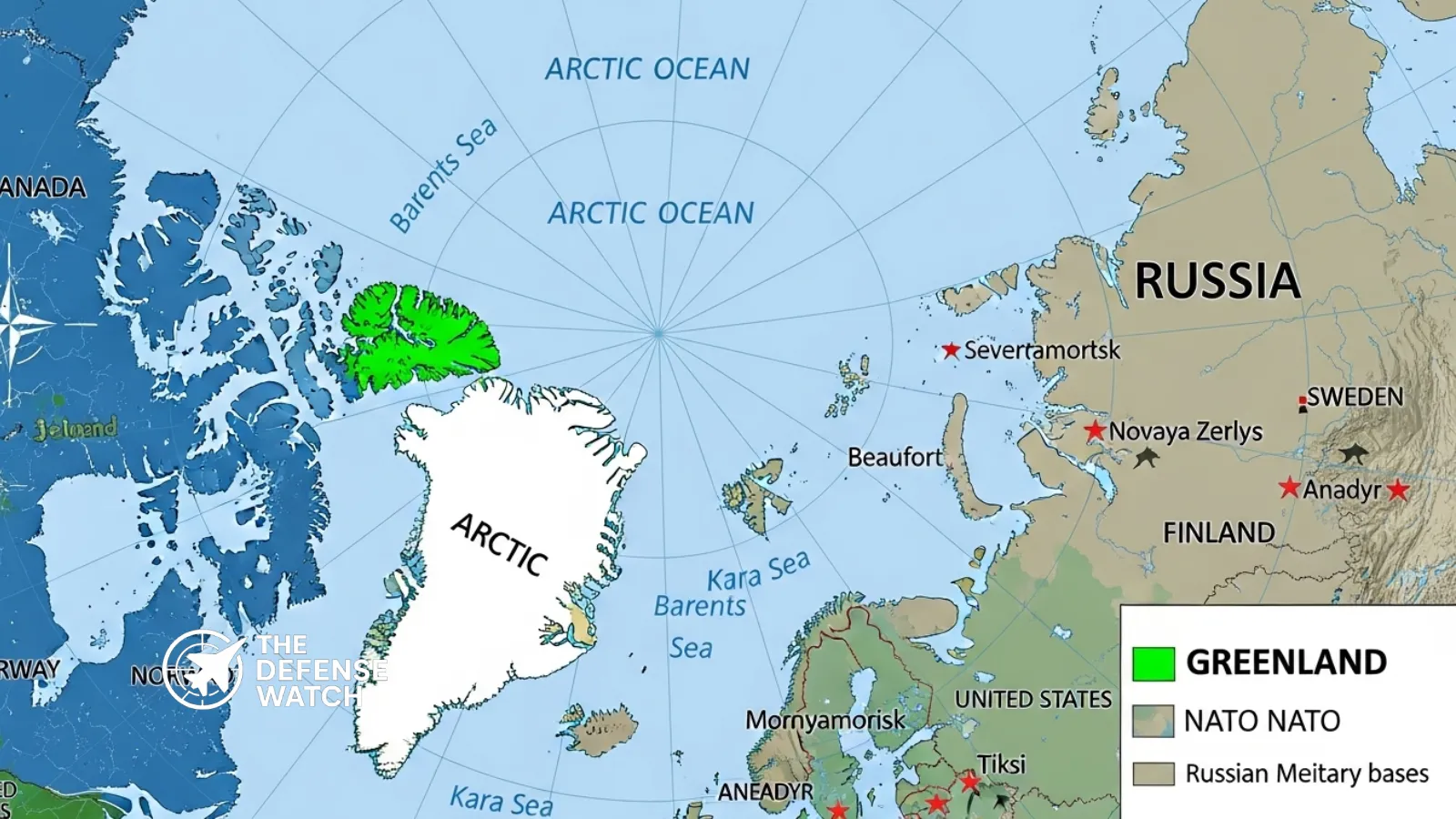
Russia Threatens Military Response As NATO Launches Arctic Mission
Russia threatens military response as NATO launches Arctic mission, signaling a sharp escalation in competition over one of the world’s most strategic regions. Moscow’s warning came after the alliance formally introduced its Arctic Sentry mission, aimed at boosting situational awareness, deterrence, and coordination among NATO members operating in the High North.
The statement reflects growing concern within the Kremlin over Western military activity near Russia’s northern flank, particularly in and around Greenland, which Moscow views as a critical geographic gateway between the Arctic and the North Atlantic.
Russian Foreign Minister Sergei Lavrov delivered the warning during a session of the State Duma, Russia’s lower house of parliament, making clear that any move to militarize Greenland or deploy infrastructure directed at Russia would trigger what he described as military technical countermeasures.
Moscow Responds To NATO’s Arctic Sentry Mission
NATO’s Arctic Sentry mission marks the alliance’s most structured Arctic focused initiative to date. According to NATO statements, the mission is designed to improve maritime and air domain awareness, enhance early warning capabilities, and support freedom of navigation across Arctic sea lanes that are becoming increasingly accessible due to climate change.
Russia sees the initiative differently. Lavrov told lawmakers that Western states were steadily transforming the Arctic into a zone of military rivalry, undermining previous commitments to keep the region stable and predictable.
He emphasized that Greenland, an autonomous territory within the Kingdom of Denmark, holds particular strategic importance. Its location enables control over key air and maritime routes linking North America, Europe, and the Arctic Ocean.
Greenland’s Strategic Role In Arctic Security
Greenland has long played a quiet but decisive role in transatlantic security. The United States operates Thule Space Base in northwest Greenland, a critical node for missile warning, space surveillance, and ballistic missile defense. While the base has existed for decades, Russia argues that any expansion of military infrastructure on the island would alter the regional balance.
As NATO increases coordination among Arctic allies such as the United States, Canada, Norway, and Denmark, Moscow has repeatedly warned against what it calls the creeping militarization of the region.
Russian defense analysts point to Greenland as a forward operating location that could support air operations, missile defense assets, and naval logistics in a crisis involving Russia’s Northern Fleet.
Russia’s Arctic Military Posture
Russia maintains the largest military footprint in the Arctic, including a network of reopened Soviet era bases, modernized airfields, radar installations, and air defense systems stretching from the Kola Peninsula to the Chukchi Sea.
The Northern Fleet, now designated as a separate military district, operates Russia’s most capable nuclear submarines and a significant portion of its sea based nuclear deterrent. Moscow argues that its Arctic deployments are defensive and necessary to protect economic interests, including energy projects and the Northern Sea Route.
However, NATO officials have consistently highlighted Russia’s growing Arctic capabilities, including long range bombers, hypersonic weapons, and advanced air defense systems, as a driver behind the alliance’s increased focus on the region.
NATO’s Rationale For Expanded Arctic Operations
NATO officials describe Arctic Sentry as a response to changing security dynamics rather than a provocation. The alliance notes that melting sea ice is opening new shipping routes and increasing military and commercial activity, raising the risk of accidents or miscalculation.
The mission builds on existing national efforts and multinational exercises, such as Cold Response and Dynamic Mongoose, by providing a more persistent framework for information sharing and operational coordination.
With Finland and Sweden now full NATO members, the alliance controls a larger share of Arctic territory, a shift that has further unsettled Moscow.
Escalating Rhetoric And Strategic Signaling
Russia’s warning of military technical countermeasures is deliberately vague, a common feature of Moscow’s strategic messaging. Such measures could range from additional troop deployments and missile systems to expanded naval and air patrols in the Arctic and North Atlantic.
Western defense officials are closely watching how rhetoric translates into action. Previous periods of tension have seen Russia conduct snap exercises, deploy advanced weapons systems, and increase bomber flights near NATO airspace.
The risk, analysts warn, lies not only in deliberate escalation but also in the potential for incidents involving aircraft or naval vessels operating in close proximity.
Implications For Arctic Stability
The Arctic has traditionally been viewed as a zone of cooperation, governed by institutions such as the Arctic Council. That framework has weakened since Russia’s invasion of Ukraine, with most Western states suspending cooperation with Moscow.
As military activity increases, the absence of robust dialogue mechanisms raises concerns about crisis management and transparency.
Defense experts argue that confidence building measures, communication channels, and clear rules of engagement will be critical to preventing miscalculation as NATO and Russia operate more frequently in overlapping areas.
What Comes Next
For now, NATO shows no sign of reversing course on Arctic Sentry, while Russia appears determined to signal resolve without crossing immediate red lines. The coming months will likely see increased exercises, surveillance activity, and political messaging from both sides.
Whether this competition remains contained or evolves into a more confrontational posture will depend on how both NATO and Russia balance deterrence with restraint in an increasingly accessible and contested Arctic.