Lockheed Martin Introduces Next-Generation Undersea Warfare Platform
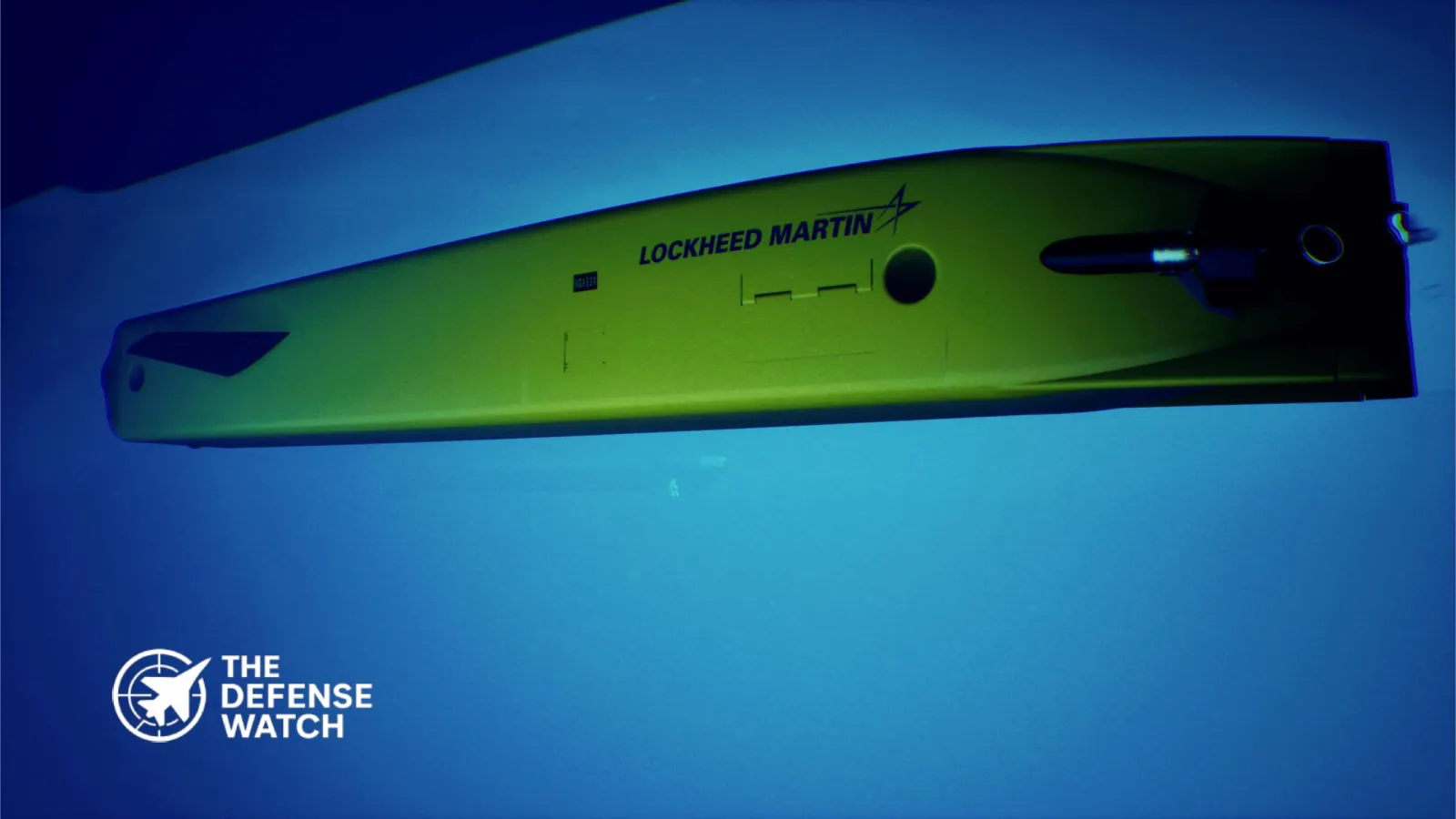
Lockheed Martin announced the Lamprey Multi-Mission Autonomous Undersea Vehicle (MMAUV) on February 9, 2026, introducing a transformative platform designed to enhance U.S. Navy undersea warfare capabilities. The internally-funded system represents a significant advancement in autonomous maritime technology, combining novel charging mechanisms with flexible mission capabilities.
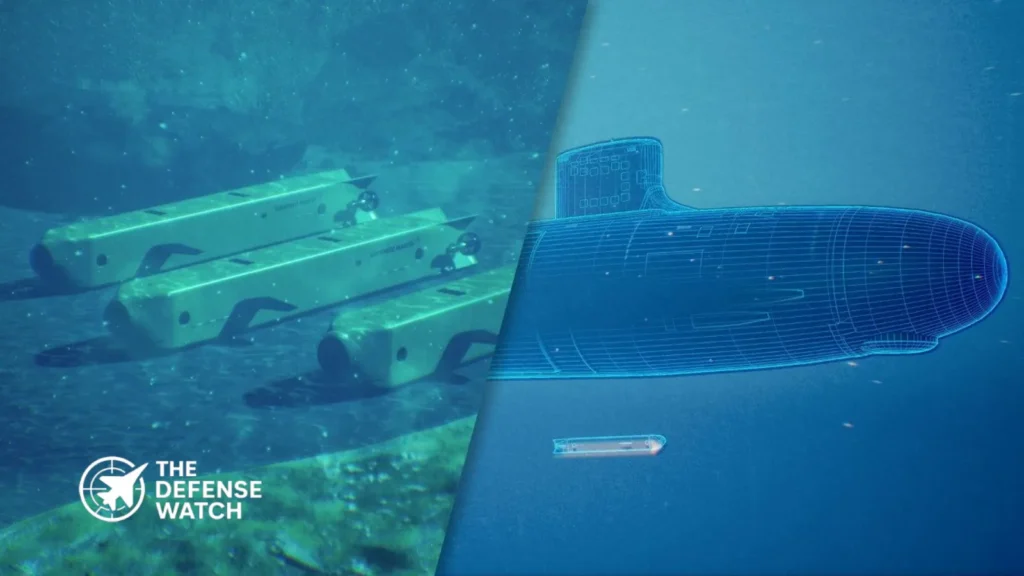
The Lamprey MMAUV employs a parasitic attachment system that enables the vehicle to dock onto host submarines or surface vessels without requiring modifications to the carrier platform. Once attached, the system utilizes built-in hydrogenators to recharge its batteries during transit, arriving in theater with full operational capacity. This approach addresses a critical challenge in unmanned undersea vehicle deployment: maintaining operational range while preserving stealth and reducing logistical footprint.
Paul Lemmo, vice president and general manager of Sensors, Effectors & Mission Systems at Lockheed Martin, emphasized the platform’s rapid development timeline. The company’s internal funding structure enabled accelerated iteration cycles, allowing engineers to deliver a multi-mission system capable of autonomous detection, disruption, deception, and engagement operations.
Technical Capabilities And Mission Profiles
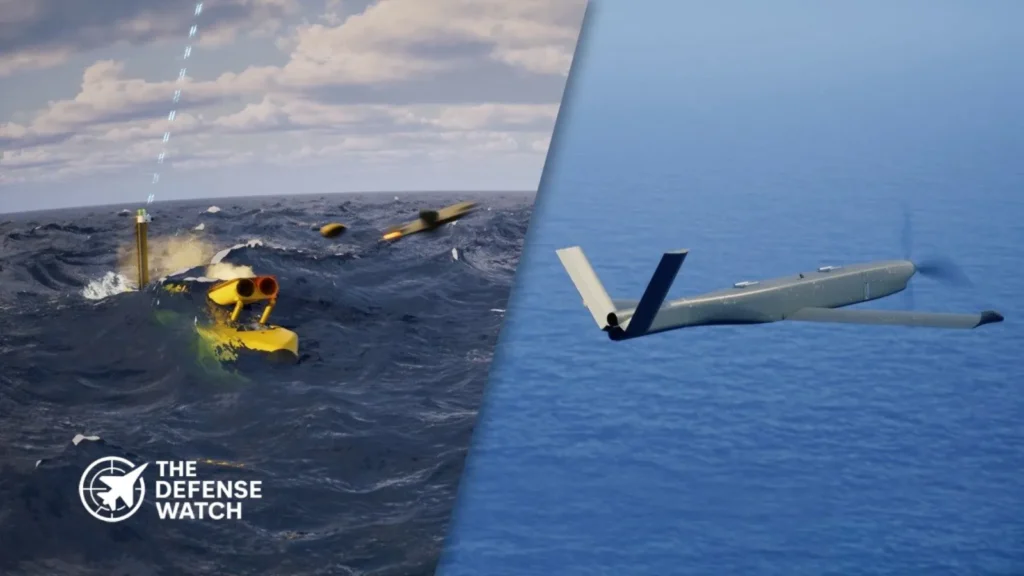
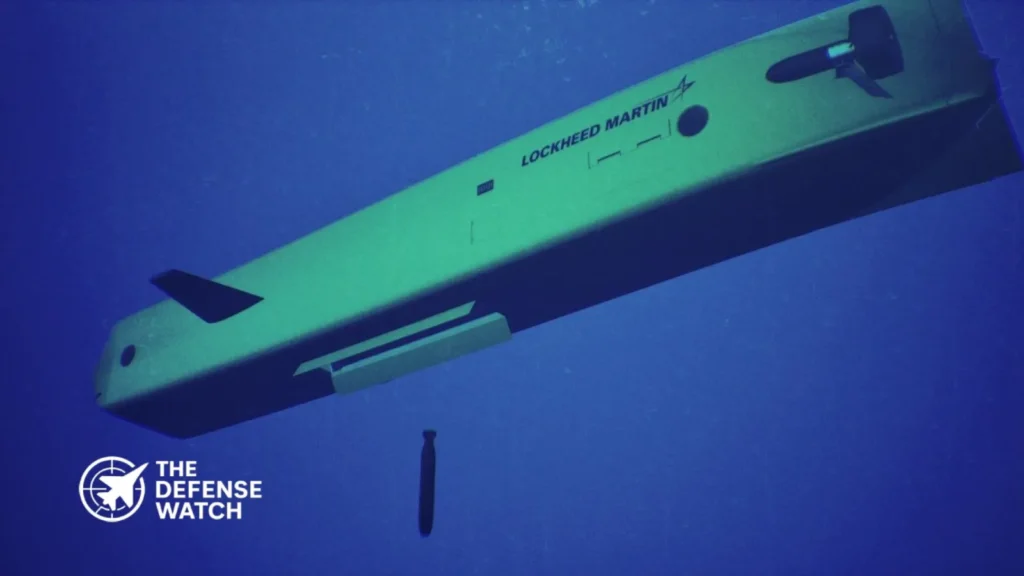
The Lamprey MMAUV features an open-architecture payload bay designed for mission-specific configuration. Operators can deploy anti-submarine torpedoes, unmanned aerial vehicle launchers, or specialized sensors depending on operational requirements. This modular approach enables rapid mission reconfiguration without extensive platform modifications.
The system supports two primary mission categories: Assured Access and Sea Denial. Assured Access operations include intelligence collection, persistent surveillance, and precision strike capabilities. Sea Denial missions encompass electronic disruption, decoy deployment, and kinetic engagement against maritime threats.
The vehicle’s autonomous capabilities extend beyond basic navigation. The Lamprey MMAUV can execute multi-intelligence collection, perform targeting operations, and deploy equipment to seafloor locations. These capabilities position the platform as a force multiplier for conventional submarine and surface operations in contested maritime environments.
Strategic Implications For Naval Operations
The Lamprey MMAUV addresses evolving challenges in undersea warfare, particularly in regions where traditional platforms face increasing counter-detection risks. By providing persistent autonomous presence at reduced operational costs compared to manned platforms, the system enables commanders to maintain area awareness and denial capabilities in high-threat environments.
The platform’s parasitic charging mechanism eliminates the need for dedicated support infrastructure in forward operating areas. Host platforms can transport multiple vehicles without significant modifications, enabling scalable deployment based on mission requirements. This capability proves particularly valuable in denied or contested waters where traditional refueling and maintenance operations pose unacceptable risks.
Lockheed Martin’s development leverages decades of undersea domain expertise, including work on submarine systems, acoustic sensors, and autonomous navigation technologies. The company has not disclosed specific performance parameters such as maximum range, depth ratings, or payload capacity, consistent with classification considerations for advanced military systems.
Dual-Mode Operations Enhance Tactical Flexibility
The Lamprey MMAUV’s ability to transition between Assured Access and Sea Denial configurations provides operational commanders with tactical flexibility. In Assured Access mode, the vehicle operates as a stealthy intelligence platform, gathering data and maintaining surveillance in areas where traditional intelligence assets cannot safely operate. The precision strike capability enables rapid response to emerging threats without exposing manned platforms.
Sea Denial operations leverage the platform’s electronic warfare systems and decoy capabilities. By deploying countermeasures and electronic disruption systems, the Lamprey MMAUV can complicate adversary targeting solutions and create tactical ambiguity. The kinetic attack capability provides commanders with a responsive strike option that minimizes risk to manned assets.
Development Timeline And Acquisition Status
Lockheed Martin developed the Lamprey MMAUV through internal research and development funding, bypassing traditional government acquisition timelines. This approach enabled rapid prototyping and testing without the regulatory oversight typical of Navy-funded programs. The company has not announced any current Navy contracts for production systems, though the platform’s capabilities align with stated service requirements for unmanned undersea vehicles.
The U.S. Navy has prioritized unmanned systems development as part of its distributed maritime operations concept. Service leaders have emphasized the need for affordable, expendable platforms capable of operating in high-threat environments where manned submarines face increased risk. The Lamprey MMAUV appears positioned to address these requirements, though formal evaluation and testing by Navy operators will determine actual procurement decisions.
Lockheed Martin has established a dedicated information portal at lockheedmartin.com/mmauv for additional technical details and capability demonstrations. The company announced the platform at its Palm Beach, Florida facility, which serves as a hub for maritime systems development and testing.
Industry Context And Competitive Landscape
The unveiling of the Lamprey MMAUV occurs amid intensifying global competition in undersea warfare technology. Multiple defense contractors are developing large displacement unmanned undersea vehicles capable of extended endurance operations. Boeing’s Orca Extra Large Unmanned Undersea Vehicle, currently under development for the Navy, represents a comparable platform with different technical approaches.
International competitors are also advancing autonomous undersea capabilities. Allied nations including Australia, the United Kingdom, and Japan have active development programs for unmanned maritime systems. China has demonstrated various unmanned underwater vehicles in recent years, though specific capabilities remain difficult to assess through open sources.
The Lamprey MMAUV’s parasitic charging system represents a distinct technical approach that differentiates it from competing platforms. Traditional unmanned undersea vehicles typically rely on onboard battery capacity or require surface charging operations. The ability to recharge while attached to host platforms extends operational range and reduces detectability during mission execution.
Future Development And Allied Integration
Lockheed Martin has positioned the Lamprey MMAUV as available to allied nations, consistent with U.S. export policy for undersea warfare systems. Integration with allied naval forces would require Foreign Military Sales approval and potential technology transfer agreements. The modular payload design may facilitate integration with allied weapons systems and sensors, though specific international partnerships have not been announced.
The company’s emphasis on open architecture suggests potential for capability growth through software updates and payload modifications. As threat environments evolve, operators could adapt the platform’s mission packages without extensive hardware redesign. This approach aligns with Navy preferences for upgradeable systems capable of maintaining relevance across multi-decade service lives.