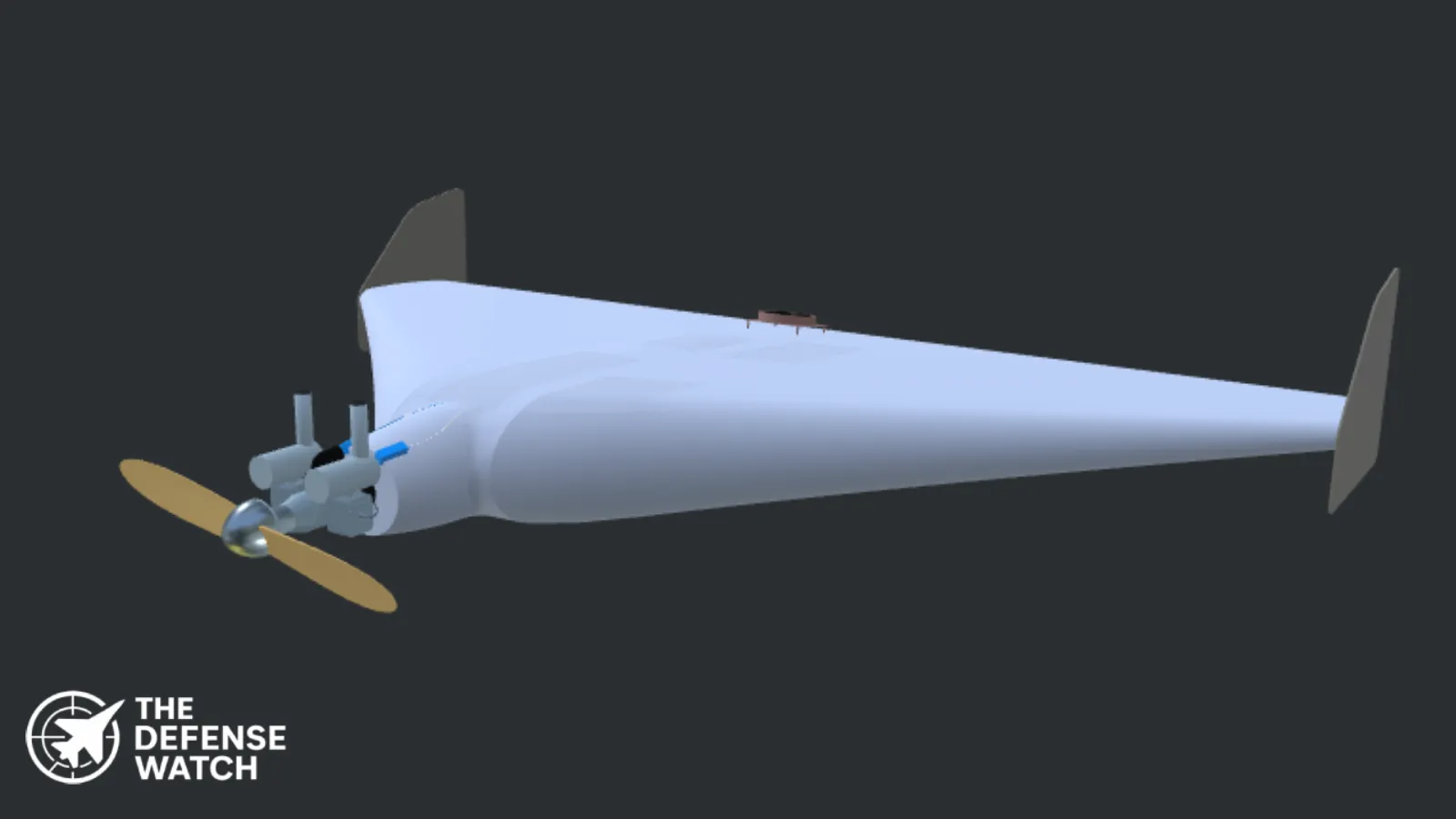
Russian BM 35 drone strike targets F 16 decoy in Ukraine
A Russian BM 35 kamikaze drone equipped with Starlink satellite communications struck an F 16 aircraft decoy at Kanatove airfield in Ukraine Kirovohrad region, according to open source imagery and official Ukrainian statements released this week.
Ukrainian authorities confirmed the strike damaged a decoy rather than an operational aircraft, underscoring Kyiv ongoing effort to protect high value assets through deception and base hardening as Western supplied fighter aircraft enter service.
Strike Details and Location
The incident occurred at Kanatove airfield, a long established Ukrainian Air Force base that has been repeatedly targeted by Russian long range weapons since the start of the full scale invasion.
Imagery circulating on social media and reviewed by independent open source analysts shows a loitering munition impacting a full scale F 16 decoy positioned on the apron. Ukrainian Air Force officials later acknowledged the strike and stated no operational aircraft were damaged.
The Russian Ministry of Defense did not issue a detailed public statement on the specific target, though Russian military affiliated channels claimed the attack demonstrated improved precision and terminal guidance for its unmanned systems.
BM 35 Drone and Starlink Integration
The BM 35 is assessed by analysts as a Russian long range kamikaze drone broadly comparable in role to the Shahed family used extensively during the conflict. Unlike earlier systems, recent variants appear to integrate commercial satellite communications terminals, including Starlink, to improve navigation resilience and operator control.
Defense analysts note that satellite connectivity allows drones to mitigate Ukrainian electronic warfare efforts that disrupt GPS and line of sight data links. However, there is no independent confirmation regarding the exact configuration used in this strike.
Starlink operator SpaceX has repeatedly stated that its services are restricted for offensive military use, and that mitigation measures are in place to prevent misuse. How Russian forces obtain or adapt terminals remains unclear.
Ukrainian Use of F 16 Decoys
Ukraine has increasingly deployed realistic aircraft decoys at airfields to draw fire away from operational platforms. With F 16 fighters now entering Ukrainian service, these decoys are intended to complicate Russian targeting and force Moscow to expend expensive precision munitions.
Ukrainian defense officials have emphasized that decoys are a cost effective countermeasure that reduce attrition and preserve combat power. The Kanatove incident appears to validate that approach, with the drone striking a non operational target.
Operational and Strategic Implications
The strike highlights two parallel trends shaping the air war over Ukraine.
(adsbygoogle = window.adsbygoogle || []).push({});First, Russia continues to adapt its unmanned systems with improved guidance, communications, and autonomy. Second, Ukraine is relying on deception, dispersal, and layered air defense to offset Russia numerical advantage in strike weapons.
Military analysts caution that neither side gains a decisive advantage from isolated incidents. Instead, the conflict remains defined by rapid cycles of adaptation, counter adaptation, and resource constraints.
What Comes Next
Ukrainian officials say additional passive defenses will be deployed around airbases hosting Western aircraft. These include hardened shelters, rapid relocation procedures, and expanded use of decoys.
At the same time, NATO observers are closely monitoring Russian experimentation with satellite enabled drones, particularly their resilience against jamming and cyber disruption.