- The UK confirmed that US strikes from British bases are limited to defensive operations targeting Iranian missile infrastructure.
- Permissions for foreign military operations from UK bases are assessed case by case under legal and policy review.
- The policy reflects London’s effort to support allies while avoiding direct participation in offensive operations against Iran.
- Bases such as RAF Fairford and Diego Garcia remain key launch points for US long range strike aircraft in Middle East operations.
- The arrangement underscores both the depth and the limits of US UK military cooperation during the ongoing regional crisis.
UK Limits US Strikes From British Bases
UK limits on US strikes from British bases have been formally confirmed by the government, clarifying that American forces may use British military facilities only for narrowly defined defensive operations against Iranian missile infrastructure.
The clarification came through parliamentary responses from the UK Ministry of Defence, which stated that any foreign military use of British bases is assessed individually against legal and policy requirements.
British officials stressed that the current authorization allows US operations only to target missile launchers or storage facilities linked to Iranian attacks on regional partners.
The Big Picture
US access to British bases has long been a cornerstone of transatlantic defense cooperation. Facilities such as RAF Fairford in Gloucestershire and Diego Garcia in the Indian Ocean have supported US air campaigns across the Middle East, including operations in Iraq and Afghanistan.
The current policy emerges amid escalating tensions following US and Israeli strikes on Iranian targets and subsequent Iranian missile and drone attacks across the Gulf region.
For NATO allies, the issue highlights a persistent balancing act. Washington relies on forward basing in allied countries to project airpower into the Middle East. European governments must weigh alliance commitments against domestic political and legal constraints.
Britain’s decision illustrates how allied governments increasingly define the scope of cooperation in modern coalition operations.
What’s Happening
The UK Ministry of Defence confirmed that the United States may conduct limited defensive strikes from British territory under a specific authorization framework.
Defense Minister Al Carns told Parliament that permissions for foreign forces to use UK bases are evaluated on a case by case basis. Each decision must meet legal standards and policy considerations established by the British government.
The current agreement permits US strikes aimed at Iranian missile facilities linked to attacks on regional allies. Officials described the authorization as narrowly defined and limited in scope.
Carns declined to confirm whether London approves individual strike targets, citing operational security concerns. He also ruled out releasing a list of US strikes conducted from British bases.
The policy reflects the British government’s position that its support for allied operations must align with international law and the principle of collective self defense.
Why It Matters
Access to overseas bases remains critical to US global power projection. Long range bombers and strike aircraft operating from the United Kingdom can reach the Middle East without relying exclusively on regional basing.
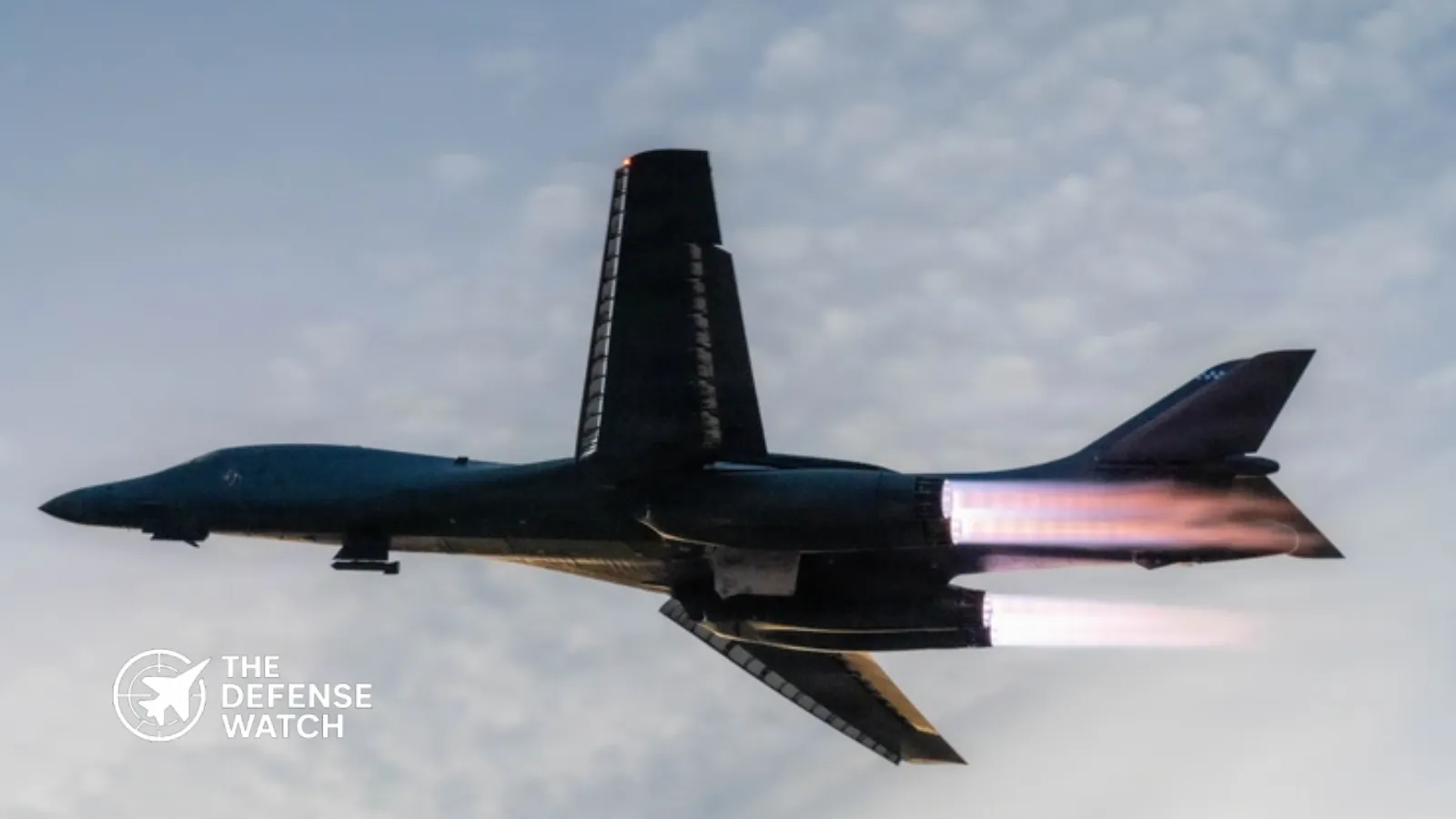
RAF Fairford, in particular, frequently hosts deployments of US strategic bombers such as the B 1B Lancer and B 52 Stratofortress during major air campaigns.
By limiting US strikes from British bases to defensive missions, London signals political support for allied security operations while avoiding deeper involvement in offensive actions against Iran.
This distinction carries legal and diplomatic significance. British officials have emphasized that their role centers on protecting allies and preventing missile attacks rather than participating in regime change or broader military escalation.
Strategic Implications
The policy reflects a calibrated approach to alliance management.
Allowing US strikes from British bases maintains operational flexibility for American forces while preserving the United Kingdom’s ability to shape the scope of its involvement.
For the United States, forward basing in the UK provides several operational advantages.
First, it ensures secure and well protected infrastructure for bomber deployments and logistics. Second, it allows rapid reinforcement of operations across Europe, Africa, and the Middle East. Third, it reinforces the strategic credibility of NATO’s transatlantic defense posture.
For Britain, the policy demonstrates continued commitment to the US alliance while reinforcing the government’s authority over how its territory is used in military operations.
Competitor View
Iran is likely to interpret the use of British bases for US strikes as evidence of broader Western alignment against its regional military activities.
Tehran has historically viewed facilities such as Diego Garcia as central nodes in US power projection across the Middle East and Indian Ocean.
Russia and China may also analyze the situation through the lens of alliance cohesion. Both countries have long argued that US global basing networks allow Washington to conduct long range strike operations far from its own territory.
The UK’s decision to impose restrictions could be viewed by these states as evidence that allied governments still exercise independent control over how their territory supports US military operations.
What To Watch Next
Several factors will shape how the policy evolves.
First, the operational tempo of US strikes targeting Iranian missile infrastructure could influence political debate in Britain.
Second, additional Iranian missile or drone attacks in the region could increase pressure on Western governments to expand defensive measures.
Third, future parliamentary scrutiny may focus on transparency around how UK bases are used in allied military operations.
The broader trajectory of the Middle East conflict will ultimately determine whether the current authorization remains limited or expands.
Capability Gap
The policy directly addresses a regional security gap created by Iran’s expanding missile arsenal.
Iran has developed a wide range of short and medium range ballistic missiles capable of targeting US forces and allied states across the Gulf region.
Destroying missile launchers and storage depots before launch represents one of the few options available to limit large scale missile attacks.
However, such operations also face constraints. Missile launchers are mobile, dispersed, and often concealed within hardened facilities or civilian infrastructure.
As a result, defensive strikes alone may reduce but not eliminate the threat posed by Iran’s missile capabilities.
The Bottom Line
The UK has reaffirmed alliance support while maintaining strict limits on US strikes from British bases, balancing operational cooperation with legal and political oversight.
Get real time update about this post category directly on your device, subscribe now.