

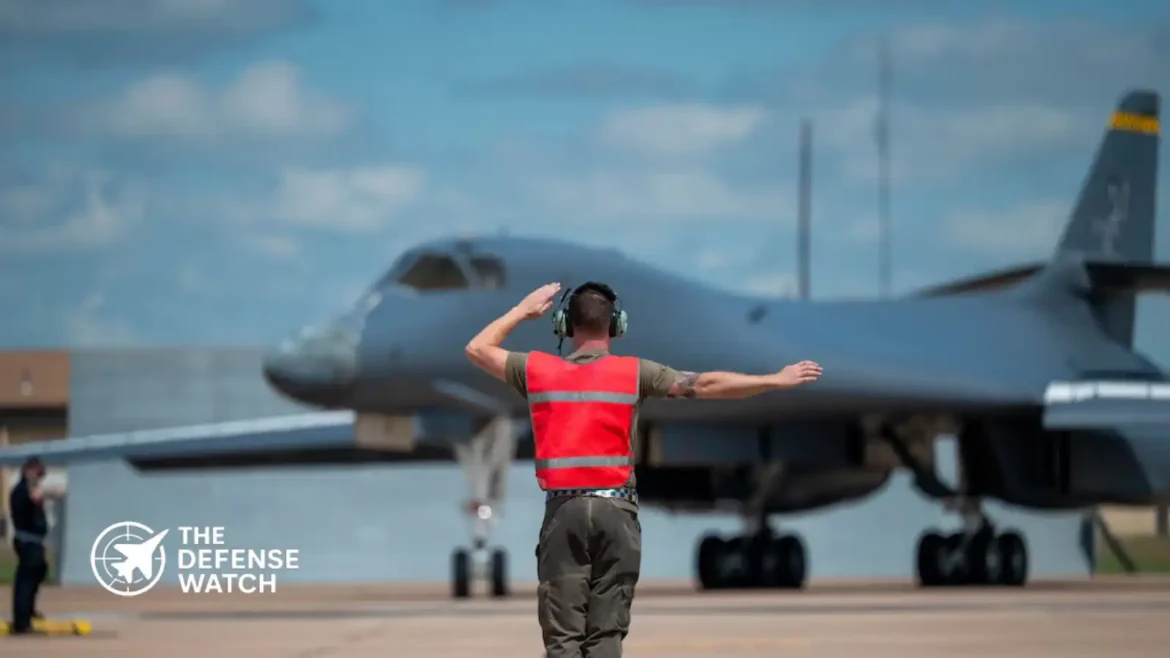
U.S. Bombers Leave RAF Fairford Amid Security Concerns
The U.S. Air Force has returned all bombers deployed to RAF Fairford in the United Kingdom to their home stations in the United States, ending the forward bomber presence at the British base after a security incident near the installation.
The Pentagon confirmed the redeployment on October 4, saying the movement had been withheld from real-time disclosure for operational security reasons. The statement did not identify the specific aircraft involved, but independent reporting and aircraft tracking indicate that approximately 12 B-1B Lancer bombers had been operating from Fairford.
The departure followed a counterterrorism investigation launched after suspicious vehicles were reported near the base on September 27. British authorities subsequently arrested five men and later detained a 25-year-old dual British-Iranian national in London in connection with the investigation. The second suspect was released on bail on October 3, while the five original suspects had already been placed on police bail.
The security investigation remains separate from the bomber decision
British counterterrorism authorities have confirmed that the September 27 incident involved three vehicles reported to be travelling toward RAF Fairford. Armed police responded, five men were arrested, and an exclusion zone was established while specialist teams examined the vehicles.
The investigation did not find improvised explosive devices. Police said a quantity of petrol was recovered, while the five suspects remained under investigation. Around 85 households were temporarily evacuated during the initial operation.
On October 1, Counter Terrorism Policing announced another arrest involving a 25-year-old dual UK-Iranian national. Authorities said they were examining multiple lines of inquiry, including possible foreign state involvement. The individual was subsequently released on bail.
That distinction is important. British authorities have not publicly established that Iran ordered or directed the activity near Fairford. Prime Minister Andy Burnham has reportedly referred to strong indications of Iranian involvement, while Iran has denied any connection to the alleged plot. The investigation remains active.
The Pentagon has also not publicly stated that the bomber redeployment was a direct response to the investigation. The timing strongly connects the two developments, but the available public evidence does not establish whether the aircraft were withdrawn specifically because of the incident or whether other operational factors were involved.
Why RAF Fairford mattered to the bomber force
RAF Fairford is not a permanent B-1B operating base. It is a U.S. forward operating location that can support bomber deployments, exercises and contingency operations in Europe.
The U.S. Air Force has repeatedly used the Gloucestershire installation for Bomber Task Force missions involving B-1B, B-2 and B-52 aircraft. Official Air Force material describes Fairford as a location capable of supporting large bomber deployments and integration with NATO allies and partners.
That forward position can reduce the distance between U.S. bomber crews and potential operating areas compared with launching every mission from the continental United States. It also provides opportunities for coordination with European allies and for maintaining a visible U.S. long-range strike presence.
The base has also been used extensively for training and readiness missions. In 2025, B-52H Stratofortress aircraft deployed from Barksdale Air Force Base to Fairford for Exercise Cobra Warrior, demonstrating that the installation remains an important part of the U.S. bomber deployment architecture in Europe.
The B-1B can operate without a permanent forward base
The withdrawal does not remove the B-1B from the U.S. long-range strike inventory or prevent the aircraft from conducting missions beyond North America.
The Air Force has demonstrated the ability to conduct long-range bomber operations directly from U.S. bases. During Operation Epic Fury in March 2026, B-1B aircraft conducted missions against targets in Iran and returned to the continental United States. U.S. Central Command publicly documented B-1B operations associated with the campaign.
That operating model provides flexibility, but it comes with a tradeoff. Forward basing can shorten transit requirements and simplify access to a theater, while continental U.S. operations reduce the exposure of aircraft and personnel at overseas locations but require longer-range missions and associated tanker, command-and-control and logistical support.
The Pentagon has emphasized that U.S. bomber crews remain capable of conducting precision global strike missions from the continental United States. That statement suggests Washington does not regard the departure from Fairford as a loss of the underlying bomber capability, although the forward positioning option has temporarily been removed.
A security problem for a high-value forward operating location
The Fairford episode illustrates a wider vulnerability associated with deploying high-value aircraft overseas during a conflict.
A bomber base does not need to be attacked successfully to impose an operational cost. Increased security measures, temporary evacuations, surveillance requirements and the possibility of hostile activity around access routes can affect how commanders assess the value of maintaining aircraft at a particular location.
For the United States, the decision also demonstrates the flexibility built into the bomber force. B-1B aircraft can relocate between operating locations, while the United States retains the ability to conduct long-range missions from its home bases.
For Britain, the incident highlights the security demands associated with hosting U.S. strike aircraft during an active conflict. RAF Fairford has historically supported U.S. bomber operations, but the concentration of high-value aircraft at a relatively small number of forward locations can make those facilities important targets for hostile intelligence collection, disruption or attack planning.
The available evidence does not establish the full intent behind the September 27 incident, and the British investigation remains ongoing. What is confirmed is narrower but significant: five men were arrested after suspicious vehicles were reported near the base, a sixth person was subsequently arrested and released on bail, and all U.S. bombers deployed at Fairford have now returned to the United States.
The immediate operational question is therefore not whether the United States still possesses a long-range bomber option. It does. The more relevant question is when and under what security conditions Washington will again use RAF Fairford or another European location as a forward bomber hub.

UK F-35B Procurement Reaches First Major Milestone
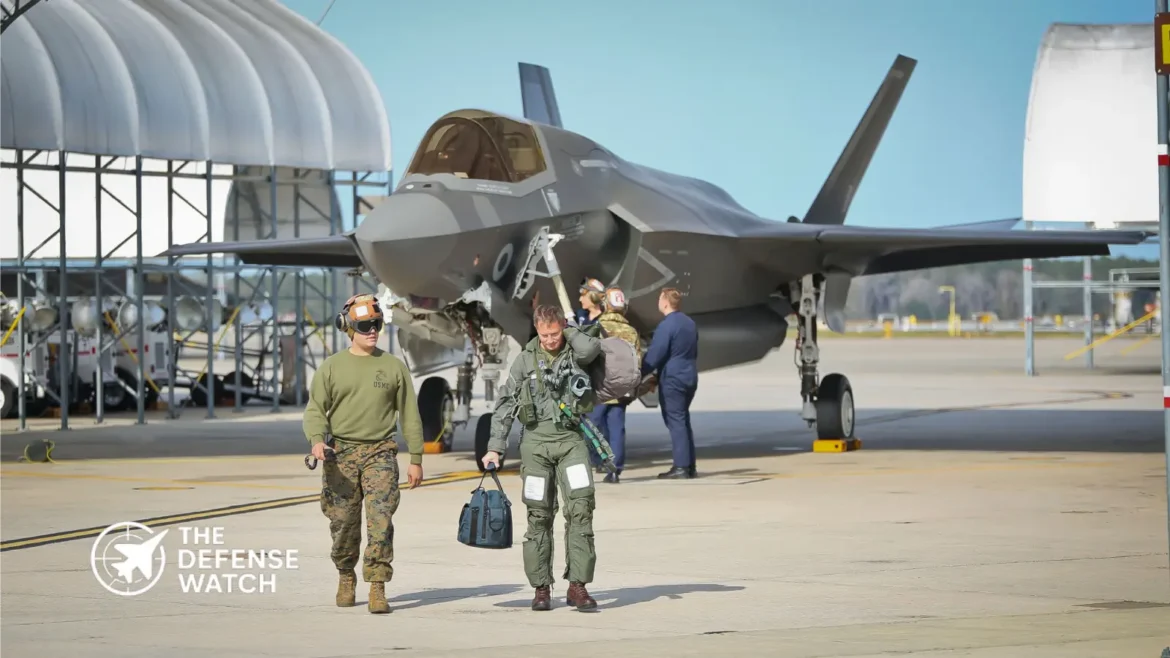
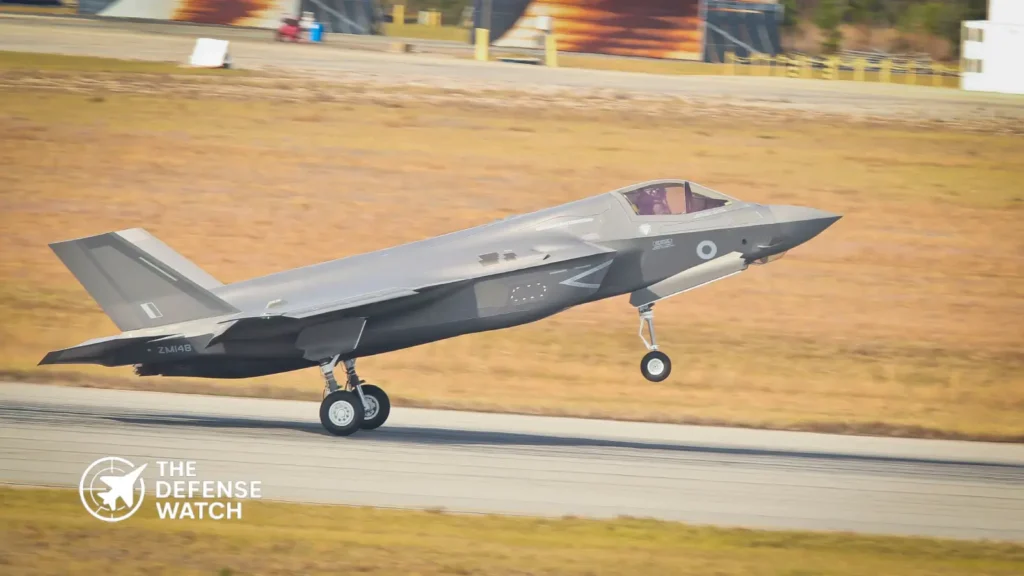
UK F-35B procurement has entered a new phase after the delivery of the 46th, 47th and 48th aircraft, completing Britain’s first contracted batch of fifth-generation fighters. The milestone marks the end of the initial acquisition phase for the Royal Air Force and Royal Navy Lightning Force.
- The United Kingdom has received aircraft numbers 46, 47 and 48, completing its initial F-35B procurement phase.
- The three jets arrived at RAF Marham, home of Britain’s Lightning Force.
- The F-35B is jointly operated by the Royal Air Force and Royal Navy for land and carrier operations.
- London still states a long-term goal of acquiring up to 138 F-35 aircraft.
- No confirmed timetable has been announced for purchases beyond the first 48 jets.
The aircraft were delivered to RAF Marham in Norfolk, the main operating base for the UK fleet. Britain’s F-35B force is jointly manned by the RAF and Royal Navy and forms the core of the country’s carrier air wing aboard the Queen Elizabeth-class aircraft carriers.
Why The F-35B Matters To Britain
The F-35B variant is the short takeoff and vertical landing model designed for operations from smaller decks and austere runways. That makes it essential to UK carrier strike operations because Britain’s aircraft carriers were built without catapult launch systems.
In practical terms, the jet gives London a modern stealth aircraft able to deploy from sea without relying on foreign bases. That provides political flexibility during crises and supports NATO maritime operations in Europe, the Mediterranean, and beyond.
For the United States and allied planners, Britain’s F-35B fleet is also valuable because it adds another carrier-capable fifth-generation force that can integrate with U.S. Marine Corps and NATO air assets.
Procurement Complete, But Bigger Questions Remain
While the first phase of UK F-35B procurement is now complete, future numbers remain unresolved. Successive British governments have maintained a headline ambition of 138 F-35 aircraft over the life of the program, but no firm contract has yet been announced for the next batch.

Image Source: Royal Air Force That matters because fleet size determines operational tempo. A carrier may deploy 24 or more aircraft during high-end operations, but training, maintenance cycles, and homeland requirements reduce the number available at any given time.
A fleet of 48 delivered aircraft, with one previously lost in a 2021 crash, gives Britain meaningful capability, but limited depth for sustained simultaneous operations.
Upgrade Delays Could Shape Combat Value
Another issue is software modernization. Wider F-35 Block 4 upgrades are needed for expanded weapons integration and future capability growth. British weapons such as Meteor air-to-air missiles and SPEAR 3 precision strike weapons are tied to that roadmap.
That means future combat power depends not only on buying more jets, but on receiving timely upgrades, weapons clearance, and sustainment support.
Strategic Outlook
The completion of the first UK F-35B procurement phase is a clear achievement for London, but it is also a decision point. Britain must now choose whether to expand its carrier air wings, diversify with more land-based fighters, or shift resources toward future programs such as GCAP.
For now, the delivery of jet number 48 confirms that the UK remains one of the leading non-U.S. operators of the F-35 and a key contributor to NATO airpower.

- UK deploys its largest number of combat aircraft to the Middle East in 15 years.
- Deployment includes advanced RAF fighter jets and support aircraft for sustained operations.
- Move aims to strengthen deterrence and support allied operations in a volatile region.
- Deployment reflects ongoing UK military commitments and rapid response capability.
- Marks a significant expansion of British air power projection beyond Europe.
UK Deploys Most Jets To Middle East In 15 Years
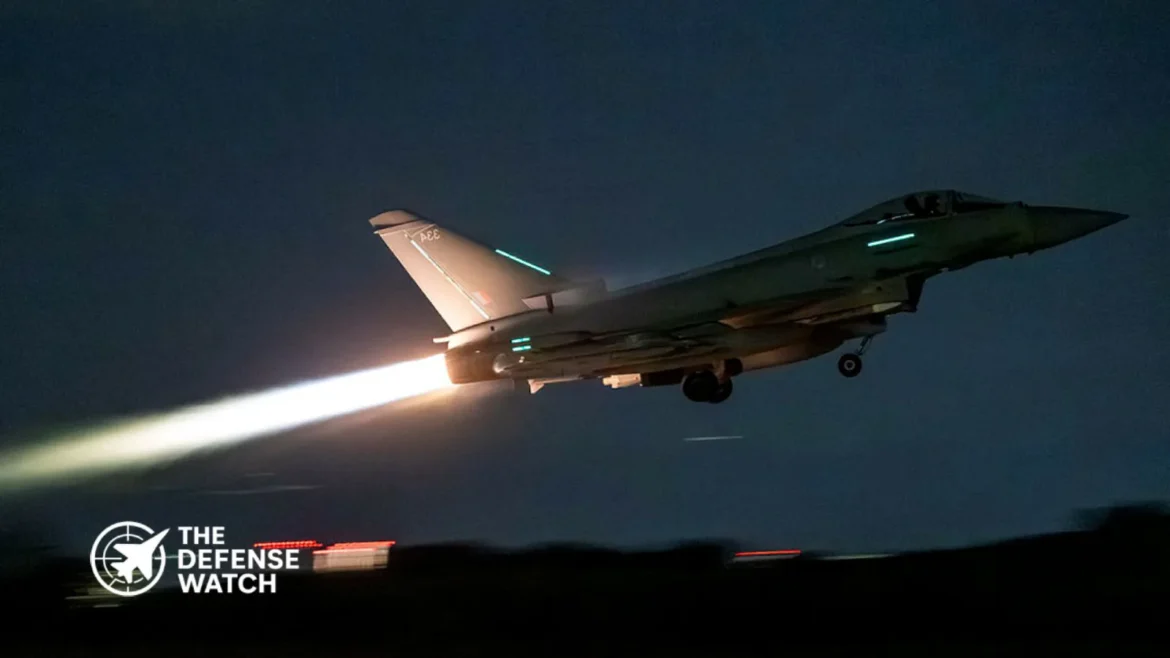
The UK deploys most jets to Middle East in 15 years, significantly expanding Royal Air Force operations in the region as part of a broader effort to reinforce allied presence and maintain regional stability.
The Big Picture
Britain’s latest air deployment reflects a wider shift in NATO and allied force posture toward persistent presence in strategically critical regions. The Middle East remains central to global energy flows, maritime security, and counterterrorism operations.
The United Kingdom has steadily reoriented its military strategy toward expeditionary operations since the release of its Integrated Review. Forward basing, rapid deployment, and coalition interoperability now define British defense planning.
This surge in aircraft deployment also aligns with broader Western efforts to maintain operational flexibility across multiple theaters, including Eastern Europe and the Indo-Pacific, without overcommitting ground forces.
What’s Happening
The Royal Air Force has deployed its largest contingent of jets to the Middle East in over 15 years, according to official reporting. The deployment includes frontline combat aircraft supported by tanker and surveillance platforms, enabling sustained air operations across extended distances.
The aircraft are operating from established UK and allied bases in the region. These locations provide strategic reach across key operational zones, including the Persian Gulf and surrounding airspace.
The deployment comes amid heightened regional tensions and ongoing military operations involving coalition forces. British aircraft are expected to support a mix of missions, including air policing, deterrence patrols, and potential strike operations if required.
Why It Matters
The decision to deploy the largest RAF air package in 15 years signals a clear intent to reinforce deterrence without escalating to large-scale ground deployments.
Air power offers flexibility. Fighter jets can conduct surveillance, intercept hostile aircraft, and deliver precision strikes with minimal footprint. This makes them a preferred tool in politically sensitive environments where escalation risks must remain controlled.
The presence of advanced aircraft also enhances interoperability with US and allied forces already operating in the region. Joint operations rely heavily on shared air assets, data links, and coordinated command structures.
Strategic Implications
The expanded RAF presence strengthens coalition air dominance in the Middle East. It ensures rapid response capability against emerging threats, including missile attacks, drone incursions, and maritime security challenges.
The deployment also reinforces the UK’s role as a key security partner in the region. By committing high-end air assets, London signals reliability to allies while maintaining influence in regional security discussions.
From a deterrence standpoint, the visible presence of combat aircraft complicates adversary planning. It reduces the likelihood of opportunistic actions by signaling readiness and capability.
Competitor View
Regional actors such as Iran are likely to interpret the increased air presence as part of a broader Western effort to contain and monitor its military activities. Increased air patrols and surveillance flights can directly impact operational freedom in contested airspace.
Russia, which maintains a military footprint in parts of the Middle East, may view the deployment through the lens of NATO expansion of influence. However, the RAF’s presence remains aligned with coalition operations rather than unilateral action.
China, while not a direct military actor in the region, continues to monitor Western force deployments closely as part of its global strategic assessment.
What To Watch Next
Operational tempo will provide the clearest indicator of the deployment’s intent. Increased sortie rates, joint exercises, or expanded mission sets could signal a longer-term commitment.
Future rotations of aircraft and personnel will also reveal whether this surge represents a temporary response or a sustained posture shift.
Defense planners will watch for integration with US-led command structures, particularly in areas such as air defense coordination and intelligence sharing.
Capability Gap
The deployment addresses a key gap in rapid-response air power availability in the Middle East. While the UK maintains a global presence, sustained high-tempo operations require forward-deployed assets.
However, limitations remain. Air power alone cannot secure territory or address underlying political instability. It must operate as part of a broader strategy that includes diplomacy and regional partnerships.
Logistical constraints also shape the deployment. Sustaining large numbers of aircraft overseas requires significant tanker support, maintenance capacity, and secure basing arrangements.
The Bottom Line
The UK’s largest jet deployment to the Middle East in 15 years underscores a renewed focus on air power as a flexible and credible tool for deterrence and regional stability.
- The UK confirmed that US strikes from British bases are limited to defensive operations targeting Iranian missile infrastructure.
- Permissions for foreign military operations from UK bases are assessed case by case under legal and policy review.
- The policy reflects London’s effort to support allies while avoiding direct participation in offensive operations against Iran.
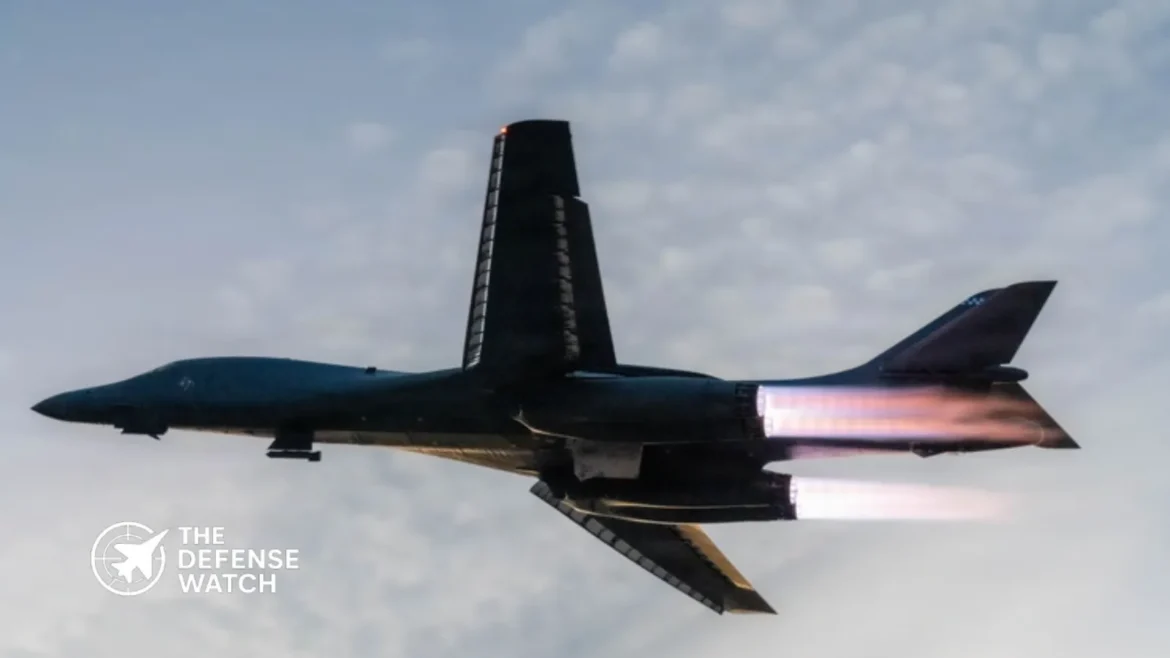
- Bases such as RAF Fairford and Diego Garcia remain key launch points for US long range strike aircraft in Middle East operations.
- The arrangement underscores both the depth and the limits of US UK military cooperation during the ongoing regional crisis.
UK Limits US Strikes From British Bases
UK limits on US strikes from British bases have been formally confirmed by the government, clarifying that American forces may use British military facilities only for narrowly defined defensive operations against Iranian missile infrastructure.
The clarification came through parliamentary responses from the UK Ministry of Defence, which stated that any foreign military use of British bases is assessed individually against legal and policy requirements.
British officials stressed that the current authorization allows US operations only to target missile launchers or storage facilities linked to Iranian attacks on regional partners.
The Big Picture
US access to British bases has long been a cornerstone of transatlantic defense cooperation. Facilities such as RAF Fairford in Gloucestershire and Diego Garcia in the Indian Ocean have supported US air campaigns across the Middle East, including operations in Iraq and Afghanistan.
The current policy emerges amid escalating tensions following US and Israeli strikes on Iranian targets and subsequent Iranian missile and drone attacks across the Gulf region.
For NATO allies, the issue highlights a persistent balancing act. Washington relies on forward basing in allied countries to project airpower into the Middle East. European governments must weigh alliance commitments against domestic political and legal constraints.
Britain’s decision illustrates how allied governments increasingly define the scope of cooperation in modern coalition operations.
What’s Happening
The UK Ministry of Defence confirmed that the United States may conduct limited defensive strikes from British territory under a specific authorization framework.
Defense Minister Al Carns told Parliament that permissions for foreign forces to use UK bases are evaluated on a case by case basis. Each decision must meet legal standards and policy considerations established by the British government.
The current agreement permits US strikes aimed at Iranian missile facilities linked to attacks on regional allies. Officials described the authorization as narrowly defined and limited in scope.
Carns declined to confirm whether London approves individual strike targets, citing operational security concerns. He also ruled out releasing a list of US strikes conducted from British bases.
The policy reflects the British government’s position that its support for allied operations must align with international law and the principle of collective self defense.
Why It Matters
Access to overseas bases remains critical to US global power projection. Long range bombers and strike aircraft operating from the United Kingdom can reach the Middle East without relying exclusively on regional basing.
RAF Fairford, in particular, frequently hosts deployments of US strategic bombers such as the B 1B Lancer and B 52 Stratofortress during major air campaigns.
By limiting US strikes from British bases to defensive missions, London signals political support for allied security operations while avoiding deeper involvement in offensive actions against Iran.
This distinction carries legal and diplomatic significance. British officials have emphasized that their role centers on protecting allies and preventing missile attacks rather than participating in regime change or broader military escalation.
Strategic Implications
The policy reflects a calibrated approach to alliance management.
Allowing US strikes from British bases maintains operational flexibility for American forces while preserving the United Kingdom’s ability to shape the scope of its involvement.
For the United States, forward basing in the UK provides several operational advantages.
First, it ensures secure and well protected infrastructure for bomber deployments and logistics. Second, it allows rapid reinforcement of operations across Europe, Africa, and the Middle East. Third, it reinforces the strategic credibility of NATO’s transatlantic defense posture.
For Britain, the policy demonstrates continued commitment to the US alliance while reinforcing the government’s authority over how its territory is used in military operations.
Competitor View
Iran is likely to interpret the use of British bases for US strikes as evidence of broader Western alignment against its regional military activities.
Tehran has historically viewed facilities such as Diego Garcia as central nodes in US power projection across the Middle East and Indian Ocean.
Russia and China may also analyze the situation through the lens of alliance cohesion. Both countries have long argued that US global basing networks allow Washington to conduct long range strike operations far from its own territory.
The UK’s decision to impose restrictions could be viewed by these states as evidence that allied governments still exercise independent control over how their territory supports US military operations.
What To Watch Next
Several factors will shape how the policy evolves.
First, the operational tempo of US strikes targeting Iranian missile infrastructure could influence political debate in Britain.
Second, additional Iranian missile or drone attacks in the region could increase pressure on Western governments to expand defensive measures.
Third, future parliamentary scrutiny may focus on transparency around how UK bases are used in allied military operations.
The broader trajectory of the Middle East conflict will ultimately determine whether the current authorization remains limited or expands.
Capability Gap
The policy directly addresses a regional security gap created by Iran’s expanding missile arsenal.
Iran has developed a wide range of short and medium range ballistic missiles capable of targeting US forces and allied states across the Gulf region.
Destroying missile launchers and storage depots before launch represents one of the few options available to limit large scale missile attacks.
However, such operations also face constraints. Missile launchers are mobile, dispersed, and often concealed within hardened facilities or civilian infrastructure.
As a result, defensive strikes alone may reduce but not eliminate the threat posed by Iran’s missile capabilities.
The Bottom Line
The UK has reaffirmed alliance support while maintaining strict limits on US strikes from British bases, balancing operational cooperation with legal and political oversight.
- UK Ministry of Defence plans to introduce its New Medium Helicopter fleet in January 2031.
- Leonardo will build 23 AW149 medium-lift helicopters under a £1 billion contract.
- The aircraft will replace multiple aging helicopter fleets and consolidate several mission roles.
- First deliveries are expected in summer 2030, with final aircraft delivered by autumn 2033.
- Production will take place at Leonardo’s Yeovil facility, securing thousands of UK aerospace jobs.
New British Military Helicopter Planned For 2031 Service Entry
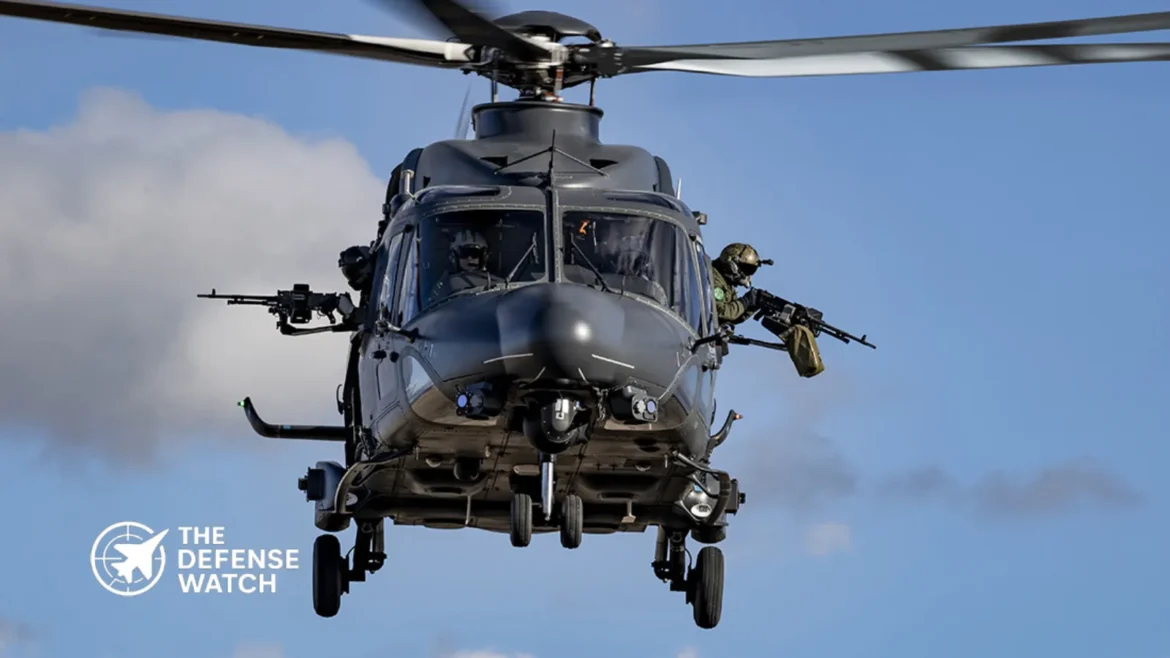
The new British military helicopter developed under the United Kingdom’s New Medium Helicopter (NMH) program is expected to enter service in January 2031, according to the UK Ministry of Defence. The aircraft will be based on the Leonardo AW149 medium-lift helicopter and will replace several aging rotary-wing platforms currently used by British forces.
The program represents one of the UK’s most significant helicopter modernization efforts in decades, combining multiple operational roles into a single platform designed for modern expeditionary operations.
The Big Picture
NATO countries are undergoing broad rotary-wing modernization as military planners respond to changing operational requirements highlighted by recent conflicts, including the war in Ukraine.
Helicopters remain critical for tactical mobility, special operations support, and rapid logistics in contested environments. Medium-lift platforms in particular provide the backbone of expeditionary operations by moving troops, equipment, and supplies where fixed-wing aircraft cannot operate.
The United Kingdom’s New Medium Helicopter program aims to streamline its helicopter fleet and improve operational efficiency while maintaining interoperability with NATO allies.
This approach mirrors similar modernization efforts across the alliance, where countries increasingly favor multi-role platforms that can handle troop transport, disaster relief, and battlefield logistics within a single aircraft type.
What’s Happening
The UK government awarded a £1 billion contract to Leonardo to produce 23 AW149 helicopters for the British Armed Forces under the NMH program.
Key program milestones include:
- First aircraft delivery expected in summer 2030
- Initial operational capability planned for January 2031
- Final aircraft delivery projected by autumn 2033
Leonardo will manufacture the helicopters at its facility in Yeovil, Somerset, which remains the United Kingdom’s only military helicopter production site. The project secures thousands of jobs across the British defense industrial base and reinforces the UK’s domestic helicopter manufacturing capability.
The AW149 platform will support a wide range of missions, including:
- Battlefield troop transport
- Special operations support
- Logistics and equipment transport
- Humanitarian assistance and disaster relief
By consolidating several rotary-wing missions into one aircraft type, the program seeks to simplify logistics and reduce long-term sustainment costs.
Why It Matters
The new British military helicopter addresses a growing capability gap in the UK’s medium-lift fleet.
Several legacy aircraft types used by British forces have reached or are nearing retirement, including long-serving utility helicopters. Maintaining multiple aging platforms increases maintenance complexity and operational costs.
Replacing them with a unified platform offers several advantages:
- Reduced training requirements for pilots and crews
- Simplified maintenance and supply chains
- Improved operational flexibility across multiple mission types
The AW149’s modern avionics and digital architecture also support future integration with unmanned systems, an area the UK Ministry of Defence increasingly emphasizes in its defense modernization strategy.
Strategic Implications
The NMH program strengthens Britain’s ability to conduct expeditionary operations alongside NATO allies.
Medium-lift helicopters are essential for rapid troop insertion, resupply missions, and battlefield mobility during high-intensity conflicts. These capabilities are particularly important for NATO operations in Eastern Europe, where terrain and infrastructure can limit ground mobility.
A modernized helicopter fleet also improves the UK’s ability to conduct global deployments, humanitarian missions, and crisis response operations.
Additionally, establishing Yeovil as a global production hub for the AW149 could strengthen Britain’s defense export position. Government officials estimate that international orders could generate up to £15 billion in exports over the next decade.
Competitor View
Russia and other potential adversaries closely monitor NATO rotary-wing modernization programs because helicopters remain central to air mobility and battlefield logistics.
The introduction of the new British military helicopter enhances NATO’s tactical mobility capabilities, which could complicate adversary planning in contested regions.
China and Russia both continue expanding their own helicopter fleets, particularly in medium-lift and heavy-lift categories, reflecting the strategic importance of these platforms for expeditionary and rapid-response operations.
What To Watch Next
Several milestones will shape the next phase of the program:
- Manufacturing ramp-up at Leonardo’s Yeovil facility
- Flight testing and certification activities before delivery
- Initial training for pilots and maintenance crews
- Integration with existing UK rotary-wing units
The first aircraft deliveries scheduled for 2030 will likely trigger early operational evaluation before the helicopter enters full service in 2031.
Capability Gap
The NMH program primarily addresses the retirement of several aging helicopters and the fragmentation of the UK’s medium-lift fleet.
Operating multiple aircraft types increases maintenance costs and logistical complexity. A single modern platform reduces these challenges while providing improved performance and digital capabilities.
However, the AW149 remains a medium-lift platform, meaning it cannot replace heavy-lift helicopters used for large-scale transport missions. The UK will still rely on other aircraft types for heavier payload requirements.
The Bottom Line
The new British military helicopter under the NMH program marks a major step in modernizing the UK’s rotary-wing fleet while strengthening NATO expeditionary mobility and the British defense industrial base.
- ► The United Kingdom has formally joined NATO ballistic missile defence, integrating national capabilities into the alliance framework.
- ► The move strengthens NATO integrated air and missile defence amid rising concerns over long range missile threats in Europe.
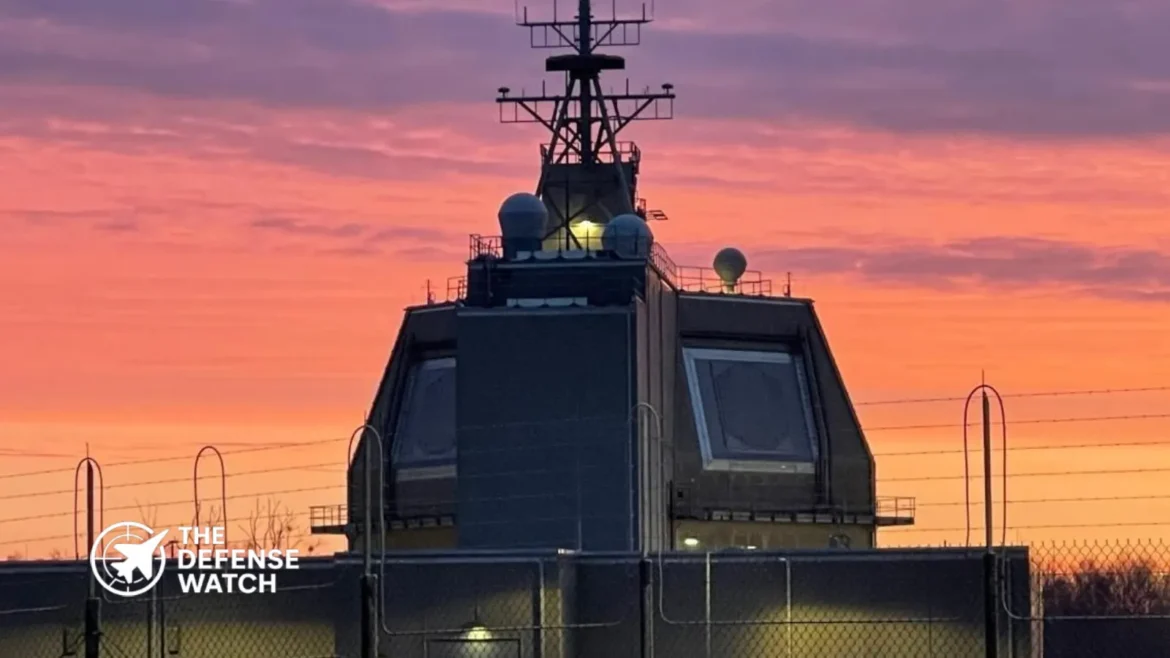
- ► NATO missile defence architecture includes Aegis Ashore sites, advanced radar systems, and US Navy Aegis destroyers.
- ► The decision enhances interoperability, data sharing, and collective deterrence under NATO Article 5 commitments.
- ► UK participation signals deeper alliance cohesion as Europe adapts to evolving ballistic missile and air defence challenges.
UK Joins NATO Ballistic Missile Defence Effort
The UK joins NATO ballistic missile defence effort in a significant move that formally integrates British capabilities into the alliance’s collective missile shield.
(adsbygoogle = window.adsbygoogle || []).push({});The decision positions the United Kingdom more deeply within NATO’s evolving missile defence architecture at a time of heightened concern over long range missile threats across Europe.
The step reinforces NATO’s integrated air and missile defence network, which is designed to detect, track, and intercept ballistic missile attacks against allied territory.
Strengthening NATO’s Missile Shield
NATO’s ballistic missile defence system, developed over more than a decade, is built to counter threats originating outside the Euro Atlantic area. The framework was formally agreed at the 2010 Lisbon Summit and has since expanded through a series of capability upgrades.
Key components of NATO’s missile defence architecture include:
- Aegis Ashore sites in Romania and Poland
- US Navy Aegis equipped destroyers forward deployed to Europe
- Advanced early warning radar systems
- NATO command and control networks
By joining NATO ballistic missile defence more directly, the UK aligns its national capabilities with this broader defensive structure. This integration enhances collective situational awareness and strengthens the alliance’s ability to respond to ballistic missile threats.
The move reflects NATO’s ongoing adaptation to an increasingly complex threat environment.
The Broader Strategic Context
NATO Secretary General Mark Rutte has repeatedly emphasized the need to strengthen integrated air and missile defence across the alliance. Following Russia’s full scale invasion of Ukraine in 2022, European allies accelerated investments in air defence, including systems such as Patriot and SAMP T.
(adsbygoogle = window.adsbygoogle || []).push({});The UK’s decision to join NATO ballistic missile defence should be viewed within this broader modernization trend.
The alliance is moving toward a layered defence model that combines:
- Short range air defence
- Medium and long range interceptors
- Ballistic missile tracking radars
- Space based surveillance
This layered approach reflects lessons learned from recent conflicts, particularly the scale and frequency of missile and drone attacks.
By embedding more fully within NATO’s missile defence network, the UK strengthens both national and allied resilience.
Implications For European Security
The integration of the UK into NATO ballistic missile defence carries both operational and political weight.
Operationally, it improves command and control integration, data sharing, and response coordination across allied forces. Missile defence requires near real time data fusion from multiple sensors. Expanding participation increases the reliability and coverage of that network.
Politically, the move underscores the UK’s continued central role in European security despite its departure from the European Union. London remains one of NATO’s leading military powers and a top defence spender within the alliance.
It also sends a clear signal of unity at a time when NATO is reinforcing deterrence along its eastern flank.
Analysis: A Measured But Significant Step
While this announcement does not represent the deployment of a new standalone British missile shield, it marks a structural shift in how the UK aligns its capabilities within NATO’s ballistic missile defence framework.
Missile defence is not a single system. It is an interconnected network of sensors, interceptors, command systems, and allied contributions.
(adsbygoogle = window.adsbygoogle || []).push({});By joining NATO ballistic missile defence more formally, the UK enhances alliance cohesion and reduces gaps in coverage. In practical terms, this contributes to deterrence by denial, making it harder for adversaries to calculate a successful missile strike against NATO territory.
Given the rapid evolution of missile technologies, including maneuverable reentry vehicles and hypersonic glide systems, NATO’s missile defence architecture will likely continue evolving.
The UK’s integration signals recognition that collective defence in the missile domain requires deeper coordination, not parallel national efforts.