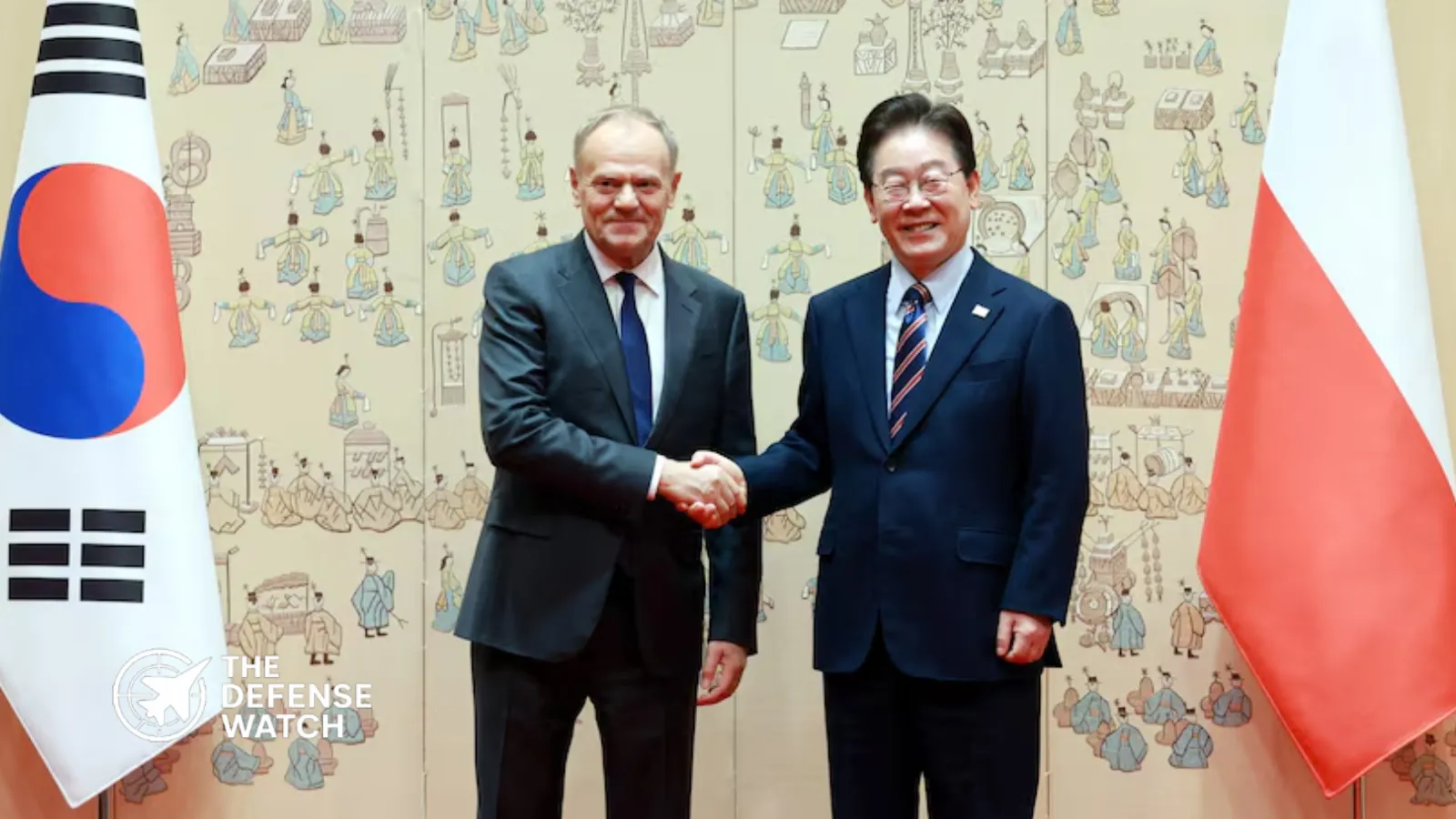
South Korea Poland Strategic Partnership Expands Defense Cooperation
The South Korea Poland strategic partnership marks a significant shift in European defense dynamics, as both nations move to formalize deeper military and industrial ties, according to reporting by Reuters.
South Korea and Poland have agreed to elevate their relationship to a comprehensive strategic partnership, a move that reflects years of rapidly expanding defense cooperation and large-scale arms deals. The upgrade comes as Warsaw accelerates military modernization in response to regional security pressures, particularly following Russia’s invasion of Ukraine.
This development positions South Korea as one of the most influential non-European defense suppliers supporting NATO’s eastern flank.
- South Korea and Poland agreed to upgrade bilateral ties to a comprehensive strategic partnership.
- The move reflects expanding defense cooperation and large-scale Korean arms exports to Poland.
- Poland has become a key European customer for South Korean tanks, howitzers, and fighter aircraft.
- The partnership aligns with NATO’s efforts to strengthen deterrence against Russia.
- The agreement signals Seoul’s growing role in global defense supply chains.
Defense Industry at the Core of Bilateral Ties
The South Korea Poland strategic partnership is anchored in defense procurement and industrial collaboration. Poland has emerged as a major buyer of South Korean military systems, including main battle tanks, self-propelled howitzers, and light combat aircraft.
These acquisitions are not limited to off-the-shelf purchases. A key feature of the relationship is technology transfer and localized production, allowing Poland to build and sustain military platforms domestically. This aligns with Warsaw’s long-term goal of strengthening its defense industrial base.
Reuters reports that the partnership upgrade reflects the scale and strategic importance of these agreements, which have already reshaped Europe’s defense procurement landscape.
From Seoul’s perspective, Poland serves as a gateway into the broader European defense market, offering both political alignment and industrial integration opportunities.
Strategic Context: NATO and Regional Security Pressures
The timing of the South Korea Poland strategic partnership is closely tied to evolving security dynamics in Europe. Poland has been one of NATO’s most proactive members in boosting defense spending and capabilities since 2022.
By partnering with South Korea, Warsaw gains access to rapidly deliverable, cost-effective military systems, addressing urgent capability gaps. Unlike some Western suppliers facing production bottlenecks, South Korean defense firms have demonstrated an ability to scale manufacturing quickly.
This has made South Korea an increasingly attractive partner for countries seeking to modernize their armed forces under tight timelines.
The partnership also reflects a broader NATO trend of diversifying supply chains and reducing reliance on traditional defense producers.
Expanding Scope Beyond Arms Deals
While defense remains central, the South Korea Poland strategic partnership is expected to extend into other areas, including:
- Joint training and military exercises
- Defense technology research and development
- Cybersecurity and emerging technologies
- Energy and infrastructure cooperation
This broader scope indicates a transition from transactional arms deals to a long-term strategic alignment.
Such partnerships are becoming more common as countries seek integrated approaches to security that combine military, technological, and economic elements.
Analysis: A Turning Point for Global Defense Supply Chains
The elevation of the South Korea Poland strategic partnership highlights a deeper transformation in global defense markets.
First, it underscores the rise of South Korea as a top-tier defense exporter, capable of competing with established Western suppliers. Its ability to deliver advanced systems بسرعة and at competitive costs has proven decisive for countries facing immediate security threats.
Second, it reflects Europe’s growing openness to non-traditional defense partners. As demand for military equipment surges, diversification has become both a strategic necessity and a practical solution.
Third, the partnership strengthens NATO’s overall deterrence posture. By accelerating Poland’s military modernization, it contributes directly to alliance readiness on its eastern flank.
However, this shift also introduces new dynamics. Increased reliance on external suppliers could raise questions about interoperability, long-term maintenance, and political alignment. Managing these factors will be critical as the partnership evolves.
Outlook
The South Korea Poland strategic partnership is likely to deepen further in the coming years, particularly as Poland continues to expand its armed forces and South Korea seeks to consolidate its presence in Europe.
If successfully implemented, the partnership could serve as a model for future defense cooperation between Asian and European powers, reshaping how military alliances and industrial partnerships are structured in a rapidly changing security environment.
Get real time update about this post category directly on your device, subscribe now.