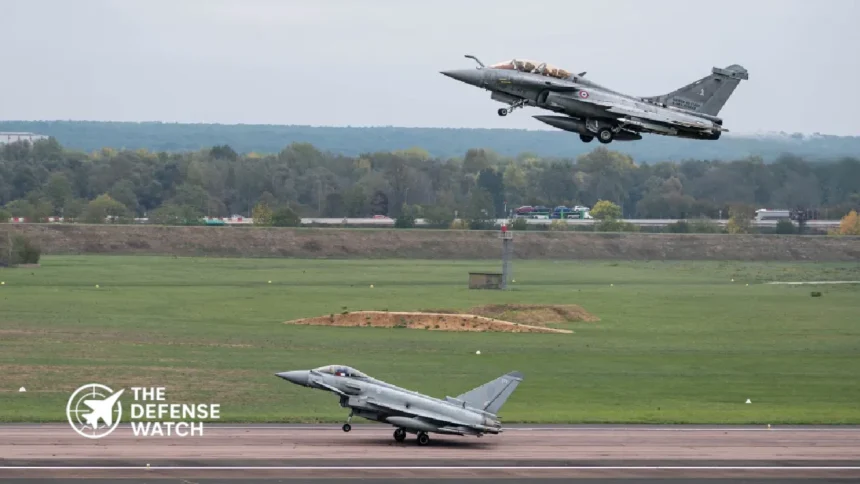
France and the United Kingdom have conducted their first joint exercise involving France’s airborne nuclear deterrent, bringing British Royal Air Force fighters into a simulated French nuclear strike mission.
The exercise, named Rummy, took place on October 20 and 21, 2026, with French Rafale fighters escorted by British Eurofighter Typhoon aircraft over the Mediterranean. The aircraft launched from Saint-Dizier Air Base in northeastern France, according to the British Ministry of Defence and French military officials. No nuclear weapons were used.
The exercise provides a practical demonstration of closer nuclear defense cooperation between Europe’s two nuclear-armed powers. It also tests how their air forces can support one another during a mission connected to nuclear deterrence, without combining their national nuclear command structures.
The drill follows the political commitments made under the Northwood Declaration in 2025, which established a framework for deeper cooperation between London and Paris on nuclear deterrence and European security.
What Exercise Rummy Tested
The central feature of Rummy was the participation of British fighters in a French exercise simulating an airborne nuclear strike.
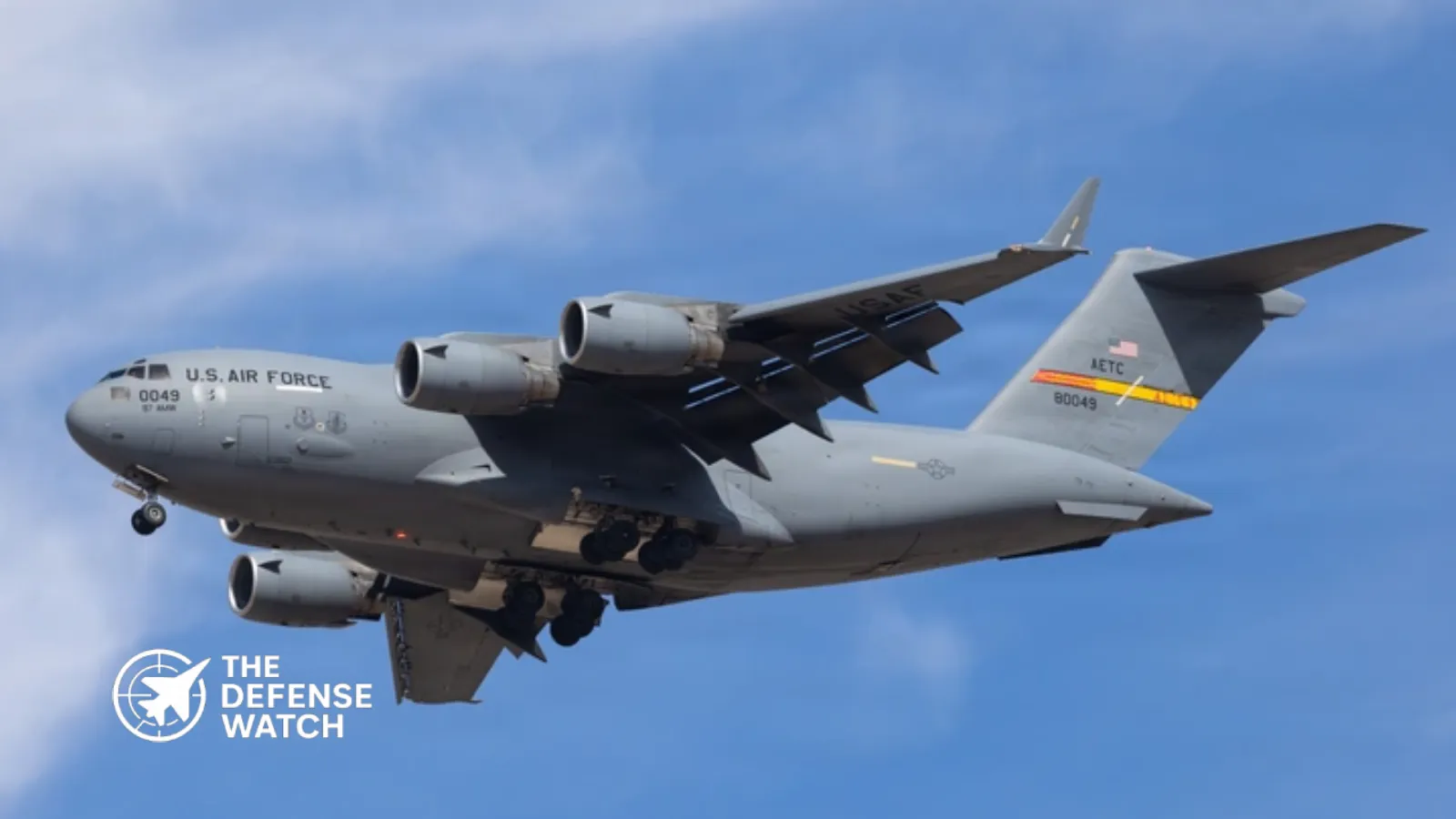
French Rafale aircraft performed the simulated strike mission, while RAF Typhoons provided an escort. French Armed Forces Chief of Staff Gen. Fabien Mandon also identified Airbus A330 Multi Role Tanker Transport aircraft as participants, adding an aerial refueling component to the exercise.
The participating aircraft serve different operational purposes.
The French Rafale is a multirole fighter that forms part of France’s airborne nuclear deterrent. In this role, suitably configured aircraft can carry France’s air-launched nuclear weapon. The aircraft also performs conventional strike, air defense and other missions.
The Eurofighter Typhoon is a multirole combat aircraft operated by the RAF. Its participation in Rummy demonstrated an ability to escort French aircraft during a simulated nuclear mission, although the public information released so far does not establish the full range of tactics, mission procedures or command arrangements tested.
The A330 MRTT provides aerial refueling and can extend the time aircraft remain airborne or allow them to operate farther from their home bases, subject to mission requirements. Its inclusion indicates that the exercise involved more than a simple formation flight, although officials have not published a detailed account of the refueling profile.
One important distinction: Rummy was a nuclear deterrence exercise, not a live nuclear weapons operation. The British government confirmed that the drill took place under safety and security arrangements and did not involve actual nuclear weapons.
Why France and Britain Are Coordinating Their Nuclear Forces
France and the United Kingdom possess independent nuclear arsenals, but their deterrence forces have different structures.
France maintains both a sea-based nuclear deterrent and an airborne component. Its nuclear-powered ballistic missile submarines provide a survivable retaliatory capability, while nuclear-capable Rafale fighters provide a separate option for delivering nuclear weapons.
The United Kingdom’s nuclear deterrent is based on its Vanguard-class ballistic missile submarines, which carry Trident II D5 submarine-launched ballistic missiles. Britain does not maintain a comparable airborne nuclear strike component.
This difference matters because the two countries cannot simply exchange aircraft or nuclear delivery roles. Their nuclear forces rely on different platforms, weapons, operating procedures and national command arrangements.
Joint training can nevertheless improve cooperation in supporting areas, including airspace coordination, escort operations, refueling, communications and mission planning. The extent to which each of these elements was tested during Rummy has not been disclosed publicly.
For Britain, participating in a French nuclear exercise provides experience working alongside an allied airborne deterrent that complements its own submarine-based force. For France, the exercise demonstrates that its nuclear-capable aircraft can operate within a wider allied air mission.
The practical value lies in improving coordination between national forces while preserving their separate responsibilities.
The Northwood Declaration Sets the Political Framework
Rummy is part of a wider effort by Paris and London to strengthen their security relationship.
The two countries agreed in July 2025 to deepen nuclear cooperation through the Northwood Declaration. The agreement recognized that an extreme threat to Europe could affect the vital interests of both countries and would prompt a response from both governments.
The declaration did not merge their nuclear forces or establish a shared nuclear launch authority. Instead, it created a political framework for greater coordination between two countries that retain independent deterrents.
That distinction is central to understanding the exercise. Closer cooperation can increase the range of military options available to both governments without removing their national control over nuclear weapons.
French Armed Forces Minister Catherine Vautrin emphasized this principle when announcing the exercise, stating that independent nuclear forces do not rule out coordination. British Defence Secretary Wes Streeting likewise described the drill as a step forward in the bilateral nuclear defense relationship.
The agreement also sits within the broader Lancaster House defense partnership, which has supported military cooperation between the two countries. The renewed focus on nuclear coordination reflects a more specific effort to connect their deterrence policies with wider European security planning.
What the Exercise Means for European Deterrence
The exercise took place against a backdrop of renewed concern about European security, Russia’s war against Ukraine and uncertainty over the long-term role of the United States in European defense.
France and Britain are NATO allies, but their nuclear forces serve distinct national purposes. Their coordination adds another layer to European deterrence by demonstrating that the two countries can cooperate during a mission involving a nuclear-capable aircraft.
This does not mean that France has extended an automatic nuclear guarantee to every European ally, or that Britain and France have agreed to launch nuclear weapons jointly. The Northwood Declaration preserves national independence while establishing that both countries regard their vital security interests as closely connected.
For NATO, closer coordination between the two European nuclear powers could complicate an adversary’s assessment of how the alliance might respond to a severe threat. However, the operational effect depends on political decisions, available forces and the credibility of the commitments made by each government.
The exercise alone does not establish a new nuclear deployment arrangement, a change in targeting policy or a standing commitment to conduct joint nuclear missions.
France’s airborne deterrent and Britain’s submarine force
The different structures of the two countries’ nuclear forces help explain why this exercise is notable.
France’s airborne component offers a delivery option that can be generated through its combat aviation force. Its Rafale aircraft operate alongside the country’s submarine-based deterrent, providing two distinct delivery systems.
Britain relies on its submarine-based nuclear force. Its planned acquisition of 12 F-35A fighters and intention to join NATO’s nuclear mission are separate developments that could expand Britain’s participation in the alliance’s nuclear arrangements, but they should not be confused with the role of RAF Typhoons in Rummy. The British government has outlined these plans as part of its wider deterrence policy.
The exercise therefore demonstrates cooperation between different national capabilities, rather than the creation of a common French-British airborne nuclear force.
What Remains Unclear
Although both governments have described the exercise as an important step in bilateral cooperation, several operational details remain undisclosed.
Public statements do not establish the precise number of aircraft involved throughout the exercise, the full mission sequence, the communications procedures tested or whether the participants rehearsed additional scenarios beyond the publicly described simulated strike and escort mission.
The available information also does not establish whether Rummy will become a recurring bilateral exercise or how the two countries intend to expand practical cooperation under the Northwood Declaration.
These questions matter because a single exercise demonstrates that forces can operate together under a particular set of conditions. Sustained readiness requires repeated training, compatible procedures, secure communications and political arrangements that remain credible during a crisis.
France has regularly conducted its own simulated nuclear strike exercises, known as Poker. Rummy builds on that established training activity by adding British aircraft to the exercise, according to French and British official reporting.
The next measure of progress will be whether the two governments translate their political commitments into a continuing program of practical cooperation while maintaining separate control of their nuclear arsenals.
For now, the confirmed achievement is specific: British Typhoons have participated in a French airborne nuclear exercise for the first time. That is a meaningful step in military coordination, but it does not by itself demonstrate a new shared nuclear command structure or a change in either country’s nuclear employment policy.