France Achieves Record Defense Procurement Levels Amid European Security Concerns
France’s Directorate General of Armaments (DGA) placed approximately €38 billion in military equipment orders during 2025, representing the highest procurement volume in the agency’s history. The unprecedented spending reflects France’s commitment to military modernization under its 2024-2030 Military Programming Law (LPM) and broader European defense initiatives.
The French defense procurement organization additionally ordered over €2 billion in military equipment on behalf of other European nations, demonstrating France’s growing role as a defense hub amid the continent’s strategic rearmament efforts. This procurement activity aligns with increased defense spending across NATO and European Union member states following heightened security concerns.
The DGA simultaneously delivered numerous critical systems to French armed forces throughout 2025, maintaining the delivery schedule outlined in the current military programming law. These deliveries ensure operational readiness while new-generation systems undergo development and production.
Next-Generation Aircraft Carrier Enters Production Phase
Among the most significant defense orders, France officially launched production of its next-generation aircraft carrier (PA-NG), which will eventually replace the Charles de Gaulle. This nuclear-powered carrier represents France’s commitment to maintaining power projection capabilities and naval aviation superiority through mid-century.
The new carrier program positions France among the select few nations capable of designing and constructing nuclear-powered aircraft carriers, alongside the United States. The PA-NG will serve as the cornerstone of French naval power and contribute to NATO and European maritime security operations.
Strategic Nuclear Deterrent Receives Major Investment
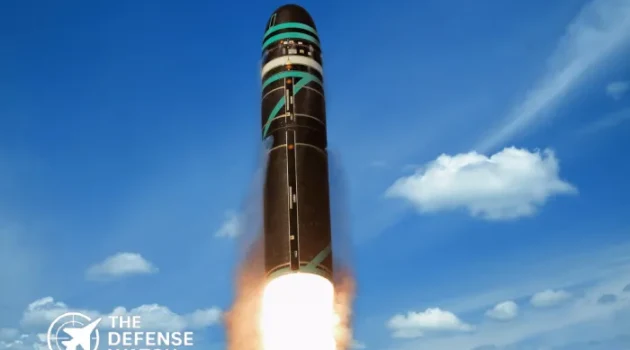
France ordered development and production of the fourth version of its M51 strategic ballistic missile, ensuring the credibility of its nuclear deterrent through the coming decades. The M51 missile equips France’s submarine-launched ballistic missile (SLBM) force, which operates from the nation’s four Triomphant-class nuclear-powered ballistic missile submarines (SSBNs).
The French defense procurement organization delivered the M51.3 version during 2025, which entered operational service with enhanced nuclear warheads designed for submarine deployment. This delivery maintains France’s continuous at-sea nuclear deterrent posture, a cornerstone of its defense strategy.
Naval Modernization Accelerates with Frigate and Support Vessel Orders
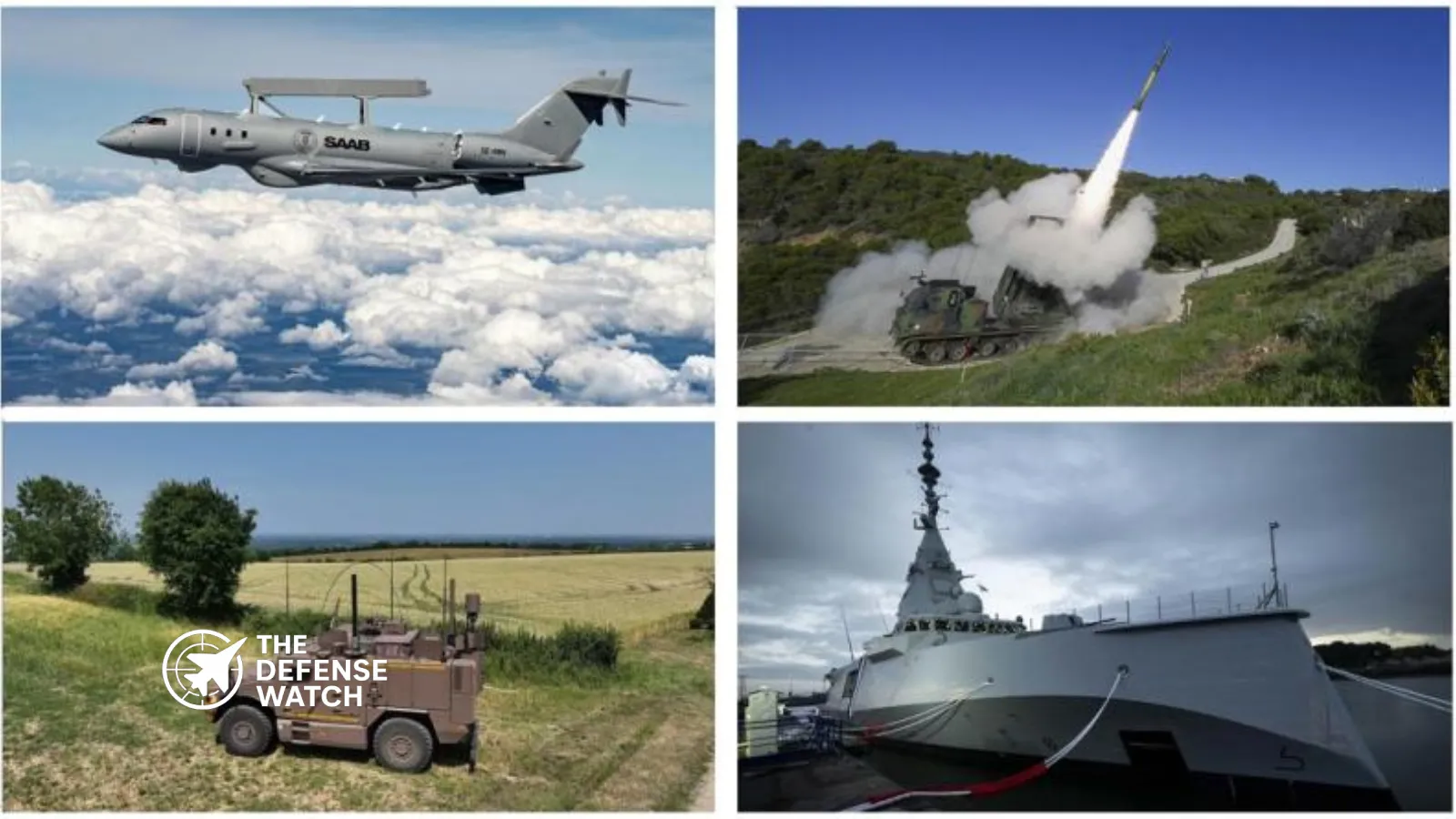
The DGA ordered a fourth Frégate de Défense et d’Intervention (FDI) for the French Navy, continuing the modernization of France’s surface combatant fleet. The procurement organization delivered the first FDI, the Amiral Ronarc’h, to the Navy in 2025, marking the beginning of a new frigate class that will replace aging vessels.
In support vessel procurement, the DGA delivered the first Fleet Logistic Support Ship (BRF), the Jacques Stosskopf, as part of the Flotlog program. This program will provide four modern replenishment vessels essential for sustaining naval operations far from French ports.
France also ordered heavy Artemis torpedoes for submarine and surface vessel deployment, maintaining its anti-submarine warfare capabilities. Additionally, the Navy received its first surface mine warfare drone, initiating the replacement of traditional mine countermeasures vessels with unmanned systems under the SLAM-F (Future Naval Mine Warfare System) program.
Aviation Procurement Emphasizes Maritime Patrol and Airborne Early Warning
France placed orders for five Albatros maritime patrol and intervention aircraft from Dassault Aviation as part of the Avismar program, which calls for acquiring 12 aircraft total. These platforms will enhance France’s ability to monitor vast maritime zones and conduct anti-submarine and anti-surface warfare operations.
The DGA also ordered the first two GlobalEye airborne early warning and control aircraft to replace France’s aging E-3F AWACS fleet. These Swedish-designed Saab platforms provide advanced radar capabilities and will significantly enhance French air defense and command-and-control operations.
French Air and Space Force received 11 Rafale fighter aircraft during 2025, maintaining the steady production and delivery of France’s primary multirole combat aircraft. The DGA also delivered one Multi-Role Tanker Transport (MRTT) and one A400M strategic airlifter, along with two Caracal helicopters.
Ground Forces Equipment Modernization Continues Under Scorpion Program
The French Army received substantial armored vehicle deliveries in 2025 as part of the ongoing Scorpion program, which represents the largest French Army modernization effort in decades. Deliveries included 30 Jaguar reconnaissance vehicles, 150 Griffon armored personnel carriers, and 113 Serval liaison and reconnaissance vehicles.
The DGA ordered 1,110 PL6 logistics trucks under a framework contract that may extend to 7,000 units, along with 152 protected tanker trucks. These vehicles provide the mobility and logistics backbone essential for sustained military operations.
The procurement organization also delivered 21 upgraded Leclerc main battle tanks, ensuring France maintains a credible heavy armor force while developing next-generation systems.
Missile and Ammunition Orders Address Stockpile Concerns
France participated in a joint missile order with Italy and the United Kingdom for Aster air defense missiles, demonstrating European defense cooperation on critical weapons systems. The DGA separately ordered MIDE (Extended Domain Interception Missile) systems for the Air and Space Force.
Addressing ammunition concerns that have emerged across European militaries, France ordered substantial quantities of 40mm telescoped ammunition for both Army armored vehicles and Navy vessels. This advanced ammunition type provides improved performance in compact weapon systems.
Emerging Technologies Feature in Procurement Strategy
The DGA ordered a Syderal high-power laser weapon system demonstrator for counter-drone and counter-missile applications. This program positions France among nations developing directed energy weapons to address evolving threats from unmanned aerial systems and precision-guided munitions.
In unmanned systems procurement, France ordered six VSR-700 rotary-wing drones for the Navy following an agreement with Airbus Helicopters and Naval Group. The DGA also ordered long-range loitering munitions and delivered the first 1,000 low-cost combat drones intended for the Orion military exercise.
These short-range Damocles loitering munitions and cost-effective reconnaissance drones reflect lessons learned from recent conflicts, where unmanned systems have demonstrated significant tactical value. The procurement organization also delivered counter-drone systems and ground-based air defense systems to French forces.
Space-Based Capabilities Enhanced with Satellite Deployment
France deployed the CSO-3 observation satellite in 2025 as part of the MUSIS (Multinational Space-based Imaging System) program. This satellite enhances France’s independent intelligence collection capabilities and supports both national security requirements and European defense cooperation.
Space-based surveillance and reconnaissance remain priorities for French defense planning, providing strategic warning and tactical intelligence across global areas of interest.
European Defense Cooperation Expands Through Equipment Sales
Beyond its domestic procurement, France’s DGA ordered over €2 billion in military equipment for other European nations, supporting the continent’s rearmament efforts. Orders placed on behalf of European partners included:
Griffon and Serval armored vehicles for Belgium and Luxembourg, expanding commonality among European ground forces. Multiple European nations ordered French Mistral surface-to-air missiles, including Belgium, Cyprus, Denmark, Spain, Estonia, Romania, and Slovenia, creating a shared air defense capability across the continent.
Caesar self-propelled howitzers were ordered for Croatia and Estonia, while Romania ordered surveillance radars. Denmark became the first export customer for Aster surface-to-air missiles, furthering European integrated air and missile defense efforts.
This procurement activity positions France as a key defense industrial partner within Europe, providing alternatives to dependence on non-European suppliers and strengthening the European defense industrial base.
Procurement Reflects French Military Programming Law Implementation
The 2025 procurement and delivery activities implement France’s 2024-2030 Military Programming Law, which establishes defense spending and capability development priorities through the end of the decade. The LPM provides a structured framework ensuring French armed forces receive modern equipment across all domains: land, sea, air, and space.
The programming law reflects France’s assessment of its strategic environment and the capabilities required to address potential threats, maintain alliance commitments, and preserve operational autonomy. Record procurement levels indicate the French government’s commitment to fully funding the planned modernization despite competing budgetary pressures.
Analysis: Strategic Implications of French Defense Investment
France’s historic procurement volume demonstrates its determination to maintain comprehensive military capabilities despite the significant costs involved. The breadth of systems ordered and delivered—from nuclear-powered aircraft carriers to individual soldier drones—reflects France’s assessment that it must preserve capabilities across the full spectrum of military operations.
The substantial orders placed for other European nations indicate France’s ambition to serve as a defense industrial anchor within Europe. By facilitating procurement for smaller European militaries, France builds interoperability, standardization, and collective defense capabilities while supporting its domestic defense industry.
The emphasis on emerging technologies, particularly unmanned systems, directed energy weapons, and advanced sensors, shows French defense planners are incorporating lessons from recent conflicts while preparing for future operational environments.
France’s continued investment in strategic nuclear forces through the M51.4 development and SSN production maintains its independent deterrent, ensuring strategic autonomy regardless of alliance commitments. This nuclear investment represents a significant portion of defense spending that non-nuclear European states can allocate to conventional capabilities.
The 2025 procurement data suggests France remains committed to its role as one of Europe’s military leaders and a global middle power capable of independent military action when required. Whether this spending level proves sustainable over the full programming period will depend on economic conditions and the evolution of security threats facing France and Europe.
Get real time update about this post category directly on your device, subscribe now.