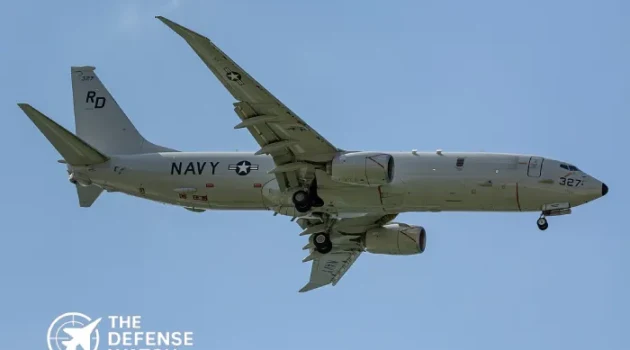
- ► Singapore will acquire three G550 Maritime Surveillance Aircraft for the RSAF.
- ► The aircraft will enhance early warning of maritime threats across key sea lanes.
- ► The new jets will complement Singapore’s Boeing P 8A Maritime Patrol Aircraft fleet.
- ► The move strengthens Singapore’s maritime domain awareness and layered security network.
- ► Singapore sits astride one of the world’s busiest and most strategically vital shipping corridors.
Singapore G550 Maritime Surveillance Aircraft To Strengthen RSAF Early Warning
Singapore’s decision to acquire three Singapore G550 Maritime Surveillance Aircraft marks a significant step in enhancing the Republic of Singapore Air Force’s ability to detect and track maritime threats at extended ranges.
The new aircraft will operate alongside the existing fleet of Boeing P-8A Poseidon maritime patrol aircraft, forming part of a broader maritime security surveillance network designed to safeguard one of the world’s busiest sea routes.
According to Singapore’s Ministry of Defence, the acquisition is intended to improve early warning coverage and provide persistent maritime domain awareness across the Strait of Malacca and the South China Sea approaches.
Platform And Capabilities
The G550 platform, built by Gulfstream Aerospace, has been widely adapted for special mission roles, including airborne early warning and signals intelligence. Singapore already operates the G550 Airborne Early Warning aircraft, equipped with advanced radar systems.
While detailed sensor specifications for the maritime surveillance configuration have not been publicly disclosed, such aircraft typically carry surface search radar, electro optical and infrared sensors, and secure communications suites. These systems allow detection of surface vessels, low flying aircraft, and potentially unmanned systems over wide areas.
The addition of three dedicated maritime surveillance variants suggests a focus on persistent coverage, networked data sharing, and layered monitoring rather than replacing existing patrol aircraft.
Complementing The P 8A Fleet
The Republic of Singapore Air Force has steadily modernized its surveillance and strike capabilities over the past decade. The Boeing P 8A Poseidon, derived from the 737 airframe, provides long range anti submarine warfare and maritime patrol capabilities.
By contrast, the G550 Maritime Surveillance Aircraft is likely optimized for higher altitude, longer endurance surveillance with advanced sensor integration. This layered approach mirrors trends seen in the United States and allied forces, where different platforms share data through secure networks to build a common operating picture.
This structure reduces single platform dependency and improves resilience during high tempo operations.
Strategic Context
Singapore sits at the crossroads of global trade. The Strait of Malacca carries a significant share of global energy shipments and commercial traffic. Increased naval activity in the South China Sea, rising gray zone operations, and the growing use of unmanned systems have placed greater emphasis on persistent surveillance.
The Singapore G550 Maritime Surveillance Aircraft acquisition reflects a broader regional pattern. Several Asia Pacific nations are investing in maritime patrol aircraft, long range ISR platforms, and integrated command networks to monitor congested waters and protect sea lines of communication.
For Singapore, the move reinforces a doctrine centered on early detection, rapid response, and technological advantage. The investment signals continuity in defense planning rather than a reactionary shift.
Why It Matters
From an operational standpoint, early warning remains the foundation of deterrence. The ability to detect, classify, and track potential threats at distance provides decision makers more time and flexibility.
The Singapore G550 Maritime Surveillance Aircraft will likely serve as high altitude nodes within a connected surveillance grid, feeding real time data to air and naval units. When combined with the P 8A fleet and coastal radar systems, the RSAF strengthens its capacity to manage both conventional and non conventional maritime challenges.
In a region where sea based trade underpins national prosperity, maintaining a credible and technologically advanced surveillance network is central to long term security planning.
Get real time update about this post category directly on your device, subscribe now.