

Executive Summary:
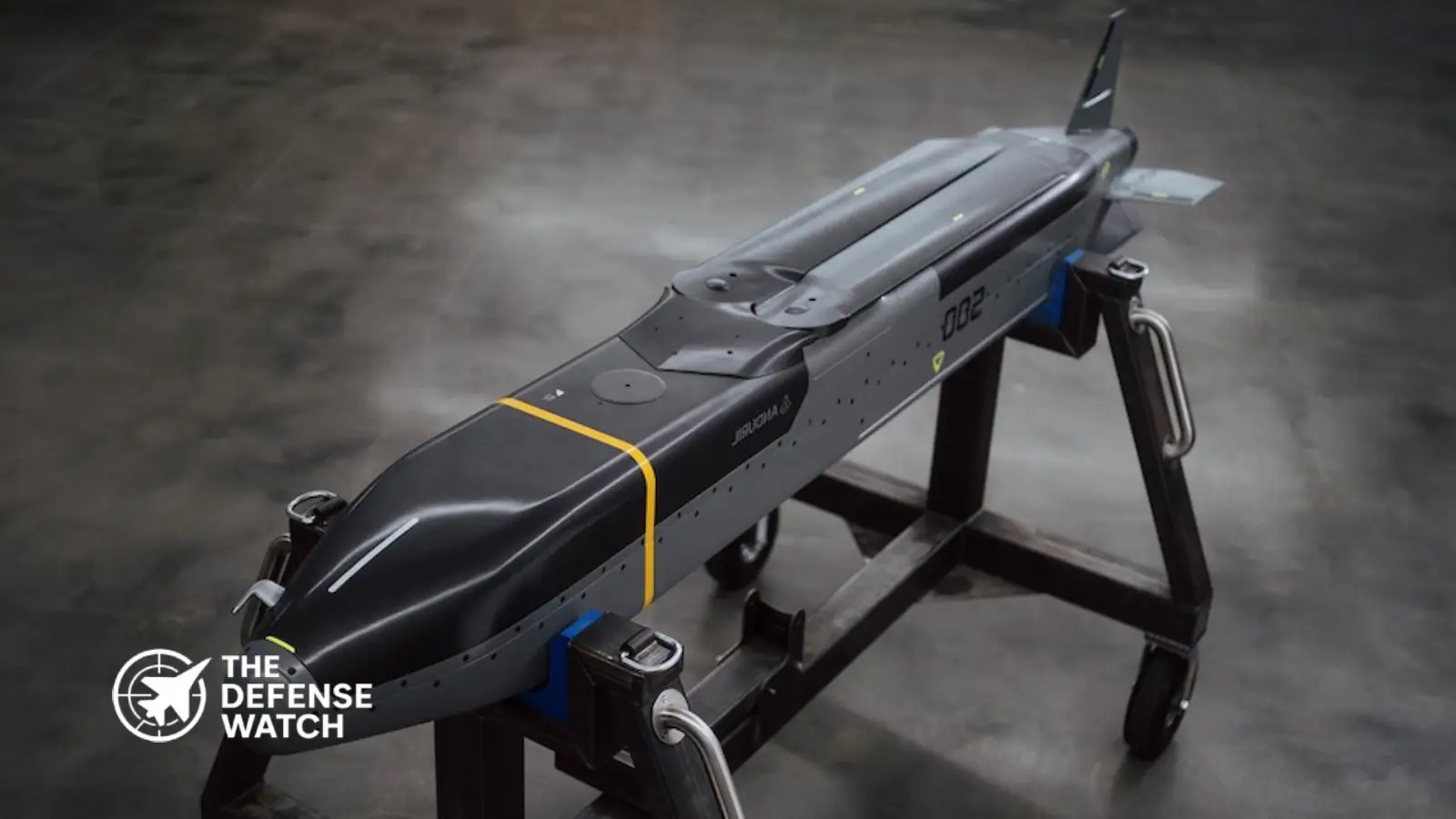
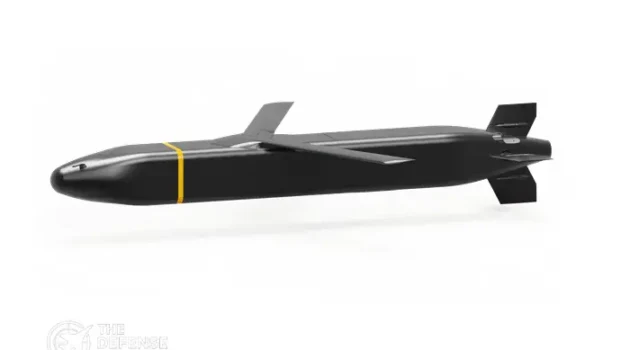
Anduril Industries and Poland’s state owned defense group PGZ have signed an agreement to establish local production of the surface launched Barracuda 500M cruise missile in Bydgoszcz. The partnership aims to produce thousands of affordable long range precision weapons for the Polish Armed Forces while strengthening NATO’s industrial capacity on its eastern flank.
Anduril Barracuda 500M Production Expands Into Poland
Anduril Industries and Polska Grupa Zbrojeniowa (PGZ) have formalized a cooperation agreement to establish localized production of the Barracuda 500M surface launched cruise missile in Poland, marking one of Europe’s most significant recent investments in scalable precision strike manufacturing. The agreement was announced during an official signing ceremony in Bydgoszcz attended by Polish Prime Minister Donald Tusk and Defense Minister Władysław Kosiniak Kamysz.
Production will be centered at Wojskowe Zakłady Lotnicze No. 2 (WZL-2), a PGZ subsidiary, where assembly will begin before gradually transitioning toward broader domestic manufacturing and supply chain localization. According to both companies, the program builds upon a memorandum of understanding first announced in October 2025.
The companies stated that the initiative will ultimately deliver thousands of Barracuda 500M systems for the Polish Armed Forces while supporting NATO’s growing requirement for affordable, mass producible long range strike weapons.
Local Manufacturing Becomes A Strategic Priority
Unlike many traditional missile procurement programs that rely on imported finished systems, the agreement emphasizes industrial participation inside Poland.
Officials said production will initially focus on missile assembly before expanding to incorporate increasing numbers of Polish and European suppliers. The long term objective is to create a Barracuda variant that is majority European made and compliant with the European Union’s SAFE defense industrial framework.
Bydgoszcz was selected because of its established aerospace workforce, military logistics infrastructure, and concentration of defense industries. The city already hosts major NATO organizations and has become one of Poland’s most important defense manufacturing hubs.
What Is The Barracuda 500M?
The Barracuda 500M belongs to Anduril’s family of autonomous precision strike systems designed around rapid, low cost manufacturing rather than traditional high expense cruise missile production.
According to Anduril, the weapon was developed to provide:
Capability Description Launch method Surface launched Mission Long range precision strike Production philosophy Mass production at significantly lower cost Employment High volume precision fires Primary users Polish Armed Forces and potential NATO partners Unlike legacy cruise missiles that often require lengthy manufacturing timelines, the Barracuda concept focuses on scalable production capable of replenishing inventories during prolonged conflict.
Why The Program Matters
The agreement reflects a broader shift occurring across NATO following lessons learned from the war in Ukraine.
Modern conflicts have demonstrated that advanced militaries can rapidly deplete stocks of expensive precision guided weapons. As a result, defense planners increasingly emphasize weapons that can be manufactured in much larger numbers without sacrificing operational effectiveness.
The Barracuda 500M addresses this challenge by combining autonomous guidance with production methods intended to reduce cost and shorten manufacturing cycles. Rather than replacing premium cruise missiles, systems such as Barracuda could complement them by providing commanders with greater magazine depth during sustained operations.
For Poland, domestic production also reduces dependence on overseas supply chains while expanding national industrial expertise in precision strike technologies.
Strengthening NATO’s Eastern Flank
Poland has emerged as one of NATO’s fastest growing defense investors, committing substantial resources to missile defense, armored forces, artillery, combat aircraft, and long range fires.
Adding domestic production of the Barracuda 500M complements these modernization efforts by giving Poland a sovereign manufacturing capability for precision strike weapons.
From NATO’s perspective, expanding missile production inside Europe improves resilience should alliance members require rapid replenishment during a major crisis. Rather than relying solely on North American production lines, localized manufacturing creates additional industrial capacity closer to potential operational theaters.
The program also aligns with broader European efforts to increase defense industrial output following heightened security concerns across the continent.
Industrial And Operational Implications
Beyond missile production itself, the agreement demonstrates an evolving model of transatlantic defense cooperation.
Instead of exporting finished systems, U.S. defense companies are increasingly partnering with European manufacturers to establish regional production networks. This approach supports allied industrial bases while maintaining interoperability across NATO.
For Anduril, the partnership provides its first major European production line for the Barracuda family. For PGZ, it expands domestic expertise in precision guided weapons while potentially opening opportunities for future collaborative programs involving autonomous systems and advanced munitions.
If production proceeds as planned, the Bydgoszcz facility could become one of Europe’s largest manufacturing centers dedicated to affordable long range precision strike weapons.
Executive Summary:
Poland’s Armament Agency has awarded PGZ Group and its industrial partners a new €1.8 billion contract for 146 additional Borsuk infantry fighting vehicles. The agreement significantly expands one of Europe’s largest armored modernization programs and strengthens Poland’s efforts to replace legacy Soviet-era combat vehicles while reinforcing NATO’s eastern flank.
Poland Signs Major Follow-On Contract For Borsuk Infantry Fighting Vehicles
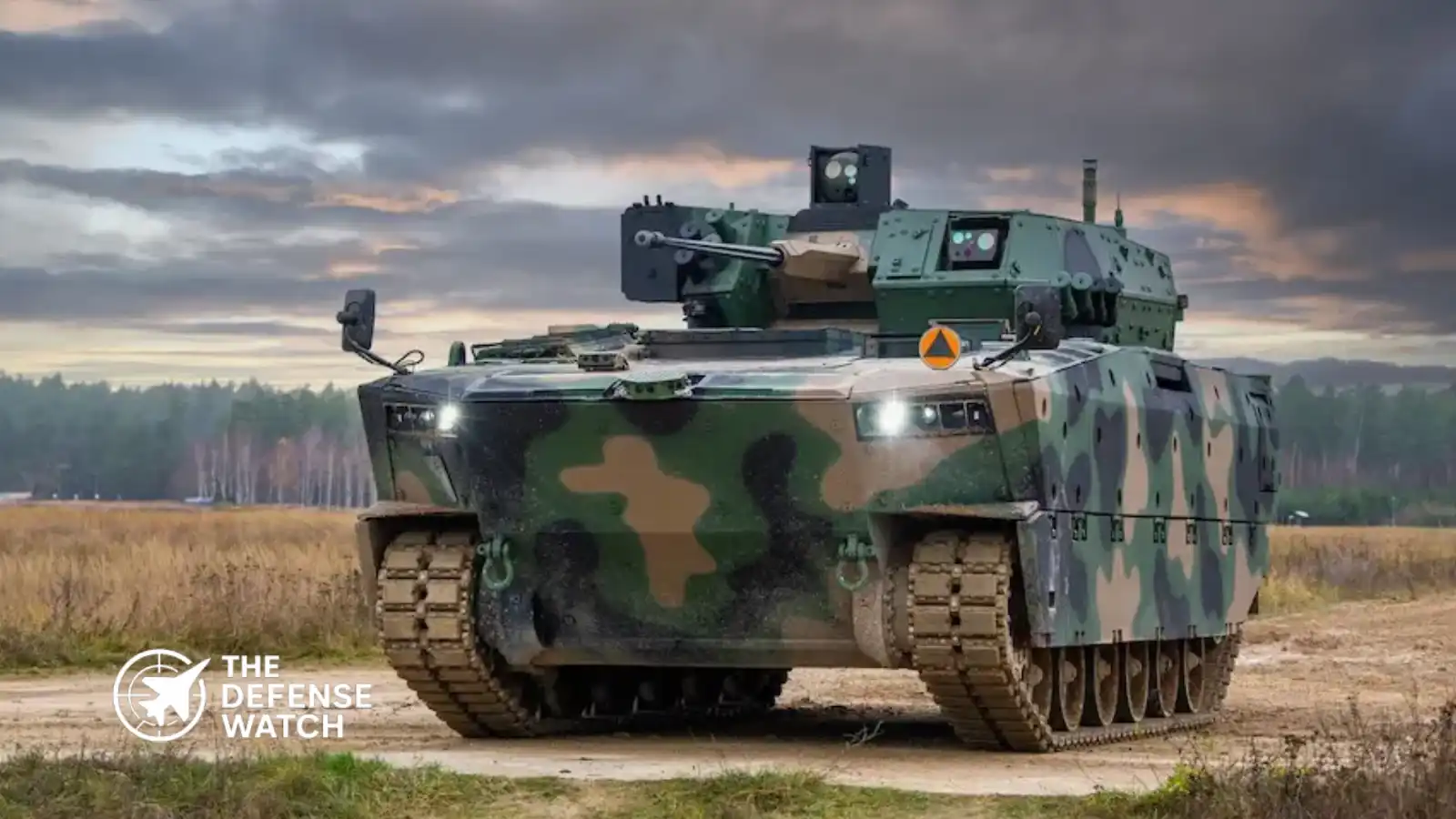
Poland’s state-owned defense group PGZ has secured a second major production contract for the domestically developed Borsuk infantry fighting vehicle (IFV), marking another milestone in the country’s ambitious military modernization strategy.
Poland’s defense procurement agency signed the agreement with a consortium led by Polska Grupa Zbrojeniowa (PGZ) for the delivery of 146 additional Borsuk vehicles by 2030. The contract is valued at approximately €1.8 billion, equivalent to around PLN 7.5 billion.
The new order follows an earlier production contract signed in March 2025 covering 111 Borsuk vehicles. Combined, confirmed procurement now stands at 257 vehicles.
Officials indicated that financing will be supported through the European Union’s Security Action for Europe (SAFE) instrument, a major defense financing initiative designed to accelerate military procurement across member states.
Borsuk Program Moves Into Large-Scale Production
The Borsuk program represents Poland’s most important tracked armored vehicle development effort in decades.
Developed by Huta Stalowa Wola (HSW), a PGZ subsidiary, the vehicle is intended to replace aging Soviet-designed BMP-1 infantry fighting vehicles that have remained in service across parts of the Polish Armed Forces.
The first production contract, signed in 2025, covered 111 vehicles worth approximately PLN 6.5 billion. Initial deliveries began in December 2025 when the first operational Borsuk vehicles were handed over to Polish Army units.
Under the broader framework agreement signed in 2023, Poland could ultimately acquire up to 1,400 vehicles and related variants, making it one of the largest armored vehicle procurement programs currently underway in Europe.
Key Borsuk Capabilities
The Borsuk was designed around Polish operational requirements that emphasize mobility across the country’s river-rich terrain and potential combat operations along NATO’s eastern frontier.
Core Specifications
Capability Details Vehicle Type Infantry Fighting Vehicle Main Armament 30mm Bushmaster Mk44S automatic cannon Secondary Armament Spike anti-tank guided missile launcher Additional Weapon 7.62mm coaxial machine gun Turret ZSSW-30 remote-controlled turret Mobility Fully amphibious Delivery Timeline Through 2030 Sources indicate the Borsuk remains the only modern European infantry fighting vehicle designed with full amphibious capability as a core operational requirement rather than a secondary feature.
Its ZSSW-30 unmanned turret combines anti-armor, anti-personnel, and reconnaissance capabilities while reducing crew exposure compared with traditional manned turret designs.
Why The New Contract Matters
The significance of the deal extends beyond the acquisition of 146 additional combat vehicles.
Poland has emerged as one of NATO’s fastest-growing defense spenders since Russia’s invasion of Ukraine. Warsaw has launched major procurement programs covering tanks, artillery, air defense systems, combat aircraft, and armored vehicles.
The Borsuk program occupies a particularly important role because mechanized infantry formations remain central to Poland’s land warfare doctrine.
Replacing legacy BMP platforms provides several operational advantages:
- Improved crew and troop protection
- Modern digital battlefield networking
- Enhanced anti-armor firepower
- Better integration with NATO forces
- Increased survivability in high-intensity combat
The vehicle’s amphibious capability is especially relevant for Poland’s geography, where numerous rivers and water obstacles can complicate military maneuver operations. Unlike heavier IFVs that often require engineering support for water crossings, Borsuk units can maintain operational tempo during rapid advances or defensive repositioning.
Strategic Implications For NATO’s Eastern Flank
The contract arrives amid a broader regional effort to expand armored and mechanized forces across Eastern Europe.
Poland’s military modernization strategy increasingly focuses on creating highly mobile formations capable of rapid deployment along the alliance’s eastern frontier. Open-source reporting indicates Borsuk-equipped units are expected to play a major role in formations stationed near Poland’s northeastern border region.
From a NATO perspective, modern IFVs are critical because they provide the protected mobility required for mechanized infantry operations in high-threat environments.
Recent battlefield lessons from Ukraine have reinforced the importance of combining armored protection, precision anti-tank weapons, unmanned systems integration, and networked battlefield awareness. The Borsuk’s architecture reflects many of these emerging requirements.
The program also strengthens Poland’s defense industrial base by sustaining domestic production lines and supporting a large network of local suppliers. Industry reporting suggests roughly 250 subcontractors are involved in the broader Borsuk ecosystem.
Export Ambitions Expand Beyond Domestic Orders
PGZ is simultaneously positioning the Borsuk for export opportunities.
During the IDEB 2026 defense exhibition in Bratislava, the company unveiled an export-oriented variant equipped with the Slovak-developed Turra 30 remote turret system from EVPÚ. The configuration was presented as a joint Polish-Slovak offering aimed at international customers seeking modern tracked combat vehicles.
The move suggests PGZ sees potential demand among European militaries seeking alternatives to platforms such as:
Although competition in the global IFV market remains intense, the Borsuk’s amphibious capability and modular architecture could provide differentiation in future procurement competitions.
Production Challenges Ahead
Despite the program’s momentum, execution remains the key challenge.
European defense manufacturers are facing pressure to increase production capacity as governments accelerate rearmament efforts. Delivering 146 additional vehicles on top of existing commitments will require sustained industrial expansion, workforce growth, and supply chain resilience.
However, the availability of SAFE financing and long-term procurement visibility provides PGZ with greater certainty for investment decisions than many previous European defense programs.
For Warsaw, maintaining delivery schedules will be critical as the military continues replacing legacy armored fleets and building new mechanized formations.

Executive Summary:
Swedish defense company Saab and Poland’s Polska Grupa Zbrojeniowa (PGZ) have signed a strategic naval cooperation agreement focused on submarines, surface vessels, and underwater systems. The partnership reflects growing European efforts to strengthen maritime security and industrial cooperation in the Baltic region amid rising regional defense pressures.
Saab And PGZ Naval Cooperation Expands European Maritime Defense Ties
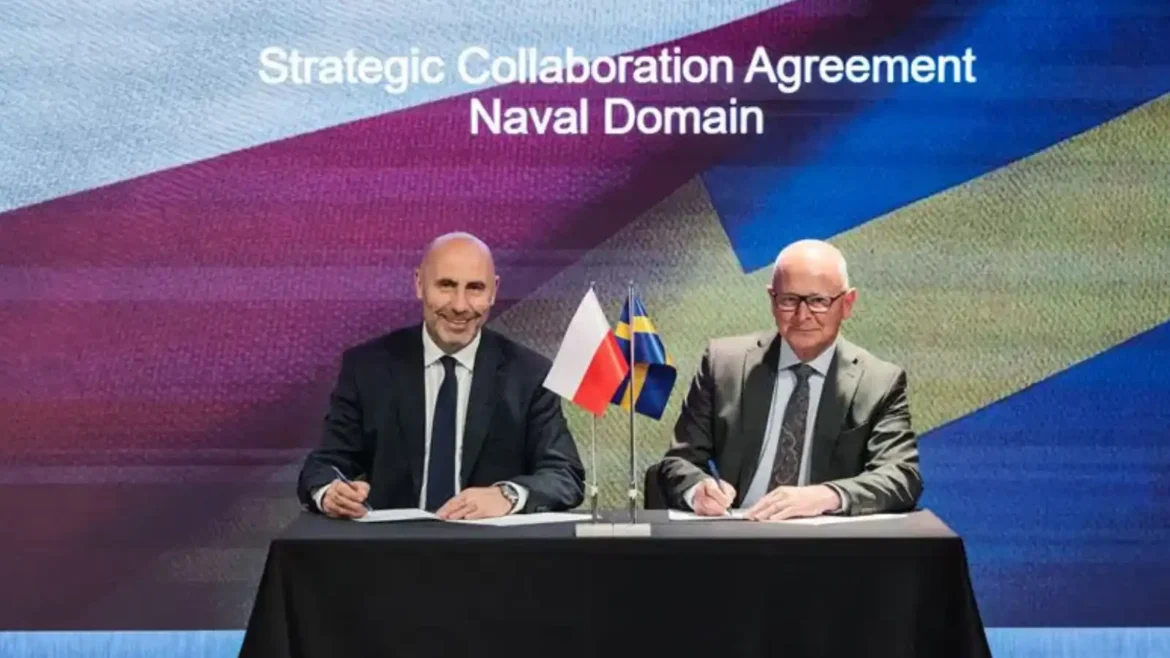
Swedish defense company Saab and Poland’s state-owned defense group PGZ have signed a strategic naval cooperation agreement covering submarines, surface vessels, and underwater systems, marking a significant step in regional maritime defense cooperation.
The agreement, announced by Saab and reported by Defence Industry Europe, aims to deepen industrial collaboration between Sweden and Poland as NATO members continue expanding naval readiness in Northern and Eastern Europe.
The cooperation framework includes potential collaboration in naval platforms, underwater technologies, maintenance, and future modernization programs. Both companies indicated that the partnership is intended to support long-term capability development for regional maritime security operations.
Strategic Focus On Submarines And Underwater Warfare
A major focus of the Saab and PGZ agreement centers on submarine capabilities and underwater warfare systems. Saab is widely recognized for its submarine expertise through the development of the A26 Blekinge-class submarine program and advanced underwater technologies.
Saab has increasingly positioned itself as a key European supplier of naval systems, particularly in anti-submarine warfare, underwater surveillance, and maritime combat systems.
Meanwhile, Polska Grupa Zbrojeniowa continues expanding Poland’s domestic naval industrial base as Warsaw accelerates military modernization efforts across multiple domains.
The partnership could support Poland’s broader naval modernization plans, including future submarine procurement efforts and expanded indigenous shipbuilding capabilities. Although no procurement contract or financial value was disclosed, the agreement establishes a framework for future industrial and operational cooperation.
Baltic Security Environment Driving Maritime Cooperation
The Saab PGZ naval cooperation agreement comes amid heightened security concerns across the Baltic Sea region following Russia’s continued military activities near NATO borders and growing emphasis on maritime infrastructure protection.
European governments have increased investments in naval defense, anti-submarine warfare, and underwater monitoring capabilities after a series of incidents involving critical undersea infrastructure in the Baltic and North Sea regions over the past several years.
For Poland, maritime security has become increasingly important as the country modernizes its armed forces and expands defense spending. Warsaw has launched multiple modernization programs focused on air defense, armored forces, missile systems, and naval assets.
Sweden’s accession to NATO has also reshaped regional defense dynamics. Stockholm now plays a more integrated role in alliance maritime operations across Northern Europe, particularly in the Baltic Sea theater.
The Saab and PGZ partnership reflects a broader trend of European defense industrial cooperation designed to reduce reliance on non-European suppliers while improving interoperability among NATO members.
Industrial Cooperation Could Support Future Naval Programs
The agreement may create opportunities for future collaboration on naval shipbuilding, sustainment programs, combat management systems, and underwater technologies.
Saab has extensive experience integrating advanced naval combat systems onto surface combatants and submarines. The company’s portfolio includes naval radar systems, underwater sensors, torpedoes, and command-and-control solutions used by several NATO and partner nations.
PGZ, which oversees a large network of Polish defense companies, has sought greater participation in domestic and international naval programs. The group has played a central role in supporting Poland’s shipbuilding and defense manufacturing sectors.
While details remain limited, the cooperation framework suggests both companies are preparing for long-term collaboration tied to regional maritime modernization requirements.
Defense analysts view such partnerships as increasingly important as European states seek to accelerate procurement timelines, improve supply chain resilience, and strengthen domestic industrial capacity.
Growing European Defense Integration
The Saab PGZ naval cooperation agreement also highlights the growing importance of cross-border European defense partnerships amid rising geopolitical uncertainty.
Since Russia’s invasion of Ukraine, European NATO members have expanded defense spending and prioritized collaborative industrial projects to improve readiness and reduce capability gaps.
Naval defense has become a particularly important area of focus due to increased activity in the Baltic Sea, Arctic approaches, and North Atlantic maritime corridors.
The cooperation between Saab and PGZ aligns with broader NATO objectives aimed at improving regional deterrence, strengthening maritime domain awareness, and enhancing allied operational integration.
Although the agreement does not yet include confirmed production programs or platform acquisitions, it establishes a strategic foundation that could influence future naval procurement decisions in the region.
Why The Saab PGZ Partnership Matters
The agreement demonstrates how European defense companies are increasingly aligning industrial capabilities with evolving NATO operational requirements.
For Saab, the partnership strengthens its position in Central and Eastern European defense markets while expanding opportunities for naval cooperation with Poland.
For PGZ, the agreement offers access to advanced naval technologies and operational expertise at a time when Poland is rapidly modernizing its military forces.
The partnership also reinforces the strategic importance of the Baltic region, where maritime security, underwater infrastructure protection, and anti-submarine warfare are becoming central priorities for NATO planners.
As European governments continue increasing defense investments, partnerships such as the Saab PGZ agreement are likely to play a larger role in shaping future naval modernization programs across the continent.