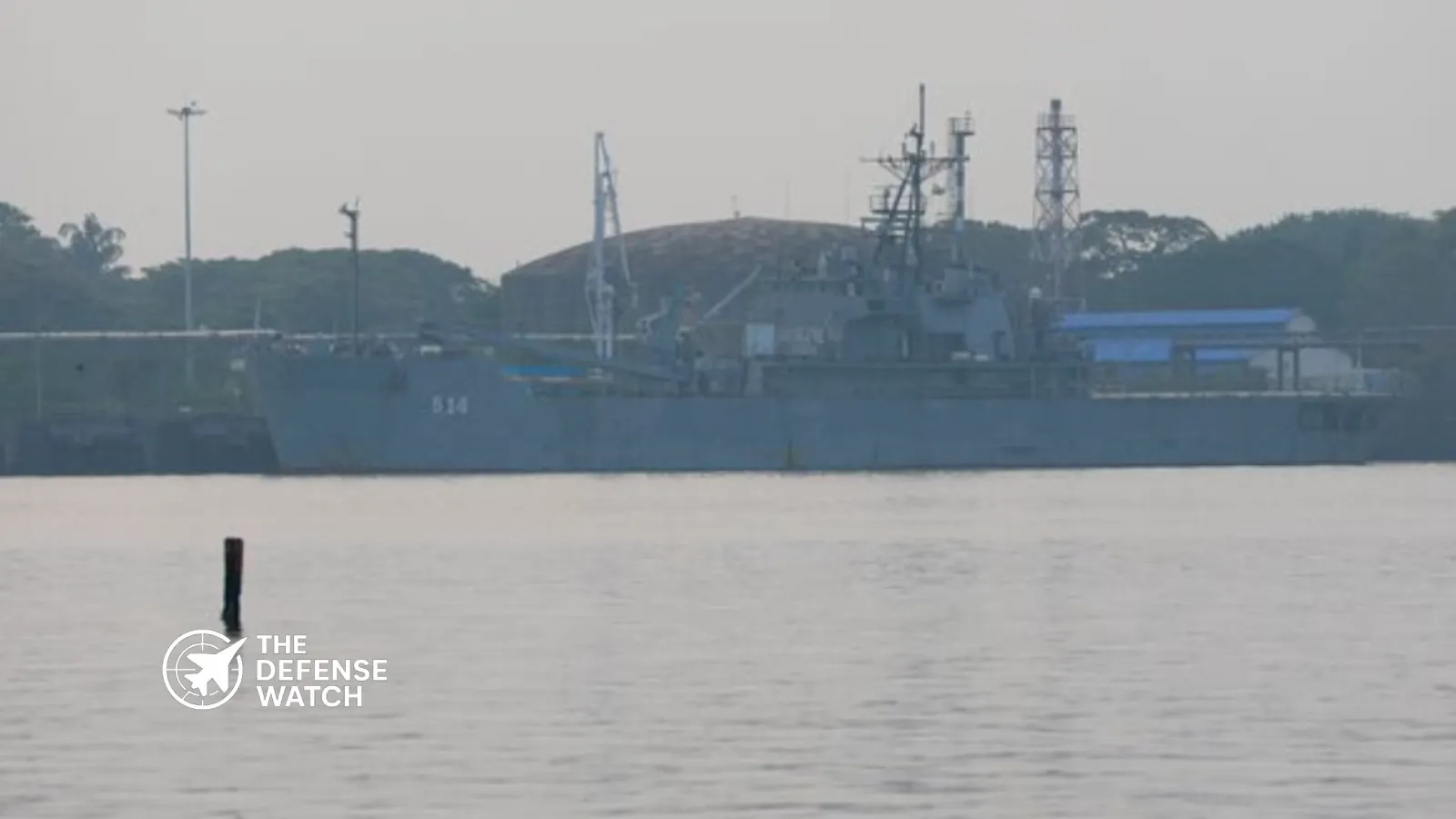
- Iranian landing ship IRIS Lavan docked inside a controlled naval zone at Kochi, India.
- The vessel reportedly developed technical problems and requested emergency port access.
- The docking occurred during escalating maritime tensions linked to the Iran conflict.
- India approved the docking request on March 1 after Iran submitted it on February 28.
- The ship’s 183 crew members are being supported at Indian naval facilities in Kochi.
Iranian Landing Ship Kochi Docking Highlights Rising Indian Ocean Tensions
The Iranian landing ship Kochi docking incident has drawn attention after the Iranian Navy vessel IRIS Lavan entered a restricted naval zone at Kochi, India, amid rising maritime tensions linked to the ongoing Iran conflict. Satellite imagery confirms the amphibious vessel is moored within a secured area normally used by the Indian Navy.
Indian authorities granted the ship permission to dock after Tehran reported technical issues while the vessel was operating in the Indian Ocean region. The decision allowed the Iranian vessel and its crew to access naval facilities in Kochi, a major Indian naval hub on the Arabian Sea.
The development occurred during a volatile period in regional security, shortly after another Iranian warship was sunk in the Indian Ocean during escalating hostilities.
The Big Picture
Naval activity across the Indian Ocean has intensified as the Iran conflict expands beyond the Persian Gulf and into critical maritime corridors linking the Middle East and Asia.
The Indian Ocean hosts some of the world’s busiest sea lanes, including energy supply routes connecting Gulf producers to Asian markets. Increased naval deployments, surveillance missions, and military exercises have turned the region into a strategic crossroads for several major powers.
Iran has periodically deployed naval task groups into the Indian Ocean as part of diplomatic and training missions. These deployments often include surface combatants, logistics ships, and amphibious platforms designed to demonstrate blue water operational capability.
The docking of an Iranian naval vessel at an Indian naval facility therefore carries geopolitical significance beyond a routine port call. It highlights the complex balance regional states must maintain as tensions between Iran and Western powers escalate.
What’s Happening
The Iranian landing ship IRIS Lavan docked at Kochi on March 4 after reporting technical issues while operating in the region. Iranian authorities submitted a request for emergency docking on February 28, which India approved on March 1.
Satellite imagery analyzed by defense observers shows the ship positioned alongside a reinforced pier inside a fenced naval zone surrounded by restricted access roads, indicating the vessel is being hosted within a secure military facility rather than a commercial port.
The vessel reportedly carries 183 crew members, including naval cadets participating in training activities linked to international maritime events in the region.
The docking took place the same day an Iranian frigate, IRIS Dena, was sunk by a United States Navy submarine off the coast of Sri Lanka during the escalating Iran conflict.
Indian officials stated the decision to allow the vessel into Kochi was based on humanitarian considerations after the ship experienced technical problems during its deployment.
Why It Matters
The Iranian landing ship Kochi docking illustrates how regional navies are managing operational realities amid a rapidly expanding maritime security crisis.
Port access for naval vessels in distress is permitted under international maritime practice. However, allowing a warship from a country involved in active hostilities to dock at a military facility requires careful political calculation.
India has traditionally maintained a policy of strategic autonomy in its foreign and defense policy. That approach allows New Delhi to sustain defense cooperation with the United States while preserving longstanding diplomatic and economic ties with Iran.
Providing humanitarian assistance to an Iranian naval vessel fits within that framework, but the decision also reflects the practical need to maintain maritime stability in the Indian Ocean.
Strategic Implications
The presence of an Iranian naval ship inside an Indian naval zone highlights the growing operational complexity of the Indo Pacific maritime environment.
First, the incident demonstrates how the Iran conflict now intersects with one of the world’s most strategically important naval theaters. The Indian Ocean is increasingly central to global energy flows, submarine patrol routes, and multinational naval exercises.
Second, it underscores India’s role as a regional maritime stabilizer. By allowing the vessel to dock, India ensured the safety of the crew and prevented a potentially dangerous maritime incident involving a disabled warship.
Third, the episode shows how naval diplomacy remains a key tool in crisis management. Controlled access to naval bases allows states to provide assistance while maintaining strict operational oversight of foreign military assets.
Competitor View
Regional powers and global competitors will interpret the docking through different strategic lenses.
Iran may view India’s decision as evidence that it retains access to diplomatic and logistical support networks beyond the Middle East. Such access could prove valuable for long distance naval deployments.
China is likely monitoring the development closely. Beijing has steadily expanded its naval presence in the Indian Ocean through ports and bases linked to the People’s Liberation Army Navy.
The United States may view the event primarily through the lens of maritime safety and humanitarian practice, though the broader Iran conflict ensures that any Iranian naval activity in the region remains closely watched by U.S. forces.
What To Watch Next
Several developments could shape the next phase of the situation.
Repairs and inspections aboard IRIS Lavan will determine how long the vessel remains at Kochi. If significant mechanical problems are confirmed, the ship could remain in port for an extended period.
Regional naval patrols are also likely to increase following the sinking of the Iranian frigate IRIS Dena, which has heightened security concerns across the Indian Ocean.
Diplomatic messaging from New Delhi, Tehran, and Washington will also be closely examined for signals about how each government intends to manage naval interactions in the region.
Capability Gap
The episode highlights a persistent operational challenge for long range naval deployments.
Iran’s navy has expanded its presence in distant waters over the past decade, but many of its ships are aging platforms that require significant maintenance during extended missions.
Landing ships such as IRIS Lavan, part of Iran’s Hengam class amphibious fleet, are designed for logistics transport and amphibious operations rather than sustained blue water operations. Mechanical issues during long deployments are therefore not uncommon.
For Iran, improving logistics support and overseas maintenance access remains a key capability gap if it intends to maintain persistent naval operations far from its home ports.
The Bottom Line
The Iranian landing ship Kochi docking highlights how the expanding Iran conflict is reshaping naval dynamics across the Indian Ocean and testing regional diplomatic balance.
Get real time update about this post category directly on your device, subscribe now.