US Tempest Air Defense System Makes Combat Debut in Ukraine
The US Tempest air defense system has recorded its first confirmed combat success in Ukraine, intercepting at least 21 Russian Shahed drones, according to video footage released by the Ukrainian Air Force on January 13.
The footage, published by Ukraine’s Air Command Central, shows the mobile short-range air defense platform firing missiles into the night sky during drone interception operations. A Ukrainian operator identified by the call sign “Shorty” confirmed the tally in the video, stating that the crew had destroyed 21 Shahed unmanned aerial vehicles (UAVs).
The system had reportedly been operating covertly for several months prior to its public unveiling, underscoring the quiet integration of new Western air defense capabilities into Ukraine’s layered air defense network.
Tempest: A New US Short-Range Air Defense Asset
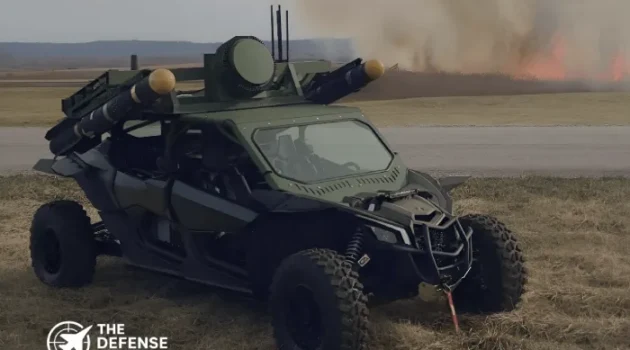
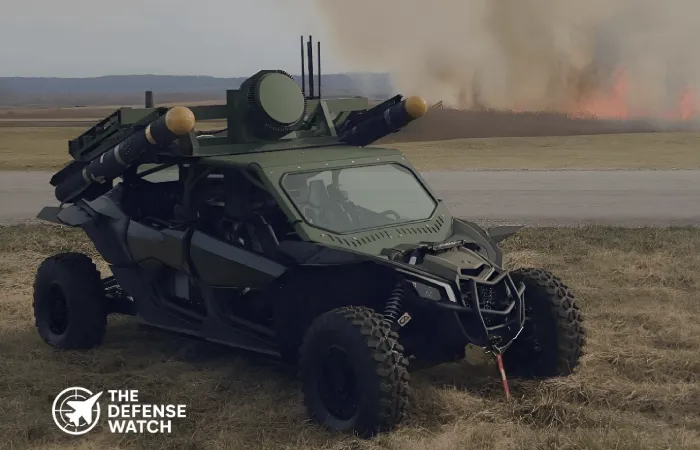
The Tempest system is developed by Virginia-based defense contractor V2X and is designed as a mobile, short-range air defense (SHORAD) solution optimized for countering low-flying threats such as drones, cruise missiles, and loitering munitions.
Mounted on a wheeled tactical vehicle, the Tempest emphasizes mobility, rapid deployment, and point-defense protection, making it well-suited for defending critical infrastructure and forward military positions against persistent drone attacks.
While V2X has not publicly disclosed full technical specifications, the system is understood to integrate electro-optical sensors, radar cueing, and missile interceptors, allowing rapid engagement of small and fast-moving aerial targets like Iran-designed Shahed drones used extensively by Russian forces.
Operational Impact Against Shahed Drones
Russian forces have relied heavily on Shahed-131 and Shahed-136 drones to strike Ukrainian energy infrastructure, logistics hubs, and urban centers. These low-cost UAVs present a persistent challenge due to their numbers and relatively small radar signatures.
The interception of 21 Shahed drones by a single Tempest crew suggests the system may offer a cost-effective counter-UAS capability, particularly when integrated into broader Ukrainian air defense operations alongside systems such as NASAMS, IRIS-T, Patriot, and Soviet-era platforms.
Ukrainian air defense units have increasingly emphasized layered defenses, using short-range systems to intercept drones and reserving higher-end interceptors for ballistic and cruise missile threats.
Quiet Deployment Highlights US Support Strategy
The revelation that the Tempest system had been operating in Ukraine for months before its public disclosure reflects a broader pattern in US military assistance, where certain capabilities are deployed discreetly before formal acknowledgment.
Washington has steadily expanded its support for Ukraine’s air defense modernization, particularly in response to Russia’s sustained drone and missile campaign. Short-range air defense systems have become a critical component of this effort, addressing gaps that high-end systems are not optimized to fill.
Neither the US Department of Defense nor V2X has publicly commented on the number of Tempest systems delivered or their future deployment plans.
Implications for Ukraine’s Air Defense Modernization
The Tempest’s combat debut adds another layer to Ukraine’s evolving air defense architecture, reinforcing its ability to counter asymmetric aerial threats with flexible, mobile solutions.
As drone warfare continues to shape the conflict, systems capable of rapid repositioning and sustained operations against UAV swarms are increasingly central to battlefield survivability and infrastructure protection.
The successful engagement of 21 Shahed drones positions the Tempest as a potentially valuable asset not only for Ukraine, but also for other militaries seeking scalable counter-drone solutions.
Get real time update about this post category directly on your device, subscribe now.