
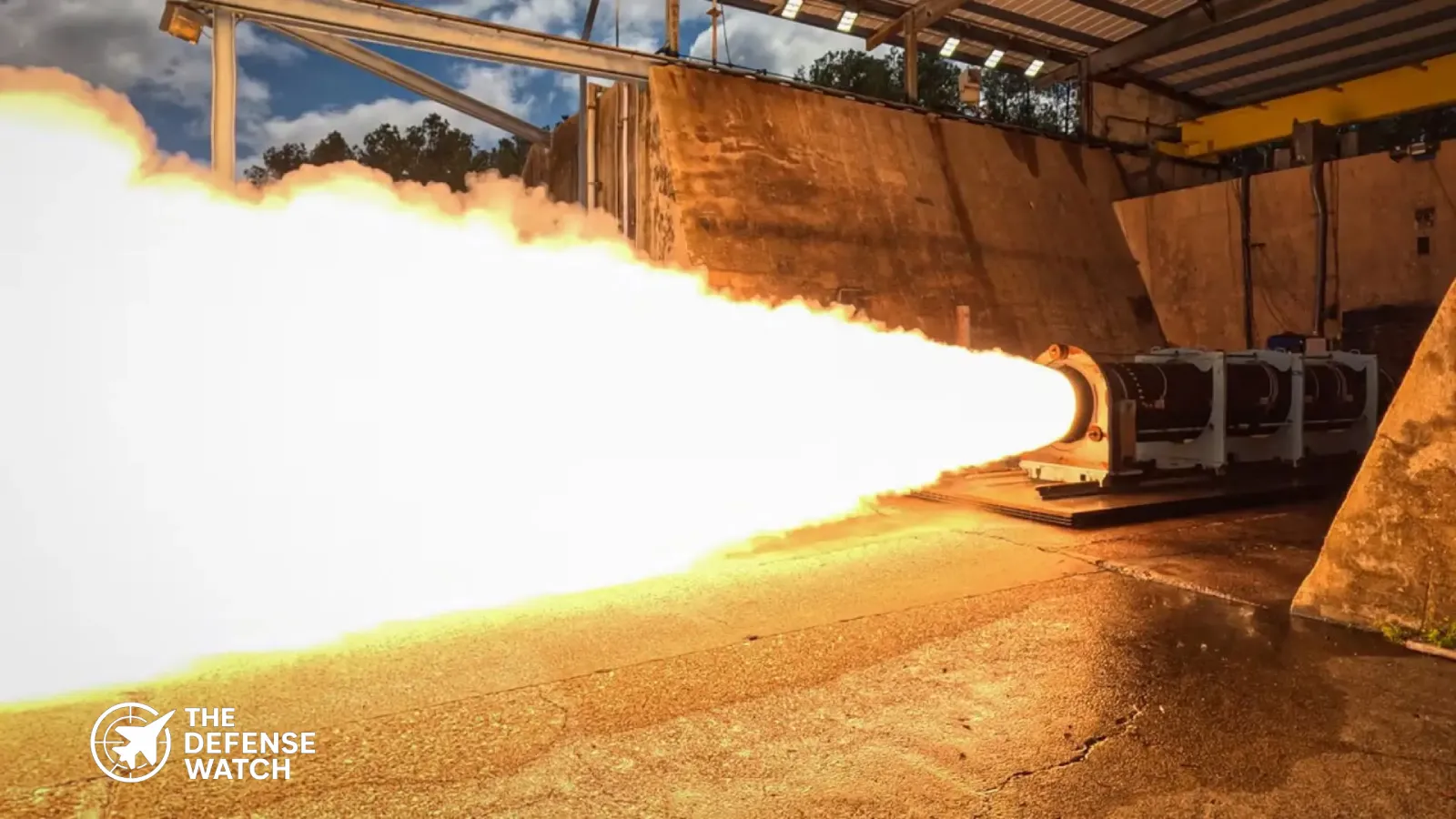
A major U.S. defense contractor will produce 60 solid rocket motors designed to support hypersonic flight testing under a commercial agreement with Kratos Defense & Security Solutions. The deal, announced late December 2025, covers the Zeus family of hypersonic motors and is intended to expand U.S. industrial capacity for advanced missile and hypersonic testing programs.
The letter of intent was issued to L3Harris Technologies, which will increase annual output of Zeus motors by more than 50 percent at its Camden Arkansas production campus. The contract follows successful development and flight test of the Zeus 1 and Zeus 2 motors carried out by Kratos.
Background: Hypersonic Testing and Industrial Capacity
Hypersonic technologies are a central area of focus for the U.S. Department of Defense as rival states pursue advanced weapons capable of sustained flight at speeds above Mach 5. The Pentagon has emphasized throughput of test flights to mature designs and reduce development timelines. However, limited access to propulsion systems and test infrastructure has constrained rapid progress.
Kratos’ Zeus solid rocket motors are developed to replace older suborbital rocket motors and support programs such as the Multi-Service Advanced Capability Hypersonic Test Bed, a Pentagon initiative aimed at accelerating test frequency and flexibility for hypersonic platforms.
L3Harris, through its Aerojet Rocketdyne division, designed the Zeus motors in Huntsville Alabama to meet Kratos’ performance requirements. Production will take place at the company’s nearly 2,000-acre Camden site, which manufactures over 115,000 solid rocket motors each year, ranging from small tactical units to large motors comparable in size to sport utility vehicles.
Details of the Planned Production
The letter of intent does not specify contract value or a delivery schedule, but L3Harris said the agreement would support significant increases in production. “We are pleased to continue working with Kratos and to support significant production increases for the Zeus advanced large solid rocket motors,” Ken Bedingfield, President of Aerojet Rocketdyne at L3Harris, said in a company statement.
Zeus motors are designed in a form compatible with older rocket systems. This approach allows integration with existing launch infrastructure and test stands with minimal changes while delivering greater thrust and efficiency. The increased output is expected to support more frequent hypersonic test flights and larger flight envelopes for test vehicles.
Production at Camden reflects broader U.S. investment in solid rocket motor output. In late 2025 L3Harris announced plans for a new 110-acre rocket motor production campus in the same area to boost capacity sixfold to meet rising demand for motors used in missiles, interceptors, and hypersonic systems.
Strategic Context
The U.S. hypersonic ecosystem includes a mix of defense primes, specialized propulsion companies, and government labs. Small and medium firms, such as Ursa Major, are advancing liquid and hybrid propulsion systems under Air Force Research Laboratory contracts. For example, Ursa Major was awarded nearly $28.6 million to develop tactical, storable liquid propulsion systems that could support both hypersonic and on-orbit missions.
Partnerships between industry and defense agencies aim to diversify the supply base and smooth technology maturation. The Department of Defense’s Manufacturing Capability Expansion and Investment Prioritization program has also funded efforts to expand solid rocket motor production capacity and lower unit costs, a key factor in fielding high-cadence hypersonic testing and operational systems.
What’s Next
If formalized, the L3Harris-Kratos production agreement would bolster U.S. industrial capacity for hypersonic propulsion. That capacity is expected to support a growing portfolio of test flights, range activities, and prototype development. The expanded output could play a role in broader U.S. efforts to compete with near-peer adversaries in advanced missile systems and weapons test programs.
With planned investments in production facilities and ongoing contracts awarded to propulsion developers by Air Force laboratories, the U.S. defense industrial base is moving toward higher throughput of rocket motors and engines critical for hypersonic test and operational systems. Continued progress on these fronts will be watched closely by defense planners as they assess readiness, supply chain resilience, and technological edge in hypersonic weapons and associated systems.
Get real time update about this post category directly on your device, subscribe now.
