L3Harris, Skydio Link X10D Drone to Anti-Jam Radios
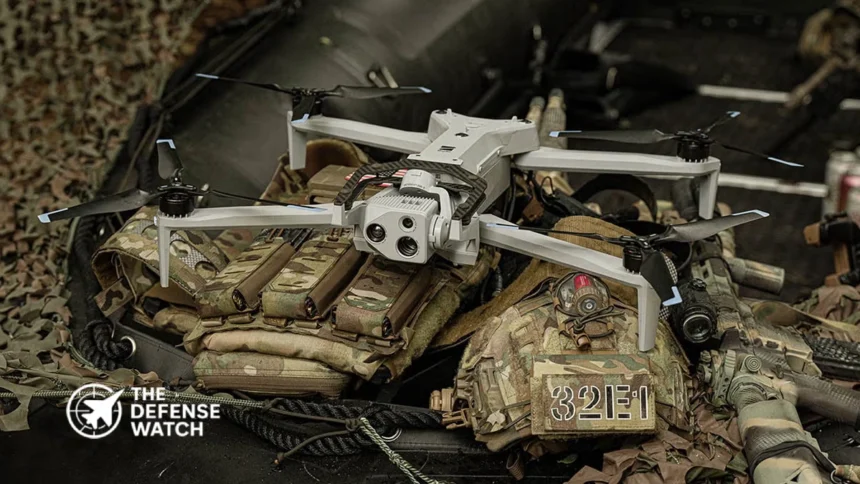
L3Harris Technologies and Skydio are combining a small autonomous reconnaissance drone with tactical military communications technology designed to maintain command links in environments where electronic warfare threatens connectivity. The collaboration pairs Skydio’s X10D uncrewed aircraft with L3Harris Falcon IV embeddable radios and its Wraith waveform, according to an announcement published on October 15, 2026.
The integration addresses a practical problem for military drone operators: collecting useful intelligence is not enough if the aircraft cannot reliably transmit video, location information and other mission data to the personnel who need it.
For forces operating against an adversary equipped with electronic warfare systems, the ability to maintain a communications link can determine whether a small drone remains useful throughout a reconnaissance mission.
Connecting the X10D to tactical military networks
The Skydio X10D is a small uncrewed aircraft designed for defense and government missions. In the new collaboration, the aircraft is paired with L3Harris communications equipment intended to connect airborne sensing with the tactical networks used by ground forces.
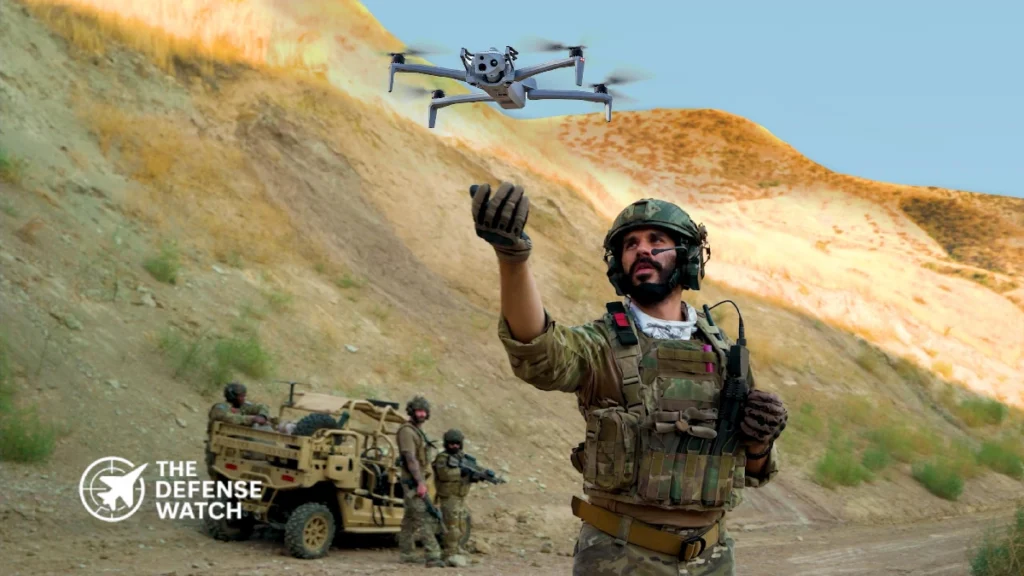
L3Harris said the integration combines the Falcon IV radio family with its Wraith waveform to provide layered anti-jam protection and electronic warfare capabilities. The companies also identified command-and-control connectivity and the delivery of mission-critical data and position location information as central objectives.
The distinction matters because a drone’s flight autonomy and its communications resilience solve different problems. Autonomous flight can help an aircraft navigate or perform tasks with limited pilot input, but it does not by itself guarantee that an operator can maintain control, receive sensor information or share intelligence when the radio-frequency environment is contested.
Integrating the aircraft with a tactical radio therefore addresses a different part of the reconnaissance mission: preserving the connection between the sensor and the force using its information.
Why electronic warfare resistance matters
Military forces increasingly use small drones to observe terrain, monitor activity and provide local reconnaissance without exposing personnel to the same risks. These aircraft can also generate large volumes of imagery and other sensor information that must reach operators and command networks in time to be useful.
An adversary can attempt to disrupt this process through radio-frequency interference, including jamming communications used for command and control or data transmission. Depending on the aircraft and its configuration, interference may limit the operator’s ability to direct a mission or receive information from the drone.
The L3Harris and Skydio integration is intended to reduce that vulnerability through a combination of aircraft autonomy and resilient communications. However, the companies’ announcement does not disclose quantified jamming-resistance performance, supported frequency bands, effective operating distances under interference or the conditions under which the integrated system was evaluated.
Consequently, the announcement establishes the intended capability, but it does not independently demonstrate how the system would perform against a particular adversary’s electronic warfare equipment.
Wraith and Falcon IV bring the communications layer
The integration draws on two elements of L3Harris’ tactical communications portfolio.
- Falcon IV radios: The radio family supplies the communications hardware incorporated into the X10D integration.
- Wraith waveform: The communications waveform is intended to provide resilient connectivity and anti-jam protection.
- Wraith Shield: L3Harris also identifies Wraith Shield as a waveform capability that can scan the spectrum, detect threats and support the neutralization of adversarial drones when used with compatible radios and associated capabilities.
The last capability broadens the company’s stated proposition beyond maintaining a drone’s communications link. Spectrum awareness can help military users identify activity in the electromagnetic environment, while counter-drone functions address the separate problem of hostile uncrewed aircraft.
These functions should not be conflated. Detecting a potential threat, maintaining a friendly drone’s connection and defeating an adversary’s aircraft involve different operational tasks. The announcement does not establish that every component performs all three functions independently or that the X10D itself becomes a counter-drone interceptor.
Interoperability could matter as much as the drone
One of the partnership’s more consequential features is its emphasis on compatibility with existing military communications equipment.
L3Harris says more than 150,000 tactical radios in U.S. and allied inventories are capable of hosting the Wraith waveform. That figure is a company statement about the wider installed radio base, not a confirmed count of radios already connected to Skydio aircraft.
If the integration can be adopted across compatible equipment already in service, military customers could potentially extend resilient communications to additional uncrewed platforms without replacing their entire tactical radio infrastructure. The practical benefits would depend on hardware compatibility, software configuration, security requirements and the work needed to integrate the system into individual units’ networks.
The companies have also previously demonstrated integration work involving the X10D and L3Harris radio equipment. In an earlier technical account, Skydio described a test flight using the X10D with an L3Harris RF-9820S-ER radio, transmitting command-and-control traffic and video over the Wraith waveform.
That earlier demonstration provides useful context for the October announcement. It indicates that the companies’ work builds on previous integration activity, although the available public information does not establish the full extent of testing, operational qualification or deployment.
What the announcement does not establish
The partnership addresses a relevant military communications challenge, but several acquisition and operational questions remain unanswered.
Neither the announcement nor the cited technical material establishes a new procurement contract, the number of aircraft involved in any planned fielding, a delivery schedule or a total program value. The announcement also does not identify a specific military unit that has received the integrated configuration.
There is similarly insufficient public information to assess the system’s performance against different jamming techniques, the degree of redundancy available if a communications link fails, or how its capabilities compare with competing drone and radio combinations under identical test conditions.
These details matter because anti-jam claims are highly dependent on operating conditions. Performance can vary with the interference source, signal environment, terrain, antenna placement, network configuration and the tactics used by an adversary.
The system’s operational value will ultimately depend on whether it can preserve useful connectivity under realistic conditions while remaining compatible with the communications networks that military units already use.
For L3Harris and Skydio, the immediate development is an effort to connect autonomous reconnaissance with resilient tactical communications. Whether that combination leads to broader adoption will depend on demonstrated performance, integration requirements and customer decisions that have not yet been publicly detailed.