
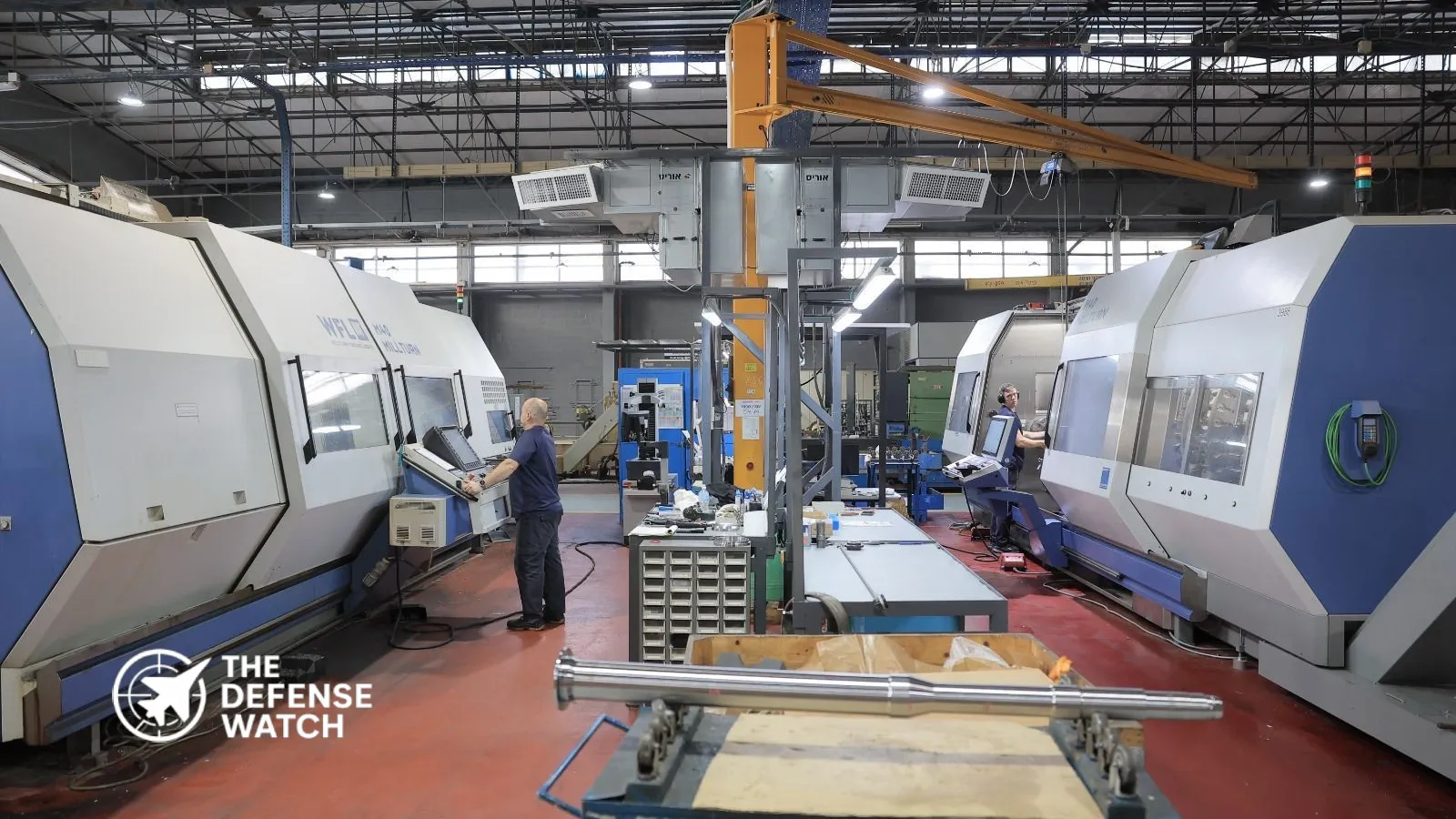
- ► Israel MOD signed an agreement with Ashot Ashkelon worth approximately $42 million.
- ► The deal covers rehabilitation and supply of Merkava tank transmissions.
- ► Work is part of a broader framework for 1,500 and 1,200 horsepower transmissions for Merkava and Namer platforms.
- ► Cumulative orders under the project now total about $82 million.
- ► The contract supports Israel’s effort to expand its domestic defense production base.
Israel MOD Signs $42 Million Merkava Tank Transmission Deal
The Israel MOD Merkava transmission deal marks another step in strengthening the operational readiness of Israel’s main battle tank fleet while reinforcing domestic defense manufacturing capacity.
The Defense Procurement Directorate within the Israel Ministry of Defense announced the signing of a contract valued at approximately $42 million with Ashot Ashkelon Industries Ltd. The agreement covers the rehabilitation and supply of transmissions for Merkava tanks operated by the Israel Defense Forces.
According to the ministry, the contract is part of a broader strategy led by Defense Minister Israel Katz and IMOD Director General Maj. Gen. Amir Baram, aimed at expanding Israel’s defense production base and supporting ongoing force buildup initiatives.
Scope Of The Merkava Tank Transmission Deal
Under the terms of the agreement, Ashot Ashkelon will rehabilitate transmissions used in the Merkava main battle tank. The total contract value exceeds NIS 130 million, equivalent to roughly $42 million at current exchange rates.
The project falls within a larger framework covering both 1,500 horsepower and 1,200 horsepower transmissions for the Merkava tank and the Namer armored personnel carrier. To date, cumulative orders under this broader program have reached approximately $82 million, or around NIS 253 million.
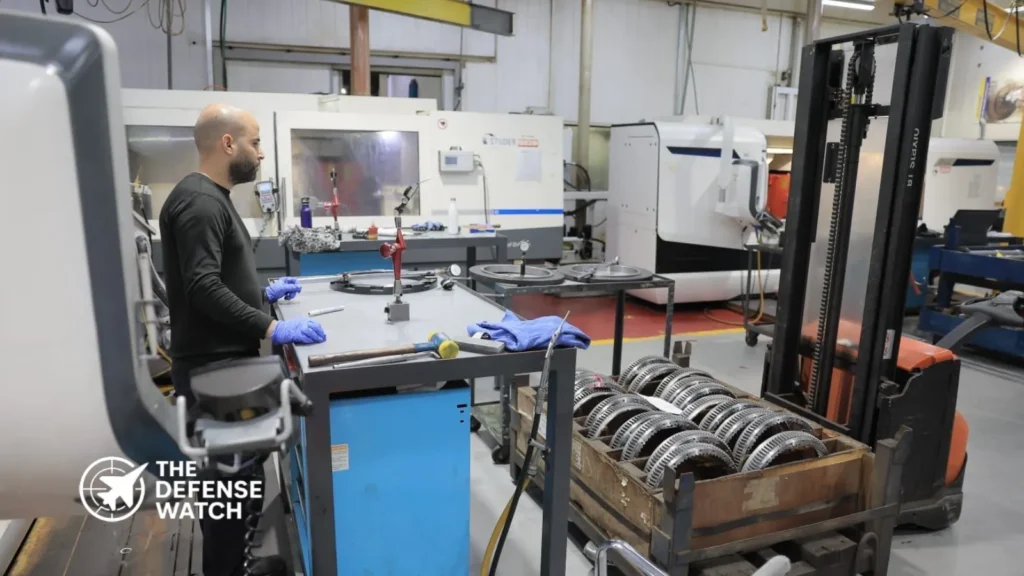
Ashot Ashkelon specializes in propulsion systems, transmissions, and other complex mechanical components for armored vehicles. Its portfolio includes key subsystems for the Merkava tank family and the Namer APC, both central to the IDF’s armored maneuver formations.
Why Transmission Rehabilitation Matters
The Israel MOD Merkava transmission deal underscores the often overlooked but critical role of sustainment in armored warfare.
Modern main battle tanks are complex systems that rely heavily on reliable propulsion and drivetrain components. The Merkava, designed and produced domestically in Israel, is built to operate in demanding terrain and high tempo combat scenarios. Transmission performance directly affects mobility, acceleration, and battlefield survivability.
Rehabilitating existing transmissions rather than procuring entirely new systems can reduce lifecycle costs and shorten turnaround times. For a military operating under sustained operational demands, maintaining fleet readiness is as important as acquiring new platforms.
Industry data and military logistics studies consistently show that maintenance, repair, and overhaul activities account for a significant share of total ownership costs for armored fleets. By investing in domestic rehabilitation capacity, Israel reduces dependency on external suppliers and strengthens supply chain resilience.
Broader Context: Industrial Expansion And Force Buildup
The Israel MOD Merkava transmission deal comes amid a series of contracts aimed at expanding the country’s defense industrial base.
Israel’s armored forces remain central to its ground maneuver doctrine. The Merkava tank, developed after lessons from earlier conflicts, emphasizes crew protection, survivability, and integration with advanced sensors and active protection systems. Maintaining this fleet in high readiness is a strategic priority.
The Namer APC, based on the Merkava chassis, forms the backbone of Israel’s heavy infantry brigades. Shared propulsion and transmission components between the Merkava and Namer platforms create economies of scale in sustainment and logistics.
From a policy perspective, the contract aligns with a broader trend among advanced militaries to localize critical defense production. Recent global supply chain disruptions and heightened regional tensions have reinforced the importance of domestic manufacturing depth.
According to official statements from the Israel Ministry of Defense, the new agreement is designed not only to support immediate operational needs but also to strengthen long term industrial capacity.
Implications For Regional Defense Posture
While the contract focuses on maintenance rather than new tank production, it carries strategic weight.
Sustainment investments signal intent to preserve and potentially expand armored capabilities. In the Middle East security environment, ground maneuver forces remain essential for deterrence and rapid response operations.
The Merkava fleet has undergone successive upgrades over the years, including improvements in fire control systems, protection suites, and digital integration. Ensuring that propulsion systems remain reliable is foundational to enabling these advanced capabilities.
For U.S. observers and defense planners, the Israel MOD Merkava transmission deal highlights a shared emphasis on readiness and industrial resilience. The U.S. Army, for example, has similarly prioritized maintenance and modernization efforts for the M1 Abrams fleet rather than pursuing entirely new tank designs in the near term.
Industrial Role Of Ashot Ashkelon
Ashot Ashkelon has long been a key supplier within Israel’s defense ecosystem. The company produces high precision gear systems, propulsion components, and mechanical assemblies for both domestic and export markets.
Its involvement in the Merkava and Namer programs reflects its position as a core subcontractor in armored vehicle production and sustainment. The new contract further consolidates that role.
By channeling funds into domestic companies, the Israel Ministry of Defense supports high skill manufacturing jobs and preserves specialized engineering expertise. In a sector where technical know how can erode without continuous production activity, steady contract flow is critical.
Looking Ahead
The Israel MOD Merkava transmission deal, valued at $42 million, may not represent a new platform acquisition. However, it reinforces a key reality of modern defense planning: readiness depends as much on sustainment as on procurement.
With cumulative orders under the broader transmission framework now reaching $82 million, Israel appears committed to ensuring long term mobility and reliability across its armored fleet.
As regional security dynamics continue to evolve, maintaining operational availability of heavy armored units remains central to Israel’s military doctrine. Contracts such as this one reflect a deliberate approach to force buildup, grounded in industrial capacity and lifecycle management.
Get real time update about this post category directly on your device, subscribe now.
