- ► Israeli officials assess Iran could possess up to 5,000 ballistic missiles by 2027.
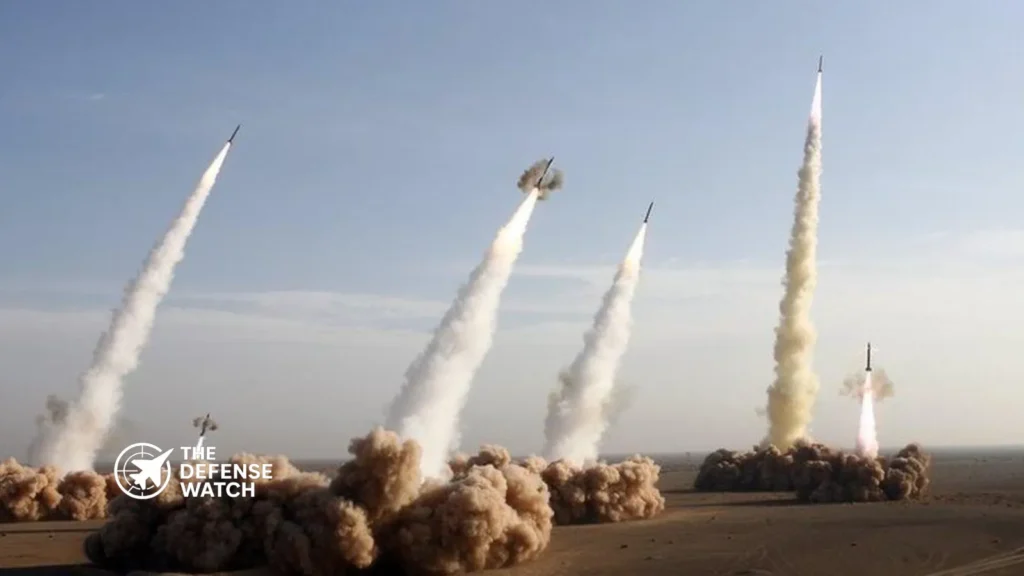
- ► Iran fields short and medium range ballistic missiles capable of reaching Israel and U.S. bases in the Gulf.
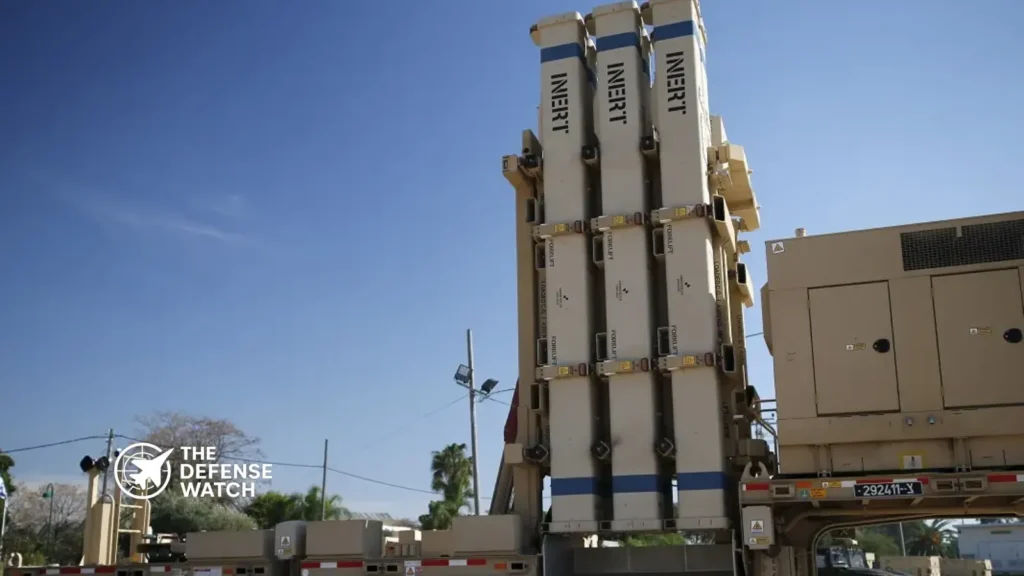
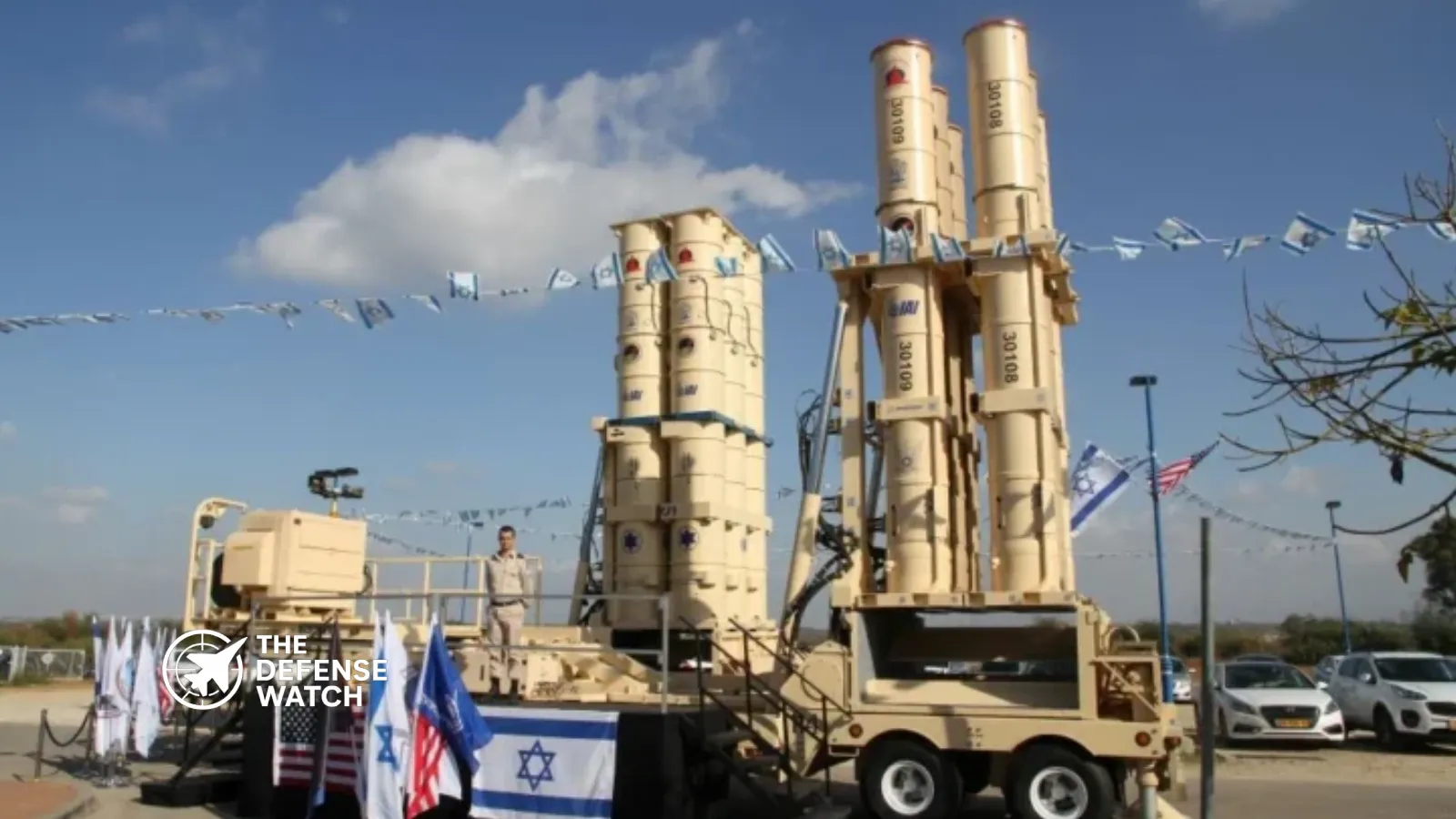
- ► Israel operates a layered missile defense network including Iron Dome, David’s Sling, and Arrow systems.
- ► U.S. forces in the Middle East rely on Patriot and THAAD batteries to defend key installations.
- ► Iranian missile production has continued despite sanctions and export control regimes.
- ► Large scale missile salvos pose saturation risks to existing regional missile defense systems.
Israel Iran Ballistic Missile Threat: A Growing Strategic Challenge
The Israel Iran ballistic missile threat is entering a new phase as Israeli officials warn that Tehran could field up to 5,000 ballistic missiles by 2027.
The warning reflects more than a raw number. It signals a shift in regional military balance, particularly for Israel’s layered missile defense architecture and for U.S. forces deployed across the Gulf.
Iran has steadily expanded its ballistic missile inventory over the past decade, despite international sanctions. Its arsenal now includes short range and medium range systems such as the Shahab and Sejjil families, along with precision guided variants that improve targeting accuracy. Israeli assessments suggest production capacity, not just stockpile size, is accelerating.
For Israel and its U.S. partners, the issue is no longer whether Iran has missiles. It is whether existing defensive systems can absorb sustained, large scale salvos.
Operational Impact: Stress Testing Missile Defense
Israel’s air and missile defense network is built around layered interception.
The lowest tier is the Iron Dome, designed primarily for short range rockets. Above it sits David’s Sling, intended for medium range threats. At the top tier is the Arrow system, developed with U.S. support to intercept longer range ballistic missiles outside the atmosphere.
This structure has proven effective against limited salvos from Gaza and sporadic launches from regional actors. A potential inventory of 5,000 Iranian ballistic missiles presents a different challenge.
Ballistic missile defense is constrained by interceptor inventory and reload time. Even high success rates can be strained if dozens or hundreds of missiles are launched in waves. Each interceptor carries significant cost, often in the millions of dollars per round.

For the United States, the operational concern centers on forward deployed forces. U.S. installations in Qatar, Bahrain, Kuwait, and the United Arab Emirates host air assets, logistics hubs, and command nodes. Many rely on the MIM-104 Patriot and THAAD for protection.
Those systems were designed to counter limited missile threats from state actors. A surge in Iranian production shifts the problem from capability to capacity.
Regional Security Context
Iran’s missile doctrine emphasizes deterrence through volume and survivability. Lacking a modern air force comparable to Israel or the United States, Tehran has invested heavily in ballistic and cruise missiles as asymmetric tools.
Over the past decade, Iran has demonstrated the ability to strike regional targets, including U.S. positions in Iraq in 2020. That strike highlighted improvements in accuracy and coordination.
If the projected growth materializes, the Israel Iran ballistic missile threat will not be confined to Israel. Gulf states hosting U.S. forces would also fall within range of large portions of Iran’s inventory.
This dynamic complicates coalition planning. It increases the demand for integrated air and missile defense, data sharing, and coordinated early warning across the region.
Industrial And Budget Dimensions
Missile defense is expensive on both sides of the equation.
Iran’s production of solid fuel ballistic missiles suggests a growing domestic industrial base. Solid fuel systems reduce launch preparation time and increase survivability.
On the defensive side, interceptors are costly and production lines are finite. U.S. budget documents from recent fiscal years show continued funding for Patriot and THAAD modernization, as well as support for Israeli systems through joint programs.
If threat assessments drive increased interceptor procurement, Congress will face tradeoffs. Resources allocated to missile defense may affect funding for other priorities such as next generation aircraft or naval modernization.
For Israel, sustained high interceptor usage in a major conflict would require rapid resupply, likely with U.S. assistance. That creates a direct linkage between U.S. industrial capacity and Israeli homeland defense.
Comparison With Competitors
Other regional actors face missile threats, but few match the scale projected for Iran.
North Korea maintains a significant ballistic missile force, though its focus is oriented toward Northeast Asia and the United States. Russia and China field larger arsenals, but their strategic focus lies elsewhere.
What differentiates Iran is the combination of geographic proximity to Israel and Gulf bases, growing missile numbers, and the potential use of proxy groups to complicate defense planning.
The Israel Iran ballistic missile threat is therefore distinct in its regional density. Distances are short, warning times are limited, and saturation attacks are feasible.
Strategic Assessment
The projected expansion of Iran’s missile arsenal has direct implications for regional power balance.
First, it reinforces deterrence through the threat of mass retaliation. Even if Israeli and U.S. defenses intercept a high percentage of incoming missiles, a small number penetrating defenses could inflict significant damage.
Second, it pressures defense budgets. Sustaining sufficient interceptor stocks requires steady procurement and industrial readiness. That benefits defense contractors involved in missile defense programs, but it also strains fiscal planning.
Third, it strengthens the case for deeper U.S. and regional integration. Shared radar networks, joint exercises, and coordinated command structures become more critical as missile numbers grow.
Fourth, escalation risks increase. In a crisis, preemptive strikes against missile launchers could be seen as necessary by one side and escalatory by the other. The speed of ballistic missile exchanges leaves limited room for diplomatic intervention once hostilities begin.
Finally, the signal to allies and adversaries is clear. Missile capability is central to modern deterrence in the Middle East. Airpower alone no longer defines regional superiority.
What happens next will depend on three factors: the pace of Iranian production, the scale of Israeli and U.S. interceptor procurement, and whether regional states move toward a more unified air and missile defense architecture.
Why This Matters Now
This issue matters now because timelines are compressing. A projected 2027 benchmark is within current defense budget cycles.
Procurement decisions made in Washington and Jerusalem over the next two years will determine whether defensive capacity keeps pace with offensive growth.
For the United States, the question is not only about defending Israel. It is about protecting U.S. forces and preserving freedom of action in the Gulf.
For Iran, expanding missile inventories enhances leverage without crossing the nuclear threshold.
For Israel, maintaining credible deterrence depends on proving that even a large scale missile campaign would fail to achieve strategic objectives.
The Israel Iran ballistic missile threat is therefore not just a numbers game. It is a test of industrial capacity, alliance cohesion, and the credibility of layered missile defense under stress.
Get real time update about this post category directly on your device, subscribe now.