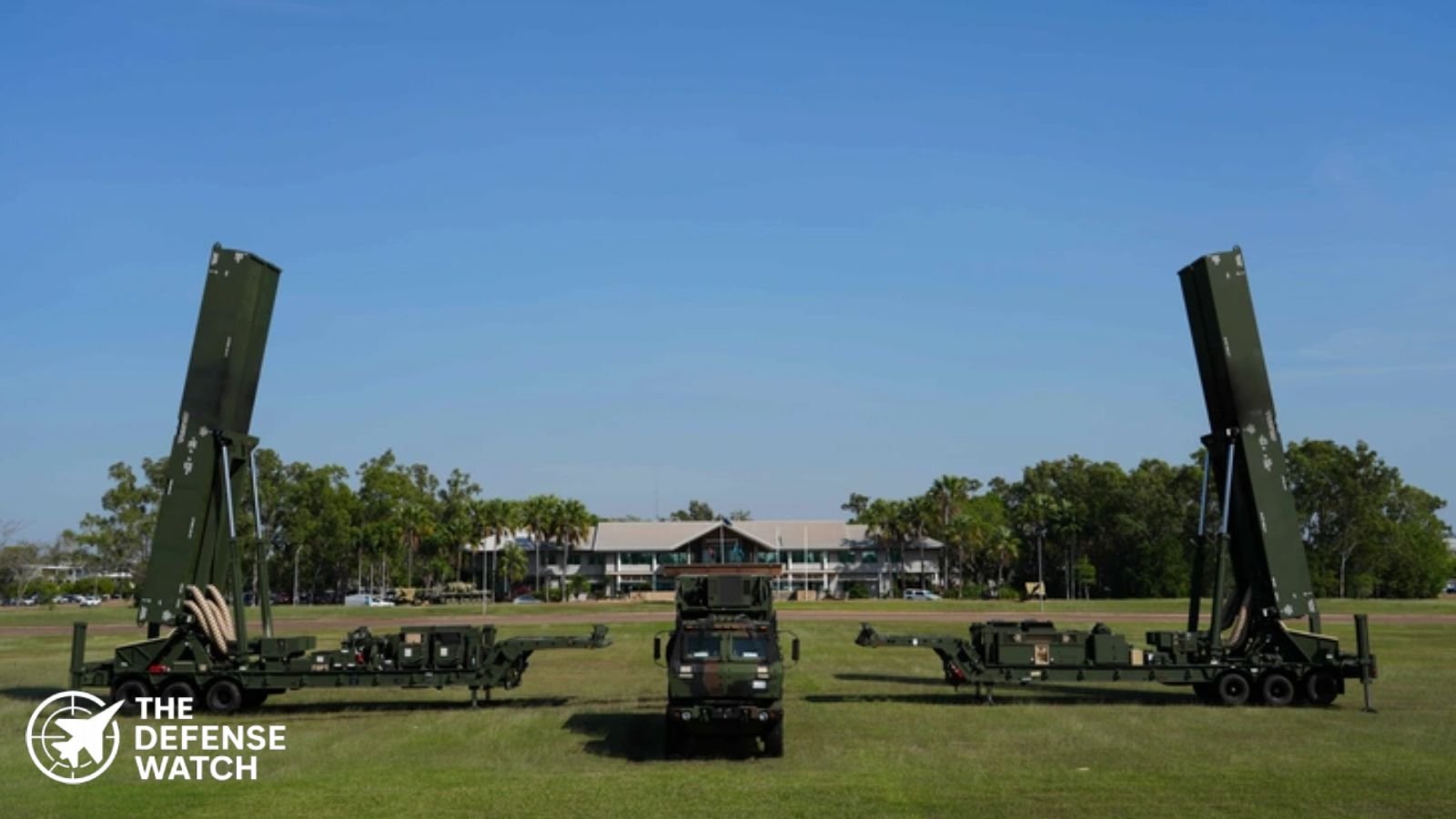
U.S. Evaluates Dark Eagle Hypersonic Missile Deployment Against Iranian Targets
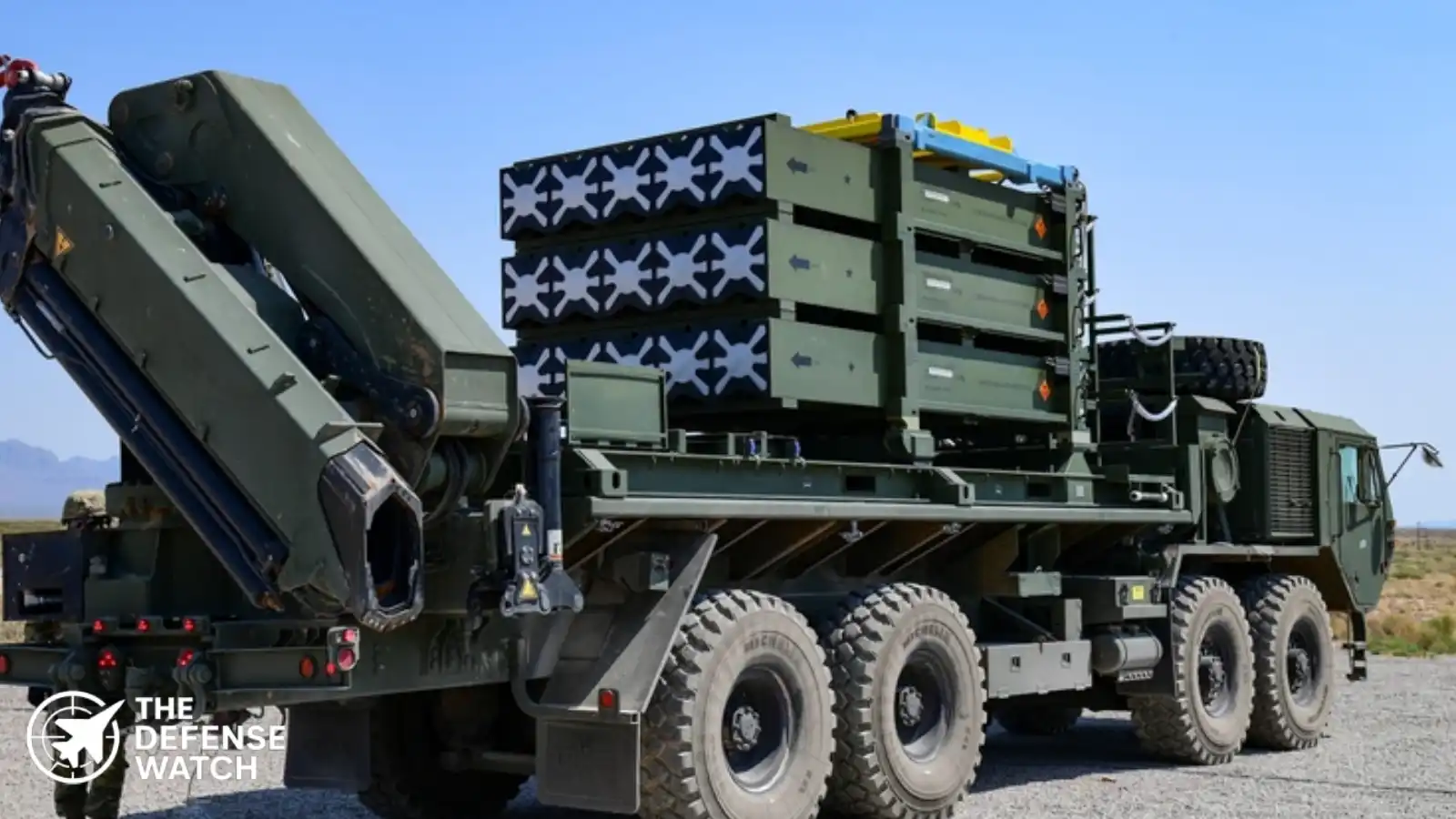
The Dark Eagle hypersonic missile is under consideration by the United States as a potential tool to strike Iranian ballistic missile launchers, signaling a shift in how Washington may address rapidly evolving threats in the Middle East.
According to reporting by defense sources, U.S. planners are assessing whether the Dark Eagle system, officially known as the Long Range Hypersonic Weapon (LRHW), could provide a fast, survivable strike option against mobile and hardened missile assets operated by Iran.
- Iran and Russia reportedly signed a secret €500 million missile deal in December 2025, according to the Financial Times.
- The pact covers delivery of 500 Verba man portable air defense launch units and 2,500 9M336 missiles through 2027 to 2029.
- The Verba systems are infrared guided MANPADS designed to target low altitude threats including drones and cruise missiles.
- The deal follows damage to Iran’s air defense network during the 2025 conflict with Israel.
- The agreement reflects deepening military cooperation between Tehran and Moscow.
This comes as concerns grow over Iran’s expanding ballistic missile inventory and its ability to disperse launch systems across difficult terrain, complicating traditional targeting methods.
Why Dark Eagle Changes The Strike Equation
The Dark Eagle hypersonic missile offers a combination of speed, maneuverability, and precision that conventional strike systems struggle to match. Traveling at speeds above Mach 5, the system can penetrate advanced air defenses and reduce enemy reaction time.
Unlike ballistic missiles, hypersonic glide vehicles follow unpredictable flight paths, making interception far more difficult. For U.S. forces, this translates into a credible option to neutralize high-value targets such as transporter erector launchers before they can fire.
The operational value is clear. Iranian missile units often rely on mobility and concealment. A weapon like Dark Eagle compresses the decision window, allowing strikes within minutes rather than hours.
This capability is especially relevant in a scenario where early neutralization of missile threats could prevent escalation or limit damage to regional bases and allied infrastructure.
Strategic Context: Rising Tensions And Expanding Threats
The consideration of deploying the Dark Eagle hypersonic missile reflects broader geopolitical pressure. Iran continues to invest heavily in missile development, including solid-fuel systems that are quicker to launch and harder to detect.
Recent intelligence assessments have highlighted improvements in Iran’s dispersal tactics and hardened infrastructure. Combined with reported defense cooperation with Russia, this trend has raised concerns in Washington about the survivability of existing deterrence tools.

From a strategic standpoint, introducing hypersonic weapons into the region would send a clear signal. It demonstrates the ability to hold time-sensitive targets at risk, even in heavily defended environments.
However, such a move also carries escalation risks. Hypersonic systems are often viewed as strategic assets, and their deployment could be interpreted as a shift toward more aggressive posturing.
Operational Challenges And Deployment Considerations
While the Dark Eagle hypersonic missile offers clear advantages, its deployment is not without challenges.
First, the system is still progressing toward full operational capability within the U.S. Army. Fielding timelines, logistics, and integration with existing command structures remain critical factors.
Second, basing options in the Middle East would need careful evaluation. Forward deployment increases responsiveness but also exposes high-value assets to potential counterstrikes.
Third, targeting mobile launchers requires robust intelligence, surveillance, and reconnaissance support. Hypersonic speed alone does not guarantee success without accurate and timely target data.
These factors suggest that any deployment decision would likely be part of a broader integrated strategy rather than a standalone solution.
Analysis: A Shift Toward Rapid Precision Strike
The potential use of the Dark Eagle hypersonic missile highlights a larger shift in U.S. military thinking. The focus is moving toward rapid, precision strikes against fleeting targets in contested environments.
Traditional airpower and cruise missiles remain important, but they may face limitations against advanced air defenses and mobile threats. Hypersonic systems fill this gap by combining speed with survivability.
In the Middle East context, this capability could reshape deterrence dynamics. It introduces uncertainty for adversaries relying on mobility and concealment, potentially reducing their confidence in surviving a first strike.
At the same time, it raises questions about escalation control. Faster weapons compress decision timelines not only for the attacker but also for the defender.
Israel Iron Dome UAE Deployment Signals New Phase In Regional Defense
Israel Iron Dome UAE cooperation appears to have entered a new stage after reports that Israel deployed one of its Iron Dome air defense batteries to the United Arab Emirates during the recent conflict with Iran.
According to Axios and follow-on regional reporting, the deployment included Tamir interceptors and Israeli operators, with the system used to help defend the UAE from incoming Iranian missile and drone attacks. Israeli and U.S. officials cited by Axios said the move came after consultations between Israeli Prime Minister Benjamin Netanyahu and UAE President Mohammed bin Zayed.
- Israel reportedly deployed an Iron Dome battery to the UAE during the 2026 conflict with Iran.
- Several dozen Israeli personnel were said to accompany the system to operate it on Emirati soil.
- The battery reportedly intercepted multiple Iranian missiles and drones targeting the UAE.
- The move marks the first known foreign combat deployment of Iron Dome.
- The deployment signals deeper Israel-UAE military coordination under the Abraham Accords.
If confirmed in full detail, this would be the first known operational use of Iron Dome on foreign territory during active combat.
Why Iron Dome Matters In The Gulf
Iron Dome air defense system was originally designed to defeat short-range rockets, artillery rounds, and drones. It has since evolved into a flexible lower-tier air defense layer capable of engaging cruise missiles and some aerial threats when integrated into broader networks.
That matters in the Gulf, where states such as the UAE already field advanced systems including THAAD and Patriot PAC-3. Those systems are optimized for higher-end ballistic missile defense, while Iron Dome can add magazine depth and cheaper intercept options against drones or lower-flying threats.
In practical terms, layered defense is critical during saturation attacks, where a mix of ballistic missiles, cruise missiles, and drones are launched simultaneously.
Strategic Meaning Beyond The Hardware
The more important story may be political rather than technical.
Since the 2020 Abraham Accords, Israel and the UAE have expanded diplomatic, economic, and security ties. A wartime deployment of Israeli military personnel and a sensitive air defense asset onto Emirati territory suggests a level of trust and urgency that would have been difficult to imagine only a few years ago.
It also indicates that Gulf states increasingly view integrated regional defense as necessary against missile and drone threats from Iran and aligned groups.
For Washington, which has long encouraged regional missile defense cooperation among partners, such a move aligns with broader U.S. strategic goals of burden-sharing and networked security architecture.
Operational Lessons From The Conflict
The reported attacks on the UAE underscore how modern air campaigns are changing. Precision missiles alone are no longer the sole challenge. Large numbers of low-cost drones can force defenders to expend expensive interceptors or overwhelm radars.
That dynamic has driven demand for multi-layered systems where each threat is matched with the most efficient response.
If Iron Dome performed successfully in the UAE, it could strengthen export interest in Israeli short-range air defense technology and accelerate additional Gulf procurement or joint integration programs.
What Comes Next
Neither Israel nor the UAE has publicly released full operational details. That is common for sensitive wartime air defense missions. But the reported deployment itself is significant.
It shows that missile defense is no longer just a national shield. It is becoming a coalition capability, rapidly moved where threats emerge.
For the Middle East, that may be one of the most important military lessons of the 2026 conflict.
KEY FACTS AT A GLANCE- U.S. Central Command issued a civilian safety warning regarding Iranian military activity in urban areas.
- Iran is reportedly launching one way attack drones and ballistic missiles from cities including Dezful, Esfahan, and Shiraz.
- CENTCOM states that sites used for military operations may lose protected civilian status under international law.
- Iran has launched hundreds of ballistic missiles and thousands of drones since Feb. 28.
- U.S. and partner forces say Iranian launch rates are declining as military infrastructure is targeted.
U.S. CENTCOM Safety Warning Highlights Iranian Drone And Missile Launches From Cities
The U.S. CENTCOM safety warning issued March 8 states that Iranian forces are launching drones and ballistic missiles from heavily populated urban areas, placing civilians at risk and complicating military operations across the Middle East.
U.S. Central Command said Iranian military units are conducting launch operations from cities including Dezful, Esfahan, and Shiraz. According to the command, the Iranian government is using civilian populated areas as operational sites for one way attack drones and ballistic missiles.
(adsbygoogle = window.adsbygoogle || []).push({});CENTCOM officials warned that facilities used for military operations may lose protected civilian status under international humanitarian law, increasing the potential risk to nearby populations if those locations become military targets.
Adm. Brad Cooper, commander of U.S. Central Command, said the Iranian government is disregarding civilian safety while carrying out attacks against regional partners.
The Big Picture
The U.S. CENTCOM safety warning reflects a broader escalation in regional military activity involving Iran and U.S. partner nations across the Middle East.
Since late February, Iran has conducted large scale launches of drones and ballistic missiles targeting regional sites, including civilian infrastructure such as airports and residential areas, according to U.S. military statements.
The warning highlights a key feature of modern missile warfare in the region. Military forces increasingly disperse launch systems inside urban environments to complicate detection and targeting. This tactic reduces vulnerability to preemptive strikes but increases risks to civilian populations.
Urban launch operations also create operational and legal challenges for opposing forces. Targeting sites located within populated areas requires careful verification and precision engagement to reduce civilian harm.
For U.S. forces operating under strict rules of engagement, these conditions can slow targeting timelines and complicate air defense responses.
What Is Happening
According to CENTCOM, Iranian military units have used several major cities as operational hubs for drone and missile launches.
Locations identified by the command include:
Dezful
Esfahan
ShirazThese cities host a mix of civilian populations and military infrastructure. Iran maintains air bases, missile depots, and aerospace research facilities across several of these locations.
CENTCOM reported that Iran has launched hundreds of ballistic missiles and thousands of one way attack drones since Feb. 28, representing one of the largest coordinated launch campaigns attributed to the country in recent years.
However, U.S. officials say the pace of launches has recently declined.
The command attributes the reduction to ongoing operations by U.S. and partner forces targeting Iranian military capabilities.
(adsbygoogle = window.adsbygoogle || []).push({});CENTCOM emphasized that the U.S. military attempts to minimize civilian casualties but cannot guarantee safety near facilities used for military operations.
Why It Matters
The U.S. CENTCOM safety warning highlights the increasing central role of drone warfare and missile systems in regional conflicts.
Iran has spent decades developing an extensive missile and unmanned aerial vehicle program designed to provide strategic deterrence against technologically superior adversaries.
Ballistic missiles allow Iran to strike targets across the Middle East from within its borders. One way attack drones offer a lower cost but highly flexible strike option that can overwhelm air defenses through mass launches.
By launching these systems from populated areas, Iran complicates the targeting decisions of adversaries and increases the potential political cost of retaliatory strikes.
However, this tactic also increases the risk to Iranian civilians if military infrastructure becomes a target during conflict.
The issue has drawn increasing attention from military planners who must balance operational necessity with legal obligations under the laws of armed conflict.
Strategic Implications
The warning from CENTCOM reflects a growing regional confrontation between Iran and U.S. aligned partners in the Gulf.
Iran’s missile and drone forces form the backbone of its deterrence strategy. These systems provide Tehran with the ability to threaten energy infrastructure, military bases, and commercial shipping routes across the region.
For the United States, countering these capabilities has become a central mission for regional commands and coalition forces.
Air defense networks in the Gulf now rely on a layered architecture that includes Patriot missile batteries, naval Aegis systems, and fighter aircraft capable of intercepting drones and cruise missiles.
The current surge in Iranian launches tests these systems under real operational conditions. It also demonstrates the scale at which drone warfare can challenge modern air defenses.
If Iranian launch infrastructure continues to operate inside urban areas, coalition forces will face ongoing challenges identifying and neutralizing threats while minimizing civilian harm.
Competitor View
Iranian military doctrine places strong emphasis on asymmetric warfare against technologically superior adversaries.
From Tehran’s perspective, dispersing missile and drone operations across urban environments increases survivability and complicates enemy targeting.
Russian and Chinese military planners have studied similar operational concepts in recent conflicts. The widespread use of mobile missile launchers and concealed drone infrastructure reflects broader trends in modern warfare.
Urban concealment techniques reduce vulnerability to surveillance systems such as satellites, drones, and airborne radar platforms.
However, these tactics can also draw international criticism if military operations occur in densely populated areas.
(adsbygoogle = window.adsbygoogle || []).push({});Capability Gap
The situation highlighted by the U.S. CENTCOM safety warning exposes a persistent challenge for modern air defense systems.
Missiles and drones launched from urban areas often provide minimal warning time for defenders. Mobile launchers can appear briefly before firing and then relocate rapidly.
Traditional missile defense systems were designed primarily to counter high altitude ballistic threats. Large scale drone attacks require additional capabilities such as electronic warfare systems, directed energy weapons, and rapid firing interceptors.
The U.S. military has increasingly invested in layered counter drone systems to address this gap. These include high energy lasers, electronic jamming systems, and advanced radar networks designed to detect low flying unmanned aircraft.
What To Watch Next
Several developments could shape how this situation evolves.
Military analysts will closely watch whether Iranian launch activity continues or declines further following coalition strikes.
Another key factor is the potential expansion of missile defense operations by U.S. allies in the Gulf. Regional states have been upgrading radar networks and interceptor systems in response to the growing drone threat.
Operational data gathered during these attacks could also influence future U.S. procurement decisions for counter drone technology.
(adsbygoogle = window.adsbygoogle || []).push({});Finally, any escalation involving strikes on Iranian military infrastructure could significantly reshape the regional security environment.
The Bottom Line
The U.S. CENTCOM safety warning underscores the growing risks of missile and drone warfare conducted from urban areas, a tactic that increases operational complexity while placing civilian populations at greater risk.
■ KEY FACTS AT A GLANCE- ► Israeli officials assess Iran could possess up to 5,000 ballistic missiles by 2027.
- ► Iran fields short and medium range ballistic missiles capable of reaching Israel and U.S. bases in the Gulf.
- ► Israel operates a layered missile defense network including Iron Dome, David’s Sling, and Arrow systems.
- ► U.S. forces in the Middle East rely on Patriot and THAAD batteries to defend key installations.
- ► Iranian missile production has continued despite sanctions and export control regimes.
- ► Large scale missile salvos pose saturation risks to existing regional missile defense systems.
Israel Iran Ballistic Missile Threat: A Growing Strategic Challenge
The Israel Iran ballistic missile threat is entering a new phase as Israeli officials warn that Tehran could field up to 5,000 ballistic missiles by 2027.
(adsbygoogle = window.adsbygoogle || []).push({});The warning reflects more than a raw number. It signals a shift in regional military balance, particularly for Israel’s layered missile defense architecture and for U.S. forces deployed across the Gulf.
Iran has steadily expanded its ballistic missile inventory over the past decade, despite international sanctions. Its arsenal now includes short range and medium range systems such as the Shahab and Sejjil families, along with precision guided variants that improve targeting accuracy. Israeli assessments suggest production capacity, not just stockpile size, is accelerating.
For Israel and its U.S. partners, the issue is no longer whether Iran has missiles. It is whether existing defensive systems can absorb sustained, large scale salvos.
Operational Impact: Stress Testing Missile Defense
Israel’s air and missile defense network is built around layered interception.
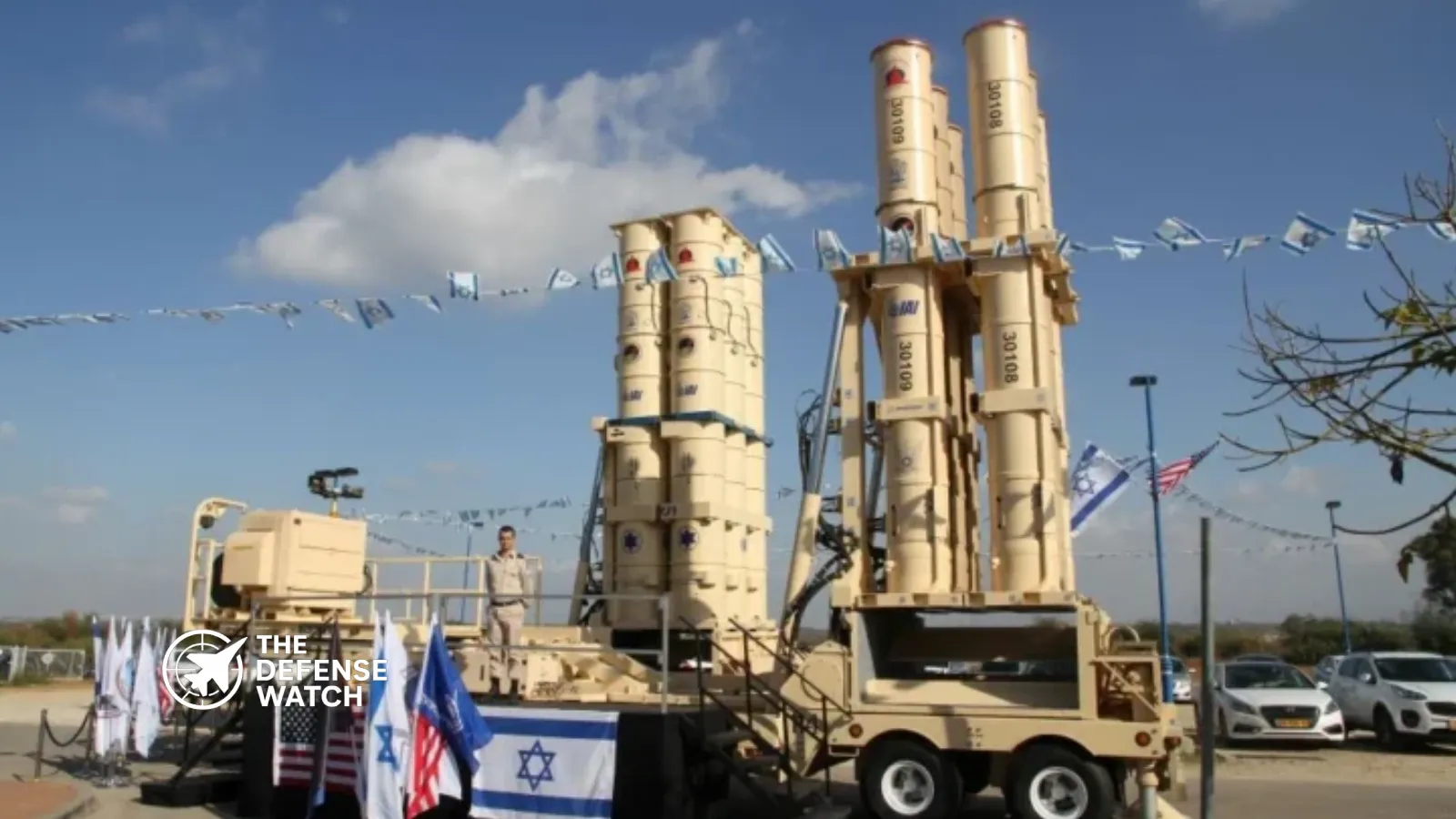
The lowest tier is the Iron Dome, designed primarily for short range rockets. Above it sits David’s Sling, intended for medium range threats. At the top tier is the Arrow system, developed with U.S. support to intercept longer range ballistic missiles outside the atmosphere.
This structure has proven effective against limited salvos from Gaza and sporadic launches from regional actors. A potential inventory of 5,000 Iranian ballistic missiles presents a different challenge.
(adsbygoogle = window.adsbygoogle || []).push({});Ballistic missile defense is constrained by interceptor inventory and reload time. Even high success rates can be strained if dozens or hundreds of missiles are launched in waves. Each interceptor carries significant cost, often in the millions of dollars per round.

For the United States, the operational concern centers on forward deployed forces. U.S. installations in Qatar, Bahrain, Kuwait, and the United Arab Emirates host air assets, logistics hubs, and command nodes. Many rely on the MIM-104 Patriot and THAAD for protection.
Those systems were designed to counter limited missile threats from state actors. A surge in Iranian production shifts the problem from capability to capacity.
Regional Security Context
Iran’s missile doctrine emphasizes deterrence through volume and survivability. Lacking a modern air force comparable to Israel or the United States, Tehran has invested heavily in ballistic and cruise missiles as asymmetric tools.
Over the past decade, Iran has demonstrated the ability to strike regional targets, including U.S. positions in Iraq in 2020. That strike highlighted improvements in accuracy and coordination.
If the projected growth materializes, the Israel Iran ballistic missile threat will not be confined to Israel. Gulf states hosting U.S. forces would also fall within range of large portions of Iran’s inventory.
(adsbygoogle = window.adsbygoogle || []).push({});This dynamic complicates coalition planning. It increases the demand for integrated air and missile defense, data sharing, and coordinated early warning across the region.
Industrial And Budget Dimensions
Missile defense is expensive on both sides of the equation.
Iran’s production of solid fuel ballistic missiles suggests a growing domestic industrial base. Solid fuel systems reduce launch preparation time and increase survivability.
On the defensive side, interceptors are costly and production lines are finite. U.S. budget documents from recent fiscal years show continued funding for Patriot and THAAD modernization, as well as support for Israeli systems through joint programs.
If threat assessments drive increased interceptor procurement, Congress will face tradeoffs. Resources allocated to missile defense may affect funding for other priorities such as next generation aircraft or naval modernization.
For Israel, sustained high interceptor usage in a major conflict would require rapid resupply, likely with U.S. assistance. That creates a direct linkage between U.S. industrial capacity and Israeli homeland defense.
Comparison With Competitors
Other regional actors face missile threats, but few match the scale projected for Iran.
North Korea maintains a significant ballistic missile force, though its focus is oriented toward Northeast Asia and the United States. Russia and China field larger arsenals, but their strategic focus lies elsewhere.

What differentiates Iran is the combination of geographic proximity to Israel and Gulf bases, growing missile numbers, and the potential use of proxy groups to complicate defense planning.
The Israel Iran ballistic missile threat is therefore distinct in its regional density. Distances are short, warning times are limited, and saturation attacks are feasible.
Strategic Assessment
The projected expansion of Iran’s missile arsenal has direct implications for regional power balance.
First, it reinforces deterrence through the threat of mass retaliation. Even if Israeli and U.S. defenses intercept a high percentage of incoming missiles, a small number penetrating defenses could inflict significant damage.
Second, it pressures defense budgets. Sustaining sufficient interceptor stocks requires steady procurement and industrial readiness. That benefits defense contractors involved in missile defense programs, but it also strains fiscal planning.
Third, it strengthens the case for deeper U.S. and regional integration. Shared radar networks, joint exercises, and coordinated command structures become more critical as missile numbers grow.
(adsbygoogle = window.adsbygoogle || []).push({});Fourth, escalation risks increase. In a crisis, preemptive strikes against missile launchers could be seen as necessary by one side and escalatory by the other. The speed of ballistic missile exchanges leaves limited room for diplomatic intervention once hostilities begin.
Finally, the signal to allies and adversaries is clear. Missile capability is central to modern deterrence in the Middle East. Airpower alone no longer defines regional superiority.
What happens next will depend on three factors: the pace of Iranian production, the scale of Israeli and U.S. interceptor procurement, and whether regional states move toward a more unified air and missile defense architecture.
Why This Matters Now
This issue matters now because timelines are compressing. A projected 2027 benchmark is within current defense budget cycles.
Procurement decisions made in Washington and Jerusalem over the next two years will determine whether defensive capacity keeps pace with offensive growth.
For the United States, the question is not only about defending Israel. It is about protecting U.S. forces and preserving freedom of action in the Gulf.
(adsbygoogle = window.adsbygoogle || []).push({});For Iran, expanding missile inventories enhances leverage without crossing the nuclear threshold.
For Israel, maintaining credible deterrence depends on proving that even a large scale missile campaign would fail to achieve strategic objectives.
The Israel Iran ballistic missile threat is therefore not just a numbers game. It is a test of industrial capacity, alliance cohesion, and the credibility of layered missile defense under stress.
Iran is developing chemical and biological warheads for long-range ballistic missiles, military sources told Iran International, marking a significant potential shift in Tehran’s missile program amid rising regional tensions.
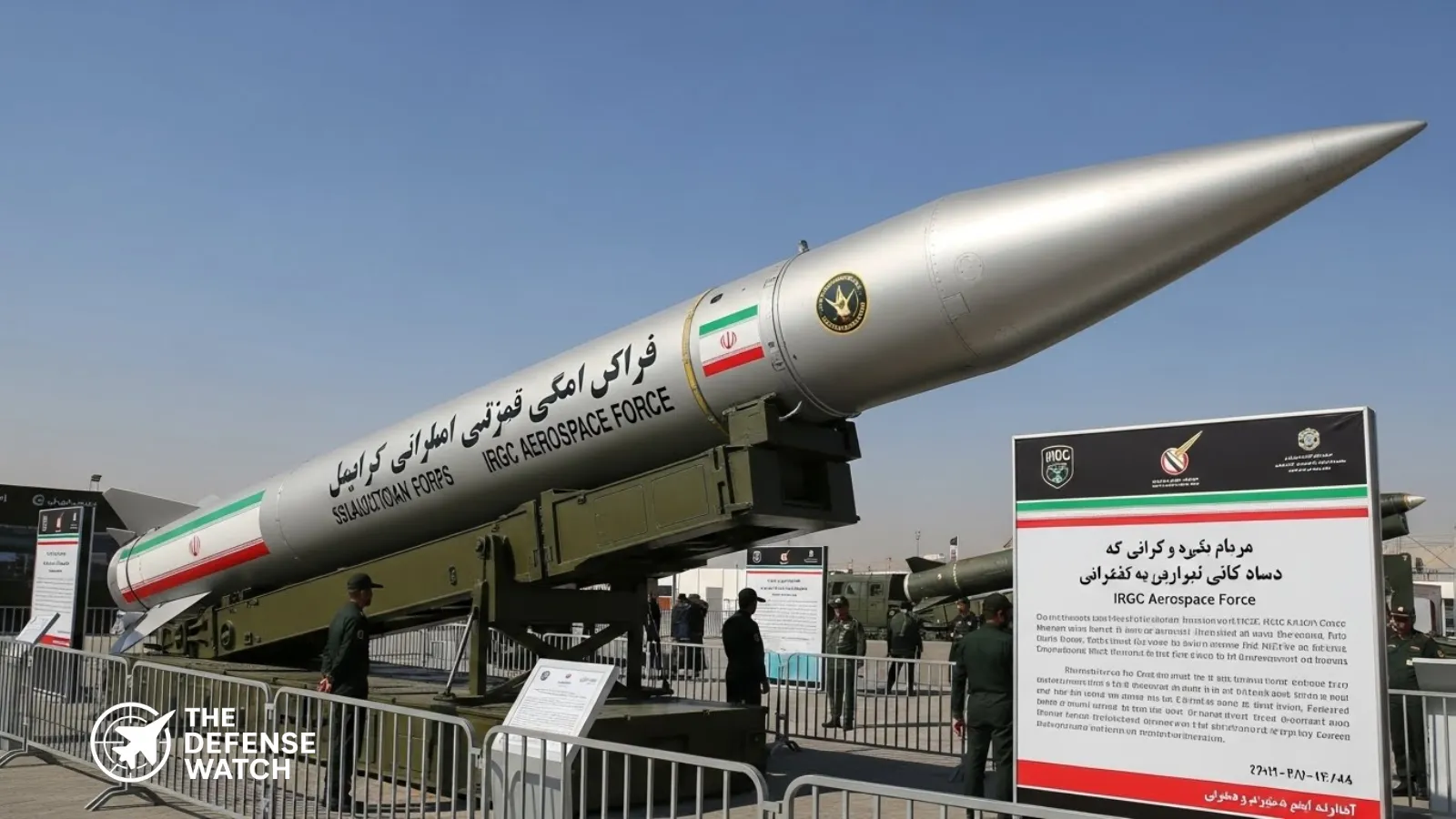
Iran’s Islamic Revolutionary Guard Corps (IRGC) Aerospace Force is working on unconventional warhead designs as it relocates missile launchers to the eastern part of the country, two unnamed sources said.
Background and Program Details
The initiative, described by sources as accelerating in recent months, involves adapting existing ballistic missile systems to carry non-conventional payloads, including chemical and biological agents.
Western intelligence agencies have reportedly detected what they describe as “unusual” movements and command-and-control signal activity tied to IRGC Aerospace Force deployments, prompting increased surveillance.
Officials familiar with the matter said Tehran frames the effort as a deterrent option under scenarios of direct conflict with Israel or the United States, even as Iranian authorities publicly deny any pursuit of weapons of mass destruction and reaffirm compliance with international commitments.
Regional Security Implications
If confirmed, the development of chemical and biological warheads could influence deterrence dynamics across the Middle East, raising questions about escalation risks and arms control regimes. Analysts say unconventional payloads on ballistic systems would draw global scrutiny and potential punitive measures.
Regional tensions remain high following a brief but intense conflict between Iran and Israel in June 2025, in which missile and air defense infrastructure sustained damage, according to multiple sources.
Strategic Context
Iran’s broader missile modernization has focused on increasing range and precision, a program that has long drawn concern from Western governments and regional states.
In parallel developments, Iran continues to advance its space capabilities, recently launching three domestically built satellites into orbit from Russia, a move that underscores dual-use technology concerns with strategic missile delivery systems.