
The US-Iran nuclear talks in Geneva entered their second round on Tuesday, February 17, 2026, as Washington and Tehran seek to curb Iran’s nuclear program through indirect, Oman-mediated negotiations.
The latest round is taking place at the Embassy of Oman in Geneva, Switzerland, with the U.S. delegation led by Middle East envoy Steve Witkoff and senior advisor Jared Kushner. Iran’s side is headed by Foreign Minister Abbas Araghchi.
Background and Recent Developments
The second round comes just eleven days after the first direct engagement between the two sides on February 6, 2026. The current diplomatic push follows a turbulent 2025 that saw direct military confrontation between Iran and Israel, followed by U.S. B-2 Spirit stealth bomber strikes on Iranian nuclear facilities in June 2025.
Since then, Iran has reportedly paused high-level uranium enrichment activities, while the United States has significantly ramped up its military footprint across the Middle East.
Current U.S. Military Posture
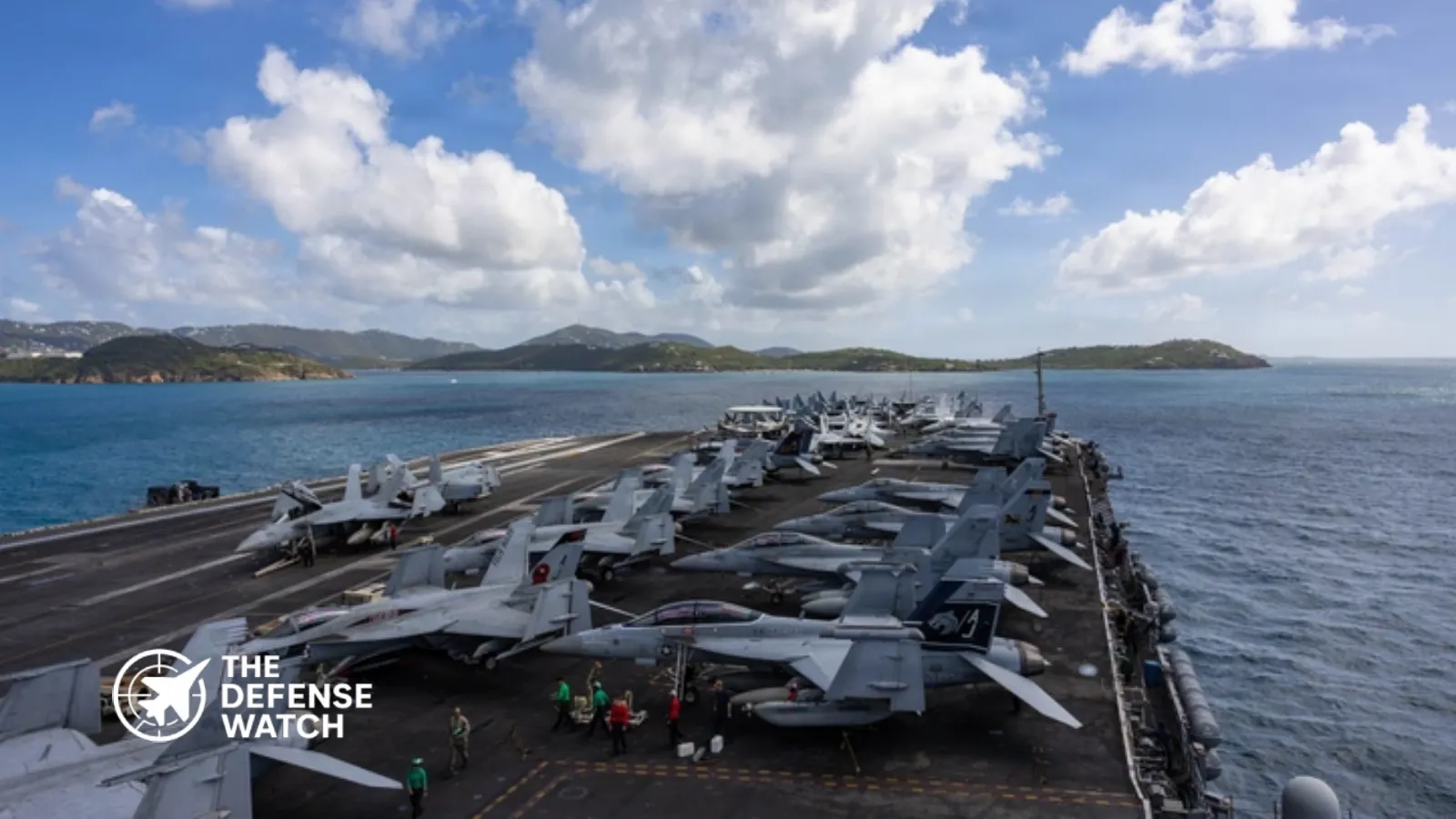
The U.S. Navy currently maintains two carrier strike groups in or near the region:
- USS Abraham Lincoln (CVN-72) and its strike group, already operating in the Arabian Sea.
- USS Gerald R. Ford (CVN-78), the Navy’s newest and most advanced supercarrier, recently redirected toward the Middle East.
Additional U.S. assets include guided-missile destroyers, air defense systems, F-35C and F-15E squadrons, and extended troop deployments in Jordan, Qatar, Bahrain, and Saudi Arabia. Pentagon officials have indicated preparations for sustained operations if diplomacy fails.
Iran has responded by launching large-scale maritime drills near the Strait of Hormuz, with the IRGC Navy emphasizing its control over the critical chokepoint.
Key Positions
According to multiple reports, the two sides remain far apart:
- The United States is seeking deep, verifiable limits on Iran’s enrichment capacity, possible dismantlement of certain facilities, ballistic missile restrictions, and curbs on regional proxy activity.
- Iran insists talks remain limited to the nuclear file, demands meaningful sanctions relief, and rejects any “submission before threats.” Foreign Minister Araghchi has repeatedly stressed that Iran will not abandon peaceful nuclear enrichment entirely.
On Monday, Araghchi met with IAEA Director General Rafael Grossi in Geneva to discuss technical cooperation and verification issues.
Trump Administration Stance
President Donald Trump, speaking aboard Air Force One, said he would be involved in the talks “indirectly” and expressed belief that Iran wants a deal.
“I don’t think they want the consequences of not making a deal… We could have had a deal instead of sending the B-2s.”
Secretary of State Marco Rubio described the negotiations as difficult but said the U.S. remains willing to pursue a diplomatic outcome.
Outlook
Analysts note that the presence of heavy U.S. naval power in the Gulf serves as both leverage for the talks and a contingency should they collapse. A breakthrough remains uncertain, given the deep mistrust and wide gaps on core issues.
Get real time update about this post category directly on your device, subscribe now.
