
- ► The United States and Israel launched coordinated strikes on Iran on February 28, 2026.
- ► Iran responded with missile and drone attacks across Gulf states and maritime targets.
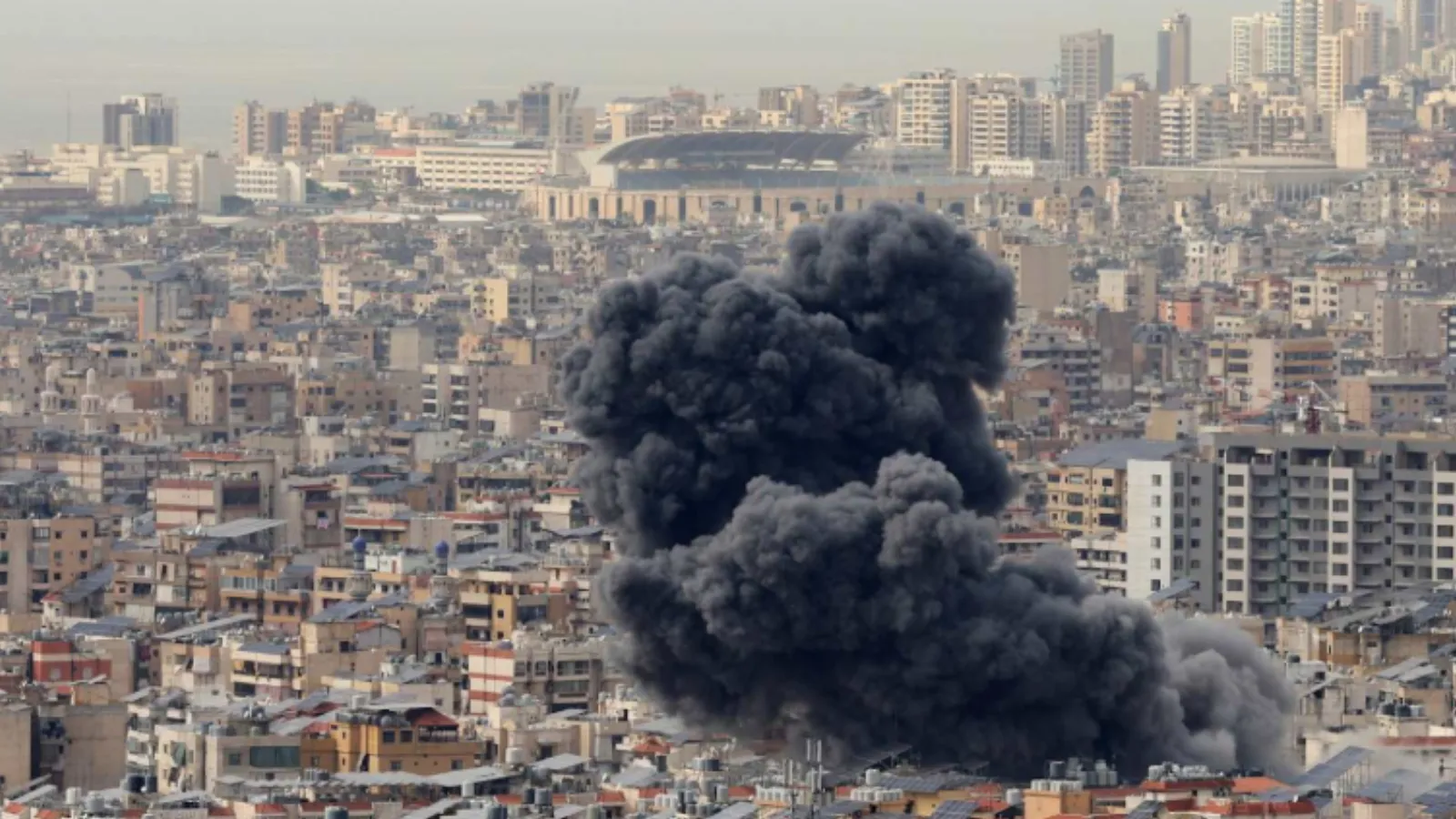
- ► Israel has now struck targets in southern Lebanon and Beirut, citing Hezbollah threats.
- ► Cross-border fire between Israel and Hezbollah has intensified along the northern frontier.
- ► Regional energy markets remain volatile amid disruption in the Strait of Hormuz.
Israel Strikes Lebanon And Beirut As Iran War Escalates
Israel strikes Lebanon and Beirut as the Iran war escalates into a widening regional confrontation, opening a new front along its northern border.
According to statements from the Israel Defense Forces, Israeli aircraft carried out precision strikes on what it described as Hezbollah command infrastructure and rocket launch sites in southern Lebanon and parts of Beirut’s southern suburbs. The strikes followed days of increased rocket and drone activity launched toward northern Israel.
Lebanese security officials confirmed explosions in the capital and in areas near the Israeli border. The Lebanese Armed Forces said it was monitoring developments but did not immediately report engagement with Israeli aircraft.
The escalation comes just days after the United States and Israel launched coordinated operations inside Iran, an unprecedented move that reshaped the regional security landscape.
Northern Front Reignites
The renewed cross-border fighting between Israel and Hezbollah marks the most significant flare up along the Lebanon frontier since previous rounds of hostilities.
Israeli officials stated that Hezbollah had increased rocket launches and attempted drone incursions in recent days. The IDF said its strikes targeted storage facilities, command nodes, and launch positions linked to the group.
Hezbollah has not issued a full operational account but has acknowledged ongoing resistance operations against Israeli positions near the border.
From a military standpoint, the opening of a northern front places additional strain on Israeli air defense systems, including Iron Dome and David’s Sling batteries. These systems are already engaged against potential missile threats linked to Iran’s broader retaliation.
Iran War Escalates Across Multiple Theaters
The wider conflict began after joint U.S. and Israeli strikes targeted senior Iranian leadership and military infrastructure. Iranian retaliatory missile and drone attacks have since targeted Gulf states and commercial shipping.
The closure and disruption of maritime traffic through the Strait of Hormuz has compounded economic risks. Energy markets reacted sharply as tankers altered routes and insurers raised premiums.
Regional airspace restrictions have also affected civilian aviation. Major hubs in the Gulf have temporarily suspended operations during missile alerts.
With Israel strikes Lebanon and Beirut as Iran war escalates, the conflict now spans multiple geographic axes, Iran, the Gulf, and the Levant.
Strategic Calculus Behind The Strikes
Israeli officials argue that neutralizing Hezbollah’s launch capabilities is a preemptive necessity. The group is widely assessed to possess tens of thousands of rockets, many capable of reaching deep into Israeli territory.
For Israel’s defense planners, preventing Hezbollah from coordinating with Iranian missile activity is central to limiting escalation. Striking Beirut’s southern districts, long considered Hezbollah strongholds, signals a willingness to target high value nodes despite international concern.
At the same time, expanding operations into Lebanon carries clear risks. Hezbollah maintains significant combat experience and a layered rocket arsenal. A sustained campaign could evolve into a protracted, high intensity conflict similar to or exceeding previous Lebanon wars.
Regional And Global Implications
The fact that Israel strikes Lebanon and Beirut as Iran war escalates underscores the fragility of deterrence frameworks in the Middle East.
Gulf states remain on high alert following Iranian missile launches earlier in the week. Maritime security forces, including U.S. naval assets in the region, continue patrol operations aimed at protecting commercial shipping lanes.
Diplomatic channels are active but strained. The United Nations Security Council has convened emergency consultations, though no binding resolution has emerged.
Energy analysts warn that prolonged instability around the Strait of Hormuz could sustain elevated oil prices. Roughly one fifth of global oil supply transits the corridor under normal conditions, making it a critical chokepoint.
Airpower And Deterrence Dynamics
Israel’s air operations over Lebanon demonstrate continued freedom of maneuver in contested airspace. The strikes appear to rely on precision guided munitions launched from stand off ranges, minimizing aircraft exposure.
However, Hezbollah’s access to advanced air defense systems, including man portable platforms, could complicate sustained air campaigns.
The broader Iran war escalates scenario also tests missile defense networks across the region. Integrated air and missile defense coordination between the United States and regional partners will likely intensify in the coming days.
What Comes Next
As Israel strikes Lebanon and Beirut as Iran war escalates, the conflict shows signs of entrenchment rather than rapid de escalation.
Key indicators to watch include the scale and frequency of Hezbollah rocket launches, the depth of Israeli strikes inside Lebanon, and the status of maritime transit through the Strait of Hormuz.
Absent a diplomatic breakthrough, the Middle East faces the prospect of a multi front conflict with direct implications for global energy security and regional stability.
Get real time update about this post category directly on your device, subscribe now.
