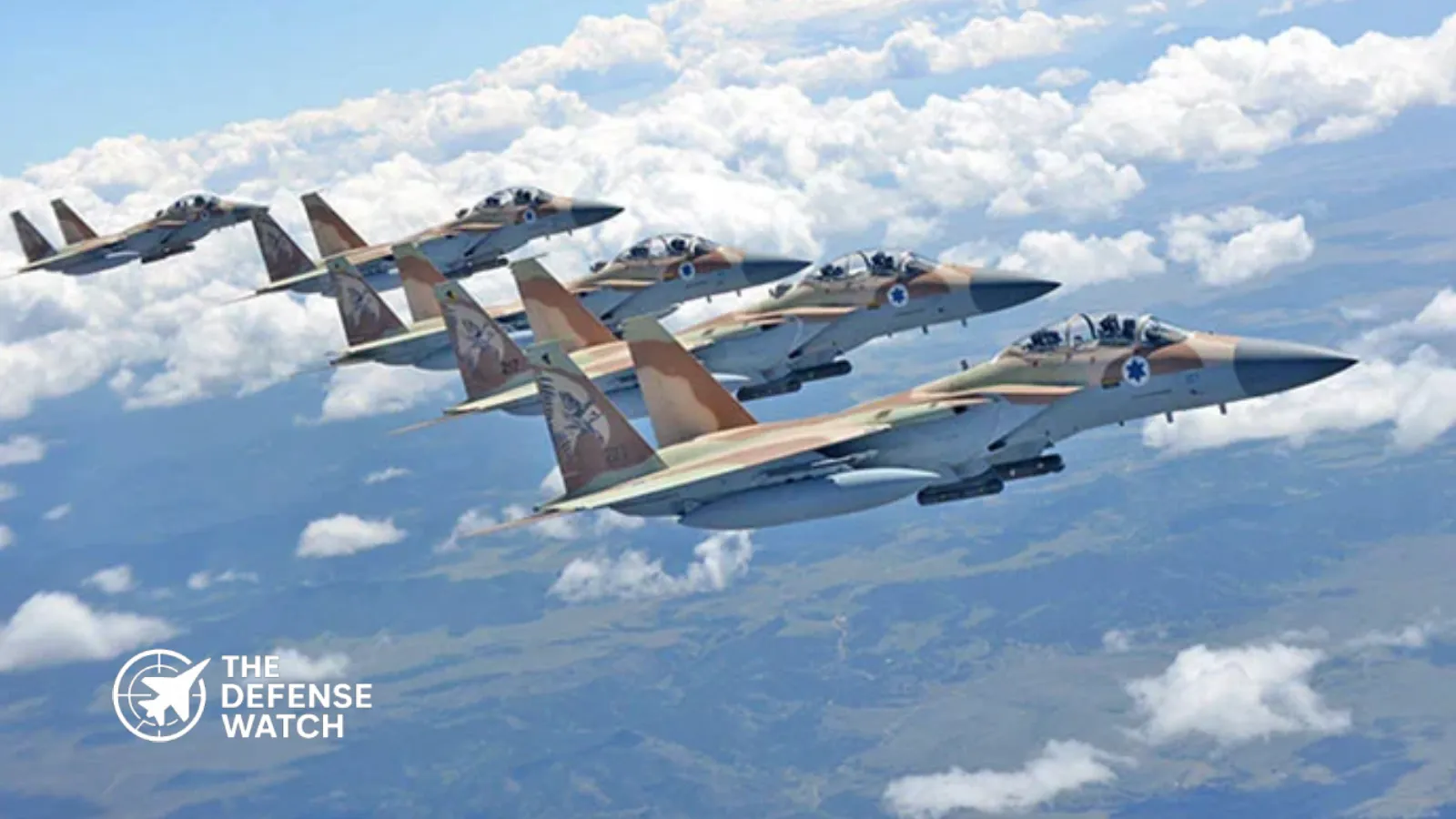
- Defense analysts have identified at least four distinct air corridors Israeli fighter jets could use to reach targets in Iran.
- Syria and Iraq present the most operationally permissive routes due to degraded or absent air defense networks following years of conflict.
- Jordan’s cooperation with Israel — reinforced during Iran’s April 2024 drone and missile barrage — makes its airspace a plausible transit zone.
- The southern Saudi Arabia route is assessed as high-risk due to modern air defenses near Tabuk air base and Riyadh’s strategic ambiguity toward Israel.
- A Red Sea–Yemen–Oman circumnavigation route covering approximately 4,700 kilometers is considered operationally unlikely by most analysts.
Israeli Fighter Jets Face a Complex Airspace Chess Match En Route to Iran
Israeli fighter jets targeting Iran must navigate one of the most geopolitically sensitive airspace environments on earth. Analysts and international defense media have identified more than three potential air corridors — each carrying distinct military risks, diplomatic costs, and operational tradeoffs. The route Israel chooses in any future strike scenario will reveal as much about its regional partnerships as it does about its operational planning.
The Big Picture
Israel and Iran have maintained a state of undeclared conflict for decades, fought largely through proxies, cyberspace, and covert operations. That posture shifted significantly in April 2024, when Iran launched a direct barrage of more than 300 drones and ballistic missiles at Israeli territory — the first such direct attack in the two countries’ modern rivalry.
Israel’s retaliatory strikes, which reportedly targeted air defense radar systems near Isfahan, confirmed that the Israeli Air Force possesses both the intent and the capability to reach deep into Iranian territory. What remains operationally sensitive — and strategically revealing — is precisely how Israeli aircraft get there.
The answer depends heavily on which neighboring states grant overflight access, whether explicitly or tacitly, and which air defense networks can be suppressed, avoided, or simply outpaced.
What’s Happening
Defense analysts and international media outlets have outlined at least four routes that Israeli fighter jets could use to strike targets in Iran.
Route One: Syria and Iraq. The primary corridor identified by analysts runs northeast through Syrian airspace and into Iraq before reaching Iranian territory. Both countries present minimal integrated air defense threats. Syria’s air defense network, already weakened by years of civil war and repeated Israeli strikes, has been further degraded following the political upheaval of late 2024. Iraq operates no credible intercept capability against fast-moving tactical aircraft operating at high altitude.
Israeli refueling aircraft and drones are already using southern Syrian airspace, according to analysts — a signal that this corridor is not theoretical but actively exercised.
Route Two: Jordan. Jordan’s airspace represents a shorter and more diplomatically complex option. The two countries normalized relations under the Abraham Accords framework in 2020, which included provisions facilitating overflight cooperation. Critically, Jordanian air defense assets actively engaged Iranian drones and ballistic missiles during the April 2024 attack on Israel, demonstrating both capability and alignment. Whether Amman would formally or informally permit Israeli strike aircraft to transit its airspace remains a politically sensitive question — one with significant consequences for Jordan’s standing in the Arab world.
Route Three: Northern Saudi Arabia and the Persian Gulf. A southern corridor running over northern Saudi Arabia and into the Persian Gulf toward Iran’s southwest is theoretically viable in terms of distance. However, analysts assess this route as operationally risky. Saudi Arabia maintains advanced air defenses, including Patriot batteries and modern interceptor aircraft based near Tabuk — a major air base in the northwest of the country positioned directly along this flight path. Riyadh has not normalized relations with Israel and has not publicly endorsed any Israeli military action against Iran, making tacit overflight permission unlikely without significant behind-the-scenes diplomacy.
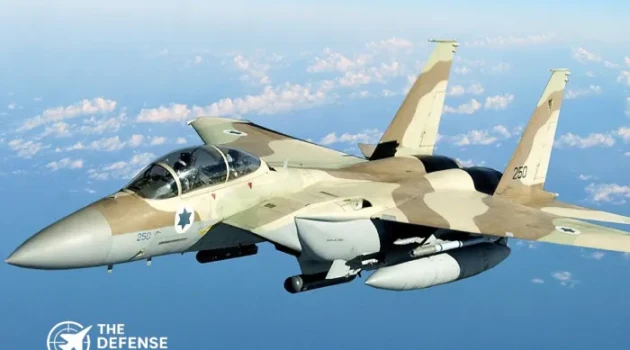
Route Four: Red Sea Circumnavigation. The longest option would route Israeli aircraft south through the Red Sea, around Yemen and Oman, and into the Persian Gulf or Gulf of Oman for strikes on Iran’s southern or eastern flanks. The round-trip distance is estimated at approximately 4,700 kilometers — well beyond the unrefueled combat radius of Israeli F-15I and F-35I aircraft without multiple aerial refueling events. Analysts broadly assess this route as low-probability given its logistical complexity, extended exposure time, and the operational risks posed by Houthi air defense activity over the Red Sea.
Why It Matters
The airspace corridor question is not merely academic. It directly determines how much warning time Iran receives, how many refueling assets Israel must commit, and what diplomatic exposure Israel and its regional partners accept.
A route through Syria and Iraq minimizes diplomatic risk to third parties but requires Israel to maintain persistent suppression of what remains of Syrian air defense capability. Israel has conducted hundreds of strikes in Syria over the past decade, systematically degrading radar and surface-to-air missile sites — a campaign that now reads, in retrospect, as deliberate corridor preparation.
The Jordanian route shortens flight time and reduces aerial refueling demands, but places Amman in an extraordinarily difficult position. Jordan’s government faces domestic pressure from a population largely sympathetic to Palestinian and broader Arab causes. Publicly acknowledged overflight cooperation with an Israeli strike on Iran could carry severe political costs for the Hashemite monarchy.
Strategic Implications
The use of Syrian airspace as a primary Israeli air corridor carries consequences beyond the immediate strike mission. It signals that post-Assad Syria — or whatever governing structure emerges — may lack the sovereign capacity or political will to deny Israeli access. That reality reshapes the regional balance in ways that extend well beyond the Israel-Iran bilateral.
For Iraq, the situation is equally complex. Baghdad officially opposes Israeli military action and hosts Iran-aligned militia groups that have repeatedly struck U.S. forces. Yet Iraq’s inability to enforce its own airspace creates a de facto permissive environment. Iraqi leaders face an impossible choice: protest Israeli overflights they cannot prevent, or remain silent and absorb the domestic political fallout.
Jordan’s position is perhaps the most strategically delicate. Amman walked a careful line during Iran’s April 2024 attack — shooting down Iranian projectiles while framing its actions as defensive rather than pro-Israel. Permitting transit of Israeli strike aircraft would represent a qualitatively different level of involvement, one that Jordan’s leadership has strong incentives to avoid making public.
Competitor View
Iran has observed Israeli strike behavior closely. Tehran is acutely aware of its own vulnerability to air attack from the west — a vulnerability that decades of investment in ballistic missiles, drone forces, and proxy networks has not fully offset. Iranian military planners have likely war-gamed Israeli approach vectors and positioned air defense assets, including Bavar-373 and S-300 batteries, to cover the most probable ingress corridors from the west and northwest.
Iran’s response to Israeli airspace use by third parties has historically been restrained — Tehran cannot easily retaliate against Jordan or Saudi Arabia without triggering broader regional escalation. However, Iranian-aligned militia groups in Iraq and Syria retain the ability to threaten Israeli aircraft through man-portable air defense systems and short-range missiles, complicating low-altitude ingress and egress profiles.
Russia, which maintains military assets in Syria, has so far tolerated Israeli air operations in Syrian airspace — a tacit arrangement that serves Moscow’s interest in keeping Israel out of the Ukraine conflict. That arrangement is not guaranteed to hold indefinitely, particularly if Israeli operations in Syria expand in scope or begin affecting Russian equities.
What To Watch Next
Several indicators will clarify how Israel’s air corridor strategy is evolving. Watch for continued Israeli strikes on Syrian air defense infrastructure, which would suggest active preparation of the northern corridor. Diplomatic signaling between Jerusalem and Amman — particularly at the security cooperation level — will indicate whether the Jordanian route remains viable. Any movement of Israeli tanker aircraft, such as Boeing 707 aerial refueling variants or newly acquired KC-46 equivalents, toward forward positions would also signal operational preparation.
Saudi-Israeli normalization talks, which were advancing before October 2023 and have continued at a lower profile since, remain a long-term variable. A formal agreement could, over time, open the northern Saudi corridor — transforming the regional strategic geometry significantly.
Capability Gap
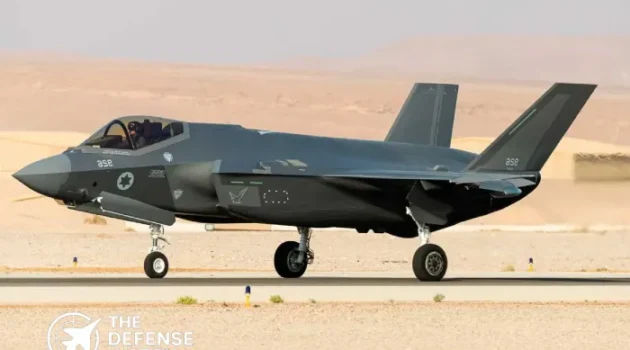
Israel’s core challenge is not strike capability — the F-35I Adir and F-15I Ra’am provide highly capable precision strike platforms — but reach and survivability across 1,500 to 2,000 kilometers of contested or diplomatically sensitive airspace. Aerial refueling assets are the operational constraint, not airframes or munitions.
Israel’s air force operates a limited tanker fleet. Any multi-wave strike package against hardened Iranian nuclear or military sites would require multiple refueling events per aircraft, significantly increasing the logistical footprint and the probability of detection. This constraint makes the Syrian-Iraqi corridor, which offers the shortest viable distance, the operationally preferred option — regardless of its diplomatic complications.
Stealth characteristics of the F-35I partially offset detection risk, but Iran’s air defense network, while not NATO-grade, has been upgraded with Russian and domestically produced systems capable of tracking fourth-generation aircraft.
The Bottom Line
Israel’s ability to strike Iran depends less on its aircraft and munitions than on which neighbors quietly look the other way — and the Syrian-Iraqi corridor, hollowed out by years of conflict and Israeli attrition strikes, currently offers the most operationally permissive path to Tehran.
Get real time update about this post category directly on your device, subscribe now.