

Executive Summary:
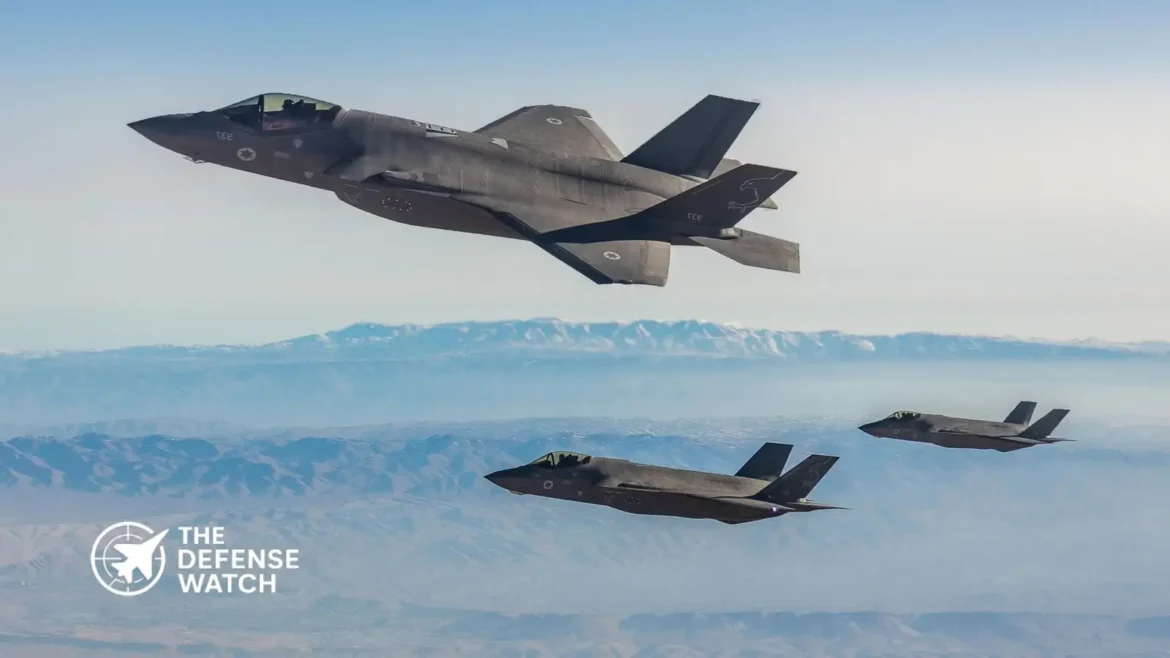
Israel has awarded Elbit Systems a new contract aimed at extending the operational range of the Israeli Air Force’s F-35I Adir stealth fighter fleet. The program reflects Israel’s continued focus on long-range strike capability, regional deterrence, and operational flexibility amid evolving Middle East security challenges.
Israel Expands F-35I Adir Operational Reach
The F-35I Adir remains central to Israel’s airpower strategy, and the latest agreement with Elbit Systems highlights a growing emphasis on extended operational reach and mission endurance.
The Israeli Ministry of Defense selected Elbit Systems to develop and integrate capabilities designed to increase the operational range of the F-35I Adir fleet operated by the Israeli Air Force. The contract supports Israel’s long-term modernization roadmap for fifth-generation combat aviation and advanced strike operations.
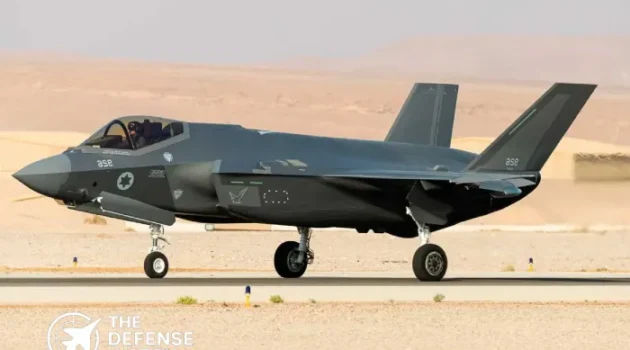
The F-35I Adir is Israel’s customized variant of the Lockheed Martin F-35 Lightning II. Unlike standard export variants, the aircraft incorporates Israeli-developed systems and mission-specific modifications approved under a unique bilateral arrangement with the United States.
While financial details of the contract were not publicly disclosed, the effort is expected to focus on advanced airborne systems, mission support technologies, and enhancements intended to improve operational flexibility during long-range missions.
Long-Range Strike Capability Remains A Strategic Priority
Israel’s decision to expand the operational range of the F-35I Adir comes as regional security dynamics continue to evolve across the Middle East.
The Israeli Air Force has increasingly prioritized deep-strike capability, survivability, and rapid-response operations against emerging threats across extended distances. Analysts have long viewed range and endurance enhancements as critical components of Israel’s future airpower doctrine, particularly as regional adversaries continue investing in integrated air defense systems, long-range missiles, and dispersed military infrastructure.
The F-35I already provides Israel with low observable penetration capability, advanced sensor fusion, electronic warfare systems, and network-centric operational advantages. Extending the aircraft’s effective operational reach could improve flexibility for intelligence, surveillance, strike, and deterrence missions without relying heavily on forward basing options.
Elbit Systems has played a significant role in several Israeli combat aviation modernization efforts, including helmet-mounted systems, electronic warfare technologies, avionics, and mission support equipment. The company’s involvement in the F-35I program reinforces Israel’s strategy of integrating domestic defense technologies into imported platforms to preserve operational independence and customization capability.
F-35I Adir Continues To Anchor Israeli Airpower
The Israeli Air Force was among the first international operators to declare the F-35 operational. Since entering service, the aircraft has become a key component of Israel’s multi-domain combat architecture.
Israel has previously stated that the F-35I has participated in operational missions across the region, including intelligence gathering and precision strike operations. The aircraft’s stealth characteristics and advanced electronic warfare suite are widely considered essential for operating in contested environments defended by modern surface-to-air missile systems.
The latest range enhancement initiative may also support future mission profiles involving longer-duration patrols, strategic deterrence operations, and expanded strike planning options.
Defense analysts note that survivability alone is no longer sufficient for fifth-generation aircraft operating in increasingly complex threat environments. Range, data connectivity, electronic warfare integration, and logistical sustainability are becoming equally important factors in modern air combat operations.
Broader Regional And Industrial Implications
The contract also reflects the continued strength of Israel’s domestic defense industrial base. By assigning key integration and upgrade responsibilities to Elbit Systems, Israel continues to reinforce local technological expertise while reducing dependence on external modification pathways.
The move aligns with broader global trends in military aviation, where operators increasingly seek sovereign control over mission systems, software integration, and platform-specific upgrades.
For Israel, maintaining technological superiority remains a core national security objective. Investments tied to the F-35I Adir demonstrate how the country continues adapting Western-built platforms to meet regional operational requirements.
The agreement further underscores the strategic importance of the F-35 program within Middle East defense planning. Several regional states are expanding air defense capabilities and investing heavily in long-range missile systems, unmanned platforms, and electronic warfare assets. In that environment, operational reach and survivability remain decisive factors.
- Defense analysts have identified at least four distinct air corridors Israeli fighter jets could use to reach targets in Iran.
- Syria and Iraq present the most operationally permissive routes due to degraded or absent air defense networks following years of conflict.
- Jordan’s cooperation with Israel — reinforced during Iran’s April 2024 drone and missile barrage — makes its airspace a plausible transit zone.
- The southern Saudi Arabia route is assessed as high-risk due to modern air defenses near Tabuk air base and Riyadh’s strategic ambiguity toward Israel.
- A Red Sea–Yemen–Oman circumnavigation route covering approximately 4,700 kilometers is considered operationally unlikely by most analysts.
Israeli Fighter Jets Face a Complex Airspace Chess Match En Route to Iran
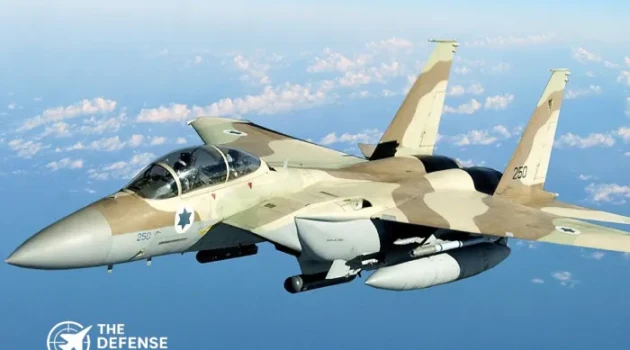
Israeli fighter jets targeting Iran must navigate one of the most geopolitically sensitive airspace environments on earth. Analysts and international defense media have identified more than three potential air corridors — each carrying distinct military risks, diplomatic costs, and operational tradeoffs. The route Israel chooses in any future strike scenario will reveal as much about its regional partnerships as it does about its operational planning.
The Big Picture
Israel and Iran have maintained a state of undeclared conflict for decades, fought largely through proxies, cyberspace, and covert operations. That posture shifted significantly in April 2024, when Iran launched a direct barrage of more than 300 drones and ballistic missiles at Israeli territory — the first such direct attack in the two countries’ modern rivalry.
Israel’s retaliatory strikes, which reportedly targeted air defense radar systems near Isfahan, confirmed that the Israeli Air Force possesses both the intent and the capability to reach deep into Iranian territory. What remains operationally sensitive — and strategically revealing — is precisely how Israeli aircraft get there.
The answer depends heavily on which neighboring states grant overflight access, whether explicitly or tacitly, and which air defense networks can be suppressed, avoided, or simply outpaced.
What’s Happening
Defense analysts and international media outlets have outlined at least four routes that Israeli fighter jets could use to strike targets in Iran.
Route One: Syria and Iraq. The primary corridor identified by analysts runs northeast through Syrian airspace and into Iraq before reaching Iranian territory. Both countries present minimal integrated air defense threats. Syria’s air defense network, already weakened by years of civil war and repeated Israeli strikes, has been further degraded following the political upheaval of late 2024. Iraq operates no credible intercept capability against fast-moving tactical aircraft operating at high altitude.
Israeli refueling aircraft and drones are already using southern Syrian airspace, according to analysts — a signal that this corridor is not theoretical but actively exercised.
Route Two: Jordan. Jordan’s airspace represents a shorter and more diplomatically complex option. The two countries normalized relations under the Abraham Accords framework in 2020, which included provisions facilitating overflight cooperation. Critically, Jordanian air defense assets actively engaged Iranian drones and ballistic missiles during the April 2024 attack on Israel, demonstrating both capability and alignment. Whether Amman would formally or informally permit Israeli strike aircraft to transit its airspace remains a politically sensitive question — one with significant consequences for Jordan’s standing in the Arab world.
Route Three: Northern Saudi Arabia and the Persian Gulf. A southern corridor running over northern Saudi Arabia and into the Persian Gulf toward Iran’s southwest is theoretically viable in terms of distance. However, analysts assess this route as operationally risky. Saudi Arabia maintains advanced air defenses, including Patriot batteries and modern interceptor aircraft based near Tabuk — a major air base in the northwest of the country positioned directly along this flight path. Riyadh has not normalized relations with Israel and has not publicly endorsed any Israeli military action against Iran, making tacit overflight permission unlikely without significant behind-the-scenes diplomacy.
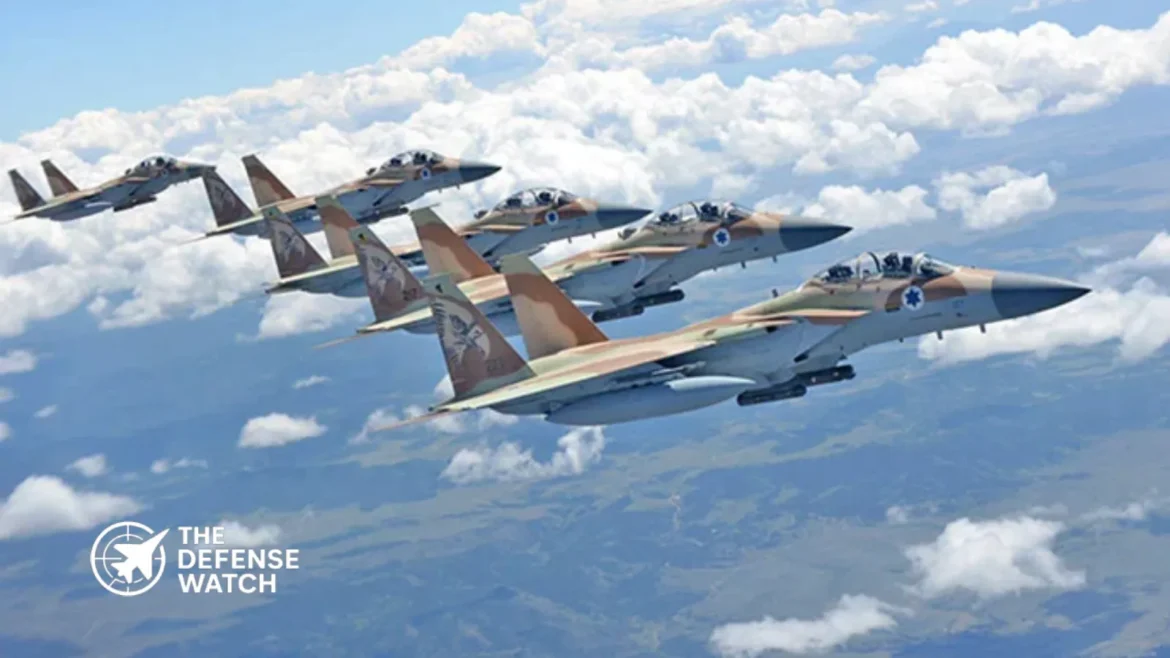
Route Four: Red Sea Circumnavigation. The longest option would route Israeli aircraft south through the Red Sea, around Yemen and Oman, and into the Persian Gulf or Gulf of Oman for strikes on Iran’s southern or eastern flanks. The round-trip distance is estimated at approximately 4,700 kilometers — well beyond the unrefueled combat radius of Israeli F-15I and F-35I aircraft without multiple aerial refueling events. Analysts broadly assess this route as low-probability given its logistical complexity, extended exposure time, and the operational risks posed by Houthi air defense activity over the Red Sea.
Why It Matters
The airspace corridor question is not merely academic. It directly determines how much warning time Iran receives, how many refueling assets Israel must commit, and what diplomatic exposure Israel and its regional partners accept.
A route through Syria and Iraq minimizes diplomatic risk to third parties but requires Israel to maintain persistent suppression of what remains of Syrian air defense capability. Israel has conducted hundreds of strikes in Syria over the past decade, systematically degrading radar and surface-to-air missile sites — a campaign that now reads, in retrospect, as deliberate corridor preparation.
The Jordanian route shortens flight time and reduces aerial refueling demands, but places Amman in an extraordinarily difficult position. Jordan’s government faces domestic pressure from a population largely sympathetic to Palestinian and broader Arab causes. Publicly acknowledged overflight cooperation with an Israeli strike on Iran could carry severe political costs for the Hashemite monarchy.
Strategic Implications
The use of Syrian airspace as a primary Israeli air corridor carries consequences beyond the immediate strike mission. It signals that post-Assad Syria — or whatever governing structure emerges — may lack the sovereign capacity or political will to deny Israeli access. That reality reshapes the regional balance in ways that extend well beyond the Israel-Iran bilateral.
For Iraq, the situation is equally complex. Baghdad officially opposes Israeli military action and hosts Iran-aligned militia groups that have repeatedly struck U.S. forces. Yet Iraq’s inability to enforce its own airspace creates a de facto permissive environment. Iraqi leaders face an impossible choice: protest Israeli overflights they cannot prevent, or remain silent and absorb the domestic political fallout.
Jordan’s position is perhaps the most strategically delicate. Amman walked a careful line during Iran’s April 2024 attack — shooting down Iranian projectiles while framing its actions as defensive rather than pro-Israel. Permitting transit of Israeli strike aircraft would represent a qualitatively different level of involvement, one that Jordan’s leadership has strong incentives to avoid making public.
Competitor View
Iran has observed Israeli strike behavior closely. Tehran is acutely aware of its own vulnerability to air attack from the west — a vulnerability that decades of investment in ballistic missiles, drone forces, and proxy networks has not fully offset. Iranian military planners have likely war-gamed Israeli approach vectors and positioned air defense assets, including Bavar-373 and S-300 batteries, to cover the most probable ingress corridors from the west and northwest.
Iran’s response to Israeli airspace use by third parties has historically been restrained — Tehran cannot easily retaliate against Jordan or Saudi Arabia without triggering broader regional escalation. However, Iranian-aligned militia groups in Iraq and Syria retain the ability to threaten Israeli aircraft through man-portable air defense systems and short-range missiles, complicating low-altitude ingress and egress profiles.
Russia, which maintains military assets in Syria, has so far tolerated Israeli air operations in Syrian airspace — a tacit arrangement that serves Moscow’s interest in keeping Israel out of the Ukraine conflict. That arrangement is not guaranteed to hold indefinitely, particularly if Israeli operations in Syria expand in scope or begin affecting Russian equities.
What To Watch Next
Several indicators will clarify how Israel’s air corridor strategy is evolving. Watch for continued Israeli strikes on Syrian air defense infrastructure, which would suggest active preparation of the northern corridor. Diplomatic signaling between Jerusalem and Amman — particularly at the security cooperation level — will indicate whether the Jordanian route remains viable. Any movement of Israeli tanker aircraft, such as Boeing 707 aerial refueling variants or newly acquired KC-46 equivalents, toward forward positions would also signal operational preparation.
Saudi-Israeli normalization talks, which were advancing before October 2023 and have continued at a lower profile since, remain a long-term variable. A formal agreement could, over time, open the northern Saudi corridor — transforming the regional strategic geometry significantly.
Capability Gap
Israel’s core challenge is not strike capability — the F-35I Adir and F-15I Ra’am provide highly capable precision strike platforms — but reach and survivability across 1,500 to 2,000 kilometers of contested or diplomatically sensitive airspace. Aerial refueling assets are the operational constraint, not airframes or munitions.
Israel’s air force operates a limited tanker fleet. Any multi-wave strike package against hardened Iranian nuclear or military sites would require multiple refueling events per aircraft, significantly increasing the logistical footprint and the probability of detection. This constraint makes the Syrian-Iraqi corridor, which offers the shortest viable distance, the operationally preferred option — regardless of its diplomatic complications.
Stealth characteristics of the F-35I partially offset detection risk, but Iran’s air defense network, while not NATO-grade, has been upgraded with Russian and domestically produced systems capable of tracking fourth-generation aircraft.
The Bottom Line
Israel’s ability to strike Iran depends less on its aircraft and munitions than on which neighbors quietly look the other way — and the Syrian-Iraqi corridor, hollowed out by years of conflict and Israeli attrition strikes, currently offers the most operationally permissive path to Tehran.

Israel Ministry of Defense Signs $130M CH-53K Integration Deal
The Israel Ministry of Defense has signed an approximately $130 million agreement with Elbit Systems to integrate Israeli-developed systems on the CH-53K Pereh heavy lift helicopters, marking a major milestone in the Israeli Air Force modernization effort.
The contract was signed by the Defense Procurement Directorate within the ministry as part of preparations for the delivery of 12 CH-53K helicopters, which will replace the Israeli Air Force aging CH-53D Yasur fleet that has been in service for decades.
According to the Ministry of Defense, the deal exceeds NIS 400 million and covers the integration of Israeli command and control systems, advanced avionics, electronic warfare suites, and an advanced directional infrared countermeasures system designed to protect the aircraft against missile threats.
Elbit Systems to Lead Israeli-Specific Integration
Under the agreement, Elbit Systems will serve as the prime contractor responsible for adapting the US-built CH-53K helicopters to Israeli operational requirements.
The integration package includes mission systems tailored to Israeli Air Force doctrine, with a focus on survivability, situational awareness, and all-weather operations. The upgraded cockpit environment is expected to improve crew workload management while enabling operations in complex terrain and contested environments.
Israeli officials say the systems will support improved obstacle detection, identification of safe landing zones, and enhanced coordination with other air and ground assets.
Elbit Systems has previously delivered avionics, electronic warfare, and self-protection suites for multiple Israeli and international helicopter platforms, including the UH-60 Black Hawk and CH-47 Chinook.
CH-53K Pereh Acquired Through US FMS Program
The CH-53K helicopters were acquired through a Foreign Military Sales agreement between Israel and the US government, signed several years ago. The aircraft are manufactured by Lockheed Martin Sikorsky and represent the latest evolution of the long serving CH-53 family.
Assembly of the Israeli aircraft is currently underway at Sikorsky primary production facility in Connecticut.
Once assembly is completed, the helicopters will be transferred to a dedicated installation and production line where Israeli systems will be integrated into the baseline American configuration. This approach allows Israel to retain commonality with US Marine Corps CH-53K aircraft while incorporating mission-specific technologies.
Enhancing Heavy Lift and Long-Range Operations
The CH-53K Pereh is expected to significantly enhance the Israeli Air Force heavy lift capability. Compared to the legacy Yasur helicopters, the new platform offers greater payload capacity, extended range, improved digital architecture, and enhanced survivability.

With the integration of Israeli electronic warfare and self-protection systems, the CH-53K fleet is intended to operate in high-threat environments, including scenarios involving advanced air defenses and man-portable missile systems.
The addition of a directional infrared countermeasures system is particularly relevant for low altitude operations, special forces insertion, and resupply missions.
Strategic Importance for Israeli Defense Planning
The CH-53K integration deal reflects Israel broader approach to defense procurement, combining US platforms with domestically developed systems to maintain operational independence and technological superiority.
Israeli defense officials have repeatedly emphasized the importance of tailoring foreign platforms to local requirements, especially in areas such as electronic warfare, communications, and networked operations.
The helicopter fleet is expected to play a key role in a wide range of missions, including long-range transport, special operations, combat search and rescue, and logistical support under fire.
Program Timeline and Next Steps
The Israeli Ministry of Defense has not publicly disclosed the full delivery timeline for the CH-53K Pereh fleet. However, initial aircraft are expected to arrive later this decade following completion of assembly, testing, and system integration.
Once delivered, the helicopters will undergo operational testing and evaluation with the Israeli Air Force before entering full operational service.
The Elbit Systems integration work will proceed in parallel with aircraft production, reducing the time required to achieve initial operational capability.


Israel Builds a New Shield Around Air Force Bases
Israel is quietly bolstering the security of its airbases by establishing an elite, rapid-response unit under the Air Force’s Wing 7, aiming to prevent a repeat of the October 7 surprise attack. The unit’s mandate: defend IAF installations — including runways, fuel depots, command centers, and munition stores — from future infiltrations.
Context: Lessons from October 7
The October 7, 2023 attack exposed major security vulnerabilities across Israeli military installations. According to multiple probes, the IDF failed to repel large-scale incursions, and some IAF bases were identified as potential targets. In one investigation, the Israeli Air Force was found to have had only two aircraft and two helicopters ready for action during the attack.
Another inquiry revealed the Air Force had detected “unusual signals and movements” from Hamas-operated drones in the hours before the onslaught — but this intelligence reportedly remained within the Air Force and was not shared upward. The gaps in readiness and communication prompted a security reset.
What the New Force Is — and How It Works
Structure and Command
- The new unit will operate under Wing 7, the IAF’s special-operations hub, which already includes Shaldag (reconnaissance and commando) and Unit 669 (combat search and rescue).
- Unlike those strike-oriented forces, the new unit is focused inward: protecting Israeli airbases from internal and external threats.
Mobility and Response
- The unit is designed for rapid deployment by helicopter, enabling it to move quickly between bases.
- A modernized perimeter system will support its operations, featuring upgraded cameras, sensors, and physical barriers.
Training and Readiness
- Recruits will begin with the next draft cycle and follow a specialized training path. According to the IDF, they’ll receive Rifleman 07 qualification — a standard combat-level certification — along with advanced coursework in surveillance, weapons deployment, and defense-system operations.
- Until this force becomes fully operational, the IAF has stationed reserve security battalions at all bases. These battalions are also being trained to Rifleman 07 standards.
Why It Matters Strategically
IAF bases are critical to Israel’s ability to project power, maintain deterrence, and conduct high-tempo operations. If adversaries — such as Hamas, Hezbollah, or Iran-backed actors — were able to strike runways or munitions dumps, Israel’s capacity for rapid response could be severely degraded.
By creating a base-defense force under the same umbrella as Shaldag and Unit 669, the Air Force is merging elite skills with defensive vigilance. This model integrates offensive and protective capabilities within a special-operations framework.
Expert and Policy Implications
From a policy standpoint, the move suggests the IAF is no longer content to rely solely on static defenses and reserve forces. Rather, it is investing in a proactive, flexible force that can respond to base intrusions in real time.
For military analysts, this shift could mark a doctrinal evolution in how air forces protect their critical infrastructure. Rather than treating base defense as a secondary mission, Israel is elevating it to the level of its most elite units.
In geopolitical terms, the stepped-up defenses send a clear signal: Israel is determined to mitigate the risk of another disorganized breach like October 7, even as the war in Gaza and threats from Iran-aligned groups persist.
What Comes Next
- Operational readiness: The timeline for the new unit’s full deployment will depend on the current recruitment and training cycle.
- Technology integration: With advanced sensor and perimeter upgrades underway, the effectiveness of the unit will increasingly depend on how well these systems mesh with human operatives.
- Drills and exercises: The IAF will likely run simulated base-infiltration exercises (including helicopter insertions) to validate the rapid-response capability.
- Continuous evaluation: Given the severity of past failures, further internal and external reviews may monitor the performance and viability of this force.
Bottom Line
In response to the severe security lapses exposed by the October 7 attacks, the Israel Air Force is establishing a dedicated base-defense unit under its special-operations wing. With helicopter mobility, advanced perimeter systems, and specially trained personnel, the force is designed to close the gap in defending sensitive airbases — and ensure that no future intruder can strike with the same surprise.