
U.S. Supercarrier Arrives in Caribbean as Pressure Mounts on Venezuela
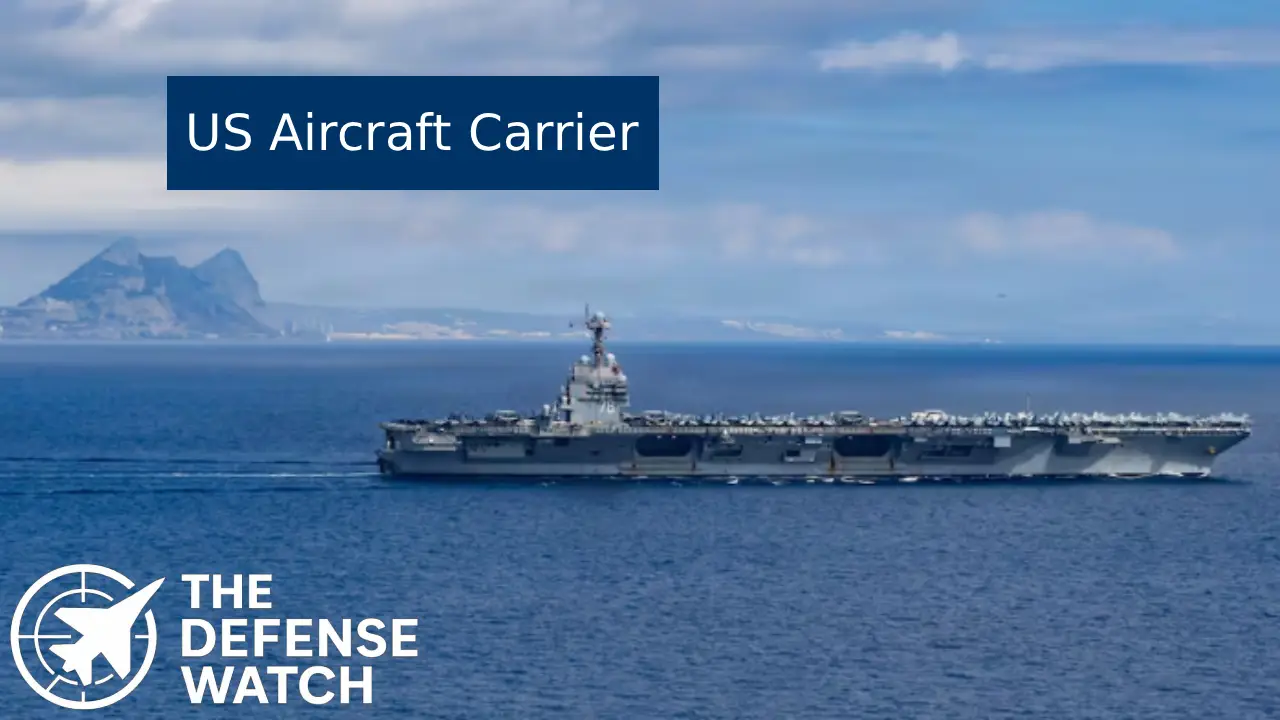
The U.S. Navy’s flagship, USS Gerald R. Ford, has arrived in the Caribbean Sea, joining a large contingent of American warships and Marines in what officials describe as a counter-narcotics mission—but which many analysts interpret as a growing show of force directed at Venezuela.
The deployment, dubbed Operation Southern Spear, now encompasses nearly a dozen Navy vessels and approximately 12,000 sailors and Marines, making it one of the most significant U.S. military buildups in the region in decades.
Mission Purpose and Force Composition
According to U.S. Navy statements, the Ford leads a carrier strike group that includes squadrons of tactical aircraft and guided-missile destroyers. The strike group transited the Anegada Passage, near the British Virgin Islands, en route to its Caribbean station.
Rear Admiral Paul Lanzilotta, commander of the strike group, said the force is deployed to “protect our nation’s security and prosperity against narco-terrorism in the Western Hemisphere.”
Adm. Alvin Holsey, head of U.S. Southern Command (SOUTHCOM), emphasized that the deployment “stands ready to combat the transnational threats that seek to destabilize our region.”
Regional Reactions and Military Moves
In Trinidad and Tobago, U.S. Marines from the 22nd Marine Expeditionary Unit have begun joint training exercises with local forces. The country’s foreign minister, Sean Sobers, framed the drills as efforts to counter violent crime and the drug trade.
Meanwhile, the Venezuelan government has strongly criticized the deployment as aggressive. Caracas has mobilized ground, air, riverine, and missile forces and placed them on high alert in response.
Legal and Political Debate
While the Trump administration frames the buildup as a counterdrug operation, critics in Washington and internationally question its legal basis and broader intent. Since September, U.S. strikes on small vessels in Caribbean and Pacific waters have reportedly killed at least 80 people.
Some experts argue that the Ford may be a blunt tool against narcotics trafficking, but its presence sends a powerful political and military signal. Others warn that such a show of force could escalate into more direct conflict.
Analysis: What This Means for U.S. Defense and Global Security
The arrival of the USS Gerald R. Ford in the Caribbean signals more than just an intensified drug-fighting campaign; it reflects a strategic pivot in U.S. posture toward Latin America. By leveraging its most advanced carrier strike group, the U.S. is projecting credible power to deter the Maduro regime while asserting dominance in the Western Hemisphere.
Key strategic implications include:
- Deterrence through presence: The Ford’s advanced capabilities—aircraft, sensors, and destroyer escorts—are less about interdiction and more about signaling. This deployment may deter Maduro or other actors by threatening escalation if diplomatic or economic pressure fails.
- Blended operations: The force includes maritime strike units, but also integrates Marines and potentially special operations. This underscores a hybrid strategy combining counter-narcotics, intelligence, and coercion.
- Diplomatic leverage: By escalating militarily, the U.S. may be aiming to force Maduro to negotiate or concede, whether on drug trafficking, political legitimacy, or economic concessions.
- Regional risk: The buildup raises the risk of miscalculation or confrontation. Venezuela’s mobilization, combined with U.S. overwatch, could make any incident prone to escalation.
Conclusion: A Pivotal Moment in U.S.–Venezuela Relations
The deployment of the USS Gerald R. Ford to the Caribbean marks a turning point in U.S. engagement with Venezuela. As Operation Southern Spear continues, the U.S. faces a critical choice: whether to rely on deterrence and diplomacy or move toward more aggressive action. The coming weeks will likely reveal whether this is primarily a pressure campaign, or the opening act of a broader military initiative.
Suggested image idea: Aerial photograph of the USS Gerald R. Ford at sea, accompanied by destroyers and support vessels, overlaid with a map showing its position relative to Venezuela.
Get real time update about this post category directly on your device, subscribe now.

6 comments
[…] deployment is officially dubbed Operation Southern Spear, aimed at curbing drug trafficking in the Caribbean. According to defense insiders, however, the […]
[…] centers located deep inside Russian territory, although specific locations were not disclosed for operational security reasons. The use of ATACMS marks the first confirmed deployment of U.S.-supplied tactical missiles […]
[…] of November 2025, carrier strike groups are deployed globally, with USS Gerald R. Ford operating in the Caribbean Sea, USS George Washington underway in the Philippine Sea, and […]
[…] comes amid a substantial U.S. military build-up in the Caribbean region. According to CBS News, the USS Gerald R. Ford aircraft carrier strike group has arrived, joining other assets deployed as part of what […]
[…] Open-source aviation trackers and defense analysts noted prior observations of the Il-22 variant operating near active mission areas, though data confirming its involvement in directed-energy testing remains […]
[…] USS John F Kennedy is the second ship of the Gerald R Ford class, following the lead ship USS Gerald R Ford (CVN-78). […]