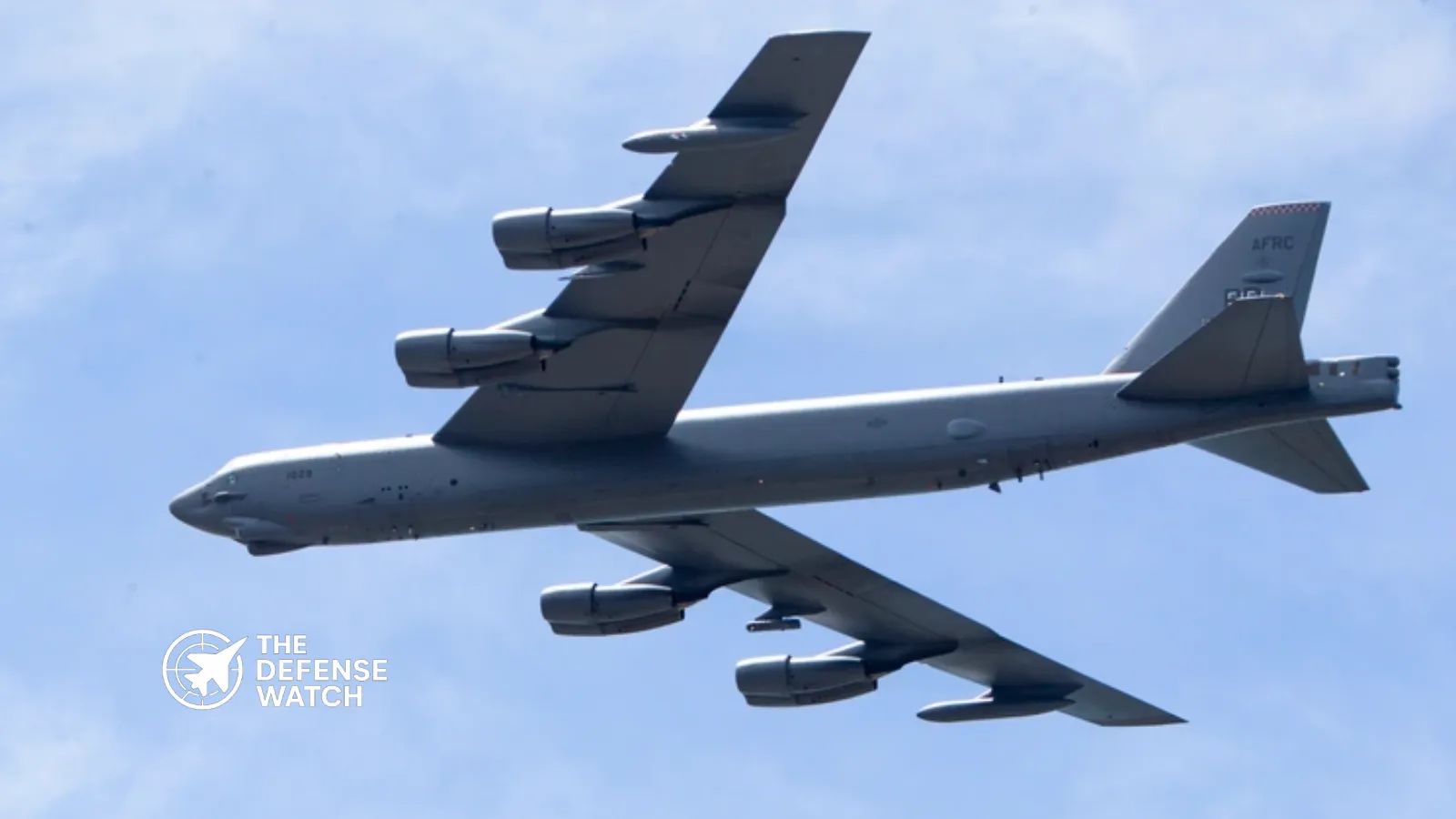
- U.S. Air Force B-52 strategic bombers launched long-range strikes on Iranian missile infrastructure during Operation Epic Fury.
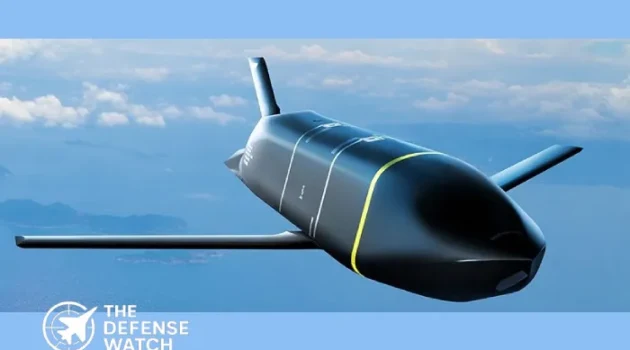
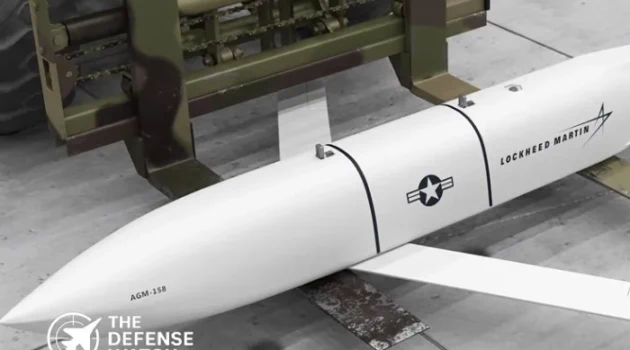
- Aircraft employed AGM-158 JASSM precision cruise missiles to strike targets from outside heavily defended airspace.
- Strikes targeted Iranian ballistic missile facilities and command and control nodes.
- The operation forms part of a broader U.S. and Israeli campaign against Iranian military infrastructure.
- Long-range bomber operations demonstrate the U.S. ability to conduct stand-off precision strikes across the Middle East.
US Deploys B-52 Bombers With JASSM Cruise Missiles Against Iranian Missile Sites
The United States deployed B-52 bombers with JASSM cruise missiles to strike Iranian missile sites as part of the expanding air campaign known as Operation Epic Fury. U.S. Central Command confirmed that the long-range bombers targeted ballistic missile infrastructure and command and control facilities linked to Iran’s military operations.
The strikes form part of a broader U.S. and allied effort aimed at degrading Tehran’s ability to coordinate and launch missile attacks across the region. American forces have carried out hundreds of precision strikes during the campaign, targeting missile storage sites, radar installations, air defenses, and drone facilities.
The Big Picture
Operation Epic Fury represents one of the most significant U.S. military operations in the Middle East in years. The campaign combines airpower, long-range missiles, electronic warfare, and allied coordination to dismantle Iranian military capabilities tied to ballistic missile operations.
U.S. planners appear to be pursuing a layered strike strategy. Stealth platforms such as B-2 bombers conduct deep penetration attacks on hardened facilities, while older but highly capable bombers like the B-52 deliver stand-off weapons from outside contested airspace.
This approach reflects the U.S. military’s modern doctrine for high-intensity operations against advanced air defense networks. Rather than relying on a single platform, commanders combine stealth aircraft, cruise missiles, and electronic warfare to gradually dismantle enemy defenses before striking key infrastructure.
What Is Happening
U.S. Air Force B-52 Stratofortress bombers carried out long-range strike missions against Iranian missile facilities during the opening phases of the campaign.
The aircraft launched AGM-158 Joint Air-to-Surface Standoff Missiles, commonly known as JASSM. These stealthy cruise missiles allow bombers to attack targets hundreds of kilometers away while remaining outside the reach of many air defense systems.
Military officials said the targets included ballistic missile launch infrastructure, weapons storage locations, and command networks used by Iranian forces to coordinate missile operations.
The B-52 remains one of the most enduring platforms in the U.S. bomber fleet. First flown in the early 1950s, the aircraft continues to perform conventional strike missions worldwide and may remain in service for decades due to continuous modernization.
Why It Matters
Iran’s ballistic missile arsenal is one of the largest and most capable in the Middle East. Tehran relies heavily on missile forces as a key element of its deterrence strategy against regional rivals and U.S. forces deployed in the region.
Targeting missile infrastructure therefore serves a clear operational purpose. By degrading launch facilities and command networks, U.S. planners aim to reduce Iran’s ability to conduct large scale missile strikes against regional bases, shipping lanes, and allied countries.
The use of stand-off cruise missiles also reflects a practical military consideration. B-52 bombers are large aircraft with a significant radar signature. Rather than entering heavily defended airspace, they employ long-range precision weapons that allow them to strike from safer distances.
Strategic Implications
The deployment of B-52 bombers with JASSM cruise missiles highlights how the United States integrates legacy aircraft into modern networked warfare.
Despite its age, the B-52 remains highly effective when paired with modern weapons. The aircraft can carry large numbers of precision cruise missiles, effectively functioning as a long-range missile truck capable of striking multiple targets in a single mission.
For U.S. Central Command, this capability provides a powerful option for suppressing enemy infrastructure early in a conflict. Large bomber formations can launch dozens of cruise missiles simultaneously, overwhelming air defense systems and destroying dispersed targets.
The strikes also reinforce Washington’s broader message of military reach. Strategic bombers can deploy from bases thousands of kilometers away and still conduct precision attacks across the Middle East.
Competitor View
Iranian military planners view long-range bomber strikes as a major threat to their strategic missile infrastructure.
Iran has invested heavily in layered air defenses, underground facilities, and mobile launch systems to complicate enemy targeting. However, stand-off weapons such as JASSM reduce the effectiveness of these defenses because the launch platform does not need to penetrate the air defense network.
Russia and China will likely analyze these operations closely. Both countries maintain extensive air defense systems and rely on hardened infrastructure to protect critical military assets. Observing how the United States combines stealth bombers, cruise missiles, and electronic warfare offers insight into American strike doctrine against heavily defended targets.
Capability Gap
Iran’s missile forces rely on fixed infrastructure for storage, coordination, and logistics. Even though mobile launchers exist, command centers and supply networks remain vulnerable to precision strikes.
The use of long-range cruise missiles directly targets this vulnerability. Destroying command and control nodes can disrupt launch coordination, slow operational tempo, and reduce the effectiveness of missile forces.
However, such strikes rarely eliminate an entire missile program. Mobile launchers, underground facilities, and dispersed infrastructure can allow Iran to continue operations even after significant damage to its network.
What To Watch Next
Military analysts will closely watch several developments as the campaign continues.
First, additional bomber deployments could expand the scale of stand-off missile strikes against Iranian infrastructure.
Second, the U.S. may shift toward more direct strikes once air defenses are sufficiently degraded. Stealth aircraft, tactical fighters, and drones could then operate more freely over Iranian territory.
Third, Iranian responses will shape the next phase of the conflict. Tehran may attempt retaliatory missile launches or asymmetric attacks through regional proxy forces.
The Bottom Line
The use of B-52 bombers armed with JASSM cruise missiles highlights the U.S. strategy of combining long-range stand-off weapons with strategic bombers to dismantle Iran’s missile infrastructure while minimizing risk to aircraft and crews.
Get real time update about this post category directly on your device, subscribe now.