
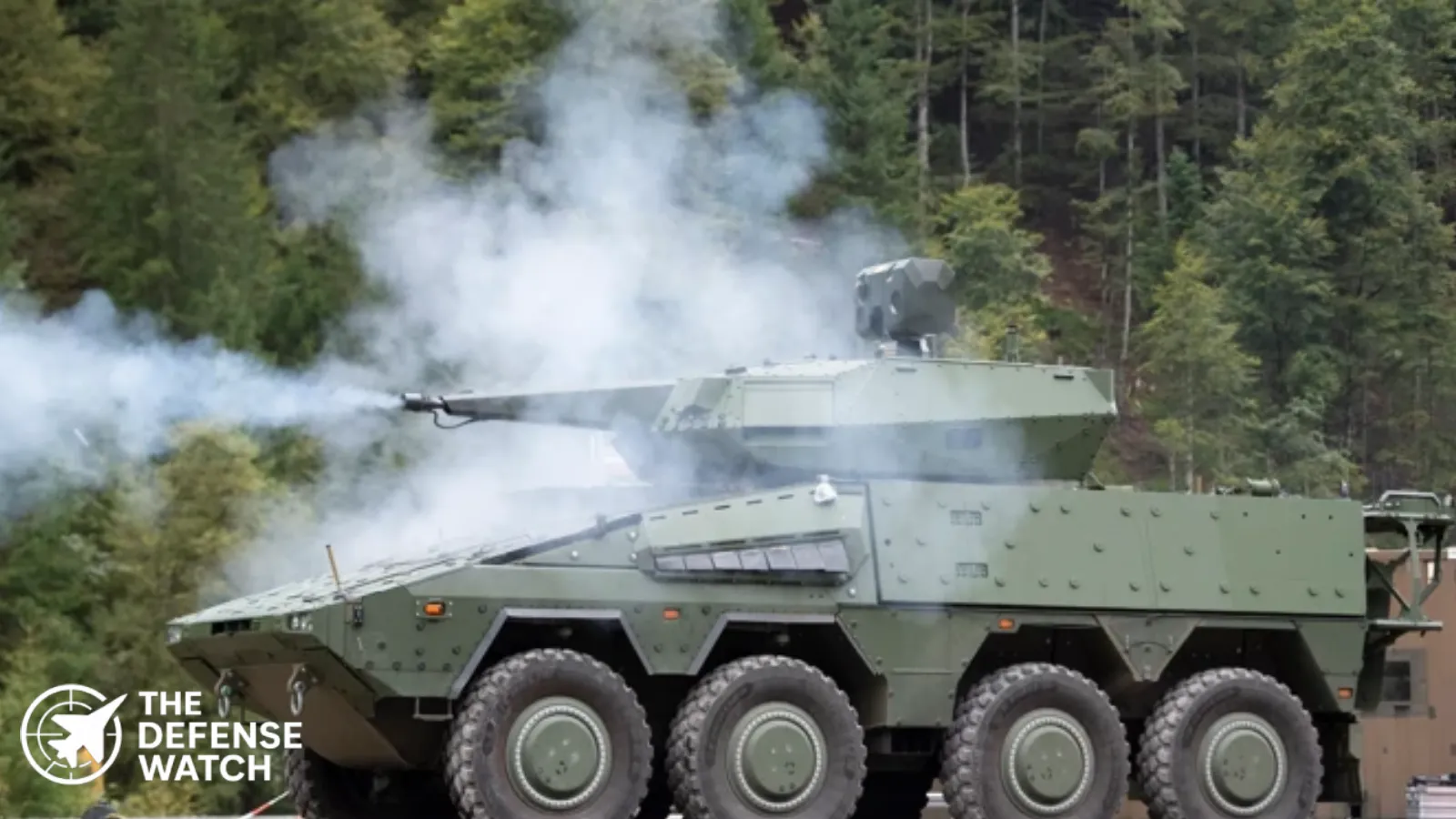
German sensor maker Hensoldt has signed a long-term framework agreement to supply radar systems to the air defense division of German defense group Rheinmetall. The deal will see Hensoldt’s SPEXER radar family used on Rheinmetall’s ground-based air defense platforms, including the Skyranger 30 systems and the laser-based HoWiSM drone defense solution. The agreement is expected to extend into the 2030s.
Framework Agreement Details
Under the framework agreement, Hensoldt will provide its SPEXER 2000 family of radars to Rheinmetall Air Defense AG for use on multiple ground-based systems. The arrangement allows various Rheinmetall Group companies to place orders over several years, giving both firms planning security and a resilient supply base for radar components.
Hensoldt and Rheinmetall have not published specific delivery dates for the radar systems. The flexible nature of the deal means radar deliveries will be paced according to program needs and customer demand.
SPEXER Radar Technology
Hensoldt’s SPEXER radars are designed for automatic detection, tracking and classification of ground, sea and low-altitude aerial targets. The SPEXER 2000 series offers high-performance surveillance capabilities that support a range of air defense missions, from short-range radar coverage to integration with counter-drone systems.
The inclusion of SPEXER 2000 radars will strengthen the target detection and tracking capabilities of Rheinmetall’s Skyranger 30 air defense system. Skyranger 30 is a mobile, turret-mounted platform equipped with a 30mm cannon and modern fire control systems. It is designed to provide close-range protection against aircraft, helicopters and unmanned aerial systems.
Integration With Advanced Systems
In addition to integrating radars on Skyranger 30 vehicles, the agreement covers radar supply for the HoWiSM system, a laser-based counter-drone solution developed by Rheinmetall in cooperation with missile maker MBDA. HoWiSM combines high-energy lasers with sensors and tracking radar to detect and defeat small unmanned aerial threats at short ranges. The system is part of broader efforts to counter the rising threat from unmanned aerial systems in sensitive areas. Reuters
In late October 2025, Rheinmetall and MBDA stated that HoWiSM could reach full operational capability by 2029. While the radar supply deal does not spell out exact schedules, the framework agreement provides a basis for deliveries as needed in advance of that capability date.
Strategic Context
Europe has seen growing concern about drone incursions and other low-altitude threats at airports, military installations and critical infrastructure sites. Governments are increasingly investing in layered air defense networks, combining radars, effectors and command systems to improve surveillance and response.
The Hensoldt-Rheinmetall deal comes amid this broad trend and reflects a push to strengthen European defense industrial cooperation. A framework that runs into the 2030s gives both companies a longer planning horizon and supports integration of radar technology into evolving air defence architectures.
Industrial and Procurement Impacts
For Hensoldt, the agreement secures a long-term customer for its radar products and aligns with recent efforts to expand production capacity for its sensor solutions. The company has been enhancing manufacturing infrastructure, including test facilities, to meet rising radar demand across defense programmes.
For Rheinmetall, having a committed radar supplier solidifies its ability to deliver integrated air defense solutions to military customers. The modular SPEXER radar family can be used across a range of deployment scenarios, supporting both vehicle-mounted and fixed installations.
What Comes Next
With the framework agreement in place, industry watchers will monitor order announcements and delivery updates as programmes like Skyranger 30 and HoWiSM advance. The deployment of radar-equipped systems will contribute to broader efforts by European armed forces to build resilient air defense networks capable of countering evolving aerial threats, including drones and low-signature aircraft.
Get real time update about this post category directly on your device, subscribe now.

5 comments
[…] and the Indian Air Force (IAF). During those clashes, Pakistani J‑10CE fighters were used in air defence and interception […]
[…] to Western allies for additional systems, munitions, and technical support. Western nations have supplied a range of medium and long-range air defence platforms, but Kyiv maintains that evolving Russian tactics require flexible and layered defence […]
[…] rights. The Republic’s longstanding policy of military neutrality means it is not part of formal defence alliances and maintains a limited air defence […]
[…] systems use Thales’s Secure Digital Integration Platform, which allows radar data to be fused into a unified air picture and supports future integration of non-U.S. […]
[…] air defense systems worldwide. Potential adversaries continue to invest in mobile, networked radars and long range surface to air missiles designed to deny access to key […]