
- ► Castelion Corp. awarded a $49,998,005 firm fixed price order for Blackbeard hypersonic weapons development.
- ► Contract covers full scale prototypes, flight testing, integration, and early operational fielding.
- ► Work supports SBIR Phase III topic AF231 D026 on low cost long range strike weapon production.
- ► Funded with Fiscal 2026 Navy RDT&E dollars, none expiring at fiscal year end.
- ► Contracting activity is Naval Air Warfare Center Aircraft Division, Lakehurst, New Jersey.
US Navy Advances Blackbeard Hypersonic Weapons Program With $49.9M Award
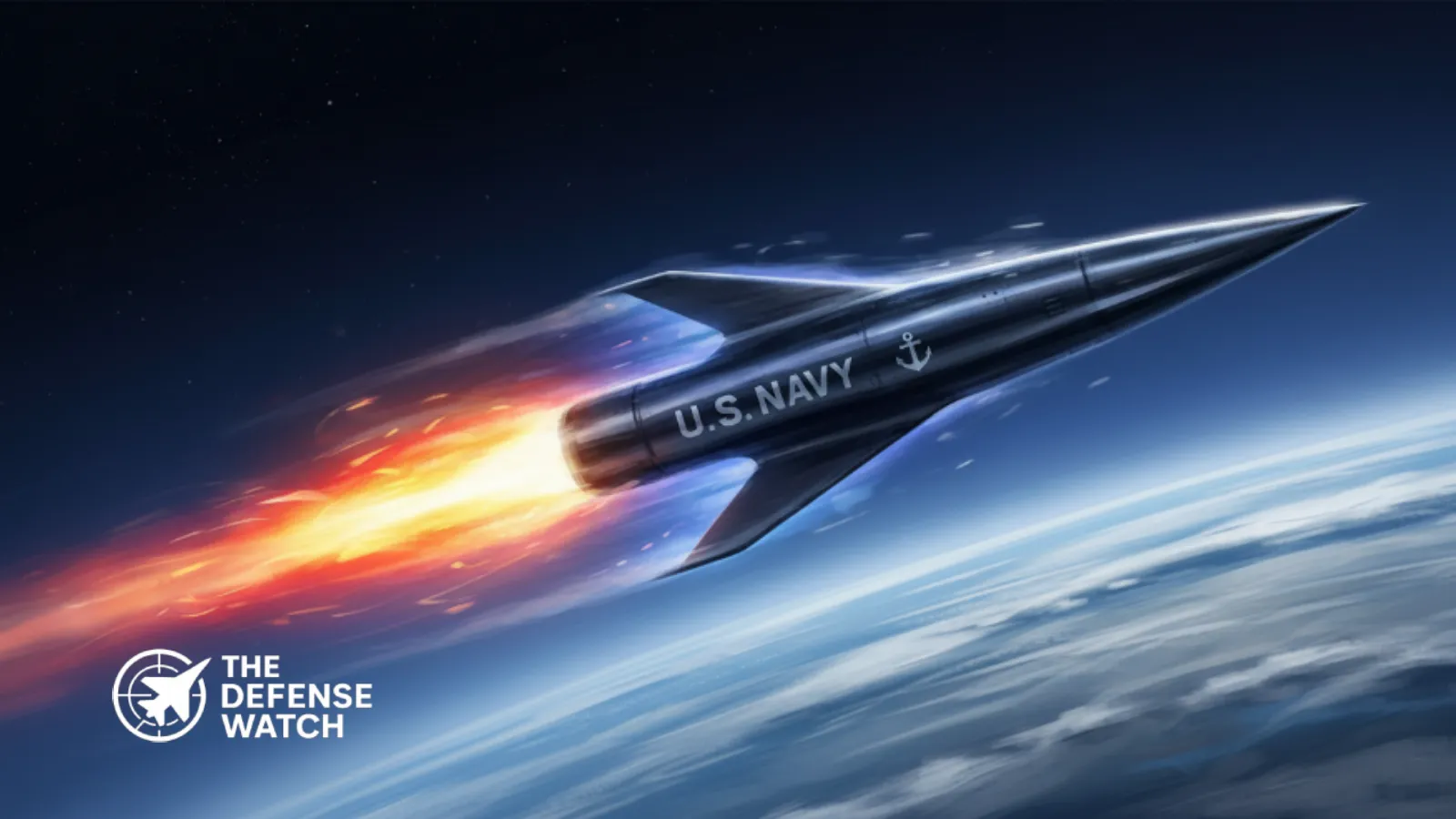
The Blackbeard hypersonic weapons program has received a $49.9 million boost after the US Navy awarded a firm fixed price order to Castelion Corp. for full scale prototypes, flight testing, and early operational fielding.
The $49,998,005 order was issued against a previously awarded basic ordering agreement and supports continued development, integration, and testing of the Blackbeard hypersonic weapons effort. The award falls under a Small Business Innovation Research, or SBIR, Phase III project titled Low Cost Highly Manufacturable Long Range Strike Weapon Production.
Work will be carried out in Torrance, California, and is scheduled for completion by November 2027.
Contract Details And Funding Structure
According to the Department of Defense contract announcement, Fiscal 2026 Navy research, development, test and evaluation funds totaling $49,998,005 were obligated at the time of award. None of the funding will expire at the end of the current fiscal year, providing budget stability through the early stages of prototype and testing work.
The contracting activity is the Naval Air Warfare Center Aircraft Division in Lakehurst, New Jersey.
The contract was competed, in line with SBIR Phase III procedures that allow follow on production and fielding efforts based on prior competitive research phases. Phase III awards are typically used to transition promising technologies into operational capability without re competing the original concept.
What The Blackbeard Hypersonic Weapons Program Aims To Deliver
While detailed technical specifications remain limited, the Blackbeard hypersonic weapons effort is tied to the Air Force and Navy SBIR topic AF231 D026. The focus is clear: develop a low cost, highly manufacturable long range strike weapon capable of scaling to production.
That objective reflects a broader Pentagon shift. In recent years, the Department of Defense has emphasized not only speed and range in hypersonic systems, but also affordability and industrial scalability. Programs that cannot transition into repeatable production lines risk remaining limited demonstrations.
By framing Blackbeard around manufacturability from the outset, the Navy signals that it is seeking more than a technology experiment. The inclusion of operational fielding in the contract scope suggests an intent to move quickly from prototype to limited deployment.
Hypersonic Weapons And The Industrial Base Challenge
Hypersonic weapons, generally defined as systems capable of sustained flight at speeds above Mach 5 with maneuverability, have become central to US military modernization efforts. The Pentagon has invested heavily in boost glide and air breathing hypersonic technologies across multiple services.
However, a persistent concern within defense circles has been cost and production complexity. Advanced materials, propulsion systems, and thermal protection requirements can drive per unit costs sharply higher than conventional strike weapons.
The Blackbeard hypersonic weapons program appears designed to address that gap. By leveraging the SBIR pathway and engaging a smaller, non traditional contractor like Castelion, the Navy is testing whether newer entrants can deliver faster development cycles and lower cost production methods.
This aligns with broader Defense Department efforts to expand the supplier base beyond established primes, particularly in emerging technology sectors.
SBIR Phase III And Rapid Transition To Fielding
The SBIR program is structured in three phases. Phase I explores feasibility. Phase II develops prototypes. Phase III transitions successful projects into production or operational use, funded by non SBIR dollars.
The Blackbeard hypersonic weapons contract falls squarely into that final category. That is significant.
Phase III awards indicate that the sponsoring service sees operational relevance and near term application. The inclusion of full scale prototypes and flight testing in this order suggests that the Navy is preparing for realistic performance validation rather than laboratory demonstration.
Early operational capability language in the award further reinforces that intent. While this does not equate to full rate production, it typically signals limited fielding for evaluation in real world conditions.
Strategic Context
The United States faces sustained investment by peer competitors in advanced missile technologies, including hypersonic glide vehicles and long range precision strike systems. Maintaining credible deterrence requires not only technological parity, but also the ability to produce systems at meaningful scale.
If the Blackbeard hypersonic weapons program succeeds in delivering a lower cost, manufacturable strike option, it could help address inventory depth concerns that have surfaced in recent strategic assessments.
At the same time, the Navy must balance speed with reliability. Hypersonic testing across multiple US programs has faced schedule and technical challenges in recent years. Ensuring that Blackbeard meets performance and safety thresholds during flight testing will be critical before broader deployment decisions are made.
What Comes Next
Between now and November 2027, Castelion is expected to complete prototype builds, integration work, and flight test campaigns under Navy oversight. Data gathered during these tests will likely inform decisions on expanded procurement or integration into specific service platforms.
Because the contract is firm fixed price, cost control and schedule discipline will be closely watched. That structure shifts performance risk onto the contractor, incentivizing efficiency while protecting government funding.
The award underscores the Navy commitment to advancing hypersonic capabilities through both traditional and non traditional acquisition pathways.
As the Blackbeard hypersonic weapons program progresses, its success or failure will offer insight into whether smaller firms can help the Pentagon solve the twin challenges of speed and scale in next generation strike systems.
Get real time update about this post category directly on your device, subscribe now.
