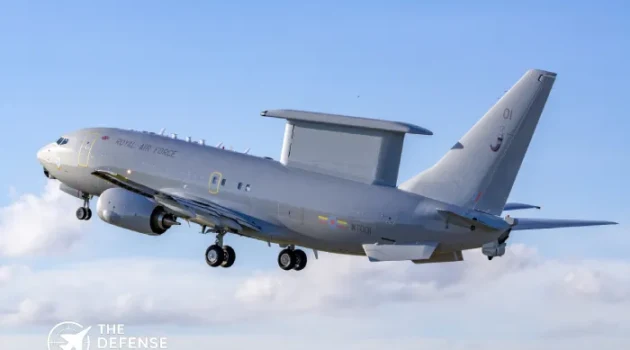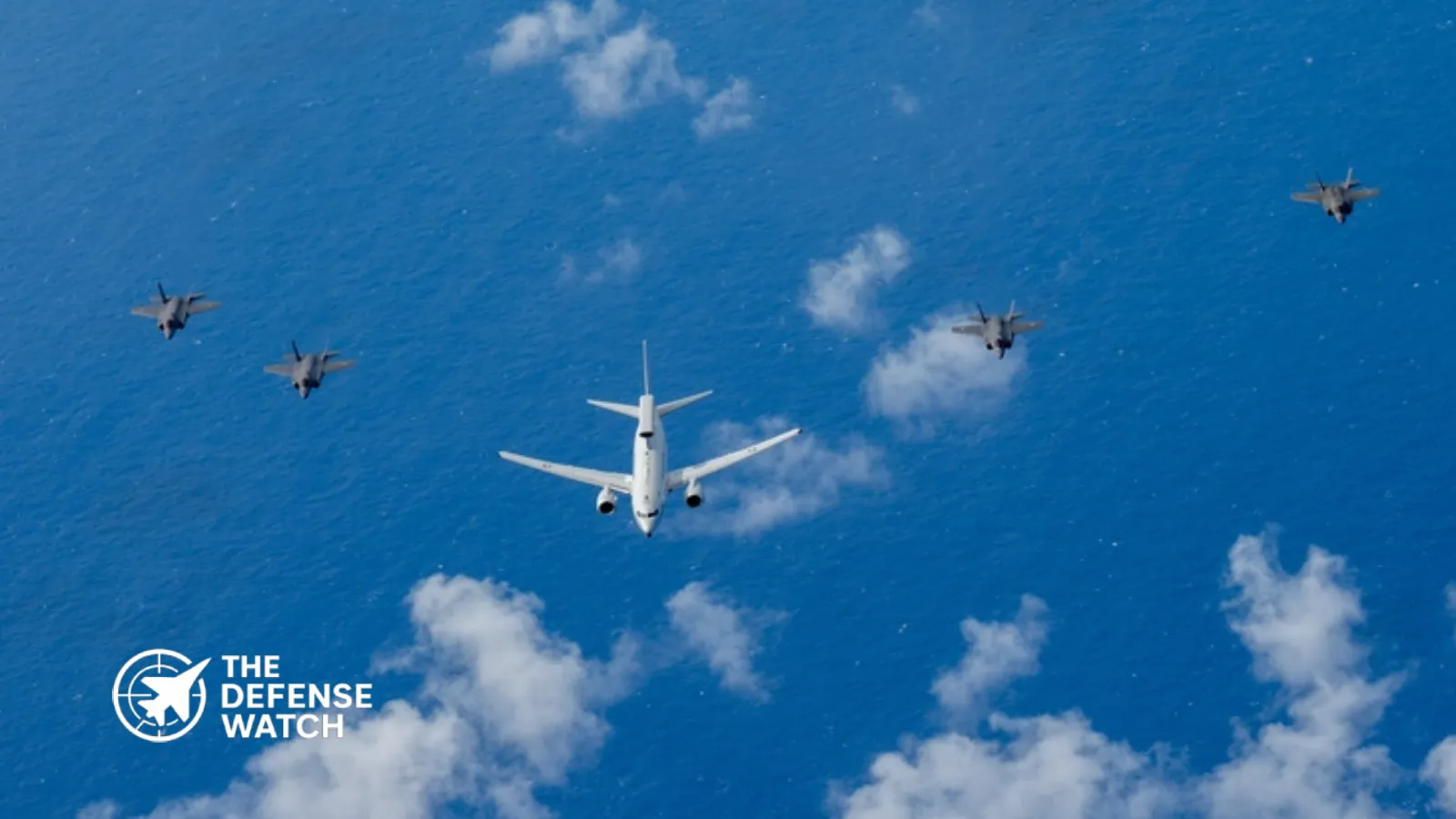
- The U.S. Air Force awarded Boeing a $2.33 billion contract modification for the E-7A Rapid Prototype Airborne Mission Segment.
- The E-7A Wedgetail will replace the aging E-3 Sentry airborne early warning and control aircraft.
- The program strengthens U.S. airborne battle management capabilities amid increasing peer competition.
- Total contract value now approaches $4.9 billion with work continuing through August 2032.
- Development work will take place across multiple U.S. aerospace hubs including Seattle, Oklahoma City, and Huntsville.
E-7A Rapid Prototype Program Advances With Major USAF Contract Modification
The E-7A Rapid Prototype program received a major boost after the U.S. Air Force awarded Boeing a $2.33 billion contract modification to continue development of the next generation airborne mission system. The award expands an existing contract for the E-7A Rapid Prototype Airborne Mission Segment, bringing the program’s cumulative contract value to approximately $4.9 billion.
The work will support development of the U.S. Air Force’s future airborne battle management aircraft based on the E-7A Wedgetail platform. The aircraft is expected to replace the aging E-3 Sentry fleet, which has served as the backbone of U.S. airborne early warning and command operations for decades.
According to the U.S. Department of Defense contract announcement, work will take place primarily in Seattle, Washington, with additional efforts in Oklahoma City, Oklahoma, Huntsville, Alabama, and Heath, Ohio. The program is scheduled for completion by August 10, 2032.
The Big Picture
The E-7A Rapid Prototype program forms a central part of the U.S. Air Force’s broader effort to modernize airborne command and control capabilities.
Airborne early warning and battle management aircraft serve as critical nodes in modern military operations. They provide long range radar coverage, track airborne and maritime threats, coordinate fighter aircraft, and manage complex air campaigns across large theaters.
The current U.S. Air Force E-3 Sentry fleet entered service during the Cold War. While the aircraft has undergone several upgrades, age related maintenance challenges and evolving operational demands have increasingly strained the platform.
The E-7A Wedgetail, already operated by several U.S. allies, offers a modern replacement that integrates advanced radar, improved networking, and enhanced mission systems designed for modern multi domain warfare.
What’s Happening
The contract modification awarded to Boeing exercises an option within the existing E-7A Rapid Prototype program contract.
The $2,335,411,756 modification supports the development of the airborne mission segment that will enable the aircraft’s command and control capabilities.
The Air Force Life Cycle Management Center at Hanscom Air Force Base in Massachusetts manages the contract. The center oversees development of mission systems, sensors, and integration for several advanced U.S. Air Force programs.
Fiscal year 2026 research, development, test and evaluation funds totaling $31 million were obligated at the time of the award.
Boeing will lead development work from its facilities in Tukwila and Seattle, Washington. Additional program activity will occur in several other aerospace centers supporting systems engineering, software integration, and mission system testing.
The effort continues through 2032, reflecting the complexity of integrating advanced battle management technologies into a new operational aircraft.
Why It Matters
Modern air warfare increasingly relies on networked operations rather than standalone platforms.
Airborne early warning aircraft serve as command hubs that connect fighter aircraft, ground forces, naval assets, and intelligence systems. They allow commanders to coordinate operations across large areas while maintaining situational awareness.
The Boeing E-7A Wedgetail aircraft introduces a digitally advanced radar system capable of tracking multiple airborne targets simultaneously. The platform uses the Multi role Electronically Scanned Array radar integrated into a distinctive dorsal structure known as the “top hat.”
Compared with legacy systems, the E-7A offers improved reliability, lower maintenance demands, and enhanced sensor performance.
The aircraft also supports modern data links and distributed command networks that align with the U.S. military’s emerging Joint All Domain Command and Control architecture.
Strategic Implications
The E-7A Rapid Prototype program carries significant implications for U.S. military readiness.
Air superiority operations depend heavily on real time situational awareness and coordination. Without airborne battle management platforms, fighter aircraft would struggle to operate efficiently across large theaters.
The Indo Pacific region presents particular challenges due to its vast geographic scale. Aircraft like the E-7A enable long range surveillance and command capabilities that support distributed operations across the Pacific.
NATO operations also rely heavily on airborne warning aircraft for air policing and coalition air operations. The E-7A could eventually support alliance operations if integrated into broader NATO command networks.
Replacing aging E-3 aircraft ensures the United States retains a reliable airborne command capability as operational demands increase.
Competitor View
Strategic competitors closely track U.S. airborne command and control modernization.
China continues to expand its own airborne early warning fleet, including platforms such as the KJ-2000 and KJ-500, which support long range air operations across the Western Pacific.
Russia operates several A-50 airborne early warning aircraft, though modernization efforts have faced delays.
From a competitor perspective, the Boeing E-7A Wedgetail aircraft strengthens U.S. ability to coordinate large scale air operations and maintain situational awareness in contested airspace.
Airborne battle management systems can significantly influence the effectiveness of fighter aircraft, long range missiles, and integrated air defense networks.
What To Watch Next
Several milestones will shape the future of the E-7A Rapid Prototype program.
Upcoming phases will include mission system development, integration testing, and operational evaluation. These stages determine how effectively the aircraft integrates sensors, communications systems, and command networks.
The U.S. Air Force also plans to procure multiple E-7A aircraft in the coming years to replace its E-3 fleet.
Initial operational capability could emerge later this decade if testing proceeds on schedule.
Capability Gap
The E-7A Rapid Prototype program addresses a growing capability gap created by the aging E-3 Sentry fleet.
The E-3 aircraft face increasing maintenance costs and reduced mission availability due to their age and complex legacy systems.
Modern warfare also requires more advanced data sharing and sensor integration than earlier airborne warning aircraft were designed to support.
The E-7A offers improved mission system architecture that supports software upgrades and integration with future digital command networks.
However, the platform still faces challenges common to complex defense programs. Integration of mission systems, cybersecurity requirements, and testing timelines will determine the final operational performance.
The Bottom Line
The U.S. Air Force’s expanded E-7A Rapid Prototype program represents a major step toward replacing the aging E-3 fleet and strengthening the nation’s airborne command and control capabilities.
Get real time update about this post category directly on your device, subscribe now.