
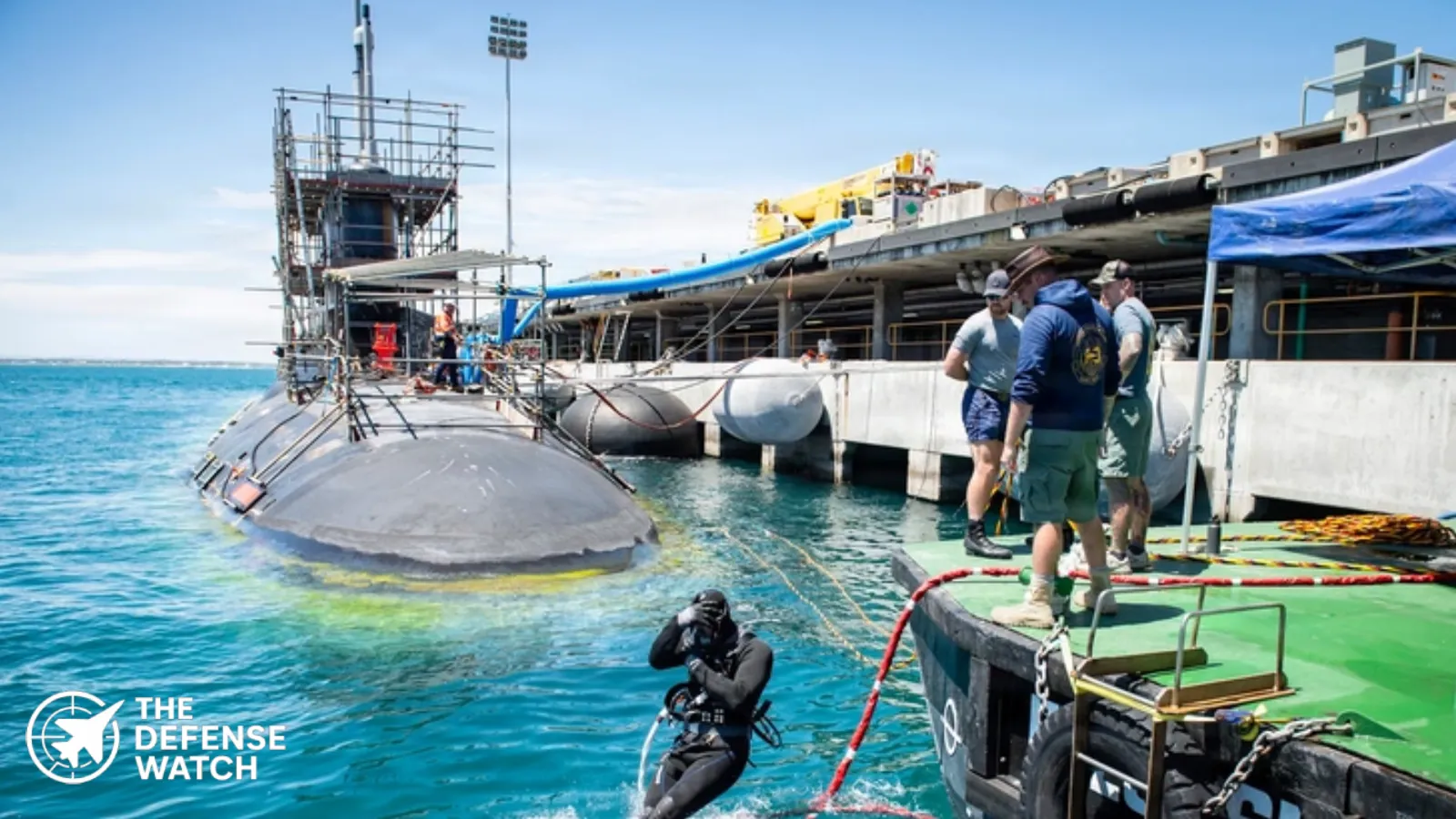
Lockheed Martin submarine electronic warfare systems are set to receive continued engineering support under a new U.S. Navy contract modification valued at 9.5 million dollars. The award, announced by Naval Sea Systems Command, supports electronic warfare capabilities on both new construction and in service U.S. Navy submarines, reinforcing long term undersea warfare readiness.
The contract modification was awarded to Lockheed Martin Corp. in Syracuse, New York, under an existing indefinite delivery, indefinite quantity agreement. Work will continue through February 2027 and will be funded with fiscal year 2026 Navy procurement funds.
Contract Details and Scope
The U.S. Navy awarded Lockheed Martin a 9.5 million cost plus incentive fee and cost contract modification under delivery order N00024-25-F-6260. The delivery order falls under a broader indefinite delivery, indefinite quantity contract identified as N00024-25-D-6211.
According to the Navy, the modification exercises contract options for engineering support tied to submarine electronic warfare systems. These systems are used across the Navy submarine fleet, including both newly built platforms and submarines already in operational service.
Work under the contract will be performed in Syracuse, New York. The Navy expects all work to be completed by February 2027.
Fiscal year 2026 other procurement Navy funds totaling 4,867,641 dollars will be obligated at the time of award. The Navy confirmed these funds will not expire at the end of the current fiscal year.
Naval Sea Systems Command in Washington, D.C. is listed as the contracting activity.
Importance of Submarine Electronic Warfare
Submarine electronic warfare systems play a central role in modern undersea operations. These systems allow submarines to detect, classify, and respond to electromagnetic threats, including radar, communications signals, and hostile sensing systems.
Electronic warfare capabilities are increasingly important as potential adversaries invest in advanced sensors, networked maritime surveillance, and multi domain command systems. For U.S. Navy submarines, maintaining reliable and adaptable electronic warfare systems is critical for survivability and mission success.
Lockheed Martin submarine electronic warfare systems support situational awareness, threat warning, and countermeasure employment. Engineering support contracts like this one help ensure these systems remain effective as threat environments evolve.
Support for New and In Service Submarines
The Navy confirmed that the contract covers both new construction submarines and submarines already in service. This approach allows electronic warfare systems to remain consistent across the fleet while also supporting upgrades and refinements over time.
New construction submarines, including future Virginia class boats, rely on advanced electronic warfare systems from the earliest design stages. Engineering support helps integrate sensors, processors, and software into complex combat systems.
For in service submarines, engineering work supports system sustainment, updates, and technical improvements. This helps the Navy extend service life and maintain operational relevance without costly platform replacements.
Lockheed Martin Role in Undersea Warfare
Lockheed Martin has a long standing role in U.S. Navy undersea warfare programs. The company supplies electronic warfare systems, combat system components, sensors, and integration services for submarines and surface ships.
The Syracuse, New York facility is a key hub for Lockheed Martin undersea and electronic warfare activities. It supports engineering, production, and lifecycle sustainment work for Navy customers.
By securing this contract modification, Lockheed Martin reinforces its position as a trusted supplier of submarine electronic warfare technology and support services.
Budget Context and Navy Procurement
The funding for this contract comes from fiscal year 2026 other procurement Navy accounts. These funds are typically used to support systems, equipment, and upgrades that fall outside standard shipbuilding or weapons procurement lines.
The Navy’s decision to obligate funds that do not expire at the end of the fiscal year provides program stability. It allows engineering work to proceed without annual funding disruptions, which is important for long term technical support efforts.
Defense contracts structured as cost plus incentive fee arrangements are common for complex engineering tasks. They allow the Navy to manage technical risk while encouraging performance and cost control.
Electronic Warfare and Future Naval Strategy
Electronic warfare is a growing focus within U.S. naval strategy, particularly in contested maritime regions. Submarines remain one of the Navy’s most survivable and flexible assets, and their effectiveness depends heavily on electronic awareness and control of the electromagnetic spectrum.
As adversaries improve anti submarine warfare sensors and tracking networks, U.S. submarines must rely on advanced electronic warfare systems to remain undetected and effective.
Engineering support contracts such as this one help the Navy adapt existing systems to new threats while preparing for future platform upgrades.
Industry and Program Stability
While the contract value is modest compared to major shipbuilding awards, it reflects steady investment in critical support functions. Engineering services often determine how well advanced systems perform over time.
For industry, these contracts provide continuity for skilled engineering teams and preserve technical knowledge within the defense industrial base.
For the Navy, sustained engineering support reduces risk and helps ensure that electronic warfare systems remain aligned with operational needs.
Outlook
The Lockheed Martin submarine electronic warfare contract modification underscores the Navy’s continued focus on undersea dominance and electromagnetic spectrum control. With work scheduled through early 2027, the program supports near and mid term fleet readiness.
As the Navy modernizes its submarine force, electronic warfare engineering will remain a priority area for investment and industry collaboration.
Get real time update about this post category directly on your device, subscribe now.
