
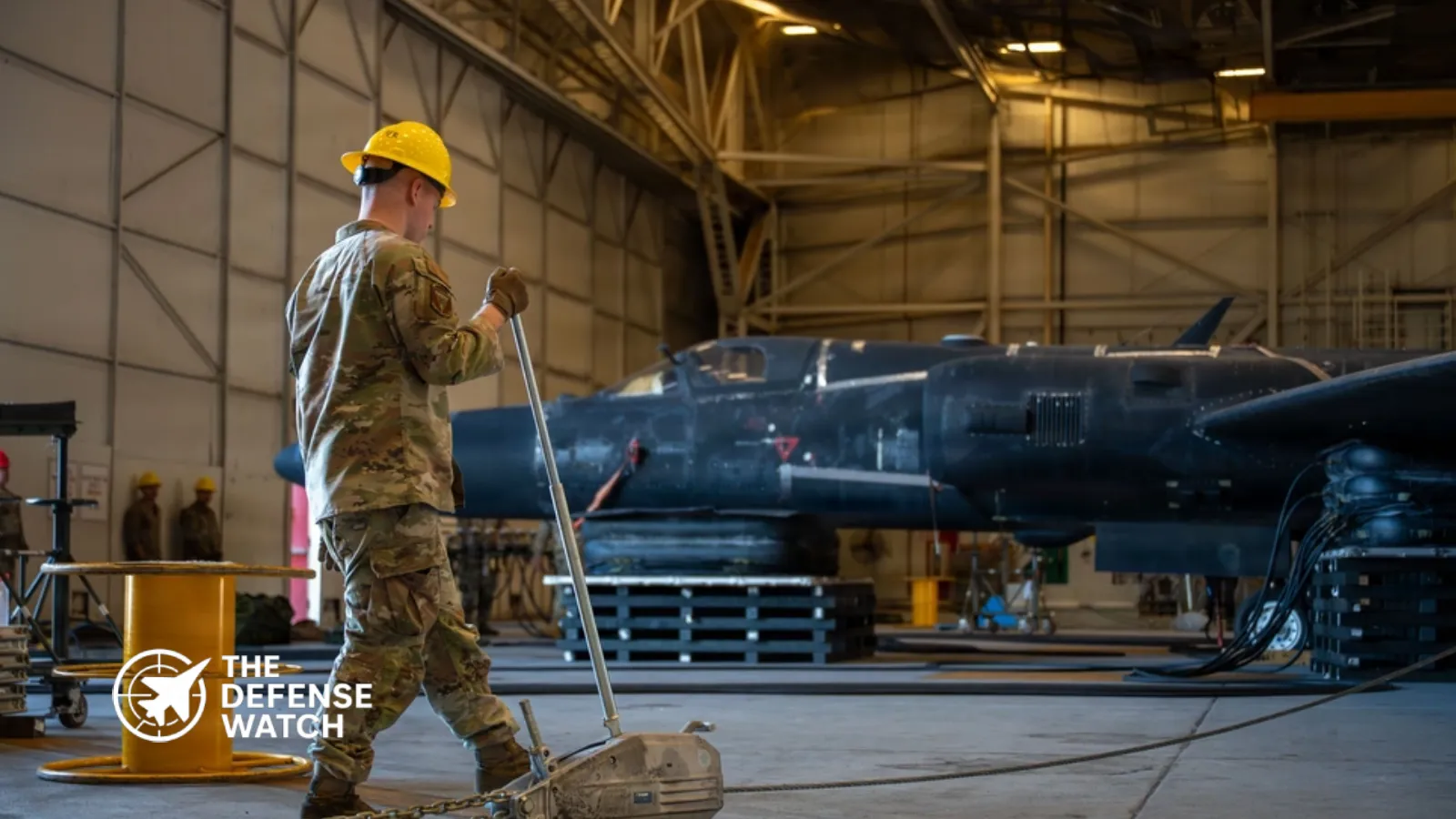
- ► $27,737,627 firm fixed price contract awarded for programmed depot maintenance.
- ► Supports the Tactical Airborne Surveillance System program.
- ► Work to be performed in Greenville, Texas through Dec. 31, 2029.
- ► Sole source acquisition managed by the 645th Aeronautical Systems Group.
- ► Fully funded at award with $27,737,627 in Foreign Military Sales funds.
L3Harris Tactical Airborne Surveillance System Contract Secures Long Term Sustainment
The L3Harris Tactical Airborne Surveillance System contract has been awarded as a $27,737,627 firm fixed price agreement to support programmed depot maintenance for the U.S. Air Force.
The award was issued to L3Harris Technologies, Integrated Systems L.P., based in Greenville, Texas. Work will be carried out at the company’s Greenville facility and is scheduled for completion by Dec. 31, 2029.
According to the Department of Defense contract announcement, the award was executed as a sole source acquisition. The contracting authority is the 645th Aeronautical Systems Group at Wright-Patterson Air Force Base, Ohio.
Sustainment Focus For Tactical Airborne Surveillance System
The L3Harris Tactical Airborne Surveillance System contract centers on programmed depot maintenance, a critical element of lifecycle sustainment for airborne intelligence, surveillance, and reconnaissance platforms.
Programmed depot maintenance typically includes scheduled overhauls, structural inspections, avionics upgrades, system recalibration, and component replacement. These activities ensure aircraft and mission systems remain airworthy, compliant with evolving standards, and capable of meeting operational demands.
The Tactical Airborne Surveillance System, commonly referred to as TASS, is designed to provide real time ISR support. It is often integrated onto special mission aircraft to deliver full motion video, signals intelligence, and wide area surveillance capabilities.
Sustainment contracts like this one are less visible than platform acquisitions, but they are central to mission readiness. Without consistent depot level maintenance, ISR fleets can face reduced availability rates, delayed deployments, and higher long term costs.
By funding the full contract amount at the time of award, the Air Force ensures predictable sustainment planning through 2029.
Foreign Military Sales Funding Signals International Stakeholder
The contract is funded entirely through Foreign Military Sales, with $27,737,627 obligated at award. The FMS program, administered by the U.S. government, enables allied and partner nations to procure U.S. defense equipment, training, and support.
Under the FMS structure, the Department of Defense manages contracting and oversight, while the partner nation provides the funding. This approach strengthens interoperability and ensures U.S. standards are maintained across allied fleets.
Although the specific foreign customer was not identified in the contract announcement, FMS backed sustainment contracts often indicate continued international reliance on U.S. ISR systems and support infrastructure.
From a policy standpoint, sustainment through FMS can extend the operational life of systems already in service abroad. It also reinforces long term defense relationships built around shared technology and training pipelines.
Sole Source Acquisition Reflects Platform Specific Expertise
The award was executed as a sole source acquisition, a contracting method typically used when only one responsible source can meet the government’s requirements.
In this case, L3Harris is the original equipment manufacturer and integrator for the Tactical Airborne Surveillance System. That position provides unique technical knowledge, proprietary data rights, and certified maintenance capabilities that are not easily replicated.
Depot maintenance for ISR platforms often requires access to mission system software, secure architectures, and classified integration frameworks. These factors frequently justify sole source arrangements under federal acquisition regulations.
The 645th Aeronautical Systems Group, operating from Wright Patterson Air Force Base, oversees specialized aircraft programs, including ISR and special mission platforms. Its involvement underscores the technical and operational sensitivity associated with systems like TASS.
Strategic Context: ISR Sustainment In A Contested Environment
While the contract is focused on maintenance, its broader importance lies in maintaining ISR capacity in an increasingly contested global security environment.
Airborne surveillance systems support counterterrorism missions, border security operations, maritime domain awareness, and conventional military planning. As peer and near peer competitors invest in electronic warfare and anti access strategies, maintaining high availability ISR assets becomes more critical.
Depot maintenance cycles also provide opportunities to incorporate incremental upgrades. Even when not explicitly stated in contract summaries, sustainment periods often align with hardware refreshes, sensor improvements, and cybersecurity enhancements.
For allied operators under Foreign Military Sales, sustained ISR readiness supports coalition operations and intelligence sharing frameworks.
In practical terms, the L3Harris Tactical Airborne Surveillance System contract ensures that aircraft equipped with these capabilities remain mission ready through the end of the decade.
Industrial Base And Regional Impact
Work will be performed in Greenville, Texas, a long standing hub for L3Harris special mission aircraft modification and sustainment. The facility supports a range of ISR, maritime patrol, and airborne early warning programs.
Stable, multi year sustainment contracts contribute to workforce continuity, technical skill retention, and supply chain stability within the U.S. defense industrial base.
For the Air Force and its international partners, predictable depot scheduling reduces operational risk and supports long term budgeting.
Get real time update about this post category directly on your device, subscribe now.
