
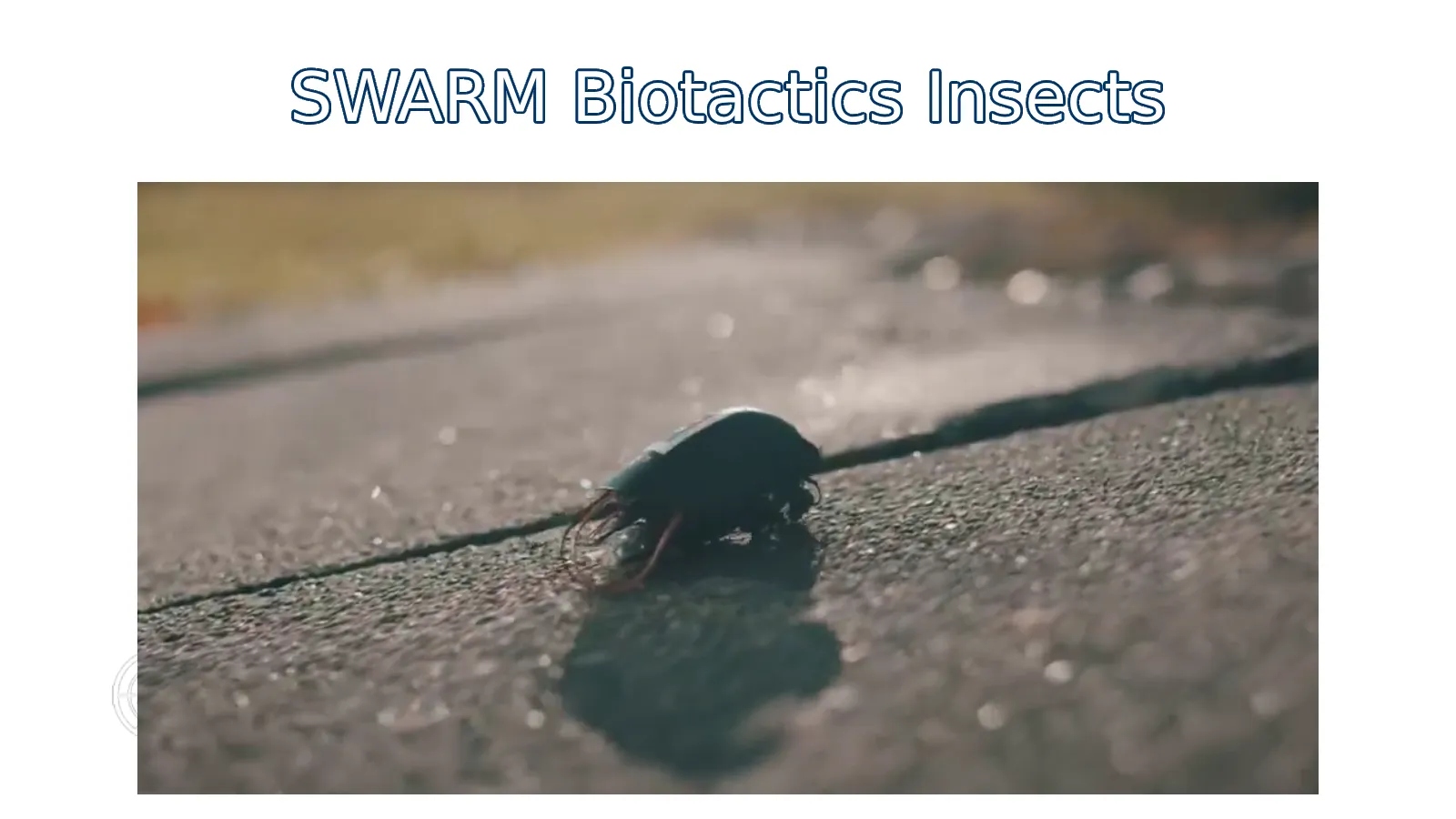
- ► SWARM Biotactics says its cybernetic insect swarms completed field testing in Germany.
- ► The systems are reportedly in operational use with NATO customers, including the German Armed Forces.
- ► Development from concept to deployment took approximately one year.
- ► The platform integrates live insects with micro electronics for reconnaissance roles.
- ► The capability reflects growing NATO interest in micro scale intelligence and surveillance systems.
NATO Intelligence From Germany Signals Operational Shift In Micro Drone Warfare
NATO intelligence from Germany indicates that cybernetic insect swarms developed by German firm SWARM Biotactics have completed field testing and transitioned into operational use with NATO customers, including the German Armed Forces.
The Germany based company announced that its bio robotic reconnaissance platform progressed from concept design to fielded capability in roughly one year, an unusually rapid development cycle for a defense system involving both robotics and live biological components.
While technical details remain limited, the development marks a notable step in micro drone warfare and close range intelligence collection.
From Concept To Operational Capability In One Year
According to statements released by SWARM Biotactics, the company successfully transitioned its cybernetic insect swarms from early design to operational employment within approximately twelve months. For defense programs, particularly those integrating biological systems with embedded electronics, that timeline is compressed.
The firm has previously described its approach as combining live insects with lightweight control modules, sensors, and secure communications links. The insects function as highly mobile micro platforms capable of entering confined spaces that conventional drones cannot access.
If confirmed at scale, this would represent one of the first operational uses of bio robotic systems within a NATO military framework.
Defense ministries across Europe have accelerated investment in small unmanned systems since the war in Ukraine highlighted the tactical impact of low cost drones. According to open source reporting and NATO procurement trends, member states have prioritized reconnaissance platforms that are smaller, cheaper, and harder to detect.
NATO Intelligence And The Micro Drone Race
The emergence of cybernetic insect swarms fits within a broader shift in NATO intelligence collection doctrine. Traditional ISR platforms, including medium altitude UAVs and crewed aircraft, provide strategic and operational coverage. However, they are less suited for indoor reconnaissance, tunnel systems, or dense urban terrain.
Micro drones attempt to close that gap.
In recent years, the U.S. Defense Advanced Research Projects Agency and European defense labs have explored insect scale robotics. What differentiates the SWARM Biotactics announcement is the claim of operational use with the German Armed Forces.
Berlin has steadily expanded funding for unmanned and autonomous systems as part of its post 2022 defense modernization push. Following Russia invasion of Ukraine, Germany launched a 100 billion euro special defense fund to accelerate procurement across air, land, and cyber domains.
While the company did not disclose contract values or deployment locations, the reference to NATO customers suggests the technology may be integrated into intelligence, special operations, or force protection units.
Operational Use Raises Strategic And Ethical Questions
The operational deployment of cybernetic insect swarms introduces both tactical advantages and policy considerations.
From a military standpoint, micro scale reconnaissance offers several clear benefits:
• Reduced detectability compared to conventional quadcopters
• Ability to infiltrate enclosed spaces
• Lower acoustic and radar signatures
• Potential for distributed swarm intelligence
However, the fusion of biological organisms and electronic control systems raises regulatory and ethical questions. NATO members operate under strict legal frameworks governing new weapons technologies. Any operational use would likely undergo legal review to ensure compliance with international humanitarian law.
There are also technical vulnerabilities. Small platforms face power limitations, signal interference risks, and environmental constraints. Adversaries investing heavily in electronic warfare could target control links or attempt to disrupt swarm coordination.
Still, the pace of innovation suggests NATO nations view micro autonomous systems as an essential component of future battlefield awareness.
Germany Position In Emerging Defense Tech
Germany has historically been strong in robotics, engineering, and industrial manufacturing. Companies such as Rheinmetall and Airbus Defence and Space have expanded into autonomous systems, loitering munitions, and AI enabled platforms.
The reported operationalization of SWARM Biotactics cybernetic insect swarms reflects a broader ecosystem of defense innovation in Germany.
It also aligns with NATO emphasis on multi domain operations, where small, networked systems feed real time data into larger command architectures.
If the system proves reliable, it could influence procurement decisions across allied nations seeking discreet ISR capabilities in urban warfare, counterterrorism, and hybrid conflict environments.
What Comes Next
Key unknowns remain. The company has not detailed production scale, cost per unit, endurance, or sensor payload capacity. It is also unclear whether the insects operate fully autonomously or rely on remote human control.
For now, the announcement signals that NATO intelligence from Germany is moving beyond conventional drones toward biologically integrated micro platforms.
As modern battlefields become denser, more contested, and electronically saturated, the demand for hard to detect reconnaissance assets will likely grow.
The transition from concept to operational use in one year suggests defense customers are willing to experiment rapidly when battlefield requirements demand it.
Get real time update about this post category directly on your device, subscribe now.
