
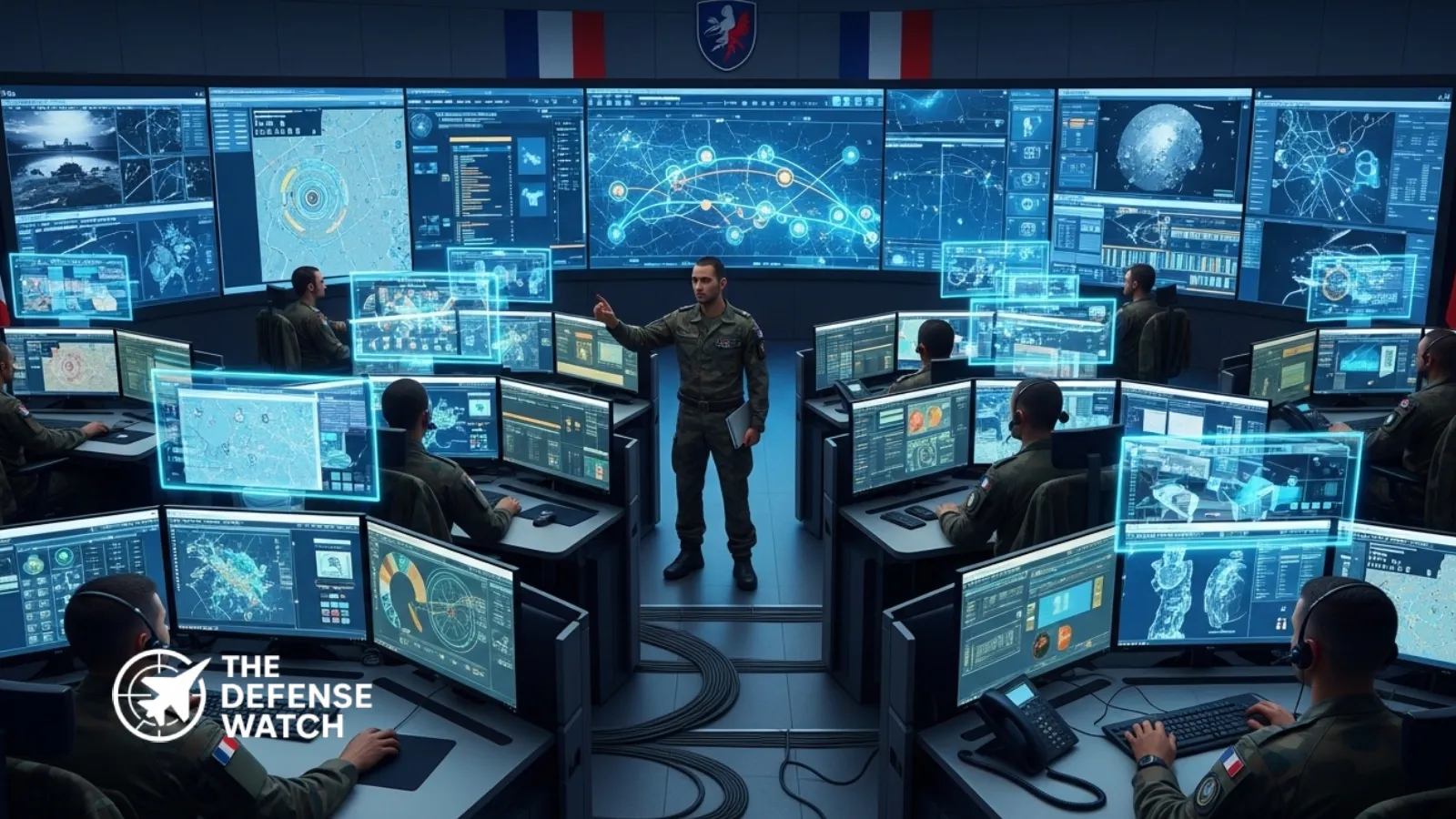
- France has begun deploying Mistral AI tools across its armed forces to enhance operational decision-making.
- The system focuses on real-time data processing, intelligence analysis, and command support functions.
- Mistral AI represents a sovereign European alternative to U.S.-based artificial intelligence systems.
- Deployment aligns with France’s broader military modernization and digital transformation strategy.
- The initiative reflects growing emphasis on AI-driven warfare across NATO and global defense sectors.
France Deploys Mistral AI Military System To Boost Operational Decision-Making
France’s deployment of Mistral AI military systems marks a significant step in integrating artificial intelligence into frontline defense operations, aiming to accelerate decision-making cycles and improve battlefield awareness.
The French Ministry of Armed Forces has begun integrating tools developed by Mistral AI across multiple branches of its military. The initiative focuses on enhancing data processing, intelligence fusion, and command-level decision support.
The deployment reflects a broader shift within France toward sovereign AI capabilities, reducing reliance on external technology providers while strengthening operational autonomy.
AI Integration Into Command And Control Systems
At the core of the Mistral AI military deployment is the ability to process large volumes of operational data in real time. Modern battlefields generate vast streams of information from sensors, drones, satellites, and communications systems. Human operators often struggle to synthesize this data quickly enough to maintain decision superiority.
Mistral AI tools are designed to address this gap. By automating analysis and prioritizing critical information, the system enables commanders to act faster and with greater confidence. This capability is particularly relevant in high-tempo operations where delays can directly impact mission outcomes.
The French military is expected to integrate these tools into command and control networks, where AI can assist in threat identification, mission planning, and operational coordination. This aligns with trends seen across NATO, where digital command systems are increasingly augmented by machine learning algorithms.
Strategic Push For European Sovereign AI
A key element of the program is technological sovereignty. Unlike many AI systems currently used in defense, which rely on U.S.-based platforms, Mistral AI represents a European-developed alternative.
This distinction carries strategic weight. By adopting domestically developed AI, France can maintain greater control over data security, system architecture, and operational use cases. It also reduces potential vulnerabilities linked to foreign supply chains or regulatory constraints.
The move mirrors broader European Union efforts to build independent digital infrastructure. In defense terms, sovereign AI is increasingly viewed as essential for ensuring operational independence in contested environments.
Operational Impact And Battlefield Applications
The practical applications of Mistral AI military tools extend across multiple domains:
- Intelligence analysis: Rapid processing of ISR data to identify patterns and threats
- Decision support: Assisting commanders with scenario modeling and recommendations
- Logistics optimization: Improving supply chain efficiency in deployed operations
- Cyber defense: Enhancing detection of anomalies and potential intrusions
These capabilities are expected to improve situational awareness and reduce cognitive load on personnel. In modern warfare, where decision speed often determines tactical advantage, AI-enabled systems can significantly shift operational dynamics.
However, integration challenges remain. Military adoption of AI requires robust validation, cybersecurity safeguards, and clear rules of use. Ensuring reliability in contested and degraded environments will be critical to long-term success.
Alignment With Global Military AI Trends
France’s move comes amid accelerating global investment in military AI. The United States, China, and several NATO allies are actively developing similar capabilities, focusing on autonomous systems, predictive analytics, and AI-assisted command networks.
What distinguishes the French approach is its emphasis on sovereignty and modular integration. Rather than relying solely on large, centralized systems, the Mistral AI deployment appears designed to integrate into existing platforms and workflows.
This approach may offer greater flexibility, allowing incremental adoption while minimizing disruption to current operations.
Analysis: Speed, Sovereignty, And Strategic Advantage
The deployment of Mistral AI military systems highlights two defining trends in modern defense strategy: the race for decision speed and the push for technological independence.
First, decision-making speed is becoming a decisive factor in conflict. AI systems that can compress the observe-orient-decide-act loop provide a measurable operational edge. France’s investment suggests recognition that future conflicts will be shaped as much by data processing as by kinetic capability.
Second, sovereignty in AI is emerging as a strategic priority. Dependence on external technology providers introduces risks that extend beyond supply chains, including data access and operational limitations. By investing in domestic AI development, France is positioning itself to retain full control over critical defense capabilities.
At the same time, the effectiveness of such systems will depend on integration, training, and trust. AI tools must be reliable, transparent, and aligned with human decision-makers. Without these elements, even advanced systems may face resistance in operational environments.
Get real time update about this post category directly on your device, subscribe now.
