
Turkish-Saudi Defense Partnership Eyes Kaan Fighter Jet Investment
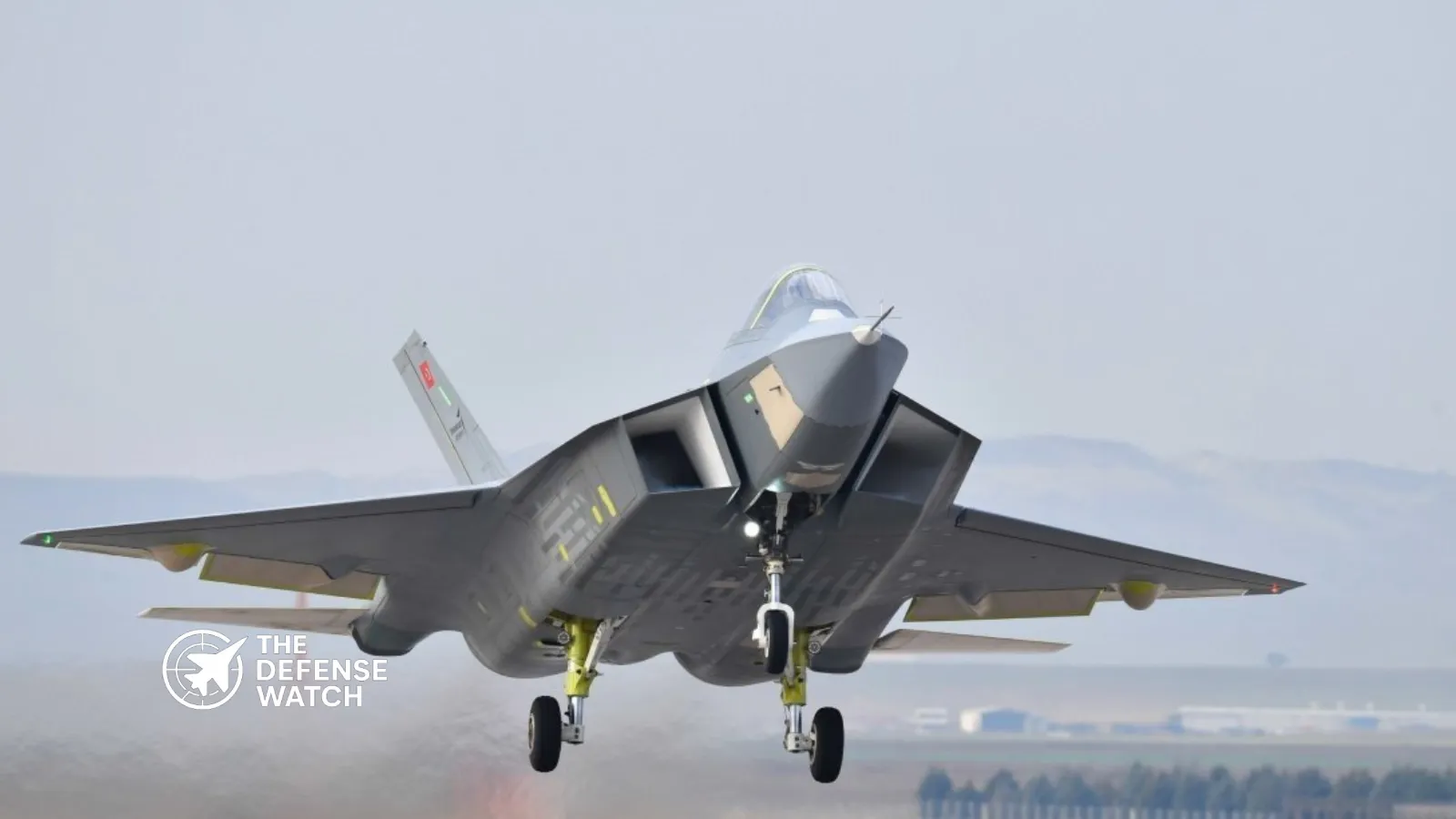
The Kaan fifth-generation fighter jet could become the centerpiece of expanded defense cooperation between Turkey and Saudi Arabia, according to Turkish President Recep Tayyip Erdogan. Speaking to reporters on February 5, 2026, during his return from Cairo, Erdogan indicated that the homegrown stealth aircraft has attracted significant interest from Riyadh and that a joint investment partnership could materialize in the near future.
“We have received a lot of positive feedback on Kaan,” Erdogan stated, according to Anadolu Agency. “There is a joint investment with Saudi Arabia in this area, and we can implement this partnership at any moment.”
The announcement follows Erdogan’s two-day diplomatic tour to Saudi Arabia and Egypt, where defense industry cooperation featured prominently in bilateral discussions. Both Ankara and Riyadh signed what Erdogan described as “major” defense industry cooperation agreements, with Turkey expressing determination to expand these partnerships further.
Kaan: Turkey’s Indigenous Fifth-Generation Fighter
The Kaan fighter jet, developed by Turkish Aerospace Industries (TAI), represents Turkey’s most ambitious aerospace project to date. First publicly unveiled in 2023, the aircraft completed its maiden test flight in early 2024 and is scheduled to enter serial production in 2028.
Erdogan emphasized the strategic significance of the program beyond its military applications. Kaan is not just a fighter jet,” the Turkish president asserted. “Kaan is a symbol of Turkey’s engineering capabilities and independent defense will.
The fifth-generation stealth aircraft incorporates advanced avionics, low-observable technology, and modern weapons systems designed to compete with established platforms like the F-35 Lightning II and European fighter programs. Turkey’s development of the Kaan accelerated following Ankara’s removal from the F-35 program in 2019.
Growing Defense Ties Between Ankara and Riyadh
Turkey-Saudi Arabia defense cooperation has strengthened significantly in recent years as both nations pursue greater strategic autonomy and regional influence. The potential partnership on the Kaan program would mark the latest development in expanding bilateral defense ties.
During his visit to Saudi Arabia, Erdogan highlighted alignment between Turkey’s “Century of Turkey” vision and Saudi Arabia’s Vision 2030 development program. Beyond defense, the countries signed an energy agreement worth approximately $2 billion to construct two solar power plants in Turkey’s Sivas and Karaman provinces, with a combined capacity of 2,000 megawatts.
“We have deep-rooted relations with Saudi Arabia that have cultural and historical dimensions,” Erdogan said. The progress our country has made in the field of defense industry is being followed with interest by Saudi Arabia, as it is by the whole world.
International Market for Turkish Defense Systems
The potential Saudi investment in the Kaan fighter jet would follow Indonesia’s commitment to purchase up to 48 aircraft under an agreement signed by TAI in June 2024. The Indonesian deal makes the Southeast Asian nation the first confirmed international customer for the advanced fighter.
Turkey’s defense industry has experienced rapid growth over the past decade, with domestically produced systems gaining international recognition. Turkish-made Bayraktar TB2 unmanned aerial vehicles have seen operational success in multiple conflicts, while naval platforms and armored vehicles have attracted buyers across Africa, the Middle East, and Asia.
We are primarily focused on meeting our own needs in the defense industry,” Erdogan explained. “In addition, we also strive to meet the needs of our friends and brothers. We are signing important cooperation agreements with Saudi Arabia in the field of defense industry and we are determined to develop this further.”
Regional Defense Dynamics
The expanding Turkey-Saudi Arabia defense cooperation reflects broader shifts in Middle Eastern security arrangements. Both nations have positioned themselves as major military and economic powers pursuing independent defense capabilities and regional leadership.
Turkey has invested heavily in indigenous defense production, reducing reliance on Western suppliers while building export markets. The country’s defense and aerospace sectors have achieved global recognition, with products ranging from armored vehicles and naval vessels to sophisticated electronic warfare systems and precision-guided munitions.
Saudi Arabia, meanwhile, seeks to diversify its defense procurement and develop domestic military industries under Vision 2030. Riyadh has historically relied on American and European suppliers but is increasingly exploring partnerships with emerging defense producers including Turkey, South Korea, and others.
Strategic Implications
A joint Turkish-Saudi investment in the Kaan program could accelerate development timelines, share production costs, and create new export opportunities. For Turkey, Saudi financial backing would provide additional resources for a capital-intensive program. For Saudi Arabia, partnership in a fifth-generation fighter program aligns with ambitions to develop indigenous aerospace capabilities.
The cooperation also signals potential coordination between two NATO partners (Turkey) and key U.S. regional allies (Saudi Arabia) on advanced military technology, independent of traditional Western suppliers.
Erdogan’s comments suggest negotiations are advanced, though specific details regarding investment amounts, production sharing, or technology transfer arrangements have not been disclosed. Turkish officials have indicated that formal announcements could follow pending finalization of technical and financial terms.
Looking Ahead
With serial production scheduled to begin in 2028, the Kaan program is entering a critical phase. Securing additional international partners and customers will be essential for program sustainability and export success.
Turkey’s growing defense cooperation with both Saudi Arabia and Egypt, underscored by Erdogan’s recent diplomatic tour, suggests Ankara is positioning itself as a key defense supplier to Middle Eastern nations seeking alternatives to traditional suppliers.
As global defense markets evolve and regional powers pursue greater self-sufficiency, partnerships like the potential Turkish-Saudi collaboration on the Kaan fighter jet may represent a new model for defense cooperation among emerging military powers.
Get real time update about this post category directly on your device, subscribe now.

