
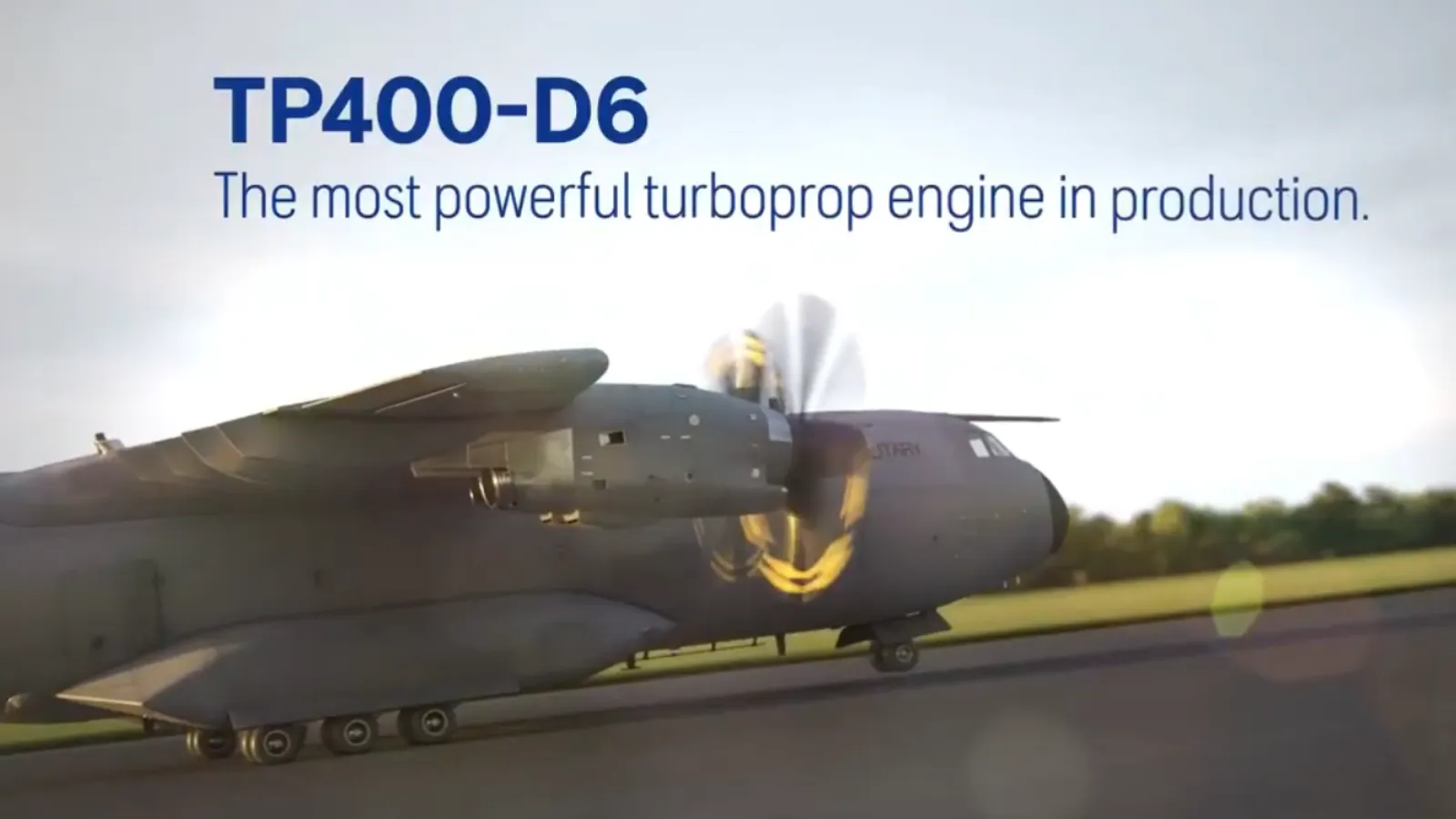
- ► The TP400-D6 programme has surpassed one million engine flying hours as of March 2, 2026.
- ► The engine powers the Airbus A400M Atlas military transport aircraft.
- ► Certification was granted by EASA in 2011, with entry into service in 2013.
- ► Ten operating nations contribute to the total engine flight hours milestone.
- ► Engine support is managed under OCCAR’s Engine Support Step 2 contract.
TP400-D6 Programme Surpasses One Million Engine Flying Hours
The TP400-D6 programme has officially surpassed one million engine flying hours, marking a major operational milestone for Europrop International GmbH and the fleet of Airbus A400M Atlas aircraft it powers.
The announcement, made March 2, 2026, underscores more than a numerical benchmark. It reflects over a decade of sustained multinational operations, deployments, and structured engine support across Europe, Asia, and beyond.
The TP400-D6 engine achieved certification from the European Union Aviation Safety Agency in 2011 and entered service in August 2013. That certification marked a critical step for Europe’s independent military propulsion capability, positioning the TP400-D6 as the most powerful turboprop engine currently in operational service on a Western military aircraft.
Built For The A400M Atlas
The TP400-D6 powers the A400M Atlas, a four engine tactical and strategic airlifter developed by Airbus Defence and Space. The aircraft bridges the capability gap between smaller tactical transports and larger strategic airlifters, supporting missions that range from humanitarian relief to special operations and aerial refueling.
Each A400M is equipped with four TP400-D6 engines. Reaching one million engine flying hours therefore reflects cumulative operational time across the global fleet rather than airframe flight hours alone.
From an operational perspective, this milestone signals fleet maturity. High cumulative engine hours typically correlate with stable maintenance cycles, improved reliability data, and optimized overhaul planning. For military operators, those metrics translate directly into availability rates and mission readiness.
Ten Operating Nations Contribute
The TP400-D6 operating nations now total ten. These include Belgium, France, Germany, Luxembourg, Malaysia, Spain, Türkiye, Kazakhstan, Indonesia, and the United Kingdom.
Initial deliveries began in 2013, with early aircraft entering service with France and Türkiye. The United Kingdom and Germany followed in 2014, with additional operators joining over subsequent years.
Collectively, these nations have flown the A400M in operational deployments across Africa, the Middle East, Europe, and Asia. Missions have included troop transport, heavy equipment airlift, medical evacuation, disaster response, and sustained overseas deployments.
The steady growth in engine flight hours reflects both routine training and real world operational demand. For defense planners, that level of use provides a substantial performance dataset for lifecycle cost modeling and long term sustainment planning.
Structured Support Under OCCAR
Engine sustainment is managed under the Engine Support Step 2 contract overseen by Organisation for Joint Armament Cooperation. The framework centralizes support for participating nations, standardizing maintenance and repair practices.
Over the past several years, Europrop International has expanded maintenance, repair, and overhaul capacity aligned with operator requirements. That includes technical support, logistics coordination, and supply chain stabilization.
The consortium behind the TP400-D6 includes Rolls-Royce, Safran Aircraft Engines, MTU Aero Engines, and ITP Aero, with additional industrial partners contributing to subsystems and components.
From a strategic standpoint, the programme represents one of Europe’s most significant collaborative military engine efforts. It reduces reliance on non European propulsion sources for a critical air mobility platform.
What One Million Engine Hours Means
Reaching one million engine flying hours does not eliminate technical challenges. The TP400-D6 has faced development and integration issues in its early years, particularly involving gearbox systems and software updates. However, sustained operational data since entry into service suggests that reliability metrics have stabilized as the fleet matured.
For operators, the milestone demonstrates that the TP400-D6 has transitioned from development phase risk into established service life performance. In military aviation, this shift is critical. It supports long term procurement confidence and reinforces export credibility for the A400M platform.
The TP400-D6 programme’s one million engine flying hours mark therefore stands as both an operational and industrial benchmark. It highlights multinational use, structured sustainment, and the maturation of a complex European military propulsion system.
As global air mobility requirements continue to evolve, sustained engine reliability will remain central to the A400M’s role in allied operations.
Get real time update about this post category directly on your device, subscribe now.
