
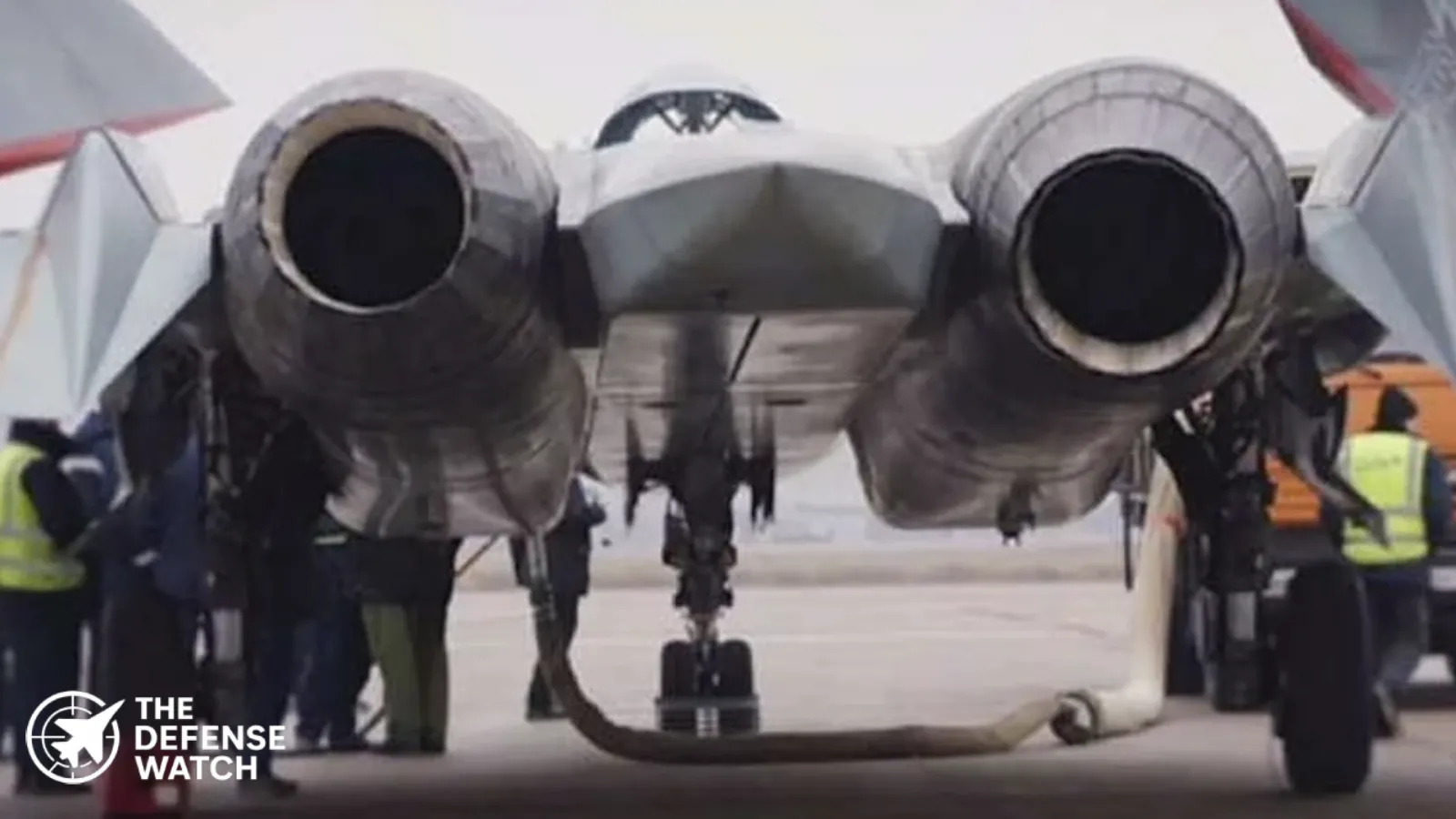
The Product 117 and Product 177 engine programs are shaping the present and future of Russia’s Su-57 fifth generation fighter, as Moscow seeks to close long standing gaps in propulsion, reliability, and combat performance. Product 117 currently powers early production Su-57 aircraft, while the more advanced Product 177 engine is intended to deliver the full performance originally envisioned for the platform.
The dual track approach highlights Russia’s effort to field operational aircraft quickly while continuing work on a next generation powerplant that supports sustained supercruise, reduced maintenance burden, and improved thermal management. According to reporting by FlightGlobal, Russia has now begun flight testing of Product 177 powered Su-57 test aircraft, marking a significant milestone for the program.
Product 117 Engine, Interim Power for an Operational Fighter
Product 117, also known as AL-41F1, serves as the interim engine for the Su-57 fleet currently in Russian Aerospace Forces service. Developed by United Engine Corporation, the Product 117 builds on legacy Flanker series engines but incorporates digital controls, improved thrust, and better fuel efficiency.

The engine provides the Su-57 with credible performance for air defense and strike missions, allowing Russia to deploy the aircraft while Product 177 development continues. However, analysts note that Product 117 does not fully meet fifth generation benchmarks in areas such as sustained supercruise without afterburner and long term lifecycle efficiency.
Despite these limits, Product 117 has enabled Russia to conduct operational testing, weapons integration, and pilot training, keeping the Su-57 program alive during a challenging period marked by sanctions and industrial constraints.
Product 177 Engine, Designed for Full Fifth Generation Capability
Product 177, often referred to as the Su-57’s definitive engine, represents a more ambitious leap in propulsion technology. The engine is designed to deliver higher thrust, improved fuel economy, and lower infrared and radar signatures compared to Product 117.
Russian officials have stated that Product 177 will enable sustained supercruise, a critical feature for fifth generation fighters seeking to engage or disengage without relying on fuel intensive afterburners. The engine also incorporates advanced materials and cooling systems intended to support high power sensors and future upgrades.
Flight testing of Product 177 is a critical step toward certification, with engineers expected to focus on vibration, thermal stability, and integration with the Su-57’s flight control systems. Full scale production is still expected to take several years, depending on test results and funding stability.
Why Russia Is Running Two Engine Programs
The decision to field the Su-57 with Product 117 while continuing Product 177 development reflects both strategic urgency and industrial reality. Russia has prioritized maintaining a fifth generation fighter presence, even if early aircraft fall short of advertised performance.
This approach mirrors strategies used in other defense programs, where interim systems bridge capability gaps until more advanced technology matures. In the case of Product 117 and Product 177, the tradeoff allows Russia to gain operational experience while refining its most advanced engine design.
However, this strategy also creates logistical complexity, as mixed engine fleets require separate maintenance pipelines, training, and spare parts inventories.
Implications for the Su-57 and Export Prospects
The success of the Product 177 engine will have a direct impact on the Su-57’s long term viability and export appeal. Potential foreign buyers have shown caution, often citing engine maturity as a key concern.
A certified Product 177 could significantly improve the aircraft’s competitiveness against Western fighters such as the F-35, particularly in speed, range, and high altitude performance. Without it, the Su-57 risks remaining a limited production platform optimized mainly for domestic use.
For Russia, the engine also has broader implications, as Product 177 technologies could inform future aircraft, including unmanned combat systems and next generation interceptors.
Strategic Context and Industry Challenges
The Product 117 and Product 177 programs are unfolding against a backdrop of sanctions, supply chain pressure, and wartime demand. Russia’s aerospace industry faces constraints in accessing advanced manufacturing equipment and materials, increasing the stakes for domestic engine development.
At the same time, propulsion remains one of the most difficult aspects of modern fighter design. Even established aerospace powers struggle with timelines and costs, making Product 177’s progress notable regardless of eventual outcomes.
Analysis, What Product 177 Really Means for Russian Airpower
From a strategic perspective, Product 177 is less about incremental upgrades and more about credibility. A fully operational fifth generation engine would signal that Russia can independently sustain high end combat aviation despite external pressure.
If delays persist, the Su-57 may continue to rely on Product 117 longer than planned, limiting its ability to challenge peer competitors in contested airspace. The next few years of testing will therefore be decisive, not only for the Su-57 but for Russia’s broader aerospace ambitions.
FAQs
Product 117 is an interim engine used on early Su-57 aircraft, while Product 177 is a more advanced engine designed to deliver full fifth generation performance.
No. Product 177 is undergoing flight testing and has not yet entered operational service.
To field the aircraft sooner and gain operational experience while the advanced engine continues development.
Yes. A mature Product 177 engine could make the Su-57 more attractive to foreign buyers.
Get real time update about this post category directly on your device, subscribe now.
