
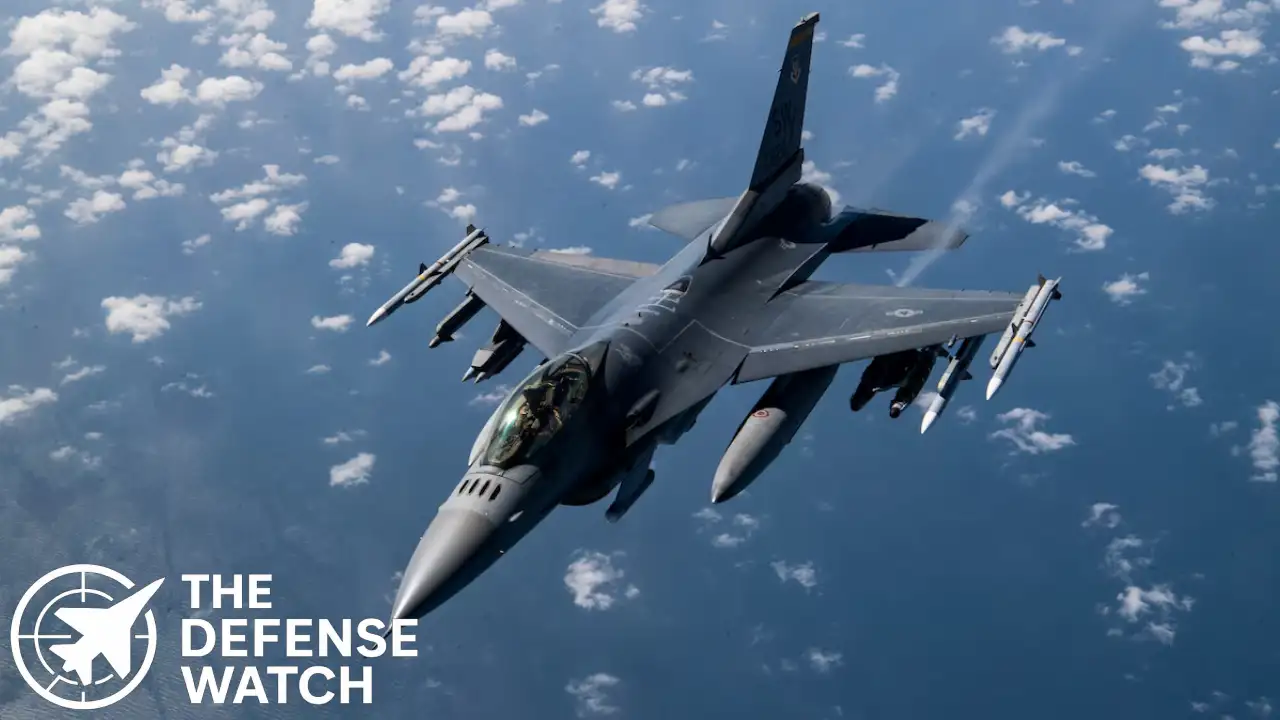
The F-16 fighter jet, officially known as the F-16 Fighting Falcon, remains one of the most versatile and battle-tested aircraft in modern aviation history. First introduced in the late 1970s, the F-16 quickly became the backbone of the U.S. Air Force’s tactical fighter fleet. Known for its agility, affordability, and multirole capability, the aircraft has been exported to over 25 countries, making it one of the world’s most widely used combat aircraft.
For the United States, the F-16 has not only played a central role in conflicts ranging from Desert Storm to present operations in the Middle East, but it also continues to evolve with advanced upgrades that extend its lifespan well into the 2040s.
Origins of the F-16
The F-16 originated in the early 1970s under the Lightweight Fighter (LWF) program, which sought a cost-effective, highly maneuverable jet to complement heavier fighters like the F-15 Eagle. General Dynamics (later acquired by Lockheed Martin) won the competition with a design that emphasized:
- High agility with a frameless bubble canopy for superior visibility.
- Fly-by-wire flight controls, revolutionary at the time.
- Relaxed static stability, giving the jet unmatched maneuverability.
- Single-engine efficiency, reducing costs compared to twin-engine fighters.
The first flight took place in 1974, and by 1978, the F-16 had entered operational service with the U.S. Air Force.
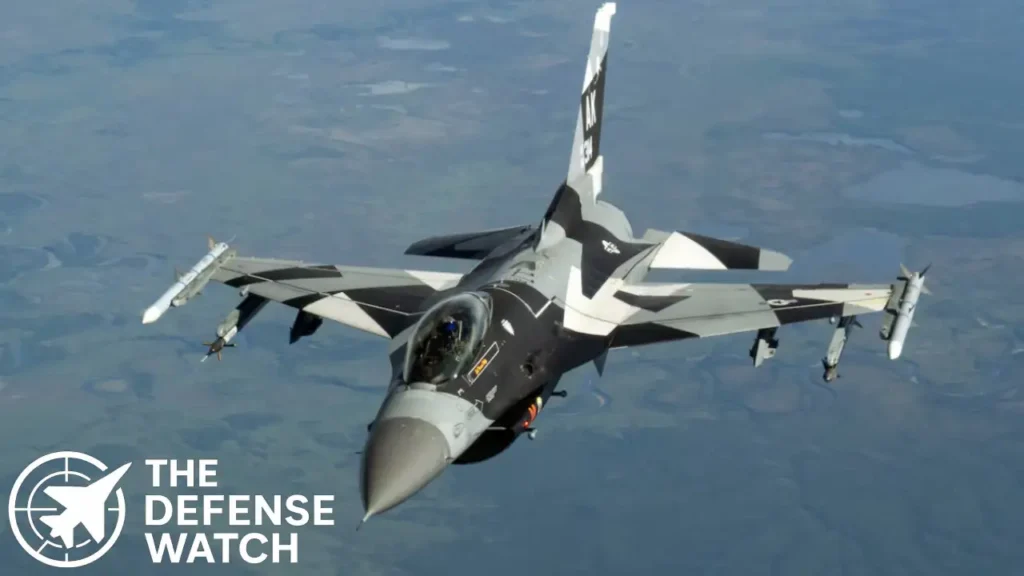
Service in U.S. Air Force Operations
Since its debut, the F-16 fighter jet has been deployed in nearly every major U.S. military conflict, including:
- Operation Desert Storm (1991): Conducted precision strikes against Iraqi forces.
- Kosovo Campaign (1999): Played a critical role in NATO’s air war.
- Operations Enduring Freedom and Iraqi Freedom (2000s): Carried out both strike and close air support missions.
- Counter-ISIS operations (2014–present): Used for precision strikes in Iraq and Syria.
The F-16’s versatility as both an air-to-air combatant and ground-attack platform has made it an indispensable tool in U.S. and allied arsenals.
U.S. F-16 Upgrades and the “Viper” Standard
Although commonly referred to as the “Fighting Falcon,” U.S. pilots often call it the “Viper”, a nickname inspired by the snake-like maneuverability and resemblance to the “Viper” starfighter from Battlestar Galactica.
Over the decades, the F-16 has undergone continuous modernization, ensuring its place alongside newer 5th-generation jets like the F-35. Key upgrades include:
- F-16C/D Block 50/52: Enhanced avionics, radar, and weapons integration.
- F-16V “Viper” Upgrade: Adds AN/APG-83 AESA radar, upgraded mission computers, modern cockpit displays, advanced electronic warfare systems, and a structural life extension program (SLEP) to 12,000 flight hours.
- Weapons Integration: Compatible with AIM-120 AMRAAM, AIM-9X Sidewinder, JDAMs, and precision-guided munitions.
The U.S. Air Force continues to operate hundreds of F-16s across active duty, Air National Guard, and Reserve units.
Role in U.S. Homeland Defense
The North American Aerospace Defense Command (NORAD) frequently uses F-16s for homeland security missions, including intercepting unidentified aircraft and responding to Russian military flights near U.S. and Canadian airspace. These missions highlight the jet’s ongoing role in both deterrence and quick-reaction alert.
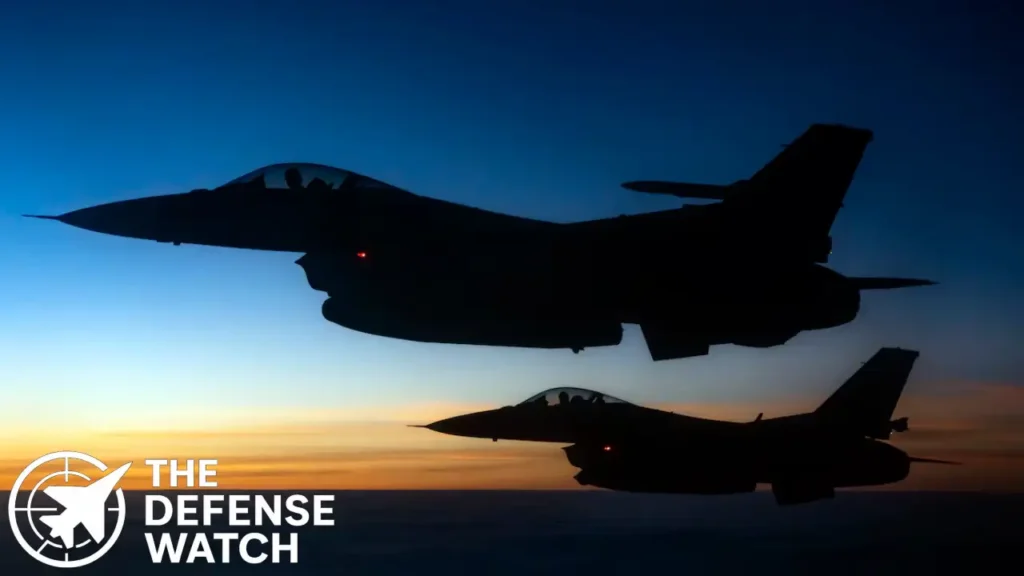
Why the F-16 Still Matters
Despite the arrival of 5th-generation fighters like the F-35 Lightning II, the F-16 remains strategically valuable for the U.S. because:
- Affordability: Operating costs are significantly lower than stealth fighters.
- Flexibility: Suitable for air policing, close air support, and precision strike.
- Global Reach: Strong interoperability with allied air forces across NATO, the Middle East, and Asia.
- Bridge to the Future: Extending F-16 service life ensures U.S. airpower capacity while F-35 production ramps up.
Analysts suggest that modernized F-16s will remain in the U.S. inventory until at least the mid-2040s, bridging the gap between today’s force and future air dominance platforms.
Strategic Analysis
For the United States, the F-16 represents not only a fighter aircraft but also a diplomatic tool. Through the Foreign Military Sales (FMS) program, Washington has used the F-16 to strengthen partnerships with allies such as Poland, Greece, and Taiwan.
Its continued upgrades reflect a broader U.S. defense strategy: extending proven legacy systems while investing in 5th- and 6th-generation platforms. This dual-track approach allows the U.S. Air Force to maintain combat mass, global presence, and interoperability—all critical in a world of rising great-power competition.
FAQs
The F-16 entered U.S. Air Force service in 1978.
Its fly-by-wire controls, high maneuverability, affordability, and multirole flexibility set it apart.
The F-16 is expected to remain in service through the 2040s, thanks to the “Viper” upgrade program.
The F-16 is a 4th-generation multirole fighter, while the F-35 is a stealthy 5th-generation aircraft designed for advanced networked warfare.
The U.S. Air Force operates around 750 F-16s, across active duty, Air National Guard, and Reserve forces.
Get real time update about this post category directly on your device, subscribe now.

2 comments
[…] Phantom is one of the most produced and operationally diverse fighters in history. It served in air-to-air, air-to-ground, and reconnaissance roles across many air forces. With high […]
[…] at high speeds and under rigorous conditions, even in controlled airspace, carries inherent risk. History records previous incidents involving demonstration-team jets, underscoring the thin margin for error when operating high-performance fighters under demanding […]