Ukrainian F-16 Fighter Jet Transfer Signals Continued Fleet Growth
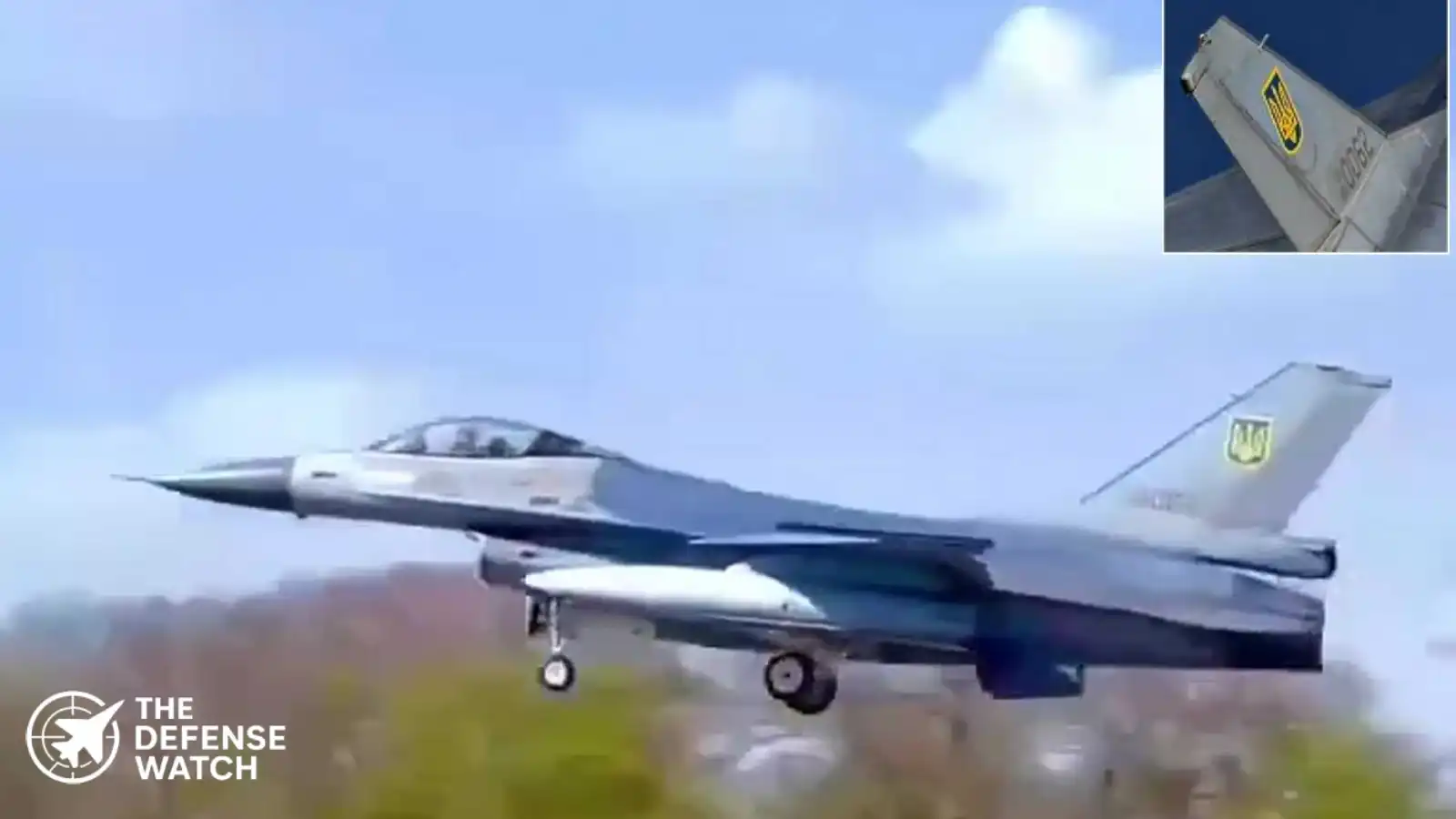
A Ukrainian F-16 fighter jet reportedly transferred by the Netherlands has been observed departing a Belgian airport, according to reporting by Army Recognition. While official authorities did not publicly identify the specific aircraft movement, the sighting points to continued progress in Kyiv’s effort to build a modern Western fighter fleet.
The transfer matters because each additional F-16 increases Ukraine’s ability to defend airspace, intercept cruise missiles, and conduct more accurate strike missions. Unlike Soviet-era aircraft still in Ukrainian service, the F-16 offers stronger radar performance, broader weapons integration, and easier access to NATO-standard maintenance and training pipelines.
- A Ukrainian F-16 fighter jet transferred by the Netherlands was reportedly spotted departing a Belgian airport.
- The aircraft is believed to be part of the multinational NATO-backed program supplying F-16s to Ukraine.
- Belgium has become a key logistics and training hub for European F-16 transition efforts.
- Additional aircraft deliveries would strengthen Ukraine’s air defense and precision strike capacity.
- The Netherlands remains one of Kyiv’s leading European combat aviation donors.
The Netherlands has been among the most committed European supporters of the fighter transfer initiative. Dutch officials previously pledged multiple retired F-16 aircraft after transitioning to the F-35 fleet. Those airframes are now being used for direct transfer, spare parts support, or training programs depending on condition and readiness.
Why Belgium Matters In The F-16 Pipeline
Belgium’s role is strategically important even when it is not the donor nation. Belgian air bases and aerospace infrastructure provide a practical transit point for aircraft refurbishment, pilot conversion activity, technical preparation, and onward movement.
This suggests the reported departure may be part of a larger coordinated logistics chain rather than a simple one-time handover. Western fighter transfers require inspections, software alignment, documentation, mission system checks, and coordination with training schedules.
For Ukraine, receiving aircraft is only one part of the equation. Sustainable combat power depends on:
- Pilot conversion training
- Ground crew certification
- Spare engines and parts
- Weapons stock integration
- Hardened basing and dispersal planning
- Secure command and control links
That means every visible aircraft movement can represent months of behind-the-scenes preparation.
What The Ukrainian F-16 Fighter Jet Adds To Combat Operations
The Ukrainian F-16 fighter jet program is designed to gradually replace aging Soviet aircraft such as the MiG-29 and Su-27 in selected roles. While no single fighter can change the war alone, the F-16 offers several practical advantages:
Air Defense Intercepts
The aircraft can respond faster to missile and drone threats when paired with modern sensors and guided missiles.
Precision Strike Missions
The F-16 can employ a wide range of Western-guided munitions, improving target accuracy.
Survivability
Modern electronic warfare systems and situational awareness tools can improve pilot survivability in contested airspace.
NATO Interoperability
Shared standards simplify future training, sustainment, and coalition support.
Strategic Limits Still Remain
Even with more deliveries, Ukraine’s F-16 fleet will operate under constraints. Russian long-range air defenses, electronic warfare systems, and missile threats continue to shape mission planning. Aircraft numbers also remain limited compared with prewar major air forces.
That means the best use of the Ukrainian F-16 fighter jet fleet may be selective, high-value missions rather than constant front-line exposure. Intercepts, defensive patrols, and stand-off strike roles are likely to remain priorities.
Netherlands Support Carries Political Weight
The Dutch decision to continue transfers also carries political significance. It signals that long-term military assistance to Ukraine remains active among key European NATO members. Fighter donations are more complex than artillery or vehicles because they involve years of training, sustainment, and security commitments.
Each successful aircraft delivery therefore demonstrates not just hardware support, but enduring coalition coordination.
Outlook
If additional sightings and confirmations follow, Ukraine’s F-16 inventory will continue to expand incrementally through 2026. That slow but steady approach may prove more valuable than rapid one-time deliveries, because trained crews, spare parts, and combat readiness can grow together.
For Kyiv, every added aircraft increases options. For Europe, every transfer reinforces the message that advanced support programs remain in motion.
1972–1974: Birth of the F-16
- U.S. launches the Lightweight Fighter (LWF) program.
- General Dynamics prototype (YF-16) first flight: January 20, 1974.
- Design emphasized agility, fly-by-wire controls, and affordability.
1978: Entry into Service
- First F-16A/B delivered to the U.S. Air Force.
- Nicknamed the “Fighting Falcon” (though pilots prefer “Viper”).
- Designed for daylight air superiority, later adapted for multirole missions.
1980s: Global Expansion & Block 15
- Export success begins — NATO allies (Belgium, Netherlands, Norway, Denmark) adopt the F-16.
- Block 15 adds new hardpoints, improved avionics, and expanded weapons capability.
1991: Operation Desert Storm
- F-16s flew more combat sorties than any other aircraft during the Gulf War.
- Proved itself in precision strike and air-to-air missions.
1990s: Block 40/42 & Block 50/52
- Block 40/42: LANTIRN pods enable night and all-weather strike capability.
- Block 50/52: integration of HARM targeting systems for SEAD (Suppression of Enemy Air Defenses).
- Transitioned fully into a true multirole platform.
2000s: Combat Proven Across Theaters
- Extensive use in Kosovo, Afghanistan, and Iraq.
- Remained a workhorse for U.S. and coalition forces in strike and close-air support roles.
2010s: Structural Life Extension (SLEP)
- U.S. Air Force begins extending F-16 airframe life to 12,000 flight hours.
- Integration of precision munitions, targeting pods, and advanced EW systems keeps the fleet relevant.
2015–Present: F-16V “Viper” Upgrade
- New Block 70/72 standard introduces:
- AN/APG-83 AESA radar
- Modern mission computers and displays
- Advanced electronic warfare suite
- Structural upgrades for decades of additional service
- Remains in production by Lockheed Martin for U.S. allies.
2020s: Homeland Defense & Global Relevance
- NORAD continues using F-16s to intercept Russian aircraft near Alaska.
- U.S. Air National Guard relies on F-16 for air policing missions.
- New customers (e.g., Slovakia, Bulgaria, potentially Peru) adopt Block 70 variants.
2040s: Projected U.S. Service Life
- Despite the dominance of the F-35, the F-16 will remain in U.S. Air Force inventory into the 2040s.
- Will continue in roles such as air defense, training, and secondary strike missions, ensuring combat mass for the Air Force.
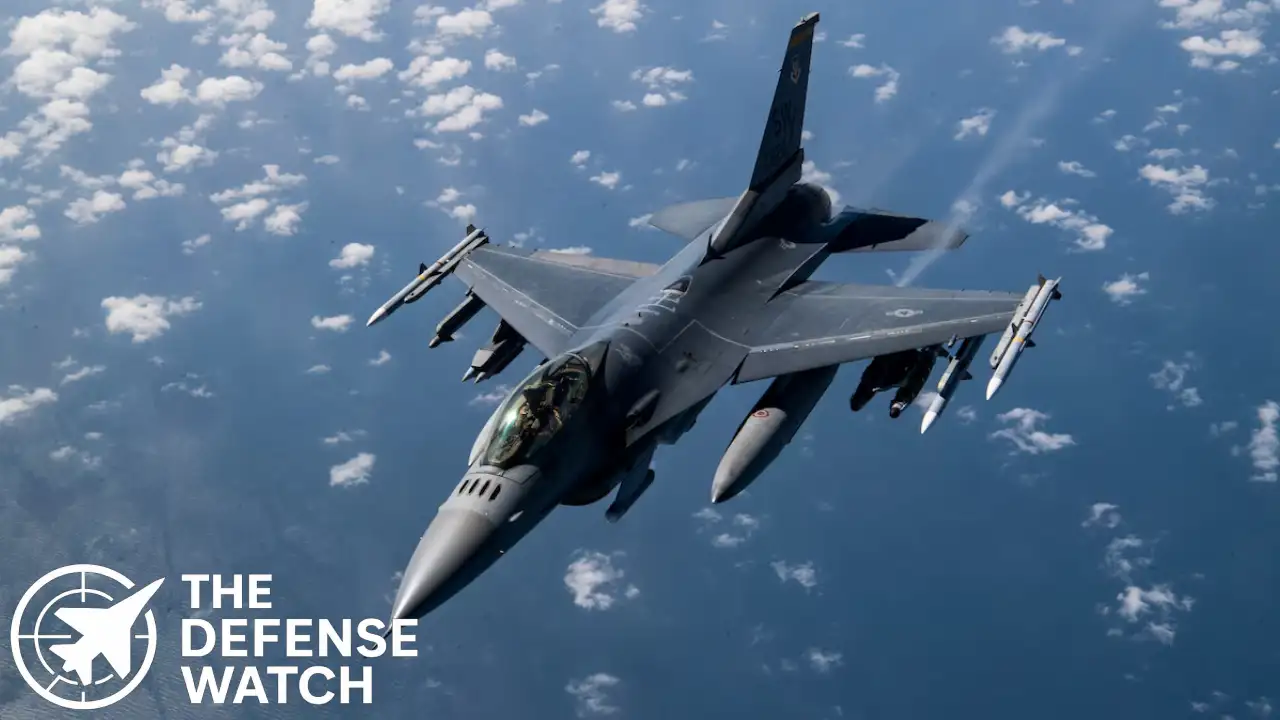
The F-16 fighter jet, officially known as the F-16 Fighting Falcon, remains one of the most versatile and battle-tested aircraft in modern aviation history. First introduced in the late 1970s, the F-16 quickly became the backbone of the U.S. Air Force’s tactical fighter fleet. Known for its agility, affordability, and multirole capability, the aircraft has been exported to over 25 countries, making it one of the world’s most widely used combat aircraft.
For the United States, the F-16 has not only played a central role in conflicts ranging from Desert Storm to present operations in the Middle East, but it also continues to evolve with advanced upgrades that extend its lifespan well into the 2040s.
Origins of the F-16
The F-16 originated in the early 1970s under the Lightweight Fighter (LWF) program, which sought a cost-effective, highly maneuverable jet to complement heavier fighters like the F-15 Eagle. General Dynamics (later acquired by Lockheed Martin) won the competition with a design that emphasized:
- High agility with a frameless bubble canopy for superior visibility.
- Fly-by-wire flight controls, revolutionary at the time.
- Relaxed static stability, giving the jet unmatched maneuverability.
- Single-engine efficiency, reducing costs compared to twin-engine fighters.
The first flight took place in 1974, and by 1978, the F-16 had entered operational service with the U.S. Air Force.

Service in U.S. Air Force Operations
Since its debut, the F-16 fighter jet has been deployed in nearly every major U.S. military conflict, including:
- Operation Desert Storm (1991): Conducted precision strikes against Iraqi forces.
- Kosovo Campaign (1999): Played a critical role in NATO’s air war.
- Operations Enduring Freedom and Iraqi Freedom (2000s): Carried out both strike and close air support missions.
- Counter-ISIS operations (2014–present): Used for precision strikes in Iraq and Syria.
The F-16’s versatility as both an air-to-air combatant and ground-attack platform has made it an indispensable tool in U.S. and allied arsenals.
U.S. F-16 Upgrades and the “Viper” Standard
Although commonly referred to as the “Fighting Falcon,” U.S. pilots often call it the “Viper”, a nickname inspired by the snake-like maneuverability and resemblance to the “Viper” starfighter from Battlestar Galactica.
Over the decades, the F-16 has undergone continuous modernization, ensuring its place alongside newer 5th-generation jets like the F-35. Key upgrades include:
- F-16C/D Block 50/52: Enhanced avionics, radar, and weapons integration.
- F-16V “Viper” Upgrade: Adds AN/APG-83 AESA radar, upgraded mission computers, modern cockpit displays, advanced electronic warfare systems, and a structural life extension program (SLEP) to 12,000 flight hours.
- Weapons Integration: Compatible with AIM-120 AMRAAM, AIM-9X Sidewinder, JDAMs, and precision-guided munitions.
The U.S. Air Force continues to operate hundreds of F-16s across active duty, Air National Guard, and Reserve units.
Role in U.S. Homeland Defense
The North American Aerospace Defense Command (NORAD) frequently uses F-16s for homeland security missions, including intercepting unidentified aircraft and responding to Russian military flights near U.S. and Canadian airspace. These missions highlight the jet’s ongoing role in both deterrence and quick-reaction alert.

Why the F-16 Still Matters
Despite the arrival of 5th-generation fighters like the F-35 Lightning II, the F-16 remains strategically valuable for the U.S. because:
- Affordability: Operating costs are significantly lower than stealth fighters.
- Flexibility: Suitable for air policing, close air support, and precision strike.
- Global Reach: Strong interoperability with allied air forces across NATO, the Middle East, and Asia.
- Bridge to the Future: Extending F-16 service life ensures U.S. airpower capacity while F-35 production ramps up.
Analysts suggest that modernized F-16s will remain in the U.S. inventory until at least the mid-2040s, bridging the gap between today’s force and future air dominance platforms.
Strategic Analysis
For the United States, the F-16 represents not only a fighter aircraft but also a diplomatic tool. Through the Foreign Military Sales (FMS) program, Washington has used the F-16 to strengthen partnerships with allies such as Poland, Greece, and Taiwan.
Its continued upgrades reflect a broader U.S. defense strategy: extending proven legacy systems while investing in 5th- and 6th-generation platforms. This dual-track approach allows the U.S. Air Force to maintain combat mass, global presence, and interoperability—all critical in a world of rising great-power competition.
FAQs
The F-16 entered U.S. Air Force service in 1978.
Its fly-by-wire controls, high maneuverability, affordability, and multirole flexibility set it apart.
The F-16 is expected to remain in service through the 2040s, thanks to the “Viper” upgrade program.
The F-16 is a 4th-generation multirole fighter, while the F-35 is a stealthy 5th-generation aircraft designed for advanced networked warfare.
The U.S. Air Force operates around 750 F-16s, across active duty, Air National Guard, and Reserve forces.