
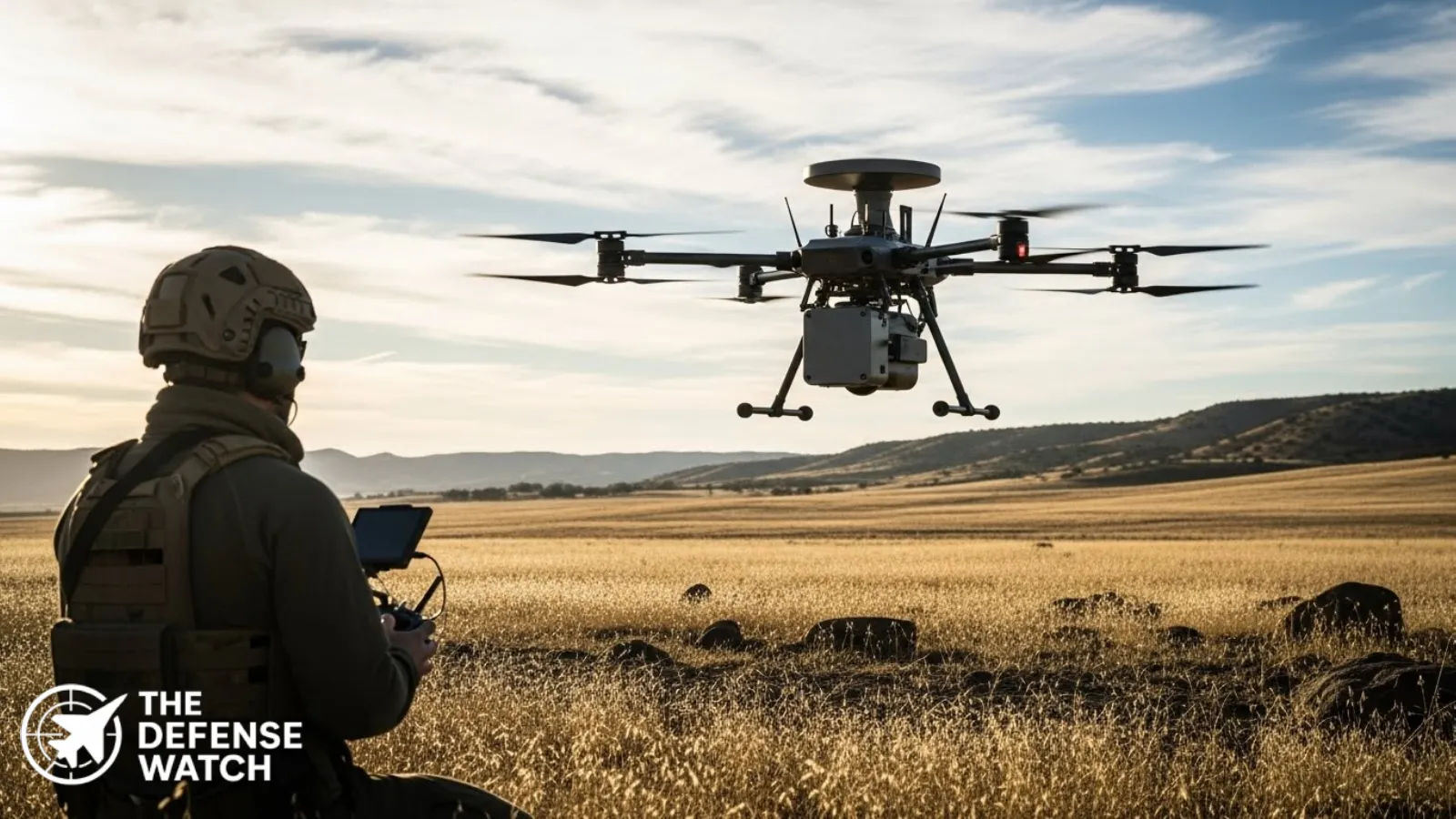
Belgium is increasing its investment in counter-drone defenses after a recent rise in unidentified drone flights near civilian airports, military installations, and sensitive sites. The move follows multiple incidents that have led to airspace closures, flight cancellations, and heightened concern over national airspace security.
Growing Drone Activity in Belgian Airspace
In late 2025, authorities recorded a notable increase in reports of unmanned aerial vehicles flying above or near key infrastructure. Several civilian airports, including Brussels, Liège, and Charleroi, faced temporary airspace shutdowns after drones were sighted within controlled zones. Flight operations were halted as a precaution, leading to cancellations and diversions.
Beyond civilian airspace, drones were detected over military sites, such as the Kleine-Brogel and Florennes air bases, prompting security reviews and investigations. In early October, as many as fifteen drones were observed over the Elsenborn military training area, though the origin and operators of these UAVs remain unclear.
Reports from the Belgian aviation authority, Skeyes, indicate that nearly 90 percent of drone flights over sensitive areas last year did not have official authorization. Operators of larger or heavier drones are subject to registration rules, but many flights detected lacked any approved flight plan.
Government Response and Procurement Decisions
Belgian Defense Minister Theo Francken announced a stepped-up national response, part of a broader €50 million anti-drone plan. This includes procurement of new counter-drone equipment and reinforcement of detection networks.
The government has recently signed contracts to acquire Saab’s Giraffe 1X surveillance radar systems. These radars are designed to track aerial targets and supply target data to air defense systems, enhancing early detection and tracking of unidentified drones. The systems will be deployed around the Brussels area, with a reported contract value of €9.2 million.
In addition, Belgium has purchased portable drone jammer guns from Australian firm DroneShield, valued at about €2.8 million. These handheld systems can detect and disrupt hostile unmanned aerial systems using artificial intelligence technologies. Similar systems are already in use in other conflict zones.
Broader Security Measures and Policy Moves
The government has also moved to tighten regulations and consider forceful responses to unauthorized drones. In emergency security meetings, Belgian officials discussed stricter enforcement measures, including clear directives that hostile drones, when detected, may be shot down if necessary.
A National Airspace Security Centre, based at the Beauvechain air force base, is scheduled to become fully operational soon. The centre will centralize drone detection and coordination across civil and military agencies.
Belgian security services have reportedly expressed suspicion that a state actor, possibly Russia, could be behind some of the drone activity, though investigations are ongoing. This concern was discussed at a National Security Council meeting with senior government officials.
International and Regional Context
Belgium is not alone in facing drone incursions. European countries have reported similar incidents leading to airport disruptions and calls for improved defensive measures. Collaborative efforts, including NATO exercises and evaluation of scalable drone defenses, are underway to help member states respond more effectively.
Neighboring states, including Germany, have offered support to Belgium by sending specialized Luftwaffe units to assist with detection and defense against small unmanned aerial vehicles. This support is part of wider cooperative security efforts within NATO to address hybrid threats.
Operational Impact and Next Steps
The increased drone activity has already had practical effects on air travel and military readiness. Temporary airport closures disrupted flight schedules, requiring diversions and affecting passenger traffic. Continued incursions near military bases have also underscored the need for rapid detection and response capabilities.
Belgium’s accelerated procurement program and expanded regulatory approach aim to reduce the risk posed by unauthorized drones. Authorities plan to integrate new detection systems with existing air defense networks and improve communication between civil and military agencies. Upcoming deployments of advanced surface-to-air systems, scheduled for the later 2020s, are expected to further strengthen national airspace security.
As the situation evolves, Belgium is likely to focus on both immediate defensive upgrades and longer-term strategies to protect critical infrastructure and air corridors. Ongoing investigations will seek to clarify the nature and source of the drone flights, shaping future policy and security investments.
Get real time update about this post category directly on your device, subscribe now.
