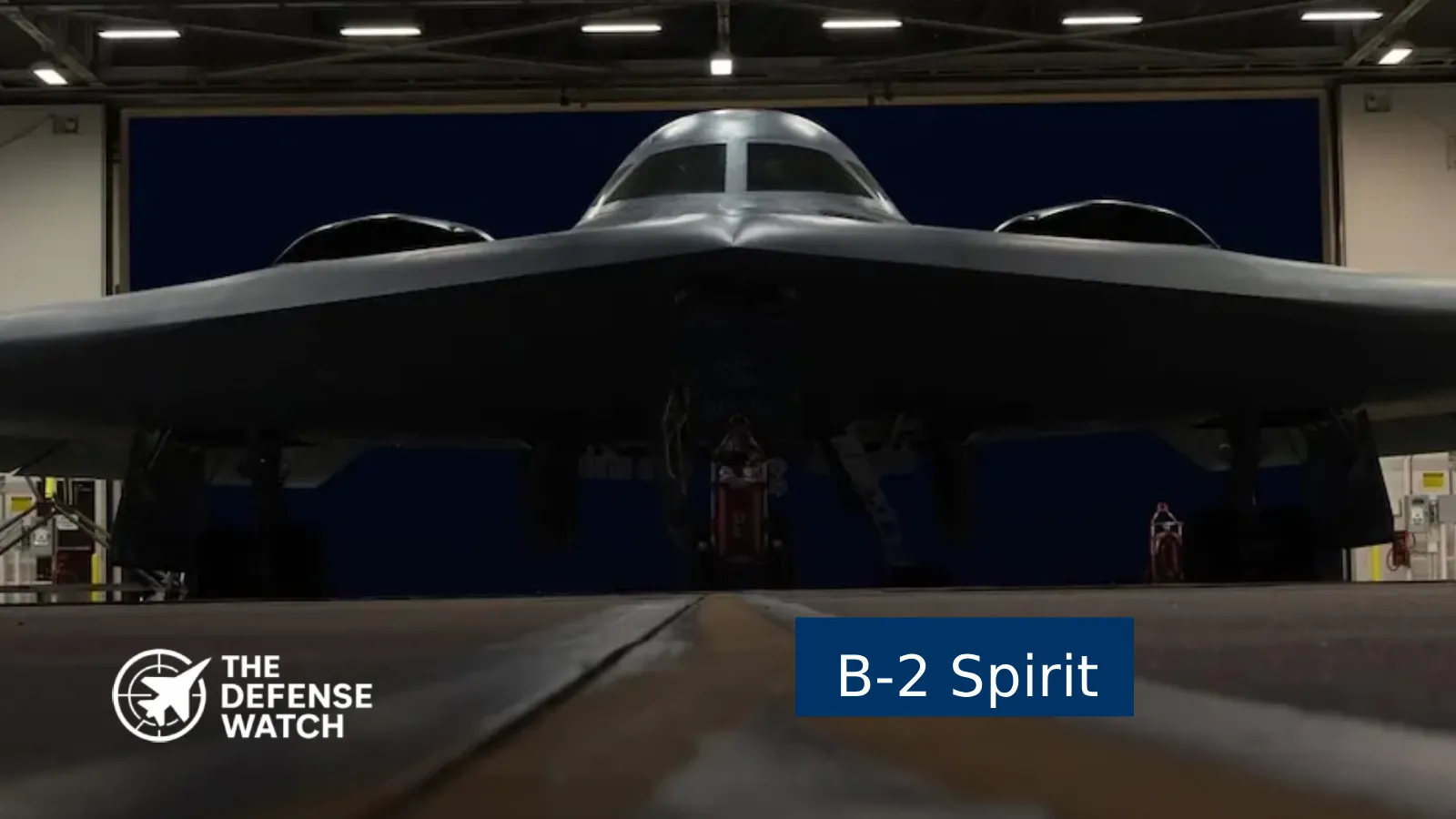
- ► Four B-2A Spirit stealth bombers flew directly from Whiteman Air Force Base, Missouri, to strike Iranian ballistic missile sites on the night of February 28 to March 1, 2026.
- ► The aircraft refueled over the central Atlantic from KC-46 tankers staged at Lajes Air Base in the Azores.
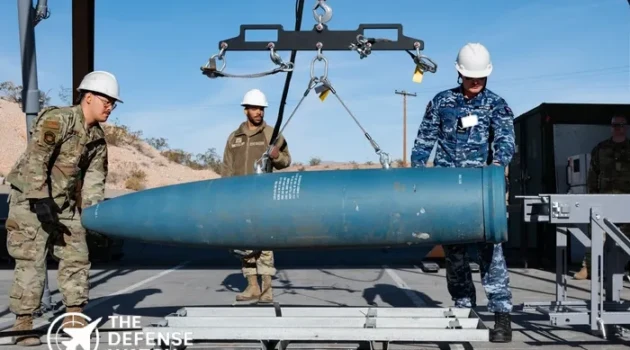
- ► CENTCOM confirmed the B-2s carried 2,000-pound bombs targeting hardened ballistic missile facilities — not the GBU-57 Massive Ordnance Penetrator used in Operation Midnight Hammer in June 2025.
- ► Operation Epic Fury marks the second confirmed B-2 combat strike against Iran in less than nine months.
- ► The targeted sites are described as ballistic missile launchers concealed in rock formations and underground tunnel networks — what analysts refer to as “missile cities.”
- ► The GBU-57 MOP weighs approximately 13,600 kilograms and is designed to penetrate up to 60 meters of earth or eight meters of reinforced concrete before detonation.
- ► CENTCOM has separately confirmed that ATACMS tactical missiles were also employed as part of Operation Epic Fury’s broader target set.
Operation Epic Fury: Why the B-2 Spirit Returned to Iran — and What the Munitions Choice Tells Us
Operation Epic Fury, confirmed by U.S. Central Command on March 1, 2026, represents the second time in nine months that the United States has employed B-2 Spirit stealth bombers in direct strikes against Iranian military infrastructure. This time, the target set shifted from nuclear facilities to hardened ballistic missile sites — and the munitions choice shifted with it.
From Midnight Hammer to Epic Fury: A Deliberate Escalation Ladder
In June 2025, Operation Midnight Hammer saw B-2s deploy the GBU-57 Massive Ordnance Penetrator against Iran’s underground nuclear facilities — the only aircraft capable of carrying the 13,600-kilogram bunker-busting weapon. The message at that time was unambiguous: the United States was targeting the hardest, deepest infrastructure in Iran’s strategic arsenal, and only one platform in the world could do that job.
Operation Epic Fury presents a different scenario. CENTCOM confirmed the B-2s were armed with 2,000-pound JDAMs, not MOPs. This is not a downgrade — it is a doctrinal signal.
Iran’s ballistic missile “cities” — underground tunnel complexes carved into mountain formations across multiple provinces — are not the same engineering problem as a uranium enrichment facility buried under 80 meters of rock. They are networked. Collapsing one exit or one launcher bay rarely eliminates the underlying capability. The complex reroutes. Launchers are repositioned. Crews clear rubble and resume operations.
Against that type of target, a single 13,600-kilogram penetrator may achieve less than a sustained campaign using multiple precision-guided 2,000-pound weapons applied systematically across tunnel entrances, ventilation infrastructure, logistics nodes, and launch hardstands. The munitions selection in Epic Fury suggests U.S. planners have been thinking carefully about this distinction.
What “Missile Cities” Actually Mean for Targeting
Iran’s underground ballistic missile infrastructure is among the most extensive in the world outside of China and Russia. Iranian state media has periodically broadcast footage of tunnel networks housing Shahab, Emad, and Ghadr-series missiles on mobile transporter-erector-launchers. These facilities are not fixed silos — they are mobile launch systems that operate from tunnel exits, making them fundamentally harder to neutralize than static hardened sites.
The challenge for any strike planner is that destroying the tunnels themselves is operationally expensive and logistically difficult. A tunnel network with 15 or 20 access points requires either an implausible number of MOP-class weapons or a sustained precision campaign targeting the exits, rail infrastructure, generator systems, fuel storage, and associated command nodes in sequence.
The use of 2,000-pound class weapons in Epic Fury likely reflects a targeting approach focused on launcher infrastructure, exit points, and supporting logistics rather than tunnel excavation per se. Whether that approach achieved meaningful degradation of Iran’s ballistic missile launch capacity will depend on battle damage assessment data that will not be public for some time, if ever.
The B-2’s Operational Envelope and What This Mission Demonstrates
The Whiteman AFB-to-Iran round trip — including mid-Atlantic refueling from KC-46s staged at Lajes in the Azores — underscores what makes the B-2 Spirit operationally unique and strategically irreplaceable until the B-21 Raider achieves full operational capability.
No other platform can combine the B-2’s payload capacity, low-observable radar cross section, and the range necessary for a continuous-flight intercontinental strike mission. The KC-46 tanker integration is a critical element of this equation; without forward-positioned tanker assets, the mission profile becomes significantly more constrained. The selection of Lajes, a joint U.S.-Portuguese facility on Terceira Island, reflects long-standing access agreements within the NATO alliance that remain operationally relevant well beyond the European theater.
This is worth noting in a broader context: two combat strikes against Iran using the B-2 in under a year represents a higher operational tempo for the Spirit than at any previous point in its service history, including its use over Kosovo in 1999, Afghanistan post-2001, and Libya in 2011. The 509th Bomb Wing at Whiteman is sustaining a genuine combat commitment, not a one-time demonstration.
The Readiness Question Nobody Is Asking Loudly Enough
The B-2 fleet consists of 20 operational aircraft. That number has been stable for years, and it is not increasing. Two consecutive combat deployments of four aircraft each represent a meaningful fraction of the available fleet on any given day, accounting for scheduled depot maintenance, modification programs, and routine availability rates.
The U.S. Air Force’s long-term answer to this capacity problem is the B-21 Raider, currently in low-rate initial production at Northrop Grumman’s Palmdale facility. The service has stated an intent to procure at least 100 B-21s, which would roughly triple the penetrating bomber fleet. But that fleet exists in the future. Today, the B-2 carries the full weight of U.S. penetrating strike capability, and repeated combat deployments impose real costs on airframe hours, crew readiness, and maintenance cycles.
Congress and the Air Force leadership will face difficult questions about B-2 sustainment funding in the FY2027 budget cycle if this operational tempo continues.
Strategic Assessment
Impact on Regional Power Balance
Iran retains substantial residual ballistic missile capability despite two rounds of U.S. strikes. The Islamic Revolutionary Guard Corps Aerospace Force has invested decades and significant resources in distributed, hardened, and mobile missile infrastructure precisely to survive this type of campaign. Degradation of the launch network is likely, but elimination is implausible. Iran’s ability to threaten regional neighbors, U.S. bases in the Gulf, and Israeli population centers is reduced — not removed.
Deterrence Implications
The back-to-back use of B-2s sends a clear message about U.S. willingness to sustain a strategic strike campaign using its most capable penetrating bomber. The deliberate CENTCOM public statement — “No nation should ever doubt America’s resolve” — is directed at audiences beyond Iran, including North Korea and China, both of which operate hardened underground facilities that would require similar or greater effort to hold at risk. The credibility of U.S. extended deterrence is being demonstrated, at operational cost, in real time.
Budget and Procurement Signals
Every combat sortie flown by a B-2 reinforces the procurement rationale for the B-21 Raider. The argument for accelerating B-21 production — already gaining momentum in Air Force planning documents and Congressional testimony — becomes considerably stronger when the 20-aircraft B-2 fleet is visibly under operational strain. Northrop Grumman’s recent announcements of accelerated B-21 production timelines are likely to find a receptive audience on the Hill in the near term.
Alliance Dynamics
The use of Lajes Air Base for KC-46 tanker staging highlights the operational importance of Atlantic basing rights within the NATO framework. Portugal’s continued hosting of U.S. assets under the Lajes Field agreement provides a forward logistics node that has proven relevant to Middle East operations — a fact that is not lost on alliance planners as debates about NATO burden-sharing continue.
Escalation Risks
Iran’s reported retaliatory salvo of more than 300 ballistic missiles and nearly 300 drones on the first day of the broader U.S.-Israeli campaign illustrates that the escalation ladder has multiple rungs remaining. Sustained pressure on Iranian missile infrastructure may accelerate Iranian decisions about proxy activation in Lebanon, Iraq, and Yemen, and raises questions about the durability of U.S. missile defense assets — THAAD, Patriot, and shipborne SM-3 — to absorb continued high-volume attacks without degradation. Defense officials have already flagged concerns about interceptor inventory sustainability under prolonged engagement conditions.
Get real time update about this post category directly on your device, subscribe now.