


Germany Approves 20 More Airbus H145M Helicopters to Expand Fleet to 82
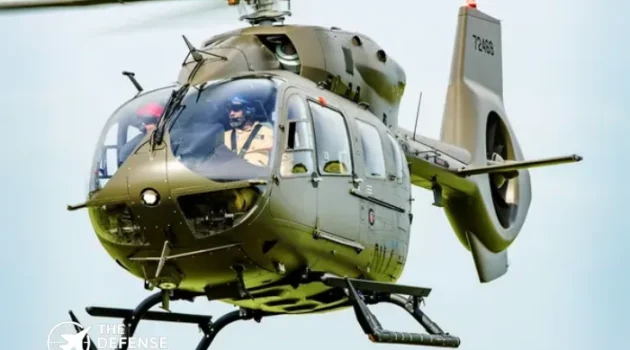
Germany has formally approved the procurement of 20 additional Airbus H145M light combat helicopters, expanding its planned fleet to 82 aircraft to improve support for special operations and light attack missions across its armed forces. The decision was announced in mid-December 2025 and reflects an ongoing effort by Berlin to modernize and scale its rotary-wing capabilities amid heightened European security concerns.
Background on Germany’s H145M Program
The expanded H145M acquisition is tied to a 2023 framework agreement between the German government and Airbus Helicopters. That contract provided for up to 82 multi-role H145M helicopters, including 62 firm orders and an option for 20 additional units. The latest move to exercise this option underscores the German armed forces’ increasing reliance on the H145M platform.
The H145M, known in German service as the Leichter Kampfhubschrauber (light combat helicopter), is a twin-engine aircraft built on the proven H145 civil design. It is equipped with the HForce weapon management system and a suite of mission modules that let operators shift rapidly between roles such as reconnaissance, special operations support, and armed light attack.
Details on Procurement and Roles
Under the expanded plan, Germany will take delivery of a total of 82 H145M helicopters. The additional 20 units are expected to enter service in the 2027 to 2029 timeframe, completing the full fleet envisaged under the original framework.
In previous statements, government sources indicated the new batch includes a mix of combat and training aircraft. The lighter weight and modular nature of the H145M enable it to support special forces, conduct rapid troop insertions, perform reconnaissance, or carry external loads for resupply and recovery missions.
President or senior Airbus officials have noted that the platform’s Helionix avionics suite and twin Safran Arriel 2E engines provide a modern flight and mission system capable of reducing pilot workload and supporting diverse mission sets. Its ability to be configured within minutes from a light attack role with guided and unguided weapons to a special operations profile with fast-rope and hoist gear is a central part of its operational appeal.
German Military Structure and Force Balance
The H145M fleet sits within a broader German helicopter force structure designed to cover a range of lift and mission profiles. Larger helicopters like the NH90 family remain the mainstay for medium transport tasks, while heavy lift requirements are shifting toward CH-47F Chinooks under Germany’s modernization plans. The H145M fills the lighter end of this spectrum, offering faster tasking and lower operating costs for missions that do not require the payload or protection of heavier rotorcraft.
This layered approach allows the Bundeswehr to more efficiently allocate assets, freeing up heavy platforms for tasks where their capacities are essential while relying on a larger fleet of H145Ms for flexible, responsive missions.
Official Comments and Program Status
Airbus has confirmed that deliveries under the original contract began in late 2024, with the first H145M handed over to the German Army for training at the Bückeburg base. Further units in light attack and special operations fittings have followed through 2025 as training and operational integration advances.
Public documentation from both the German Ministry of Defense and Airbus notes that the program includes not just aircraft but also support arrangements, including logistics, maintenance, and systems training over several years. This aligns with broader German defense policy to ensure that new systems can be fully sustained as they enter service.
What’s Next for the H145M Fleet
With the procurement of 20 additional helicopters now approved, Germany will proceed with finalizing production orders and scheduling deliveries. The enlarged fleet is expected to boost operational availability for units across the army and air force special operations wings. This expansion also positions Germany to better contribute to European and NATO rapid response scenarios, where light, flexible aviation assets are increasingly in demand.
As the H145M fleet grows, Germany will continue to refine its use cases, including integration with newer weapons, sensors, and tactical data links. The aircraft’s modular design supports future upgrades and mission packages, supporting long-term operational relevance beyond initial light attack and special operations roles.

3 comments
[…] The contract marks a significant step in modernizing Austria’s air capabilities. It follows earlier procurement cooperation between Vienna and Rome, such as recent orders for AW169M light utility helicopters. […]
[…] needed to meet demanding mission profiles and safety standards for the Navy’s executive transport helicopter fleet. The VH-92A serves as the replacement for the legacy VH-3D and VH-60N […]
[…] proven fixed-wing variant, according to Christophe Canguilhem, Aliaca program director at Airbus Helicopters. The accelerated timeline reflects the system’s mature design architecture and validated […]