

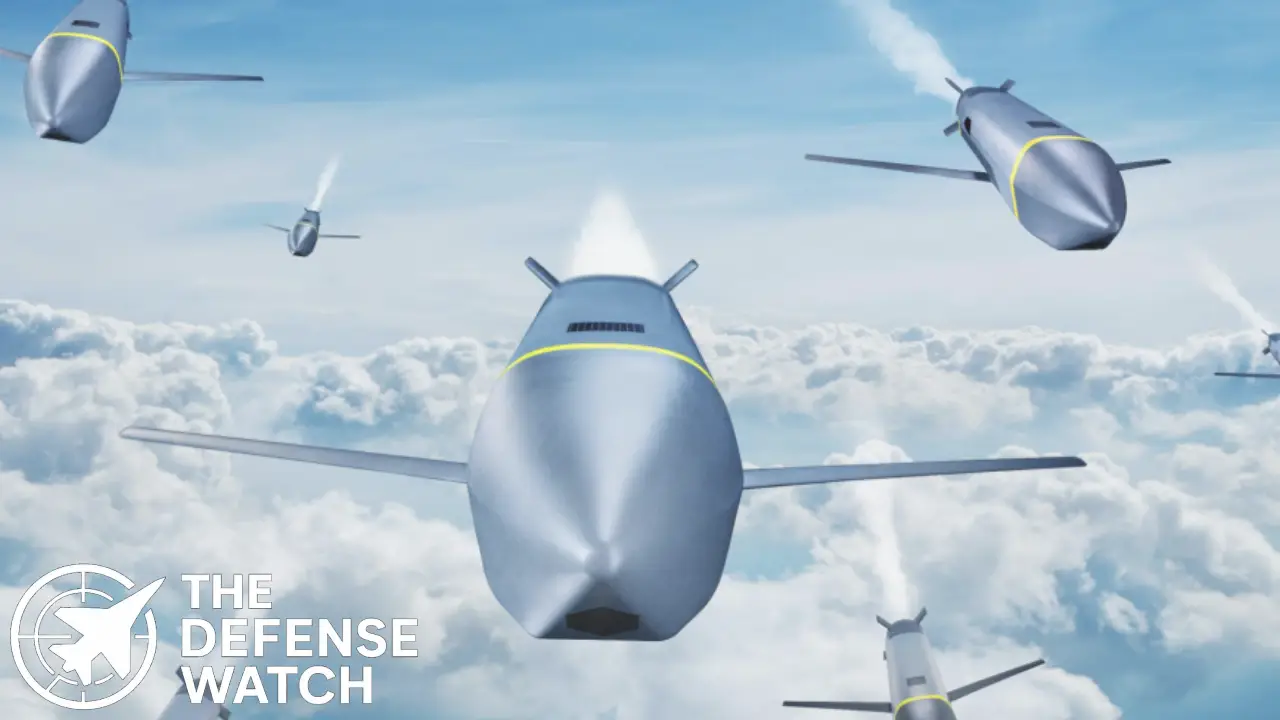
A Strategic Shift: Air Force Evaluates Low-Cost Missiles
The U.S. Air Force is poised to begin formally evaluating a new class of low-cost missiles, designed to counter increasingly numerous aerial threats. According to an Air & Space Forces Association report, the service has invited industry proposals under its Counter Air Missile Program (CAMP) — a clear indicator of its pivot toward scalable munitions.
Pentagon officials and industry executives say this push reflects a hard lesson from recent conflicts: adversaries are stockpiling attack drones, cruise missiles, and ballistic systems. Rather than rely solely on expensive, high-end precision weapons, U.S. defense planners believe large inventories of cheaper missiles are essential to sustain a protracted fight.
Key Industry Players and Missiles in Focus
Several defense companies have already responded with low-cost designs that align with the Air Force’s ambitions:
- Lockheed Martin has introduced its Common Multi-Mission Truck (CMMT) — a modular, subsonic cruise missile that could cost as little as ~$150,000 per unit.
- Lockheed is also developing two variants: a glide variant (CMMT-D) and a powered experimental version (CMMT-X).
- Leidos, in collaboration with Moog and under a CRADA with U.S. Special Operations Command and AFSOC, is advancing its Small Cruise Missile (SCM) — nicknamed Black Arrow. The missile reportedly weighs around 91 kg and can carry kinetic or non-kinetic payloads.
- Anduril Industries is pitching its Barracuda-M series, a turbojet-powered, subsonic missile family engineered for high-volume production.
Program Details: FAMM and CAMP
The evaluation is part of the broader Family of Affordable Mass Munitions (FAMM) initiative. Retired Col. Mark Gunzinger of the Mitchell Institute describes the shift as “a major change” in how the Air Force plans to structure its munitions inventory — emphasizing not just air-to-surface weapons but expanding into surface-to-air and air-to-air variants.
Budget documents tied to FAMM include plans to procure more than 3,000 cruise missiles, at a per-unit target cost of roughly $218,000 under a $656.3 million commitment.
Proposals submitted under CAMP will be evaluated across phases:
- Phase One — prototype of a ground-launched missile, with full-rate production targets of 1,000 to 3,500 units per year, and a goal unit cost of under $500,000.
- Phase Two and beyond — transition into a program of record, expanding into air-launched (air-to-air) variants.
The white paper call for submissions closes on Dec. 2, and successful proposals will enter a 24-month development window, with a first flight test expected within nine months.
Analysis: Why This Matters for the U.S. Military
- Resetting the Cost-Exchange Ratio
In a future conflict, the U.S. could face swarms of inexpensive drones and massed missile salvos. The Air Force’s current inventory skews toward sophistication and stealth — but not necessarily quantity. By fielding cheaper munitions, the service hopes to avoid depleting its more capable weapons and maintain a credible deterrent. As Gunzinger put it, “we’re on the wrong side of the cost-exchange ratio.” - Industrial Base Resilience and Surge Capacity
Producing thousands of low-cost missiles annually demands scalable manufacturing. This could revitalize parts of the U.S. defense industrial base, especially in small turbine engines, modular warheads, datalinks, and sensors — areas where cost-effective innovation is critical. - Strategic Flexibility
A family of mass munitions enables flexible mission planning: from suppressing cruise missile threats with large salvos, to using non-kinetic payloads for escalation control or signature management. It also provides a hedge against attrition in high-intensity conflict. - Peer Competition Implications
Adversaries such as Russia and China are investing heavily in missile stockpiles and unmanned systems. The U.S. pursuit of affordable mass munitions is a direct counter — signaling not just high-technology superiority but also capacity for sustained mass fires.
Challenges and Risks
- Price vs. Performance Trade-off: While low cost is attractive, ensuring reliability, range, and effectiveness at scale is difficult. Cheaper systems may sacrifice range, guidance, or warhead size.
- Integration Complexity: New low-cost missiles must be compatible with existing platforms (e.g., pallet launchers, cargo aircraft, fighters), while maintaining safe and effective operations.
- Budget Execution: Meeting annual production targets of up to 3,500 missiles hinges on consistent funding, supplier stability, and ramping up manufacturing capacity — not always guaranteed in defense budgets.
- Arms Control Risks: Mass production of inexpensive missiles may spark concerns internationally, potentially raising the risk of arms races or escalation, particularly in contested regions.
Conclusion: A New Era of Affordable Mass
The Air Force’s move to formally evaluate low-cost missile offerings marks a strategic turning point. Through its FAMM initiative and CAMP solicitation, the service is betting that quantity can be a capability, not just quality. If successful, this would reshape U.S. munitions strategy — enabling both high-end precision strike and massed, scalable fires.
The coming months will be critical: which designs survive evaluation, how quickly they can transition to production, and whether the industrial base can deliver at the targeted scale. Should these efforts pay off, the Air Force could emerge from this initiative with a cost-effective arsenal that better matches the evolving threat landscape — particularly in high-intensity, large-scale conflicts.

16 comments
[…] In Ukrainian service, Skynex batteries are primarily assigned to Air Command West, tasked with defending key power plants and grid nodes from aerial threats. […]
[…] in early 2025, with the first squadrons achieving initial operational capability at Eglin Air Force Base by summer. Its twin General Electric F110-GE-129 engines deliver over 29,000 pounds of thrust […]
[…] Northrop’s Talon, while not explicitly awarded a contract under the first CCA round, appears shaped to compete in future phases or acquisition efforts — including export opportunities with allied air forces. […]
[…] CCA program emerged as part of the Air Force’s broader push toward the next generation of air dominance, blending human-piloted aircraft with […]
[…] According to DSCA the sale will enhance Denmark’s air-to-air capability and improve its interoperability with U.S. and NATO air forces. […]
[…] to significantly enhance the country’s defensive posture and readiness against electronic and aerial threats. Future […]
[…] test included an engagement of an unmanned aerial threat, demonstrating JAGM’s ability to detect, track and neutralize UAS targets. That reflects […]
[…] The UK Ministry of Defence publicly confirmed a £405 million investment in Sea Viper upgrades following these operational lessons, as part of efforts to keep pace with evolving aerial and missile threats. […]
[…] a broader trend in Europe toward building sovereign defence technology capabilities, especially for emerging threats like unmanned aerial systems. Export controls on non-European technology and growing demand for independent supply […]
[…] The Kongsberg systems are expected to be integrated into Poland’s broader air defense command network, enabling shared situational awareness and coordinated responses to aerial threats. […]
[…] active electronically scanned array (AESA) radar designed to detect and track a wide range of aerial threats. These include unmanned aerial systems (UAS), cruise missiles, helicopters and fixed-wing […]
[…] equipment in recent years. These efforts aim to create layered protection against a range of aerial threats.Each contribution, including missile components and interceptors, plugs gaps in Ukraine’s […]
[…] capability intended to add a precise, low-collateral option for commanders facing small unmanned aerial threats. Its design focuses on direct physical interception rather than electronic jamming or directed […]
[…] Saudi Arabia’s defense modernization efforts increasingly blend domestic systems with foreign technology to create layered, flexible defenses. At shows like WDS 2026 foreign firms and local partners alike emphasize solutions that can integrate with national air pictures and address asymmetric aerial threats. […]
[…] and others have shown variations of vehicle-mounted lasers designed to counter low, slow, and small aerial threats. Previous iterations of systems similar to the LW-30 have been exhibited at air shows and […]
[…] targets radar emitters, command nodes, and surface-to-air missile batteries — giving U.S. and allied strike aircraft a critical edge in contested airspace before threats can even detect […]