Sustained Hypersonic Flight Is the Real Challenge
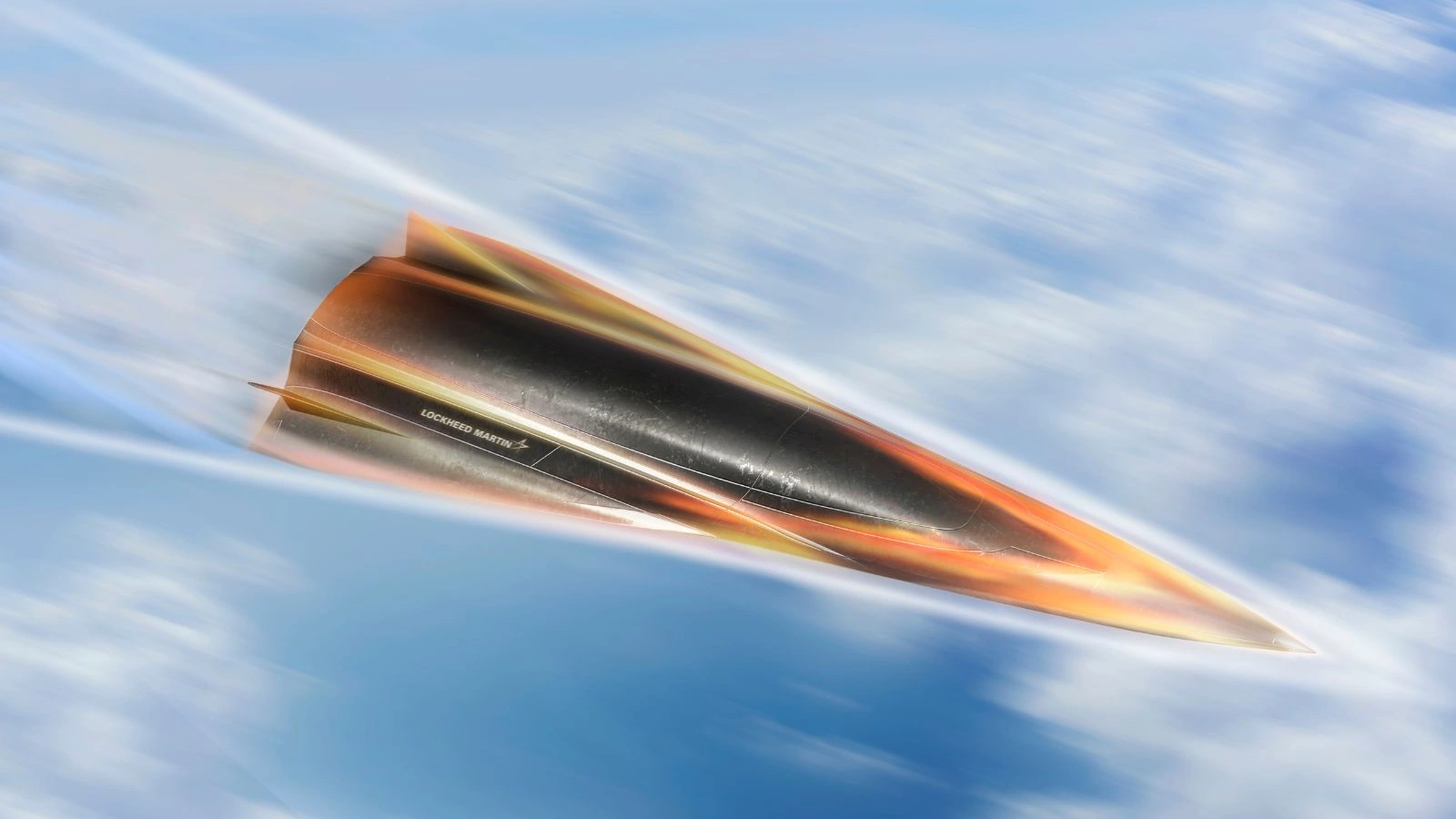
Sustained hypersonic flight refers to maintaining controlled flight at speeds of at least Mach 5 for a meaningful portion of a mission, rather than simply reaching hypersonic velocity for a short period. For the United States, this distinction is becoming increasingly important as defense programs move from demonstrating isolated high-speed events toward operational systems that must combine propulsion, thermal protection, guidance, communications and maneuverability in a single vehicle.
Lockheed Martin’s latest discussion of hypersonic technology places sustained flight at the center of the engineering problem. The company has spent decades working on hypersonic systems and currently supports programs spanning hypersonic boost-glide weapons, air-breathing concepts and next-generation glide bodies.
The issue is significant because a vehicle traveling above Mach 5 encounters an environment fundamentally different from that experienced by conventional aircraft and missiles. Aerodynamic heating increases rapidly, atmospheric density changes with altitude, propulsion becomes highly sensitive to airflow conditions, and even relatively small control errors can have major consequences at extreme velocity.
Key Takeaways
Sustained hypersonic flight is becoming a central engineering challenge for next-generation weapons, with propulsion, thermal management, guidance and manufacturing all affecting operational performance.
Why Sustained Hypersonic Flight Matters
Hypersonic flight is commonly defined as flight at Mach 5 or faster. The U.S. Government Accountability Office notes that hypersonic weapons can combine high velocity with lower-altitude flight and maneuverability, creating tracking and defensive challenges that differ from conventional ballistic trajectories.
But speed alone does not define the operational value of a hypersonic system.
A vehicle that briefly reaches Mach 5 before slowing down has a different propulsion and thermal problem from a system designed to cruise at hypersonic velocity for an extended portion of its mission.
This is particularly important for hypersonic cruise missiles and other air-breathing concepts.
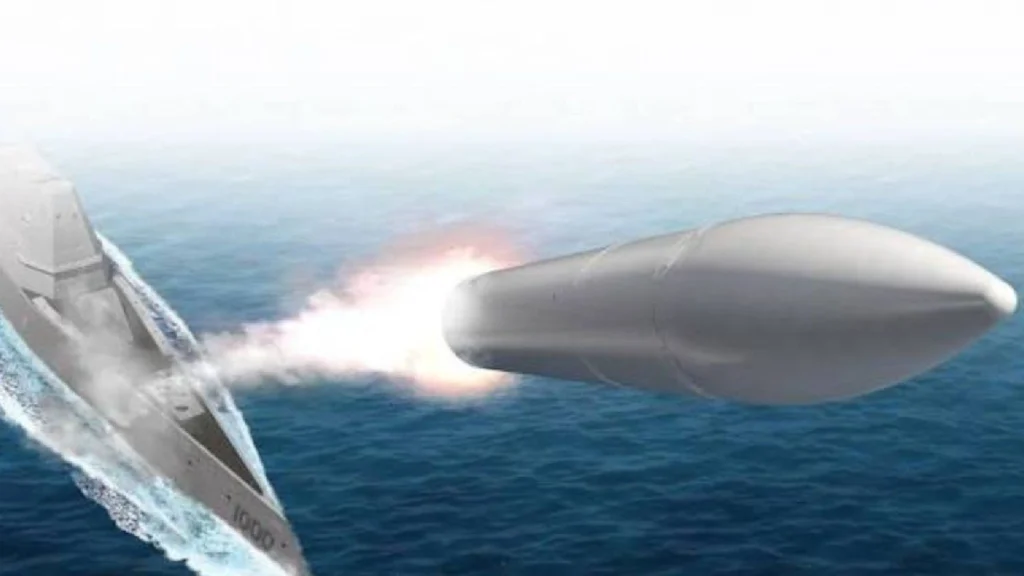
Unlike a hypersonic glide vehicle, which is accelerated by a booster before gliding through the atmosphere, a hypersonic cruise missile can use an air-breathing engine to continue generating thrust during flight. GAO describes hypersonic cruise missiles as powered systems that can use ramjet or scramjet propulsion after reaching the required speed for engine operation.
That creates a demanding engineering chain:
- Accelerate the vehicle to the required propulsion regime.
- Capture and compress incoming air.
- Sustain combustion at extremely high airflow velocities.
- Maintain stable propulsion across changing altitude and speed.
- Control aerodynamic heating.
- Maintain guidance and navigation accuracy.
- Survive high aerodynamic and structural loads.
- Deliver the required terminal maneuverability and effect.
The ability to perform all of these functions simultaneously is what makes sustained hypersonic flight difficult.
Hypersonic Propulsion: The Engine Has to Keep Working
Traditional jet engines are not designed to operate efficiently at hypersonic speeds. Conventional turbine engines rely on rotating compressor stages and combustion processes that become impractical as incoming airflow velocity increases.
Ramjets provide one alternative. They use the vehicle’s forward motion to compress incoming air before combustion. Scramjets take this further by maintaining airflow through the combustor at supersonic speeds.
The advantage is important. An air-breathing hypersonic vehicle does not need to carry an onboard supply of oxidizer for its cruise propulsion system. It can use atmospheric oxygen, potentially allowing more of the vehicle’s mass to be devoted to fuel, payload, structure and thermal-management systems.
DARPA’s HAWC program demonstrated this principle. In a 2021 test, a Raytheon-built vehicle used a Northrop Grumman scramjet and achieved flight above Mach 5. The program specifically focused on technologies needed for effective air-launched hypersonic cruise missiles.
The Lockheed Martin HAWC configuration subsequently demonstrated sustained hypersonic cruise. DARPA reported that the vehicle maintained speeds above Mach 5, reached altitudes above 65,000 feet and traveled more than 300 nautical miles during a 2022 flight test.
These demonstrations are significant because they moved the engineering problem beyond simply proving that a vehicle can reach hypersonic velocity.
Lockheed Martin and the Next Generation of Hypersonic Propulsion
Lockheed Martin’s 2026 hypersonic work includes efforts to improve propulsion efficiency and manufacturing scalability.
In January 2026, Lockheed Martin and GE Aerospace announced successful tests of a liquid-fueled rotating detonation ramjet intended for hypersonic missile applications. The companies said the design could provide higher thrust generation and improved fuel efficiency while using a compact engine architecture.
The technology uses rotating detonation combustion rather than conventional combustion methods. Detonation waves move through the combustion process, potentially improving pressure gain and propulsion efficiency.
For hypersonic weapons, improvements in propulsion efficiency can have effects beyond engine performance.
A smaller or more efficient engine could potentially create additional internal volume for:
- Fuel
- Payloads
- Thermal-management equipment
- Guidance hardware
- Communications equipment
- Structural reinforcement
Lockheed Martin and GE Aerospace said they would continue maturation of the rotating detonation ramjet during 2026.
Thermal Management May Be the Defining Constraint
At hypersonic velocity, aerodynamic heating becomes one of the most difficult problems facing vehicle designers.
The vehicle compresses the surrounding atmosphere as it moves through the air. Shock waves form around the airframe, and energy is transferred into the structure and surrounding airflow.
The result is a thermal environment that can affect nearly every subsystem.
GAO has identified heat-tolerant materials as a major hypersonic development challenge. The agency has noted that external temperatures can exceed 2,000 degrees Fahrenheit under some hypersonic conditions, requiring materials that combine thermal resistance with structural strength and low weight.
This means thermal management cannot be treated as an isolated subsystem.
The aerodynamic shape affects heating.
The propulsion system affects internal temperatures.
The materials affect structural mass.
The electronics must remain within their operating limits.
The guidance system must continue functioning while the vehicle experiences extreme thermal and mechanical conditions.
Lockheed Martin has also identified thermal management as an important area for advanced manufacturing. In April 2026, the company said its laser powder-bed fusion work was being applied to thermal-management components for next-generation aircraft and hypersonic systems.
Guidance and Communications at Hypersonic Speed
Sustained flight also increases the demands placed on navigation and control.
At approximately one mile per second, a vehicle covers enormous distances in a short period. That leaves little time for a control system to detect an error, calculate a correction and change the vehicle’s flight path.
Hypersonic systems therefore require highly responsive guidance and flight-control architectures.
Communication creates another problem.
Lockheed Martin identifies communications as one of the major technical challenges associated with hypersonic flight. At high speed, a vehicle operating within an extreme aerodynamic environment must maintain access to its sensors and communication systems while dealing with the physical effects of high-temperature atmospheric flight.
This becomes particularly important for systems expected to operate in contested environments.
A future hypersonic weapon may need to receive updated information, use onboard navigation and sensors, maintain an accurate flight path and execute terminal maneuvers while facing electronic warfare and communications disruption.
The result is a system that requires much more than a high-performance engine.
Sustained Hypersonic Flight and Modern Warfare
The operational attraction of hypersonic systems comes from the combination of speed, maneuverability and reduced reaction time.
A hypersonic weapon can potentially reach a target faster than a conventional cruise missile while following a less predictable trajectory than a traditional ballistic missile.
GAO notes that hypersonic systems could be used against mobile or time-sensitive targets because their high speed can reduce the time available for an adversary to react.
This has implications for command centers, air-defense systems, mobile missile launchers, naval assets and other high-value targets.
However, sustained hypersonic flight should not be viewed as a replacement for existing missile technologies.
Ballistic missiles, cruise missiles, stealth aircraft, long-range artillery and conventional precision weapons each have different combinations of cost, range, payload, survivability and mission flexibility.
Hypersonics add another option to that broader strike architecture.
U.S. Hypersonic Programs Are Expanding Across Multiple Domains
The United States is pursuing hypersonic capabilities across air, land and maritime domains.
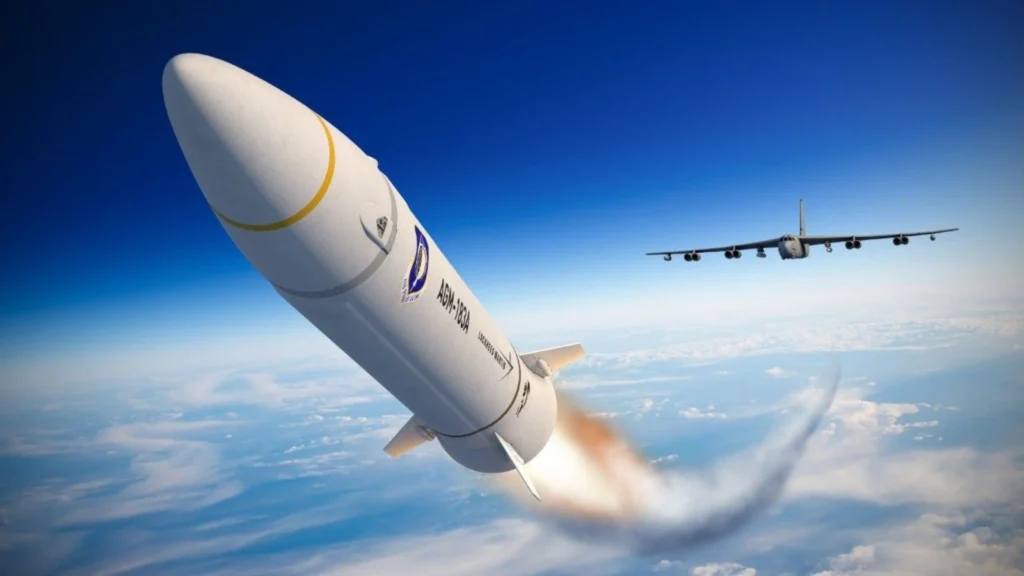
The Army and Navy are developing the same common hypersonic missile technology under different service designations. The Navy calls its system Conventional Prompt Strike, while the Army uses the Long-Range Hypersonic Weapon designation. GAO reported in July 2026 that the Navy plans to field the system aboard Zumwalt-class destroyers and later on Virginia-class submarines, while the Army is also procuring the capability.
Lockheed Martin is involved in the common hypersonic glide body used by these programs.
The company is also developing the Next Generation Glide Body, or NxGB, which Lockheed Martin describes as a scalable hypersonic glide body designed to support long-range strike options from multiple platforms and warfighting domains.
This illustrates an important distinction.
Not every U.S. hypersonic program requires sustained powered flight.
Boost-glide systems use a different architecture from air-breathing hypersonic cruise missiles.
Both, however, depend on the ability to survive extreme aerodynamic conditions while maintaining precise control.
Hypersonic Flight: Key Technical Comparison
| Parameter | Hypersonic Cruise Missile | Hypersonic Glide Vehicle | Conventional Cruise Missile |
|---|---|---|---|
| Typical Speed Regime | Mach 5+ | Mach 5+ during portions of flight | Usually below Mach 1 |
| Main Propulsion | Air-breathing ramjet or scramjet | Rocket booster for acceleration, then unpowered glide | Turbine or turbofan engine |
| Sustained Powered Flight | Yes | No during glide phase | Yes |
| Atmospheric Flight | Yes | Yes | Yes |
| Major Thermal Challenge | Very high | Very high | Lower |
| Key Engineering Challenge | Sustained propulsion and thermal management | High-speed maneuvering and thermal protection | Range, survivability and propulsion efficiency |
| U.S. Development Examples | HAWC technology demonstrations and advanced air-breathing concepts | CPS, LRHW, NxGB | Tomahawk and other cruise missile families |
| Primary Operational Value | Rapid strike with sustained high-speed flight | Long-range high-speed maneuverable strike | Long-range precision strike |
| Technology Maturity | Development and demonstration across multiple programs | Moving toward operational fielding | Mature operational technology |
The table highlights why sustained hypersonic flight is a distinct technical challenge. An air-breathing system must continue producing useful thrust throughout the cruise portion of the mission, while a boost-glide vehicle concentrates its propulsion requirement primarily in the acceleration phase.
China and Russia Add Pressure to the Hypersonic Race
The U.S. focus on sustained hypersonic flight is occurring within a wider competition involving China and Russia.
Both countries have fielded or developed hypersonic weapons, while the United States continues working to mature comparable offensive systems and counter-hypersonic defenses.
The competition is therefore not limited to maximum speed.
It includes:
- Propulsion efficiency
- Flight duration
- Maneuverability
- Thermal protection
- Sensor integration
- Manufacturing capacity
- Launch platforms
- Command and control
- Missile warning and tracking
- Counter-hypersonic interception
The defensive side is particularly important.
The Missile Defense Agency is developing capabilities intended to detect, track and defeat maneuvering hypersonic threats. GAO has identified the Glide Phase Interceptor and space-based tracking concepts such as the Hypersonic and Ballistic Tracking Space Sensor as important elements of the U.S. counter-hypersonic effort.
This creates a broader technological competition between offensive hypersonic systems and increasingly distributed defense networks.
Manufacturing Is Becoming a Strategic Requirement
A successful hypersonic flight test does not automatically translate into a deployable weapon.
The United States must also be able to manufacture advanced thermal structures, propulsion components, guidance systems and airframes consistently and at sufficient scale.
GAO has repeatedly identified the industrial base as one of the challenges facing U.S. hypersonic development. Specialized materials, manufacturing processes and highly trained personnel can increase cost and complicate production.
Lockheed Martin has recently placed greater emphasis on this part of the problem.
In August 2026, the company announced a teaming agreement with Albany Engineered Composites to pursue high-rate production opportunities for U.S. hypersonic programs. Lockheed Martin said the partnership is intended to combine systems integration with scalable composite manufacturing.
The company has also announced a multimillion-dollar investment in a Modular Payload Delivery System intended to transform existing hypersonic vehicle technologies into a more flexible family of systems.
These efforts show that the hypersonic challenge is increasingly moving from laboratory performance toward production engineering.
Challenges That Remain
Despite progress in flight testing and propulsion research, several technical barriers remain.
Thermal Protection
Materials must survive extreme heating while remaining light enough for the vehicle to achieve the required performance.
Propulsion Reliability
A hypersonic engine must start, operate and remain stable across changing flight conditions.
Guidance
High velocity reduces the time available for corrections and places exceptional demands on onboard navigation and control.
Communications
Maintaining reliable communications and sensor operation in a severe aerodynamic environment remains difficult.
Testing
Hypersonic development requires specialized wind tunnels, thermal facilities and flight-test infrastructure. GAO has identified limited testing resources as a continuing challenge.
Cost and Production
Advanced materials and specialized manufacturing processes can make hypersonic weapons expensive to build. The Pentagon therefore faces the additional challenge of achieving production rates that can support operational inventories.
Future Outlook: From Speed Demonstrations to Sustained Performance
The next stage of hypersonic development is likely to focus less on proving that a vehicle can briefly reach Mach 5 and more on demonstrating repeatable, controlled and affordable operation.
That means the key metrics will increasingly include:
- Sustained speed
- Flight duration
- Propulsion efficiency
- Thermal performance
- Guidance accuracy
- Reliability
- Production rate
- Cost per weapon
- Platform integration
- Operational availability
Lockheed Martin’s current portfolio reflects this broader shift. The company is working across hypersonic glide bodies, air-breathing propulsion, advanced manufacturing and counter-hypersonic defense.
The U.S. Department of Defense is also moving toward a larger operational architecture in which hypersonic weapons operate alongside conventional long-range fires, aircraft, submarines, surface ships, space sensors and integrated command networks.
The technical goal is therefore not simply a faster missile.
It is a reliable system capable of maintaining performance under extreme conditions and contributing to a wider multi-domain force.
Conclusion
Sustained hypersonic flight is becoming one of the defining engineering challenges in advanced military aerospace.
Reaching Mach 5 is a necessary milestone, but it does not by itself create an operational hypersonic weapon. The harder task is maintaining propulsion, controlling aerodynamic heating, protecting electronics and structures, preserving navigation accuracy and sustaining reliable performance throughout the mission.
Lockheed Martin’s current work illustrates that transition. The company is pursuing advanced glide bodies, air-breathing propulsion and manufacturing technologies while continuing to support major U.S. hypersonic programs.
DARPA’s HAWC demonstrations already showed that sustained Mach 5-class air-breathing flight is technically achievable under test conditions. The next challenge is turning those demonstrations into reliable, affordable and producible military capabilities.
For the United States and its allies, the long-term competition will therefore be measured not only by who can build the fastest vehicle, but by who can combine speed, endurance, thermal protection, propulsion, guidance, manufacturing and operational integration into a dependable system.
That is why sustained flight may prove to be the more important hypersonic frontier.