Sweden Moves Ahead With HIMARS Procurement
Sweden has authorized the purchase of Lockheed Martin’s HIMARS rocket artillery system in a deal worth about SEK 7 billion, or approximately $729 million, according to the Swedish government and Reuters. The procurement covers about 10 HIMARS systems, ammunition and associated support, with first deliveries expected in 2027.
- Sweden Moves Ahead With HIMARS Procurement
- Takeaways
- What Sweden Is Buying
- HIMARS Adds a New Layer to Swedish Fires
- Why the Finland Connection Matters
- Sweden Wants Greater Ammunition Security
- A Broader Shift in Sweden’s Military Posture
- Mobility and Survivability Are Central to the Concept
- The $729 Million Deal Has Wider NATO Implications
- What Happens Next
- Bottom Line
Takeaways
Sweden is adding HIMARS to its armed forces as it builds a longer-range precision fires capability and strengthens its role in NATO’s northern defense.
The decision gives the Swedish Army a dedicated mobile rocket artillery capability that can complement its existing tube artillery. Stockholm says HIMARS will allow Swedish forces to operate across larger areas and conduct long-range precision engagements while remaining compatible with systems operated by other NATO members.
The acquisition is part of Sweden’s broader effort to adapt its armed forces to its role as a NATO Ally. Sweden joined NATO in March 2024 and is now contributing forces and capabilities to the Alliance’s northern defense structure.
What Sweden Is Buying
Reuters reported that the agreement covers around 10 HIMARS launchers plus ammunition. The Swedish government has not publicly provided a complete breakdown of every munition and support item included in the final procurement.
The scale of the final purchase is also smaller than the package previously authorized by Washington.
| Item | Sweden’s current procurement |
|---|---|
| System | M142 HIMARS |
| Manufacturer | Lockheed Martin |
| Quantity | About 10 launchers |
| Procurement value | About SEK 7 billion |
| U.S. dollar value | About $729 million |
| First deliveries | 2027 |
| Ammunition | Included |
| Local industrial cooperation | Saab and Lockheed Martin |
| Regional cooperation | Sweden and Finland |
The earlier U.S. Foreign Military Sales notification published in April covered a potential package valued at $930 million. It listed 20 M142 HIMARS systems, multiple GMLRS variants, M57 ATACMS pods, IFATDS equipment, communications equipment, training, logistics and other support.
That earlier notification represented the maximum proposed U.S. sale, rather than the final Swedish purchase announced in September.
HIMARS Adds a New Layer to Swedish Fires
The significance of the procurement is less about the launcher itself than the capability it adds to Sweden’s force structure.
Sweden already operates the Archer 155 mm self-propelled artillery system. Archer provides highly mobile tube artillery, while HIMARS introduces rocket artillery with a different combination of range, mobility, ammunition options and precision. Stockholm explicitly describes the new system as a complement to existing artillery rather than a replacement.
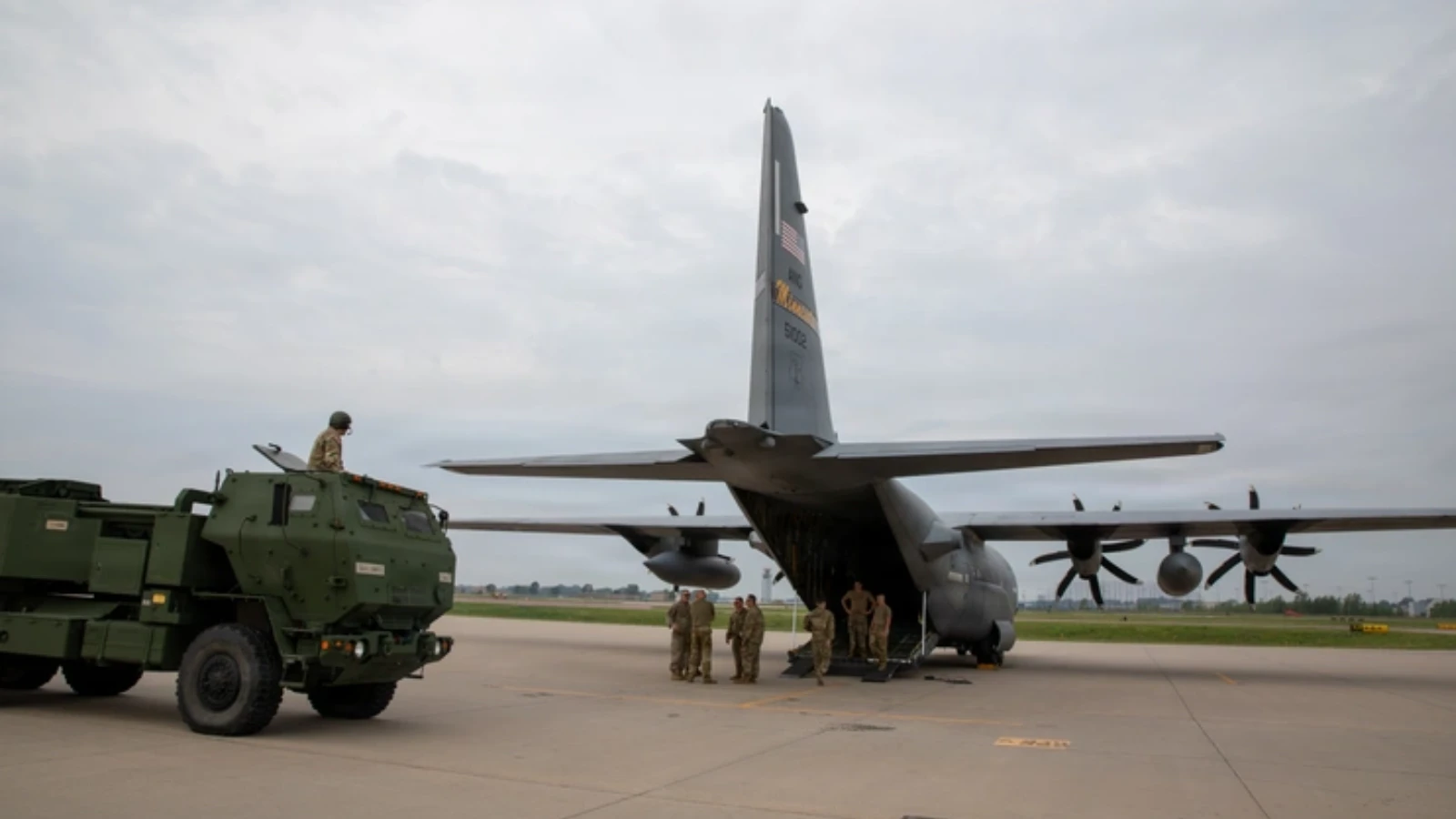
HIMARS is a wheeled, highly mobile launcher derived from the M270 Multiple Launch Rocket System family. Its modular launcher architecture allows it to employ several members of the U.S. Army’s precision fires family, depending on the munitions authorized and procured by the customer.
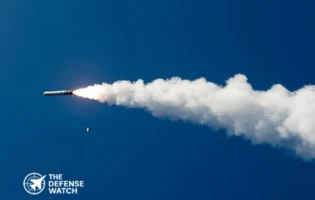
This matters because the launcher can evolve as Sweden’s ammunition inventory develops. Lockheed Martin’s Precision Strike Missile, or PrSM, for example, is designed for compatibility with HIMARS and the M270 family and is advertised by Lockheed Martin with a range of 499 kilometers or more. That does not mean Sweden is receiving PrSM as part of the announced purchase, but it illustrates the growth path available to HIMARS users.
The earlier U.S. notification for Sweden did include M57 ATACMS missile pods as part of the proposed package. Whether individual long-range missile types from that notification form part of the final contract should be distinguished from the broader U.S. approval.
Why the Finland Connection Matters
The HIMARS purchase is being paired with a new Swedish-Finnish cooperation framework for rocket artillery.
Finland already operates the tracked M270 MLRS, which shares ammunition and components with HIMARS. Sweden and Finland intend to cooperate on training, education, capability development, maintenance, supply security and production.
That creates an important regional advantage. Sweden does not have to build an entirely separate rocket artillery support ecosystem from scratch when a neighboring NATO Ally already operates a closely related system.
Common ammunition and related components can also support more efficient training, maintenance planning and logistics. The two countries have already built extensive defense cooperation, and Sweden is serving as the framework nation for NATO’s Forward Land Forces in Finland.
For NATO, the result is a more connected Nordic fires architecture rather than two isolated national capabilities.
Sweden Wants Greater Ammunition Security
The launcher purchase is also tied to industrial cooperation.
Sweden’s government said Saab and Lockheed Martin are signing a joint declaration covering potential integration of Saab’s Ground-Launched Small Diameter Bomb, or GLSDB, and production of ammunition for HIMARS and other systems, including Patriot air defense.
The industrial element is significant because modern rocket artillery depends on ammunition availability as much as launcher numbers.
A force with a limited number of launchers can still provide meaningful combat power if it has sufficient stocks, reliable resupply and the ability to regenerate combat-ready units. Conversely, launcher numbers alone do not guarantee sustained fires.
Sweden’s effort to establish additional production capacity therefore addresses the sustainment side of the capability as well as the acquisition itself.
A Broader Shift in Sweden’s Military Posture
The HIMARS decision fits a larger Swedish military modernization effort following NATO accession.
Sweden became NATO’s 32nd member in March 2024. Since then, Stockholm has increased its emphasis on collective defense, interoperability and the ability to support Allied operations in Northern Europe.
In June 2026, Sweden announced that Swedish forces assigned to NATO’s Forward Land Forces in Finland would come under NATO command. The force is intended to strengthen deterrence and defense in the High North and includes a Swedish battalion battlegroup based in Boden.
That geography makes mobile long-range fires particularly relevant.
Swedish and Finnish territory sits between the Baltic Sea, the Arctic and the northern approaches to Norway. Sweden’s own defense assessments have highlighted the strategic importance of the Nordic region to NATO’s ability to reinforce and defend its northern flank.
HIMARS does not by itself transform the regional balance. Its value comes from adding a mobile precision fires layer that can operate alongside ground forces, artillery, air defense and other NATO capabilities.
Mobility and Survivability Are Central to the Concept
Modern rocket artillery faces a basic operational problem: once a launcher fires, an adversary can attempt to locate and strike it.
HIMARS addresses part of that problem through mobility. Its wheeled configuration allows units to relocate rapidly after firing, while its relatively compact launcher can be transported by C-130-class aircraft.
For Sweden, mobility also has geographic significance. The country’s dispersed road network, forests and large territorial depth offer opportunities for mobile ground units to operate from multiple locations rather than relying on a small number of fixed firing positions.
The effectiveness of such a force would still depend on reconnaissance, targeting data, communications, logistics and command-and-control. HIMARS is therefore best understood as one component of a broader precision-fires network.
The $729 Million Deal Has Wider NATO Implications
The Swedish purchase illustrates how NATO expansion in Northern Europe is changing procurement priorities.
Sweden previously maintained a defense structure centered heavily on national territorial defense and advanced but comparatively limited high-end capabilities. NATO membership has added requirements for interoperability, reinforcement, collective planning and the ability to contribute specialized capabilities to Allied operations.
HIMARS fits that environment because it is already operated by several NATO countries and uses a broader U.S.-led family of precision fires munitions.
The Finland agreement strengthens that effect. Sweden and Finland are developing complementary rocket artillery capabilities while both countries operate within NATO’s collective defense framework.
For the United States and Lockheed Martin, the Swedish decision also reinforces HIMARS’ position as a common Allied fires platform. Lockheed Martin said in 2026 that U.S. Army and international demand had led to additional HIMARS production awards, reflecting the system’s expanding role among partner nations.
What Happens Next
The immediate milestone is delivery. Sweden expects its first HIMARS systems in 2027, after which personnel training, infrastructure, ammunition integration and unit formation will determine how quickly the capability becomes operational.
The next issue will be ammunition depth.
Sweden’s cooperation with Saab and Lockheed Martin indicates that Stockholm is looking beyond simply receiving launchers. Local or regional ammunition production could become an important part of maintaining the system during a prolonged crisis.
The Finland partnership could also provide a practical framework for shared training, maintenance and supply arrangements.
Taken together, the HIMARS purchase, the Swedish-Finnish rocket artillery agreement and the planned industrial cooperation point toward a broader Nordic effort to build a sustainable precision fires capability inside NATO.
For Sweden, the immediate result is straightforward: the country is acquiring its first dedicated HIMARS force, adding mobile long-range rocket artillery to an Army already equipped with Archer. The longer-term significance will depend on the ammunition stocks, command-and-control architecture and regional integration built around the launchers.
Bottom Line
Sweden’s roughly $729 million HIMARS procurement represents a major addition to its ground-based precision fires capability. The initial force of about 10 launchers is relatively small, but the system’s compatibility with a broad family of U.S. and Allied munitions gives Sweden a scalable foundation for future modernization.
The parallel agreement with Finland may prove equally important. By connecting Sweden’s future HIMARS force with Finland’s existing M270 MLRS capability, Stockholm is building a more integrated Nordic approach to rocket artillery at a time when Sweden is taking on a larger role in NATO’s northern defense.